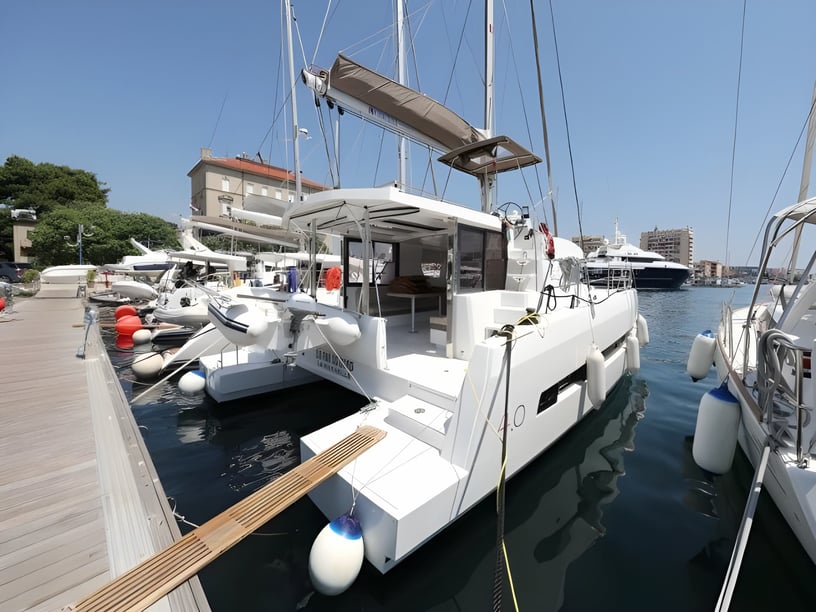
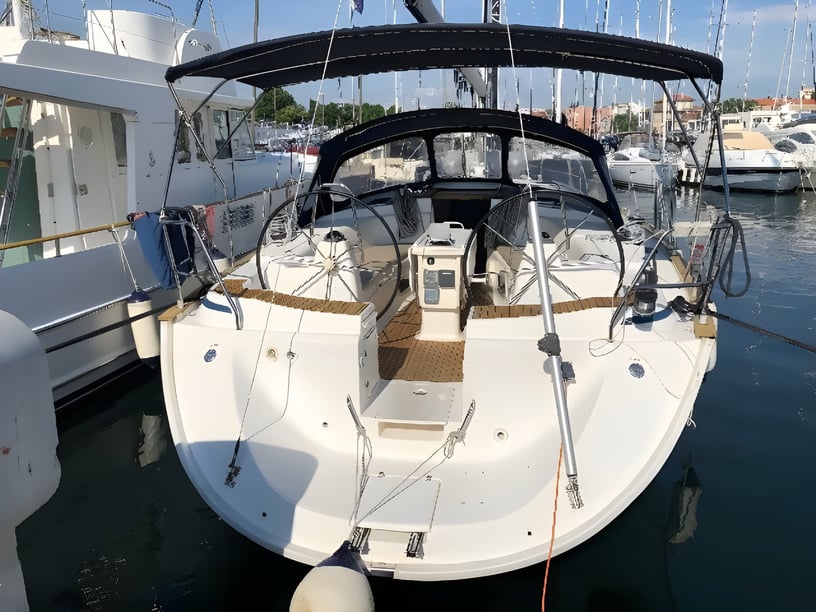
Yacht charter around Brbinj
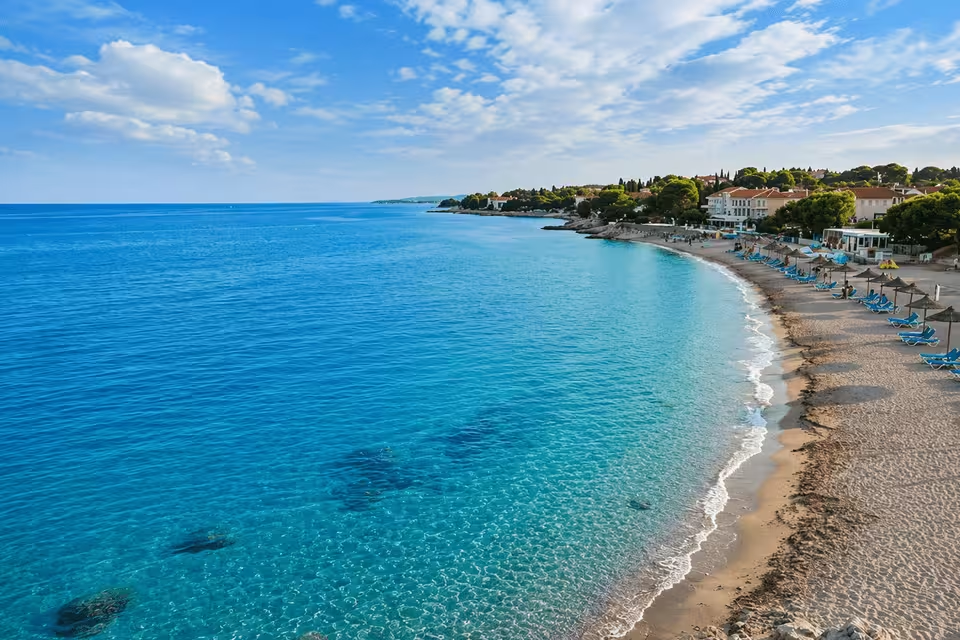
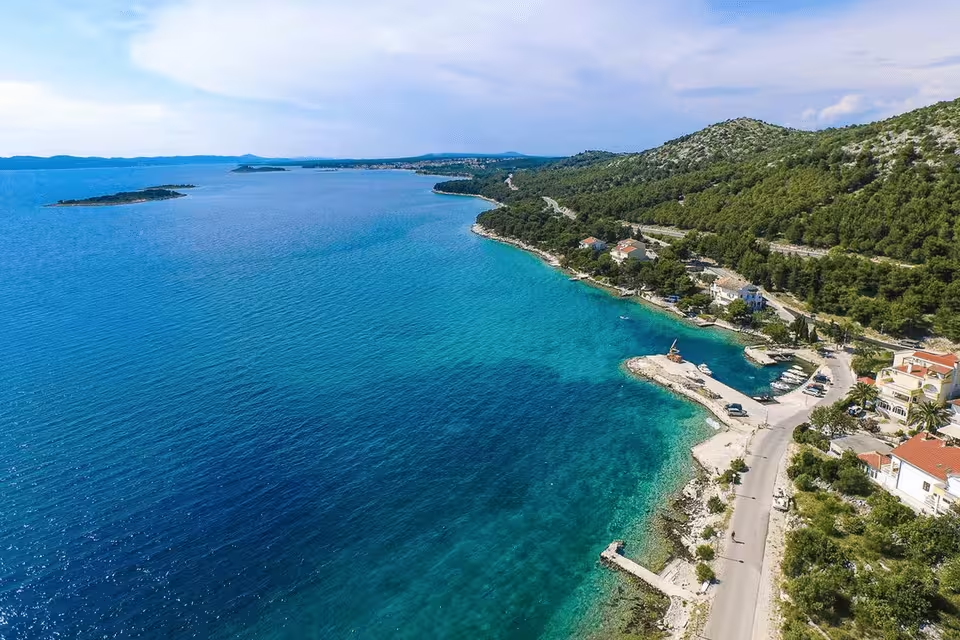
Brbinj is a small coastal settlement in the northern half of Dugi Otok, set on an isthmus between Jaz and Lučina bays. Rather than a full-service marina resort, it is a quiet place to visit by yacht, with sheltered mooring areas, wooded and rocky shores and a working ferry harbor connecting the island with Zadar.
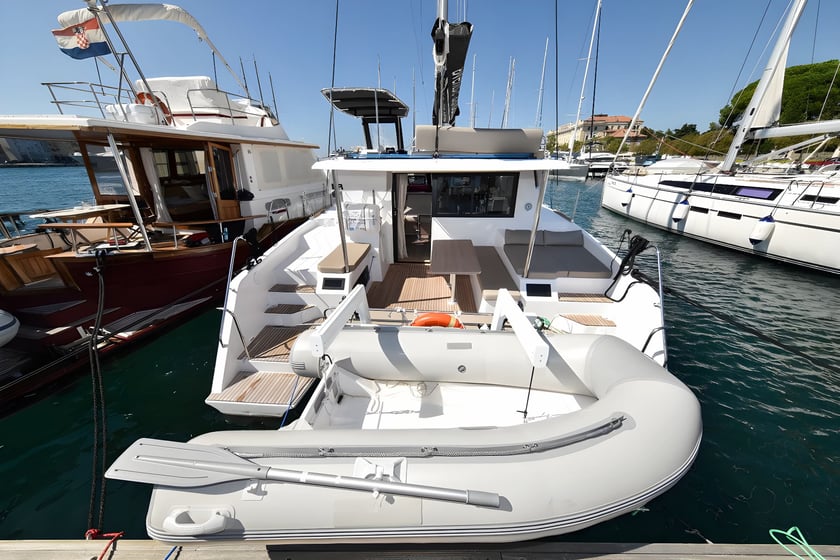
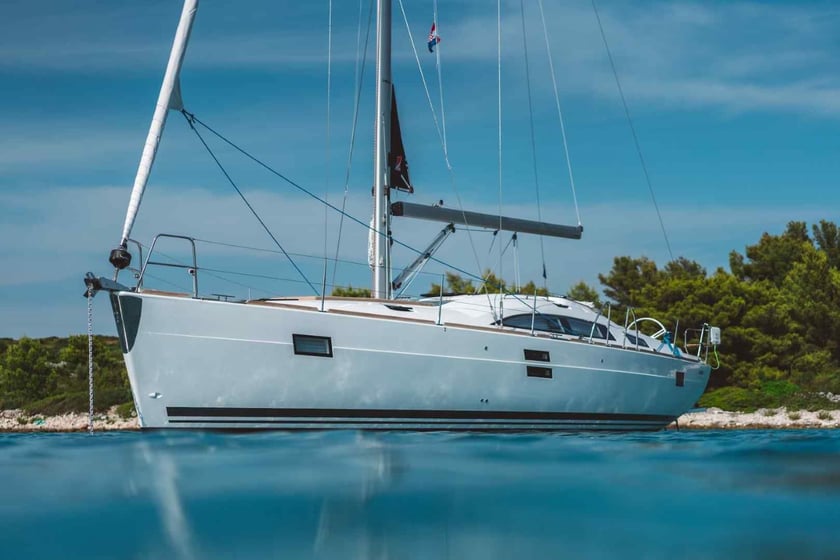
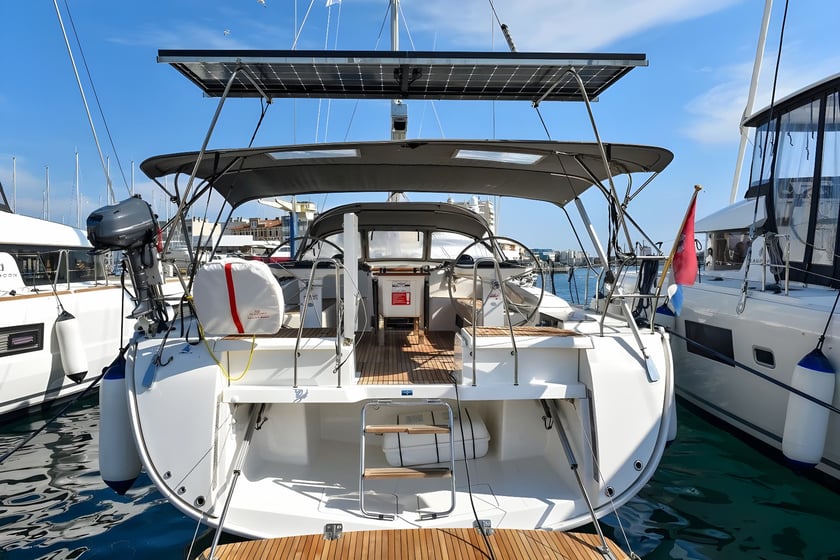
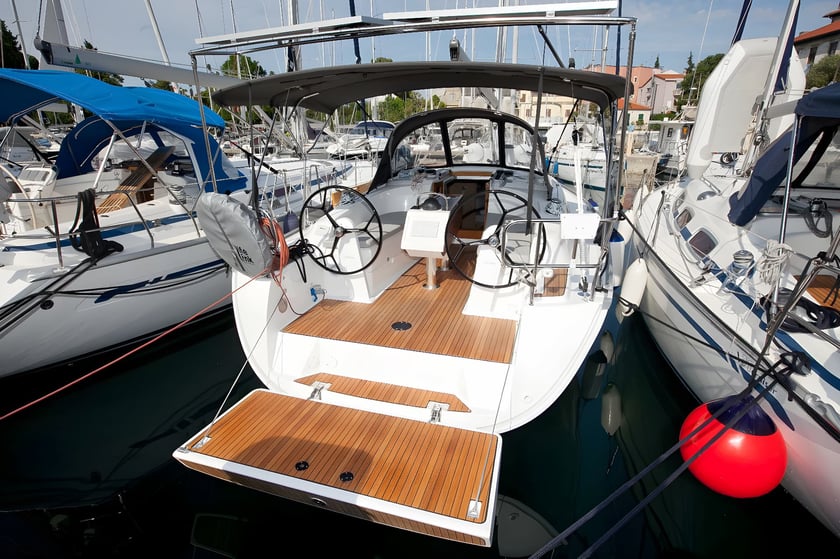
A yacht charter around Brbinj is shaped by the contrast between Dugi Otok’s two coasts. The island-facing eastern side provides the calmer anchorages around the village, while the open-Adriatic shore to the west has cliffs, caves and more exposed water. This makes Brbinj particularly relevant as an anchorage and exploration stop within a wider Dugi Otok trip, not necessarily as the principal departure base. Travelers planning a broader yacht charter in Croatia can consider it for swimming, scenic cruising and time away from busier marina environments.
Bays and coastal places to explore
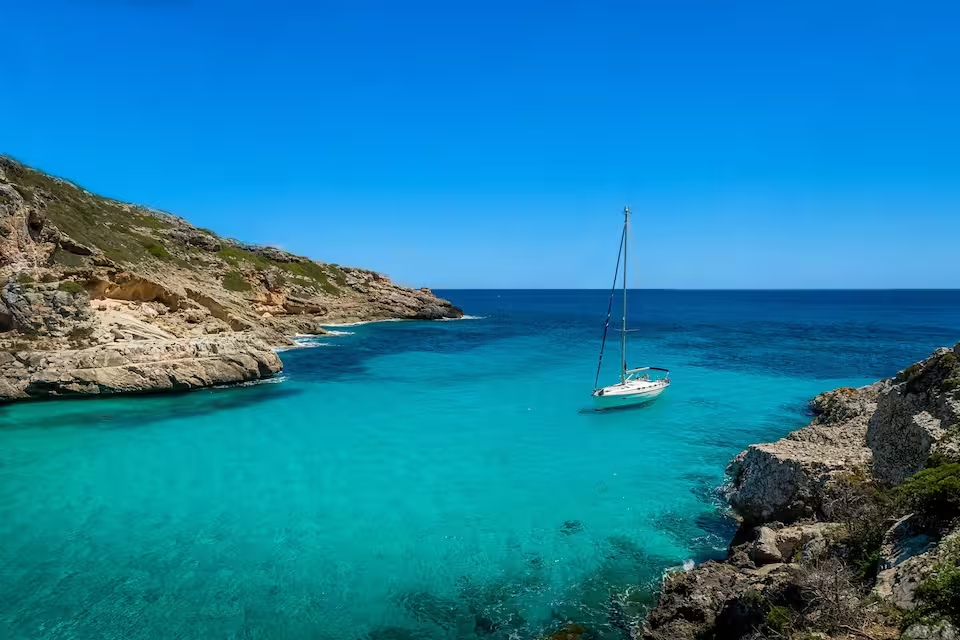
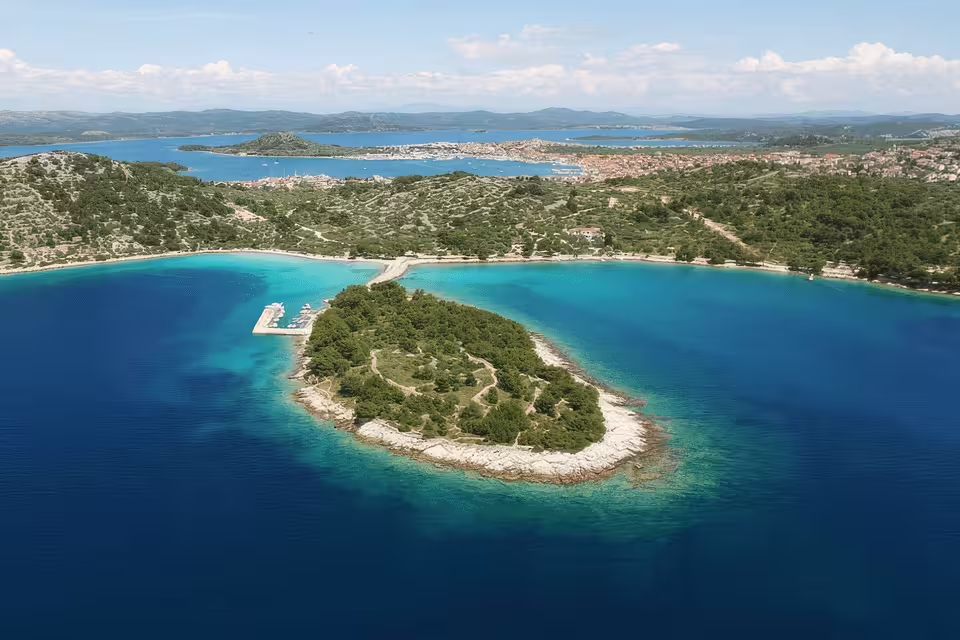
Jaz and Lučina are the two bays most closely connected with the village. Cruising here centers on anchoring areas, buoys and a limited number of waterfront berths. Lučina is partly screened by the wooded islet of Utra, although it remains exposed to northerly conditions and is also Brbinj’s active ferry harbor. Jaz offers another sheltered setting on the eastern side of the isthmus.
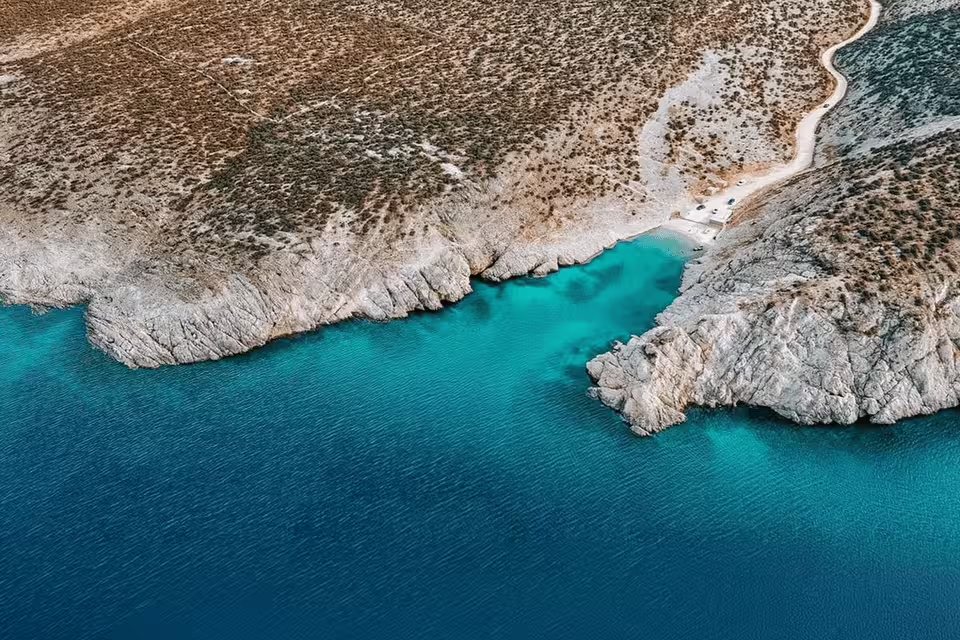
The branches of Brbinj Bay can be explored by dinghy, adding a slower, close-to-shore element to a yacht stay. Southwest of the village, Brbinjšćica Bay presents a very different coastline. It lies on Dugi Otok’s open-Adriatic side, where limestone cliffs, rocky shores, sea caves and formations such as Zmajevo Oko define the landscape. The setting is compelling, but it is substantially more exposed than the eastern anchorages and should be approached only when conditions are settled.
Sailing conditions and local cruising character
Cruising around Brbinj is considered moderately demanding because shelter changes noticeably over short distances. Much of Brbinj Bay is protected, but the outer area can become uncomfortable or unsafe during a strong bora. Lučina benefits from some protection from Utra, yet northerly exposure and regular ferry movements require attention. Once a yacht moves toward Brbinjšćica and the western shore, it enters water that is more open to wind and swell.
Summer commonly brings the northwesterly maestral, a sea breeze that tends to develop as the day progresses. Bora from the northeast and jugo from the southeast can create much stronger conditions, particularly outside midsummer. This difference matters when planning the rhythm of a charter: sheltered-bay swimming and dinghy exploration may remain practical when a western-coast outing is not. Cave visits by a small boat or kayak require calm, wave-free water and are generally better considered during stable mornings than after the afternoon breeze has strengthened.
Best time for a Brbinj yacht charter
Recreational boating around Brbinj is generally most practical from May through October, with the principal warm-weather season running from June to September. June and September are identified as particularly suitable months, combining comfortable sailing temperatures with conditions favorable for spending time underway, at anchor and in the water.
July and August are usually the sunniest and driest months. They suit travelers prioritizing warm-weather cruising, although they fall in the central high season. May offers a shoulder-season alternative before the main summer period, while October can still allow boating but is wetter and less consistent. Winter activity is limited by cooler weather, reduced visitor services and a greater likelihood of strong bora or jugo episodes. Whatever the month, local forecasts remain important because the protected eastern bays and exposed western coast can experience markedly different conditions.
Experiences on the water and ashore
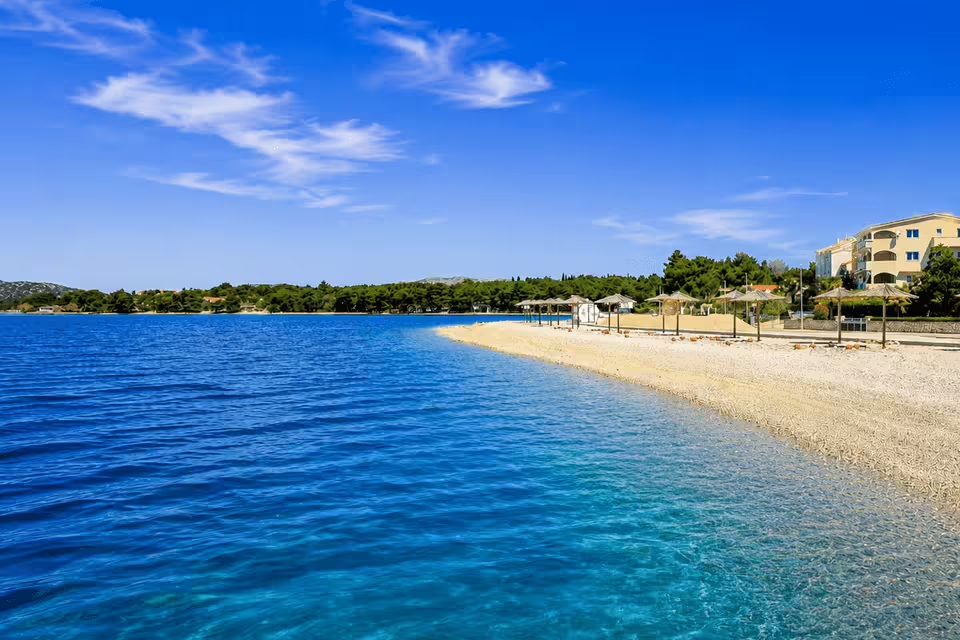
Brbinj lends itself to a yacht-holiday rhythm centered on anchoring, swimming and short excursions by dinghy. Its adjoining bays make it possible to spend time close to sheltered shores, while the rugged western side provides a contrasting scenic objective when the sea is calm. Diving and exploring secluded anchorages also fit the area’s coastal character.
Brbinjšćica’s limestone formations and Golubinka sea cave are distinctive highlights, but they should be treated as weather-dependent excursions rather than guaranteed stops. On land, Brbinj’s history adds depth to a visit. The Parish Church of Saints Cosmas and Damian was recorded in a papal document in 1195, and the settlement has associations with Glagolitic priests who contributed to Croatian literacy. Archaeological remains around Lučina and the islet of Školj indicate still earlier maritime settlement and coastal economic activity. These features allow a charter stop to combine quiet time afloat with a concise look at the island’s long coastal history.
Reaching Brbinj and planning a departure
Brbinj is connected to the mainland by a vehicle ferry from Zadar’s Gaženica port. Zadar Airport is the principal airport for travelers continuing through the city, and the island road links the ferry landing with other settlements on Dugi Otok. Those arranging a charter from the mainland may therefore find Zadar relevant when comparing departure options for the surrounding boating area.
Brbinj itself is best understood as a place to explore and anchor rather than a major charter base. There is no full-service marina listed in the locality, and facilities center on seasonal mooring arrangements, anchoring areas, limited waterfront berths and the working ferry harbor. Recreational boats must remain clear of ferry approaches and maneuvering zones in Lučina. Travelers should confirm current mooring arrangements and visitor services before arrival, especially outside the main summer months.
Practical charter planning
When comparing yacht charter or boat rental options for a trip including Brbinj, begin with the role the village will play in the itinerary. It works naturally as a sheltered stop, a swimming base or a staging point for a calm-weather visit to the western cliffs. Plans that depend on reaching Brbinjšćica should retain flexibility, because conditions there may be unsuitable even while the eastern side of the island remains comparatively protected.
Mooring availability and local services can be seasonal, so current arrangements should be checked before arrival. The active ferry harbor also makes careful berth selection important in Lučina. Before setting out, consult current Croatian marine forecasts, navigational warnings and the national Nautical Information Service, paying particular attention to bora and jugo forecasts. For cave excursions, wait for calm, wave-free conditions and avoid treating a small-boat visit as an all-weather activity. These considerations are more useful than a rigid schedule in an area where shelter, exposure and afternoon winds can quickly change the day’s priorities.