Yacht charter in Split
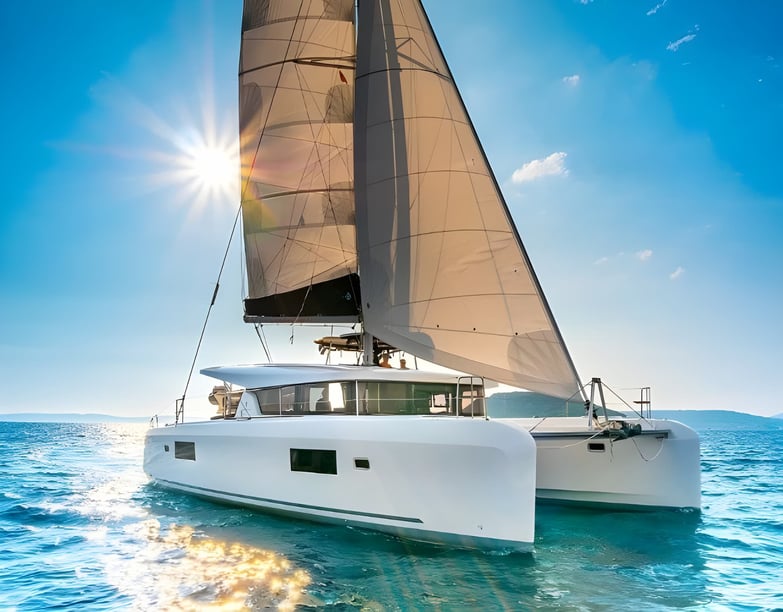
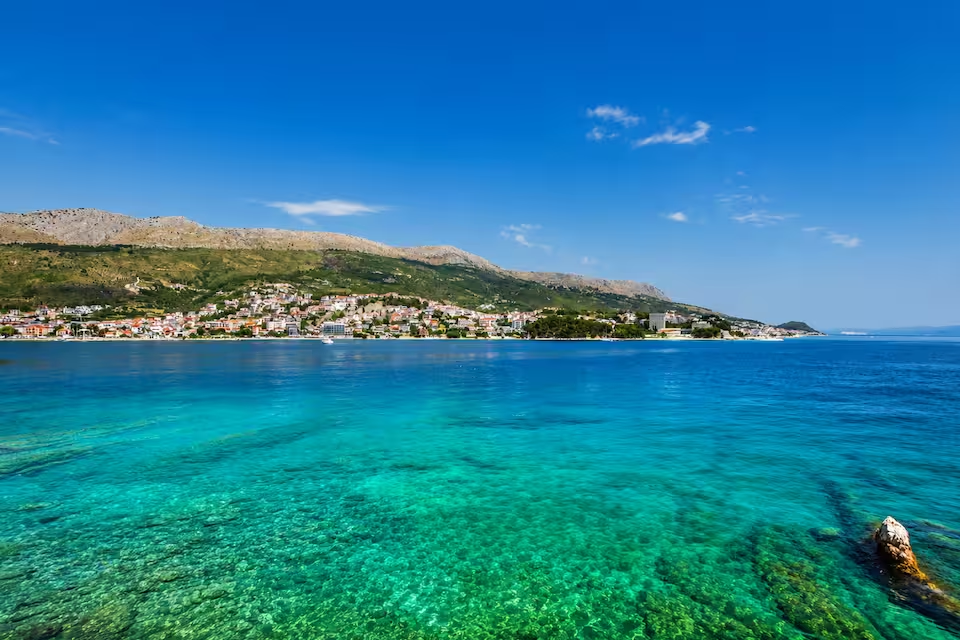
Split is a historic Adriatic port and a practical gateway to the central Dalmatian islands. The city occupies a coastal peninsula shaped by the forested Marjan headland, while its waterfront faces Brač, Šolta, Hvar and the more distant island of Vis. This position allows a yacht charter in Split to combine short initial passages with a broader week of island-hopping.
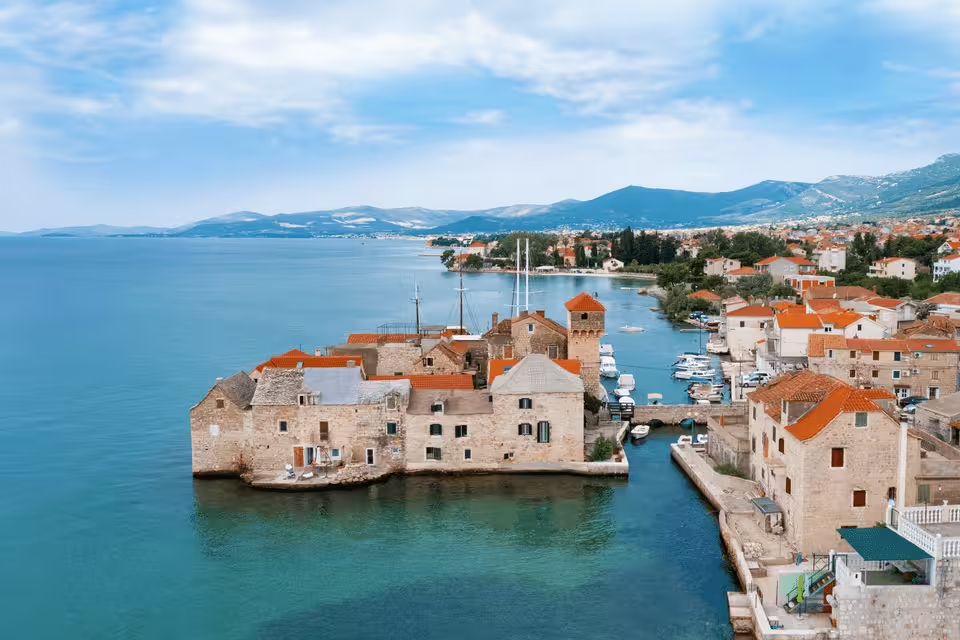
The city is more than a departure point. Its working harbour, extensive services and lively waterfront are set beside a Roman and medieval centre that remains part of everyday urban life. Travelers can provision, explore Diocletian’s Palace or spend time on the Riva before or after cruising. Embarkation may take place in Split itself or elsewhere around Kaštela Bay and Trogir, so the exact marina should always be checked in advance. For a wider comparison of departure areas, see yacht charters across Croatia.
Islands and coastal stops around Split
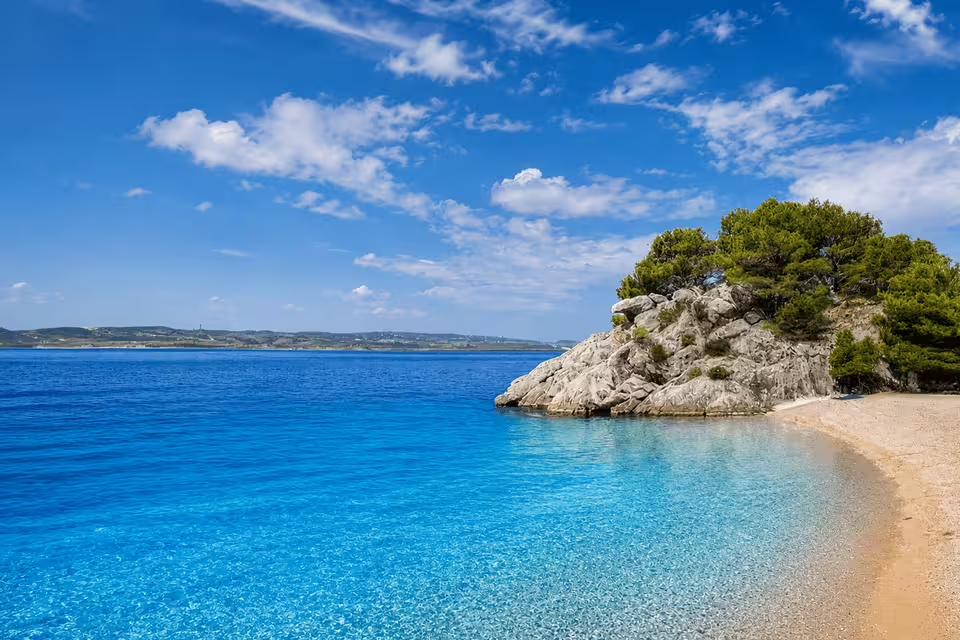
Brač and Šolta are natural early stops because they can be reached on relatively short passages from the Split area. Milna and Bol are among the relevant ports on Brač, while Rogač and Maslinica provide options around Šolta. These nearer islands work well for itineraries that emphasize manageable sailing days, swimming stops and time ashore.
Hvar Town adds a more animated waterfront and evening dimension, while Vis and Komiža suit travelers prepared for a longer, more exposed passage. The distance to Vis makes weather and route planning more consequential than on the shorter crossings to Brač or Šolta. Trogir can also form part of a central Dalmatian circuit, either as a cruising stop or as an embarkation area near Split. Together, these destinations make it possible to balance island ports, coves, town quays and open-water sailing without treating every day as a long transfer.
What sailing from Split is like
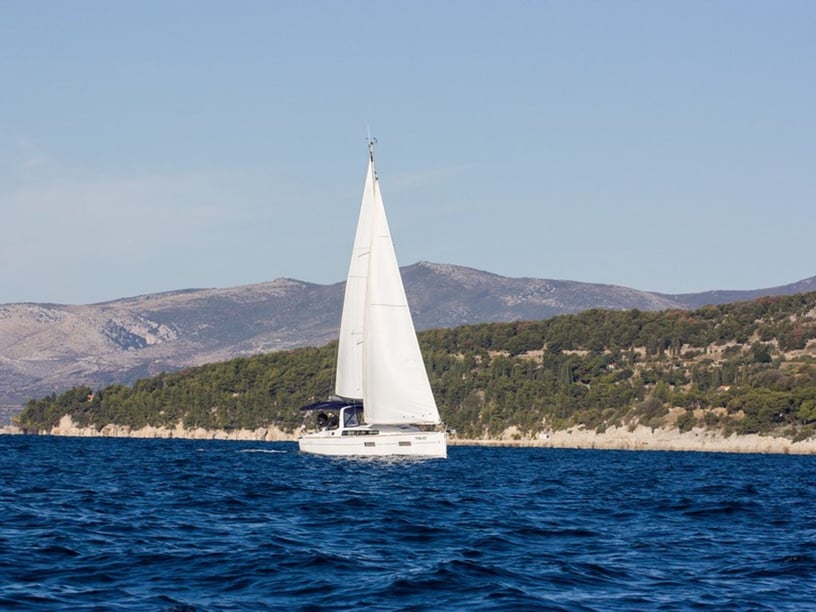
Cruising from Split usually begins with line-of-sight passages toward Brač or Šolta. From there, routes can continue through sheltered ports and coves or extend toward Hvar and Vis. This creates a useful choice between a relatively compact itinerary and one containing longer open-water legs. The crossing toward Vis is particularly important to keep flexible because it is more exposed than the nearby island hops.
In summer, sunny and comparatively dry weather is common, and an afternoon northwesterly maestral or sea breeze often develops in the wider cruising area. Conditions can change when the bura arrives from the northeast: it may be strong and gusty, with locally accelerated winds near the mainland mountains. The southeasterly jugo is steadier but can bring cloud, rain and building seas. These patterns make forecast-led planning essential even during the main season.
Split City Port is busy with ferries, passenger vessels and excursion boats. The harbour therefore feels more commercial than a quiet island anchorage, and recreational craft must follow local instructions and keep clear of larger traffic.
The best time to charter
The usual recreational charter season runs from May through October. June and September are particularly suitable months, combining warm conditions with less pressure on marinas than during the height of summer. They are strong choices for travelers who want an active sailing season without concentrating their trip in the busiest weeks.
July and August bring the most consistently hot, dry weather and the highest level of boating activity. This can suit travelers prioritizing summer conditions and lively ports, but berths and town quays are under their greatest pressure. May can be pleasant, although the sea is cooler. October is less predictable, and some services may begin to reduce later in the month. Outside summer, weather is generally less settled, making flexible routes and conservative passage choices increasingly important.
Central Dalmatian route ideas
A documented seven-day circuit links Split with Brač, Hvar, Vis, Komiža, Rogač on Šolta and Trogir before returning to Split. Its appeal lies in the changing rhythm: shorter island passages are combined with the longer leg to Vis, while evenings can be divided among established ports and coastal towns.
The full circuit should be treated as a framework rather than a fixed schedule. If bura or jugo affects the exposed sections, a skipper may favor the nearer waters around Brač and Šolta or rearrange the order of stops. Travelers who prefer more swimming and time ashore can likewise keep the route compact instead of trying to include every island.
Life afloat and time ashore
A Split yacht charter can alternate sailing and swimming with visits to historic towns, waterfront restaurants and evening venues. The proximity of several islands means that shorter cruising days may leave substantial time for coves, port walks and meals ashore, while a route toward Vis introduces a more pronounced passage-making element.
Split itself gives the trip a distinctive cultural beginning or ending. Diocletian’s Palace was built between the late third and early fourth centuries and became the core around which the later city developed. Roman structures now sit alongside medieval and later buildings in a continuously inhabited historic centre, listed as a UNESCO World Heritage property since 1979. The Peristyle, Cathedral of Saint Domnius, palace substructures and Riva can all fit into a pre- or post-charter stay. The Split Fish Market also offers a direct connection to the city’s long-standing seafood trade and daily social life.
Getting there and finding your departure point
Split Airport is near Kaštela and Trogir, approximately 20 kilometres from central Split. Shuttle services, public buses, taxis and road transfers connect the airport with the city and surrounding marina areas, although summer traffic between the airport, Kaštela and central Split can be heavy. Split can also be reached by motorway, intercity bus, rail and passenger ferry. The main ferry port, bus station and railway station are grouped near the eastern side of the city centre.
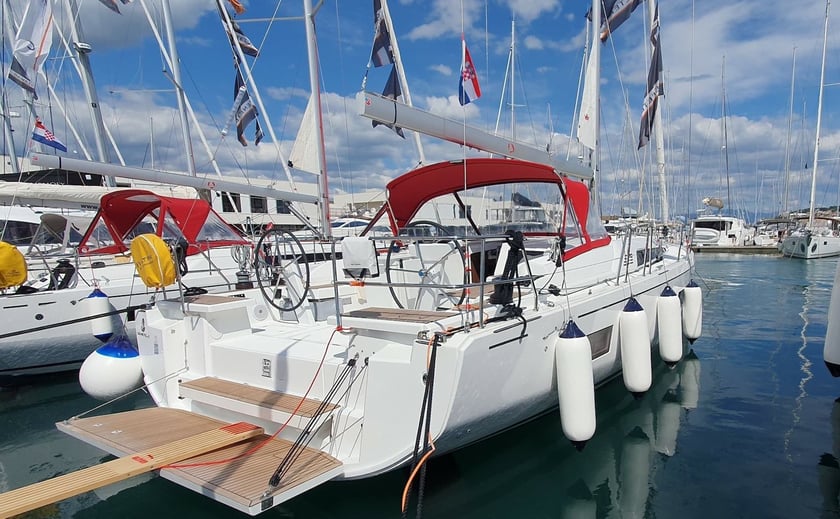
Relevant departure points include ACI Marina Split, Split City Port, Marina Kaštela and Marina Baotić. ACI Marina Split occupies the western city-harbour area and offers convenient access to the historic centre. Other trips marketed for the Split area may begin around Kaštela Bay or near Trogir instead. This distinction matters when arranging flights, accommodation and transfers: confirm the marina name and embarkation time rather than assuming the boat will be in central Split.
Planning the right Split charter
When comparing a yacht charter or boat rental in Split, begin with the intended pace rather than simply the number of islands. Brač and Šolta support shorter passages and more time for swimming or going ashore. Adding Hvar and especially Vis creates a broader circuit but also introduces longer, more exposed legs and a greater need for itinerary flexibility.
Check the exact embarkation point before arranging local transport, and allow extra transfer time during the summer peak. July and August also require more careful berth planning because marinas and town quays are busiest. Whatever the month, routes should remain responsive to current marine forecasts, particularly when bura or jugo is expected. Travelers should discuss priorities with the skipper or charter operator in advance—such as nightlife, historic stops, swimming time or longer sailing days—so the itinerary can reflect both the group’s interests and the conditions.










Verified
Rémy F.26 Aug 2026
Very good. I was the captain and the boat was perfect. Enjoyed it thank you
Listing owner: Vedrana RoškoSplit / Croatia