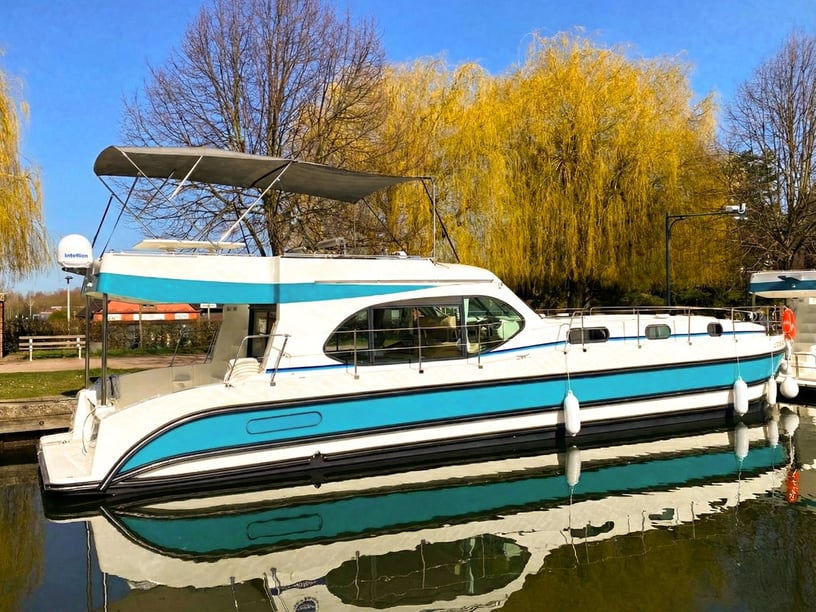
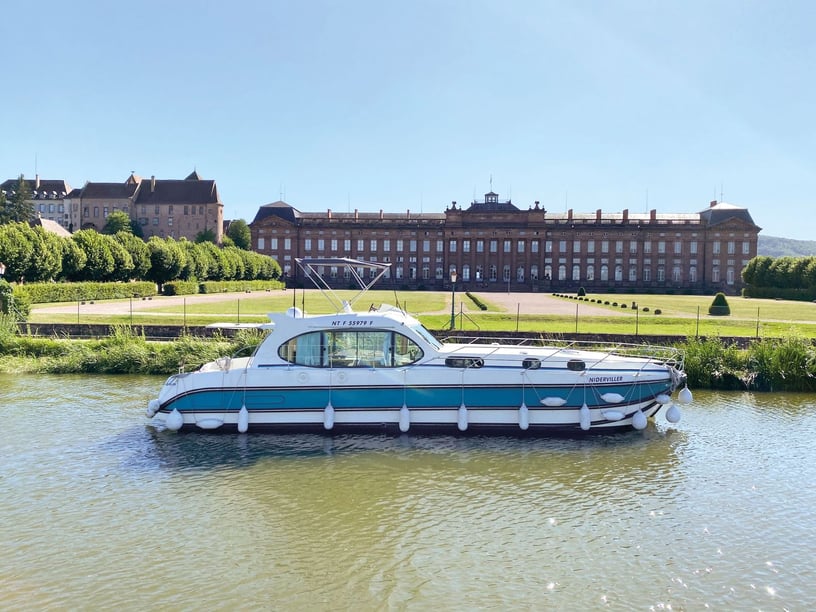
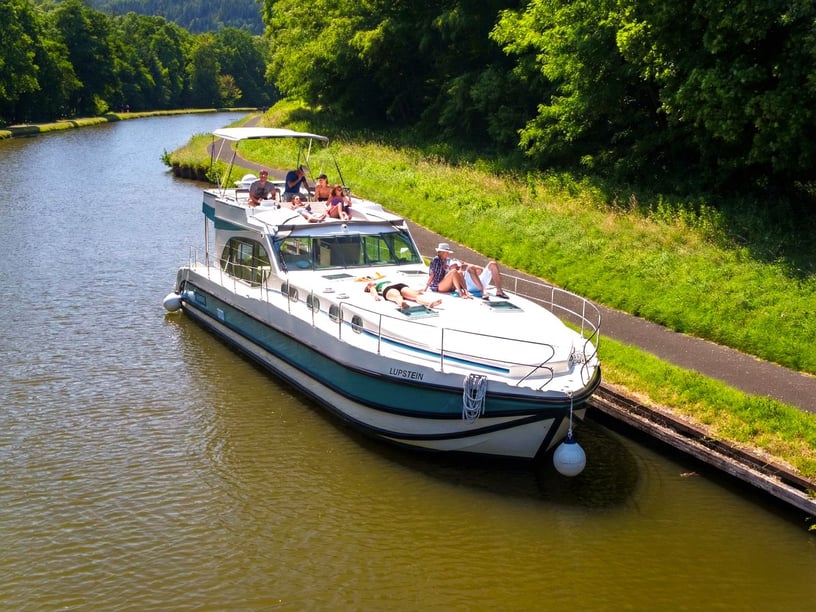
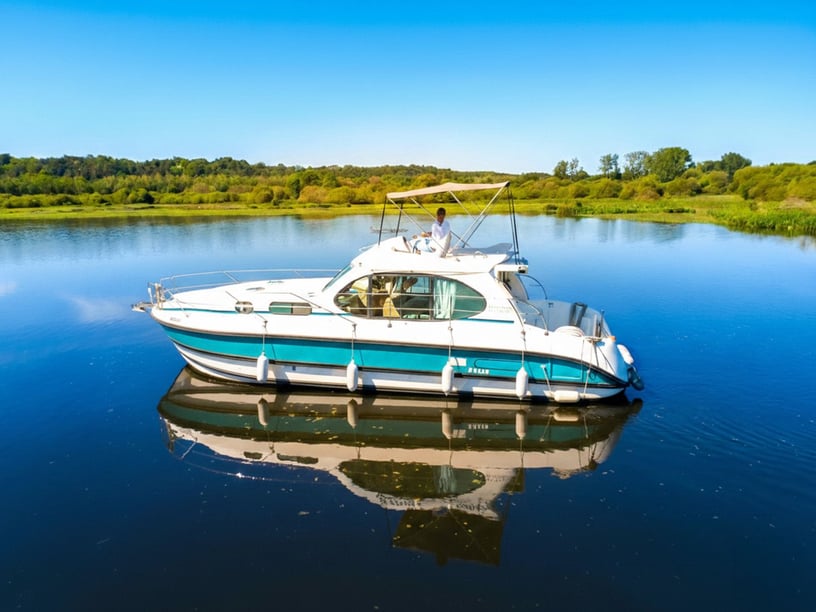
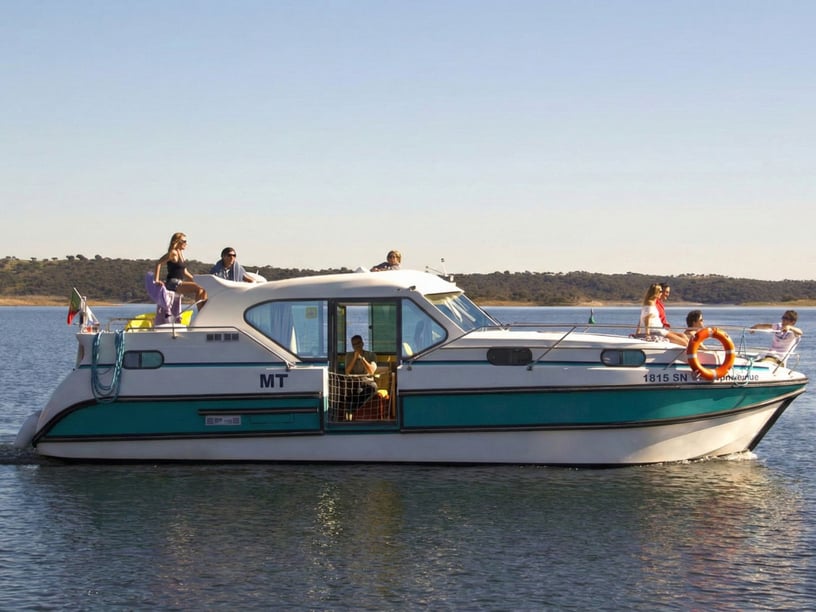
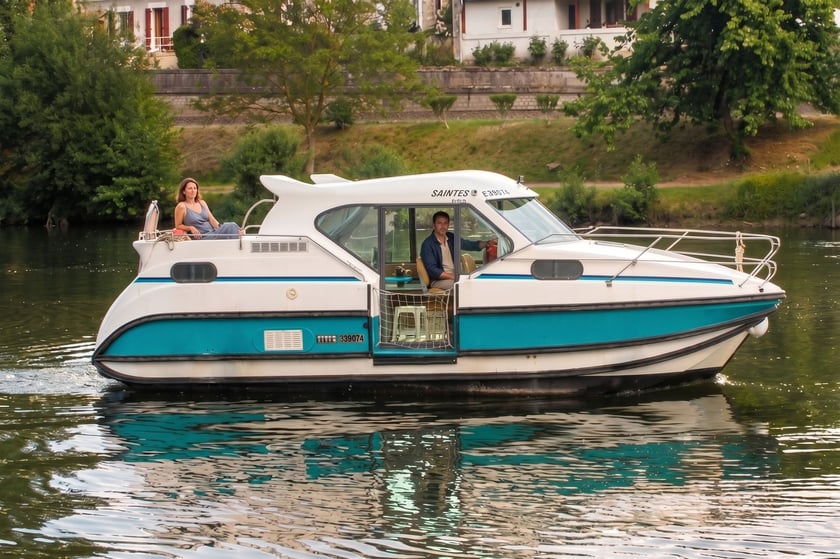
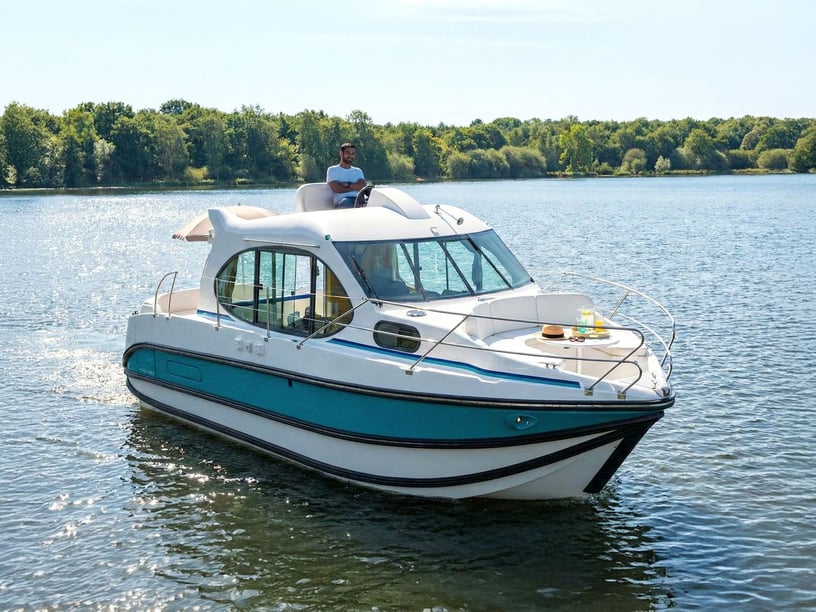
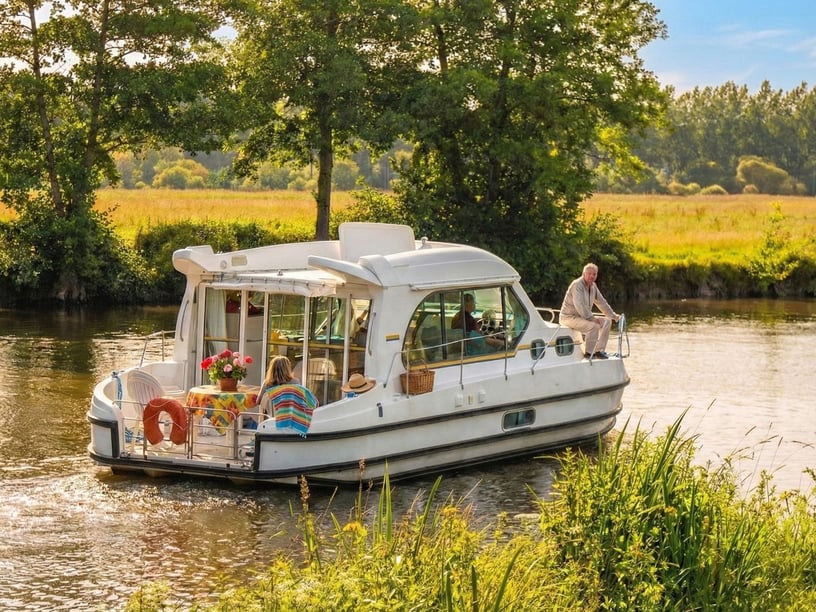
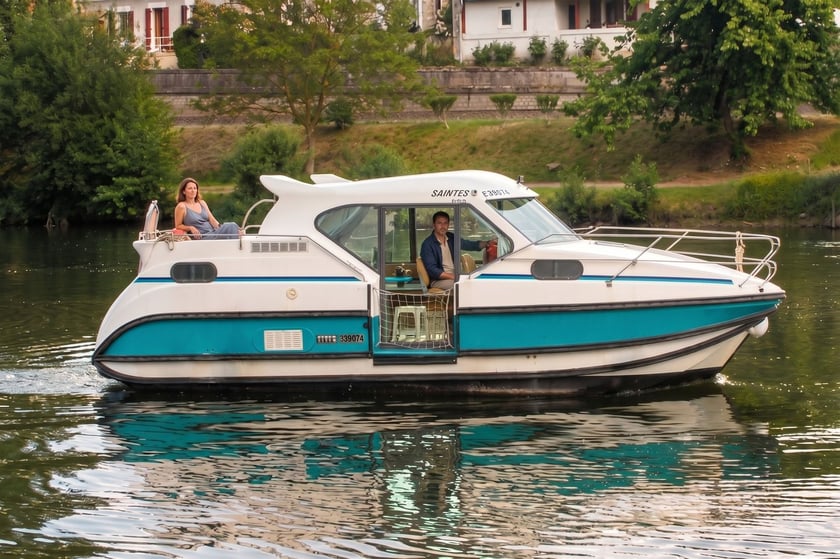
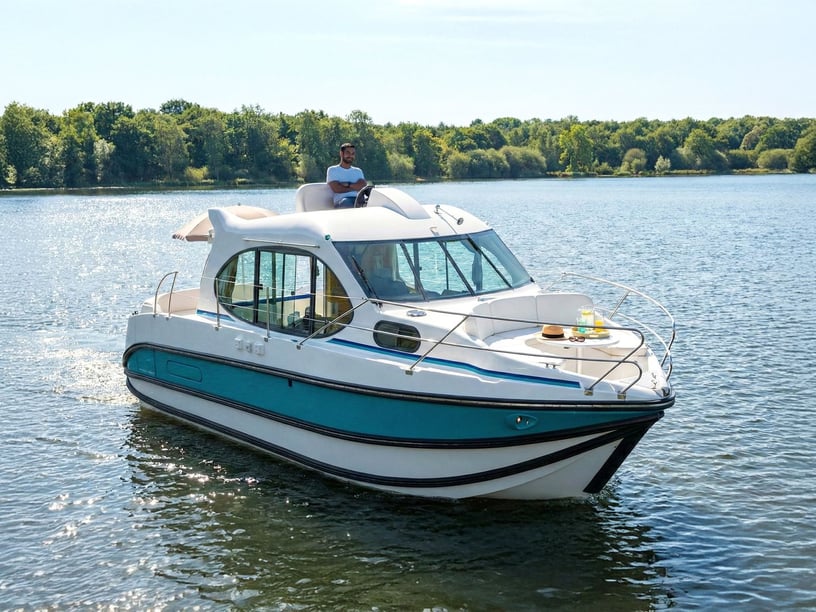
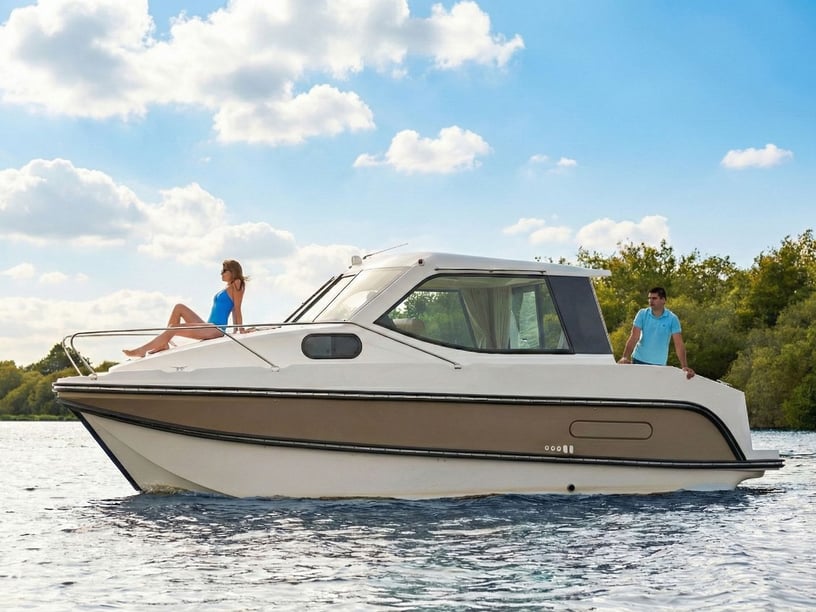
Yacht charter in Bellegarde
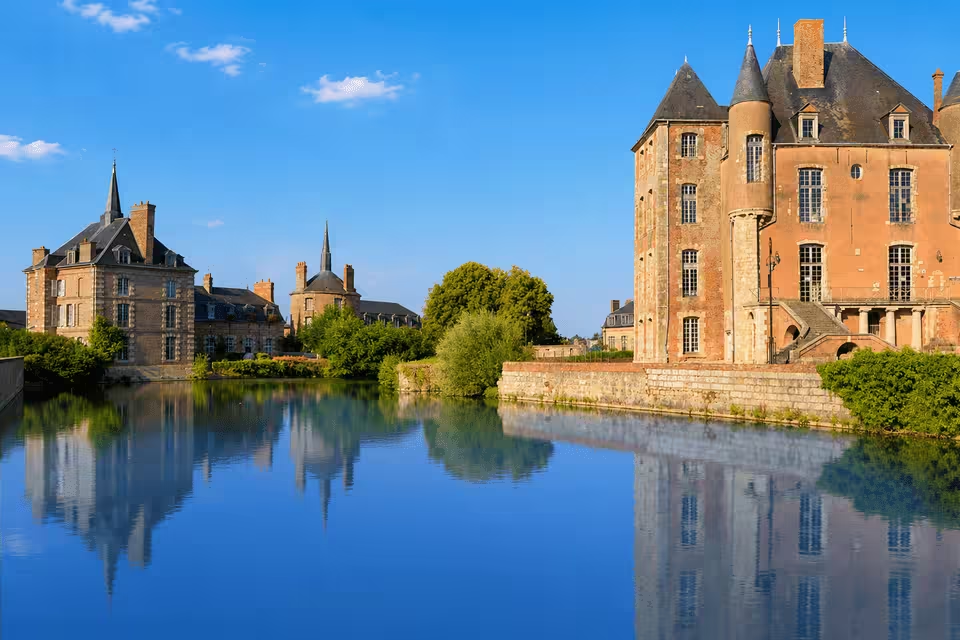
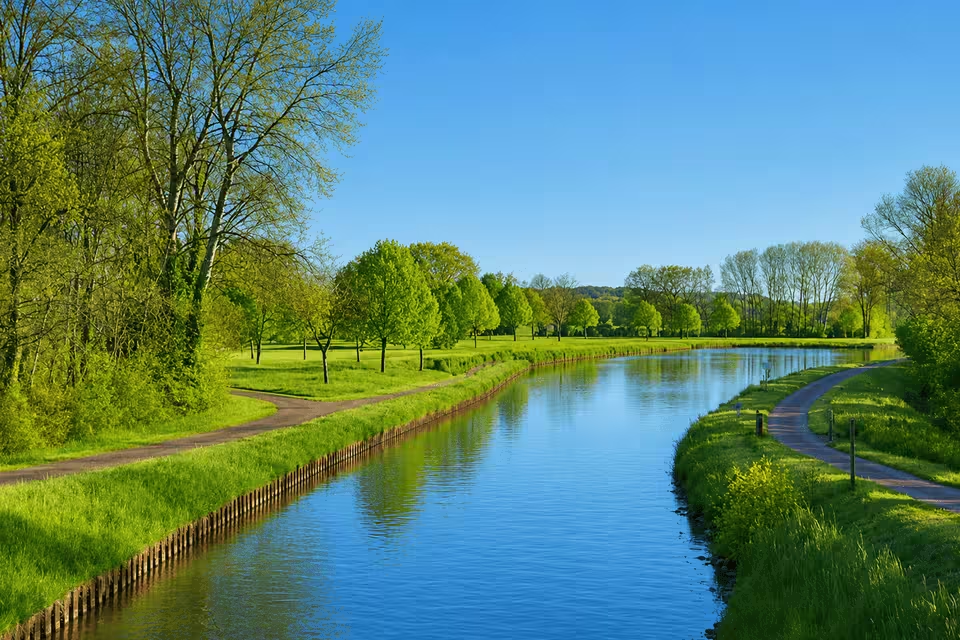
A yacht charter in Bellegarde is primarily an inland-waterway experience rather than a conventional coastal sailing holiday. The locality stands beside the Canal du Rhône à Sète in the Gard department, where the stony Costières plateau descends toward the low plains and wetlands of the Petite Camargue. Its freshwater marina lies south of the town, surrounded by flat agricultural land.
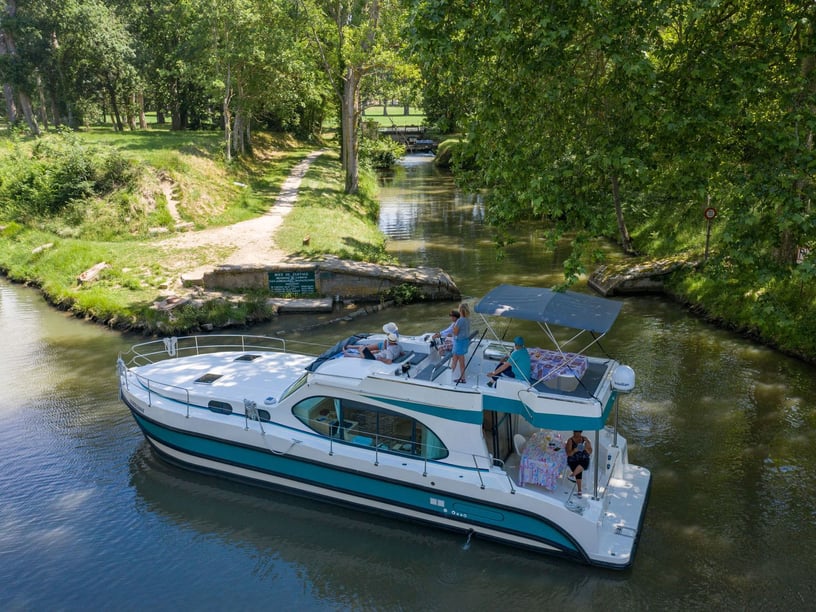
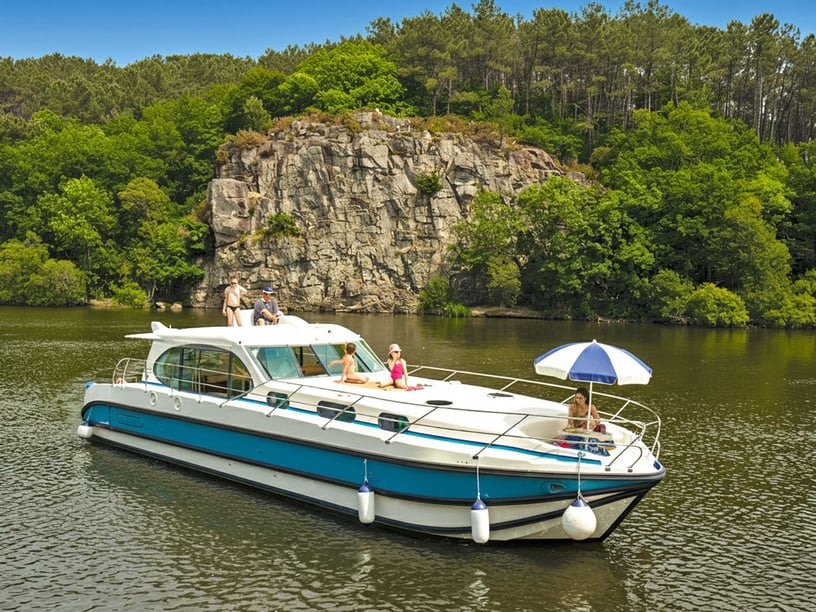
From here, cruising generally means an unhurried journey by houseboat, motor cruiser or barge. Westbound waterways connect Bellegarde with Saint-Gilles, Gallician, Aigues-Mortes and, on longer trips, Sète and the Étang de Thau. The setting suits travelers interested in sheltered navigation, compact historic towns and landscapes shaped by vineyards, canals and wetlands. Conventional sailing conditions only become relevant if the journey continues onto the more exposed lagoon or Mediterranean waters.
Places to explore along the canal
The western route leads first toward Saint-Gilles, an important point on the Canal du Rhône à Sète and a natural stop on short canal itineraries. Farther west, Gallician places crews within the wetland landscape of the Camargue corridor, before the canal reaches the fortified town of Aigues-Mortes. These places work well together because the journey between them is part of the experience: slow cruising through open, low-lying country rather than a rapid passage between ports.
To the east, Beaucaire can be visited on an out-and-back cruise. The branch ends there because the former canal connection to the Rhône is closed, so crews must retrace their route to Bellegarde.
Travelers with more time can continue beyond Aigues-Mortes toward Frontignan and Sète. This brings a gradual change from protected canal navigation to the lagoon environment around the Étang de Thau, where weather and wind deserve closer attention.
What cruising around Bellegarde is like
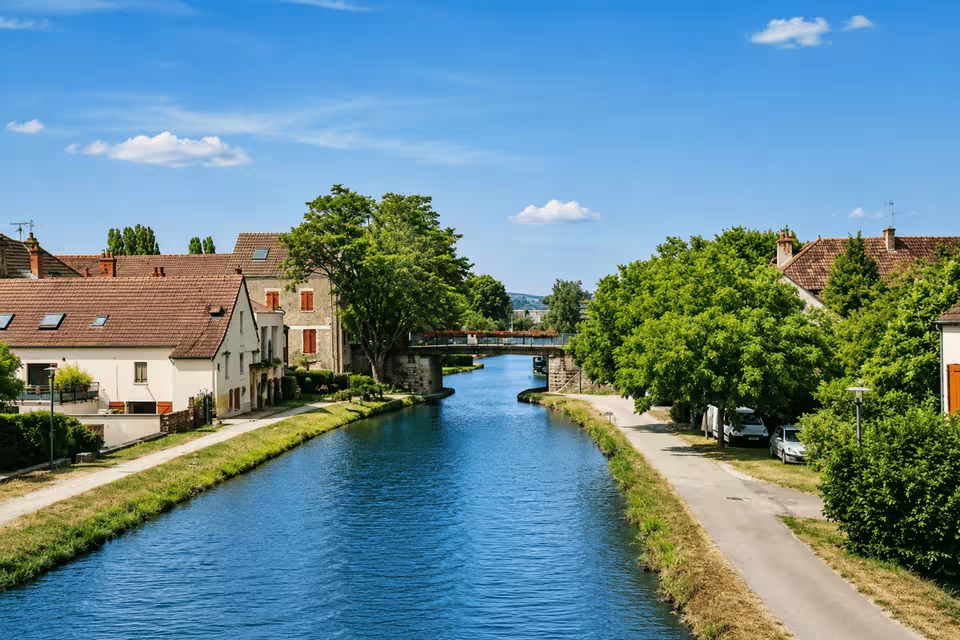
The immediate cruising area is freshwater, mostly linear and protected from sea swell. Speeds are low, and the main rhythm comes from steering along open canal reaches, passing other vessels and stopping at small ports or waterside towns. This makes the local waterway comparatively approachable, including for travelers whose priority is relaxed cruising rather than technical sailing.
Shelter does not remove every challenge. Strong mistral winds can affect exposed stretches of canal, making low-speed maneuvering and mooring more demanding. Commercial vessels also use parts of the Canal du Rhône à Sète, so recreational crews need to keep a proper lookout, leave adequate passing room and respect navigation priorities.
Conditions change materially near the Étang de Thau. The lagoon is more exposed than the canal and requires a separate assessment of wind and weather. Crews extending a Bellegarde itinerary that far should therefore distinguish between easy canal handling and the greater awareness needed on open lagoon waters.
The best time for a Bellegarde charter
Recreational cruising is generally most comfortable from spring through early autumn. May, June and September are particularly suitable, combining warm conditions with less likelihood of the extreme heat associated with midsummer. They are strong choices for travelers who expect to spend time both on the water and exploring ashore.
July and August are dry and sunny but can be very hot, so daily schedules may need to allow for the warmest part of the day. March, April and October sit around the shoulders of the main season; autumn in particular can bring heavy Mediterranean rain. Winter navigation may still be possible, but cooler weather, shorter daylight hours and reduced normal hire activity make it less convenient. Strong-wind episodes can occur beyond these broad seasonal patterns, so forecasts remain important throughout the cruising season.
Cruising routes from Bellegarde
For a short trip, the Bellegarde–Beaucaire branch offers a simple out-and-back route. It is useful for travelers seeking a compact canal journey, although the closed connection to the Rhône means it cannot form part of a through itinerary.
A more varied short-break route runs west through Saint-Gilles and Gallician to Aigues-Mortes. This established round trip follows the Camargue canal corridor and can commonly be completed without passing a lock, helping maintain an easy cruising rhythm.
A longer itinerary continues from Aigues-Mortes through Frontignan to Sète and the Étang de Thau. It adds lagoon scenery and a broader range of waters, but it also requires more planning. Movable-bridge procedures, current navigation notices and suitable conditions for crossing the Étang de Thau should all be checked before committing to the extended route.
Life on the water and ashore
A Bellegarde cruise combines time at the helm with wildlife watching in the Camargue wetlands and visits to settlements with long connections to waterborne trade. Bellegarde’s port once handled wine barrels, passengers and mail before being redeveloped for recreational boating, while the wider locality preserves Roman waterworks, historic fountains and the remains of a medieval fortified site.
Food and agriculture add another dimension ashore. Clairette de Bellegarde is a protected still white wine produced within the commune, and the restored local oil mill reflects the area’s olive-growing traditions. The traffic-free greenway beside the canal between Bellegarde and Beaucaire also provides an alternative way to experience the waterway when moored. Together, these elements make the area well suited to travelers interested in history, gastronomy, family-paced cruising and rural landscapes rather than resort nightlife.
Reaching the marina and starting a trip
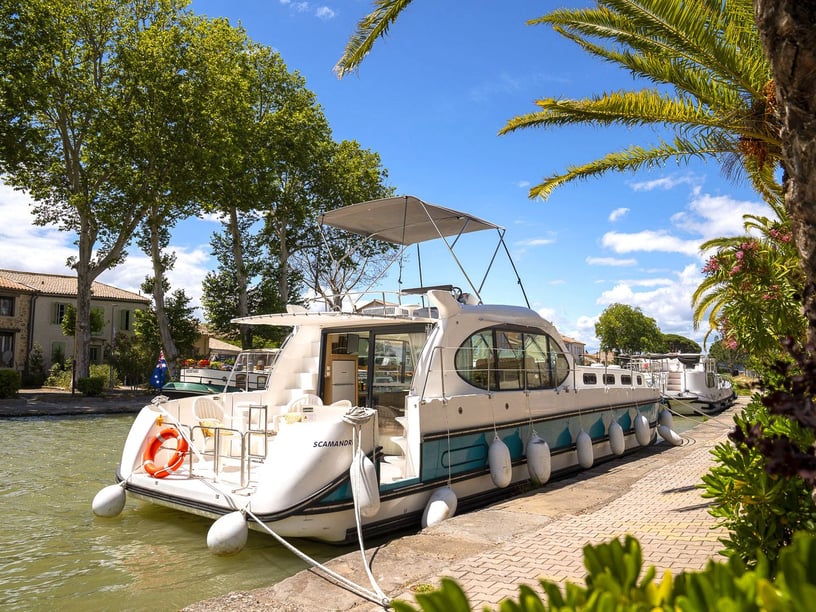
Port de plaisance de Bellegarde is the locality’s principal departure point. It is a quiet freshwater marina about one kilometre from the central built-up area, so transfers and provisioning should be considered before departure. Bellegarde can function as both a canal stop and a starting point for itineraries toward Beaucaire or the Camargue waterways, though it is small in scale rather than a major coastal charter hub.
The locality is accessible by road from Nîmes, Arles, Beaucaire and Saint-Gilles, including via local roads from the A54 corridor. Regional bus line 130 connects Bellegarde with Nîmes and Arles. The principal rail options are at Nîmes, Nîmes-Pont-du-Gard and Arles, while Nîmes Grande Provence Méditerranée Airport and Montpellier Méditerranée Airport are the relevant airports for the area.
Planning your canal charter
For travelers considering boat rental in Bellegarde, the first decision is whether the trip will remain on the protected canal or extend to the Étang de Thau. A canal-focused itinerary favors slow cruising and straightforward passage patterns; a longer route toward Sète introduces more exposed water and requires closer weather assessment.
Many locally hired houseboats may be operated without a recreational boat licence after an operator briefing, but this depends on the individual vessel and rental company. Crews should also consult current VNF notices for maintenance closures and operating arrangements affecting locks or movable bridges. Commercial traffic, mistral conditions and the dead-end Beaucaire branch should be factored into route planning.
Because the marina is outside the town center, arrange food supplies and port transfers in advance. Travelers comparing this inland experience with other boating regions can also explore yacht charter destinations across France, where cruising environments range from canals and rivers to open coastal waters.