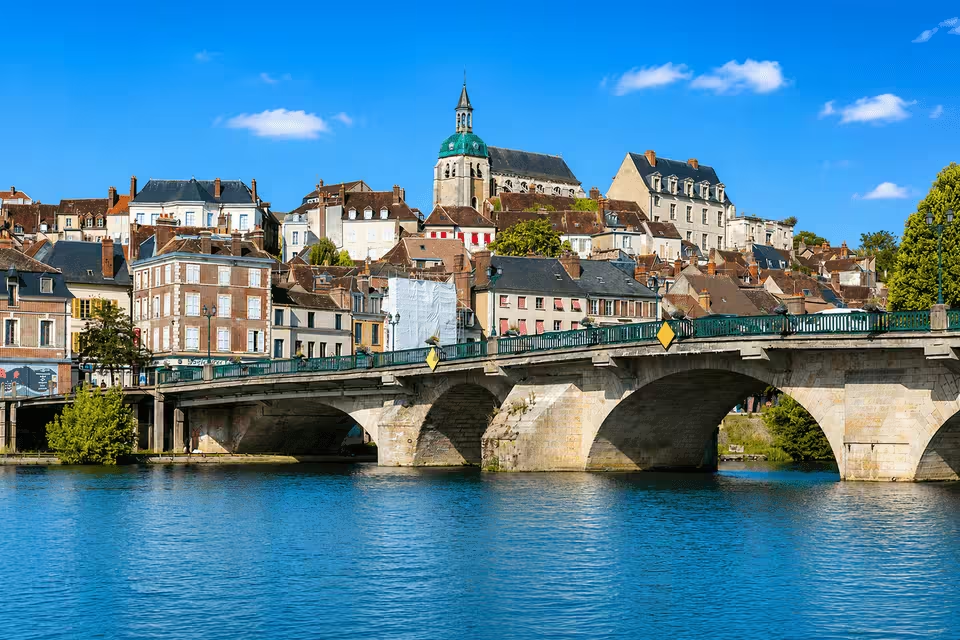
Yacht charter in Dompierre-sur-Besbre
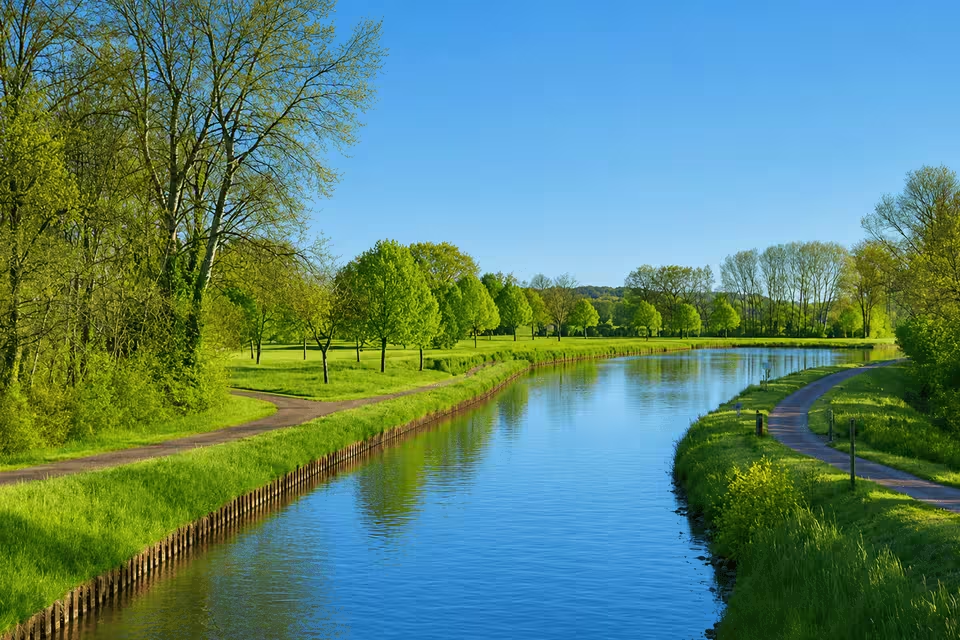
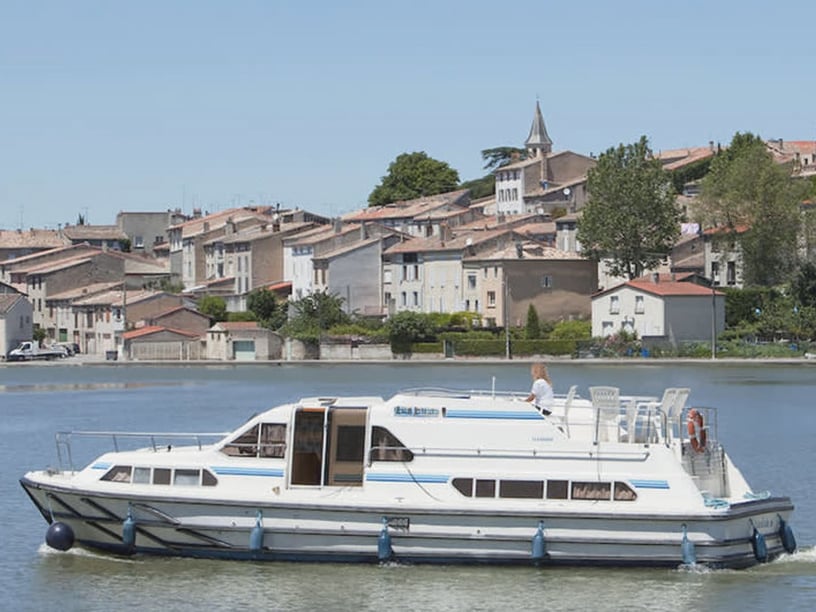
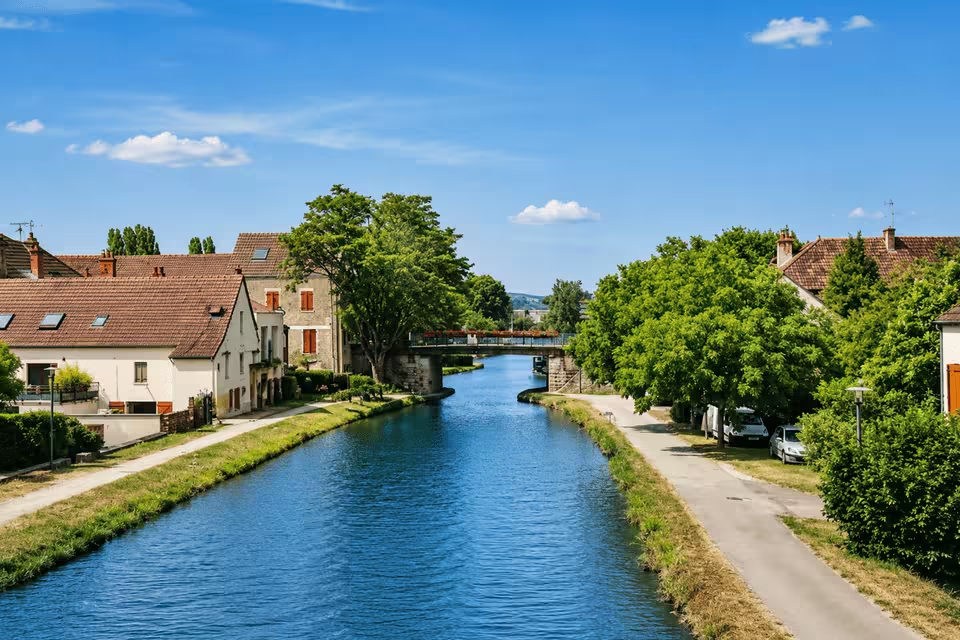
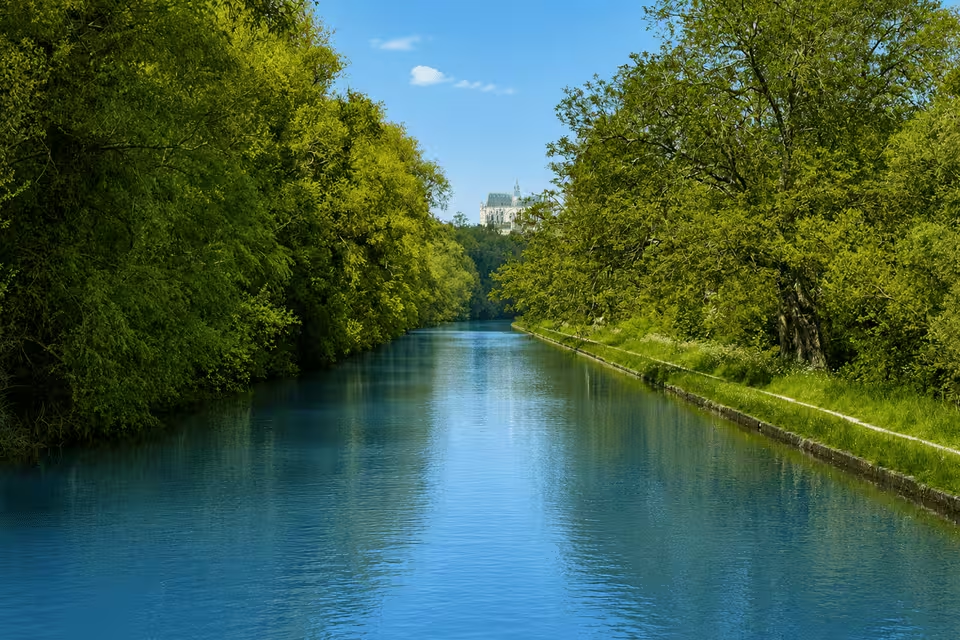
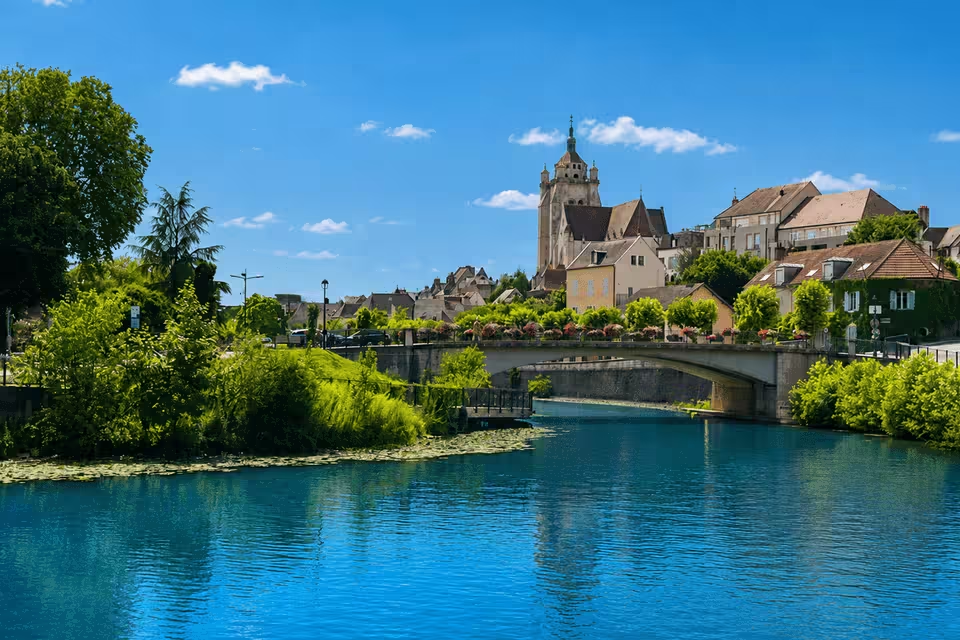
A yacht charter in Dompierre-sur-Besbre is an inland-waterway experience based around slow-moving motorboats and houseboats rather than sailing yachts. The town lies beside the River Besbre in the rural Bourbonnais area of central France. Its port sits at the end of a short feeder channel connected to the Canal latéral à la Loire.
Approximately 2.7 kilometres of this 4.3-kilometre branch are navigable. Because the approach to the town is lock-free, it offers a gentle introduction before a crew joins the locks and longer rural sections of the main canal network. The destination suits travelers who prefer unhurried cruising, compact town stops and opportunities to walk or cycle beside the water. It is a distinct alternative to the coastal experiences found elsewhere when considering yacht charter in France.
Places to explore from the canal
The Port de plaisance de Dompierre-sur-Besbre provides access to the town and nearby riverside green spaces, including the Roseraie and Percières parks. From the feeder channel, boats can join the Canal latéral à la Loire and cruise through a landscape of farmland, small settlements and historic waterway structures.
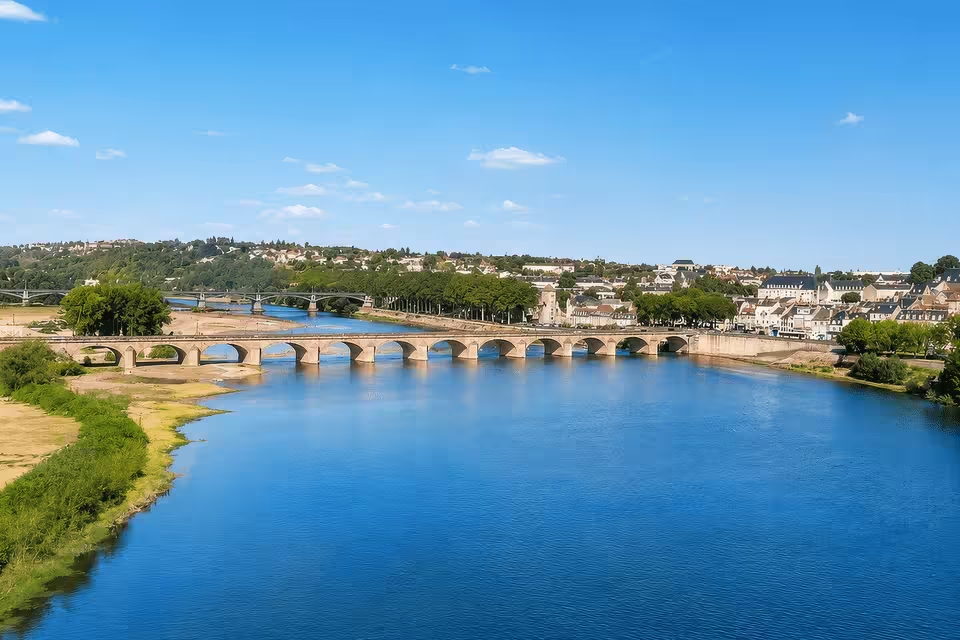
Diou and Pierrefitte-sur-Loire are relevant stops along the canal corridor toward Digoin. The towpath greenway follows the same direction, allowing cycling or walking to complement time aboard. Digoin is an important junction for longer trips because it leads toward the Canal du Centre and the Canal de Roanne à Digoin. In the opposite direction, Decize provides a connection with the Canal du Nivernais. The Pont-canal de la Besbre is another notable part of the local waterway landscape, illustrating how canals, rivers and engineered crossings shape cruising in this region.
What cruising here is like
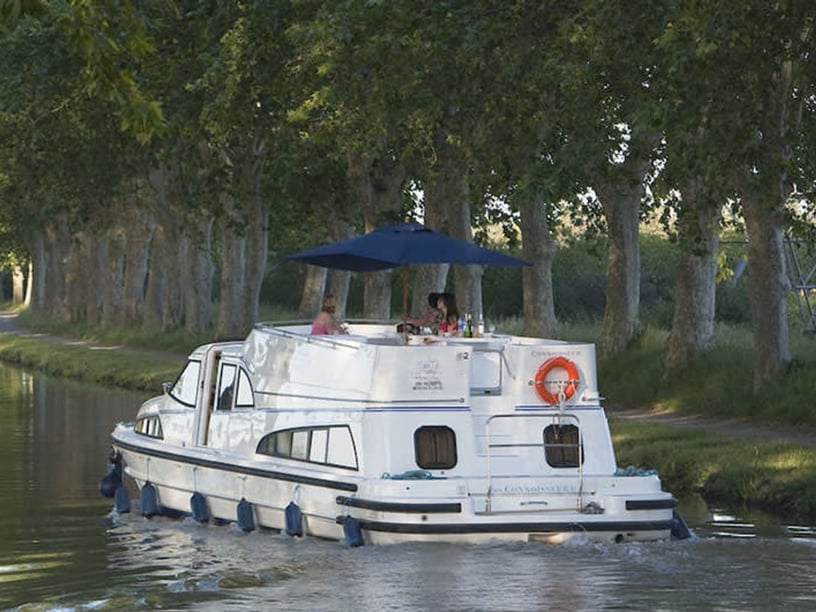
Cruising around Dompierre-sur-Besbre takes place on calm, sheltered inland water. Significant waves and strong exposure are not defining concerns; instead, the crew concentrates on keeping within the channel, approaching bridges carefully and sharing the waterway with other slow-moving craft. The Canal latéral à la Loire has a general speed limit of 8 km/h, so daily progress is intentionally measured.
The lock-free feeder branch makes the immediate approach straightforward. Once on the main canal, locks become part of the routine and should be allowed for when estimating travel time. Aqueducts and longer rural reaches add variety without turning the journey into technically demanding sailing.
The area is generally suitable for first-time inland crews, and self-drive boats are commonly operated after local instruction without previous boating experience. Nevertheless, low water, reduced permitted draft and temporary restrictions can affect navigation during dry periods. Current waterway notices therefore matter more here than forecasts for wind or sea state.
Best time for an inland charter
The principal leisure-boating season runs from late March to late October, broadly following the operating period of the Centre-Bourgogne waterways. June, July, August and September are identified as particularly suitable months for cruising, with longer days and the waterway network in its main period of recreational activity.
May through September forms the busier part of the season. April and October offer shoulder-season possibilities, but travelers should expect greater variation in weather, daylight and waterway services. Winter is colder and cloudier, with substantially less recreational navigation.
Calendar dates alone are not enough when planning a Dompierre-sur-Besbre yacht charter. Lock arrangements, maintenance work and water availability can change during the operating season, especially in dry conditions. Checking current VNF navigation notices shortly before departure is therefore essential, even for a trip booked within the generally favorable summer period.
Connected canal routes
Dompierre-sur-Besbre can form part of either a round trip or a longer one-way journey through central France. One established round-trip option runs toward Digoin, Paray-le-Monial and Roanne, combining the Canal latéral à la Loire with sections of the Canal du Centre and the Canal de Roanne à Digoin. This route suits travelers who want the structure of a return journey while experiencing several interconnected waterways.
A one-way alternative follows the canal toward Decize before continuing to Corbigny through the Loire side of the Canal du Nivernais. It provides a broader journey through the regional network, though one-way logistics and the additional locks require more planning. For either route, distances should be considered in terms of slow cruising speeds and lock time rather than road mileage.
Life aboard and ashore
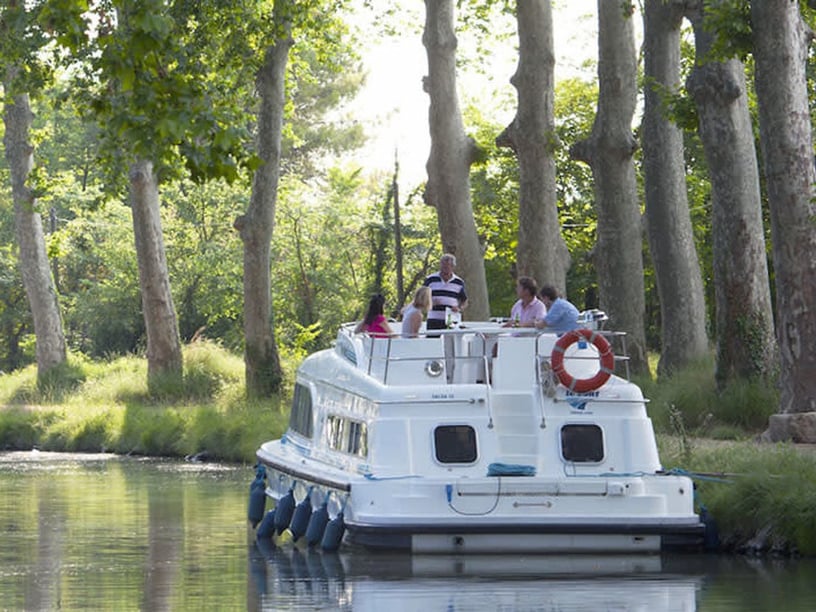
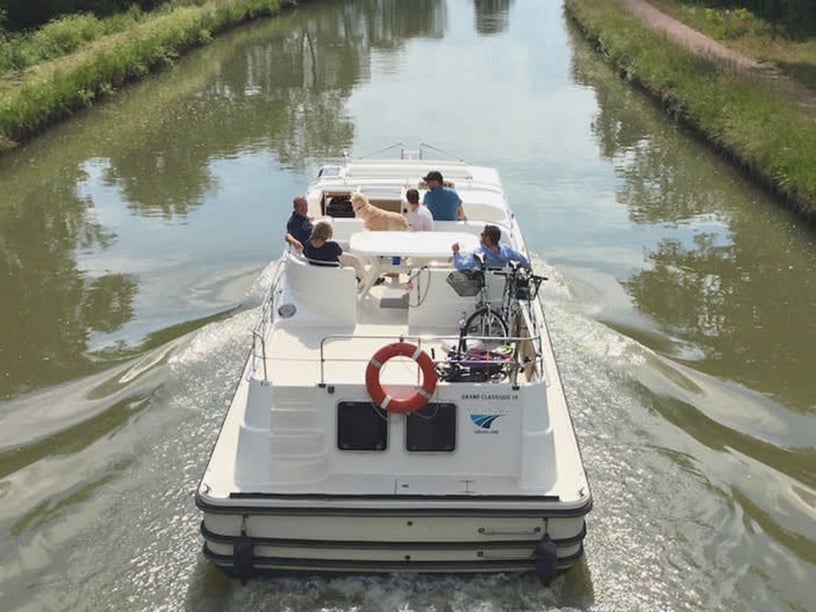
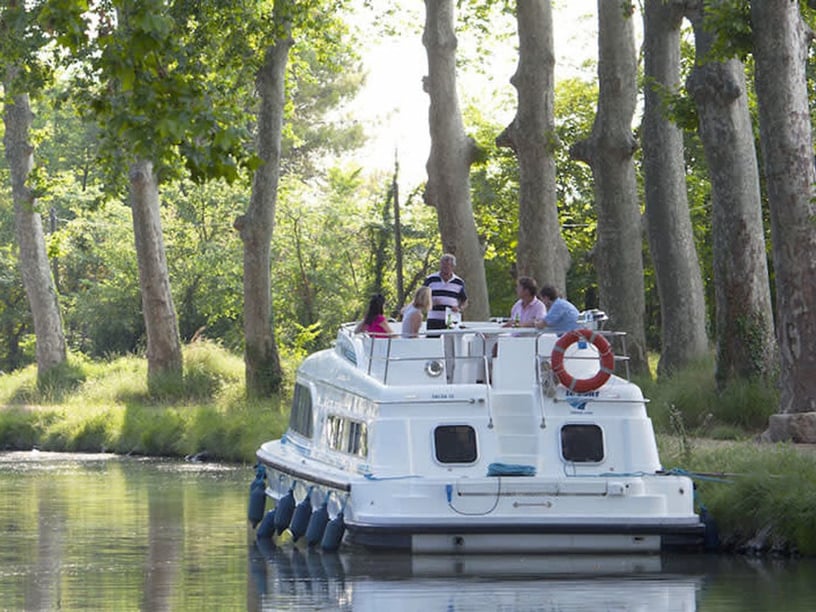
A charter here can alternate short cruising stages with walks, cycling excursions and visits to small canal settlements. The greenway beside the canal is particularly useful for crews carrying bicycles or wanting an easy activity away from the boat. The compact town stop also makes it possible to combine time on the water with the parks beside the Besbre.
The port’s surviving infrastructure adds historical context to the journey. The Besbre feeder was developed in the nineteenth century to help supply the Canal latéral à la Loire, and its navigable section later handled commercial boats. A railway connection enabled freight to be transferred between canal and rail, giving today’s recreational port an industrial-waterway background.
Farther afield, the Abbey of Sept-Fons represents a much older strand of local history. Founded in 1132, this Cistercian monastery connects the cruise with the religious heritage of the Besbre valley. These varied shore options make the area well suited to families and travelers interested in landscape and history rather than nightlife or open-water sailing.
Access, port and departure planning
Port de plaisance de Dompierre-sur-Besbre is the town’s relevant harbor and the endpoint of the navigable feeder branch. It can serve as a place to begin or pause a canal journey, but travelers should confirm the precise boat handover location rather than assume that every charter in the surrounding network starts at the town port. Nearby bases elsewhere on the connected canals may also shape the practical itinerary.
By road, Dompierre-sur-Besbre is reached via the A79 and RD779 corridor between Moulins and Digoin. Dompierre-Sept-Fons station has regional rail connections, with onward links through places including Moulins, Digoin, Paray-le-Monial and Lyon. Clermont-Ferrand Auvergne Airport and Lyon–Saint Exupéry Airport are the relevant airports for travelers approaching from farther away, although onward ground transport is required. The canal-side greenway also supports local movement by bicycle toward Diou, Pierrefitte-sur-Loire and Digoin.
Planning the right charter
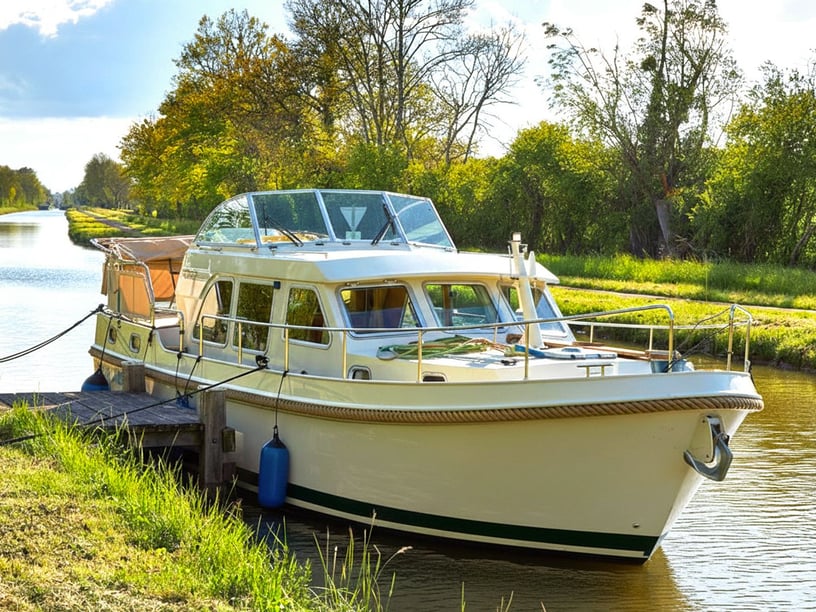
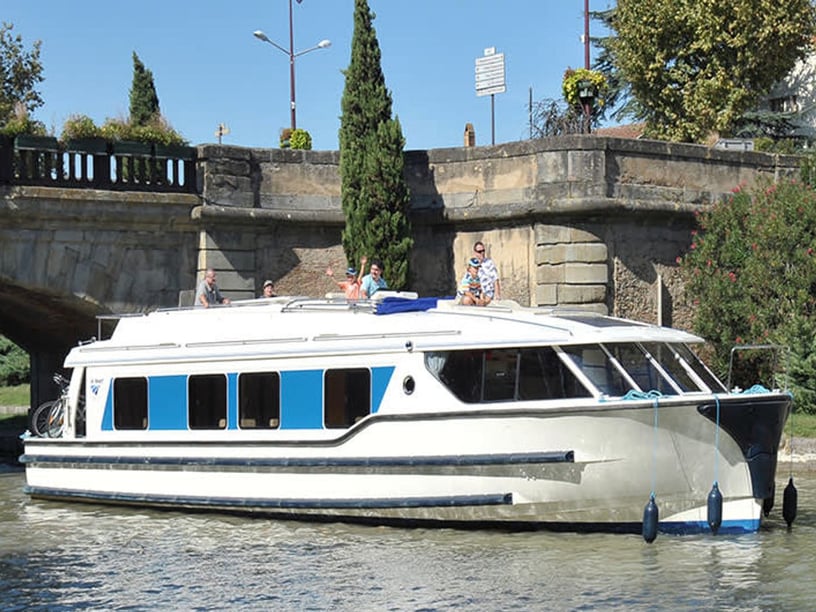
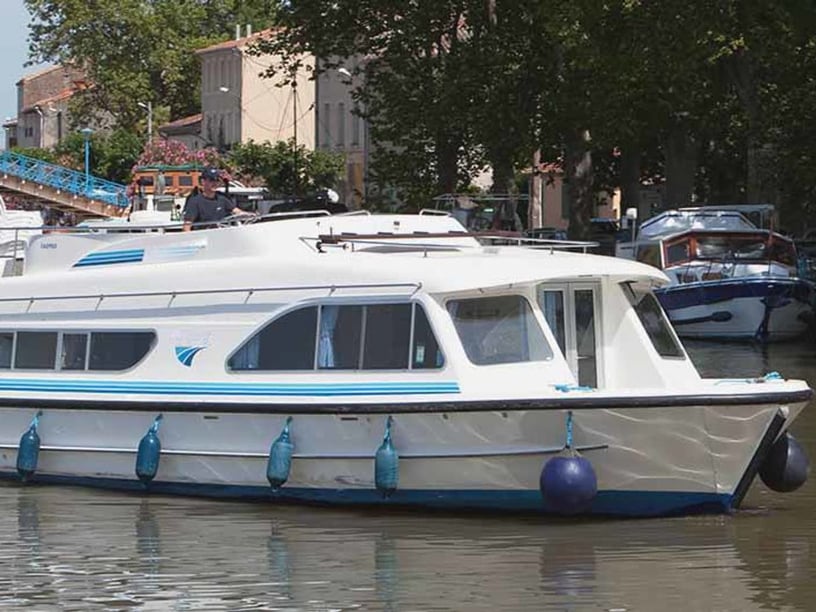
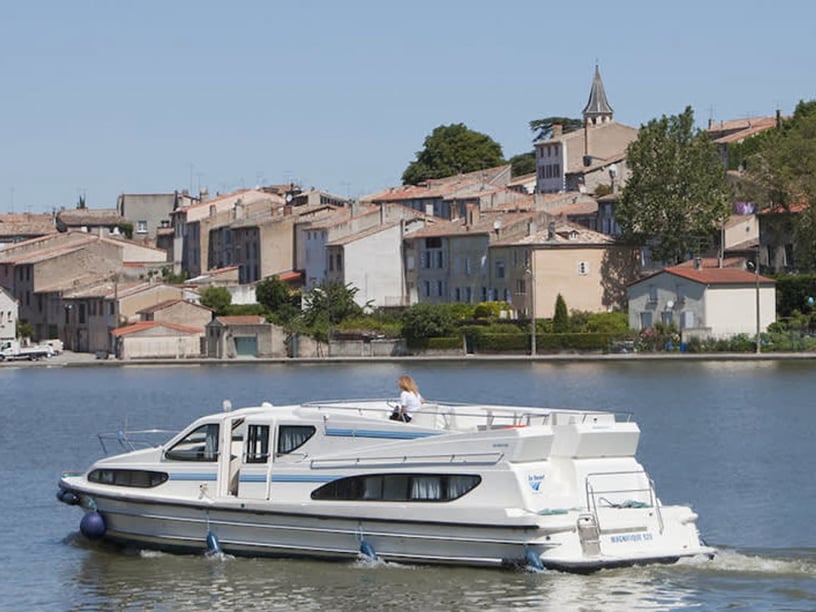
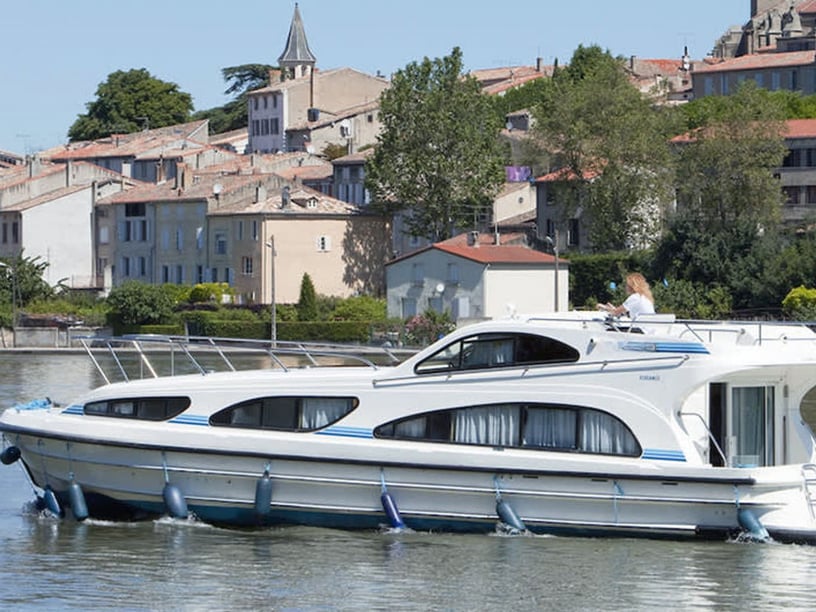
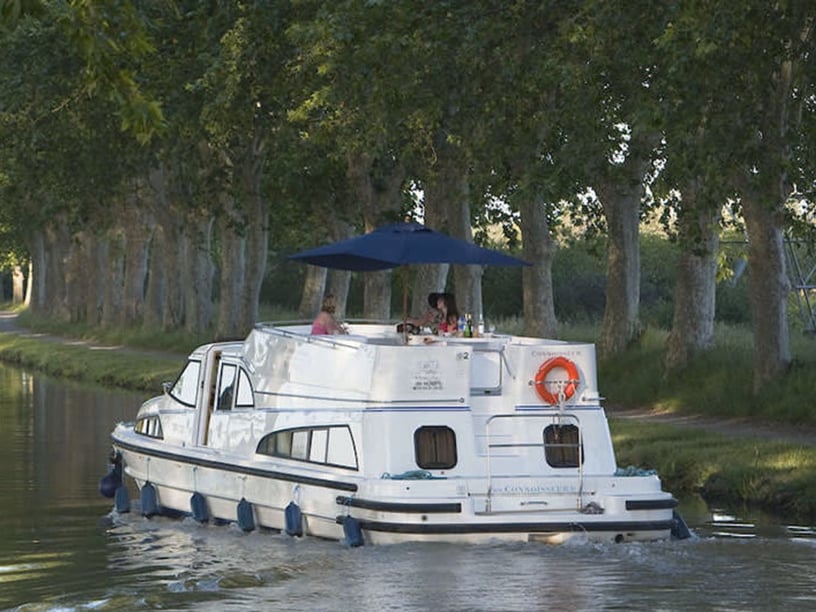
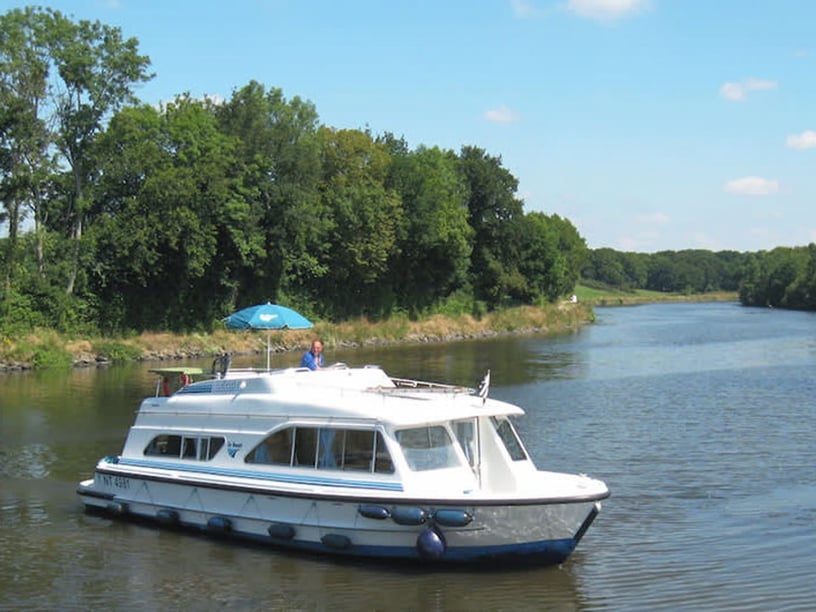
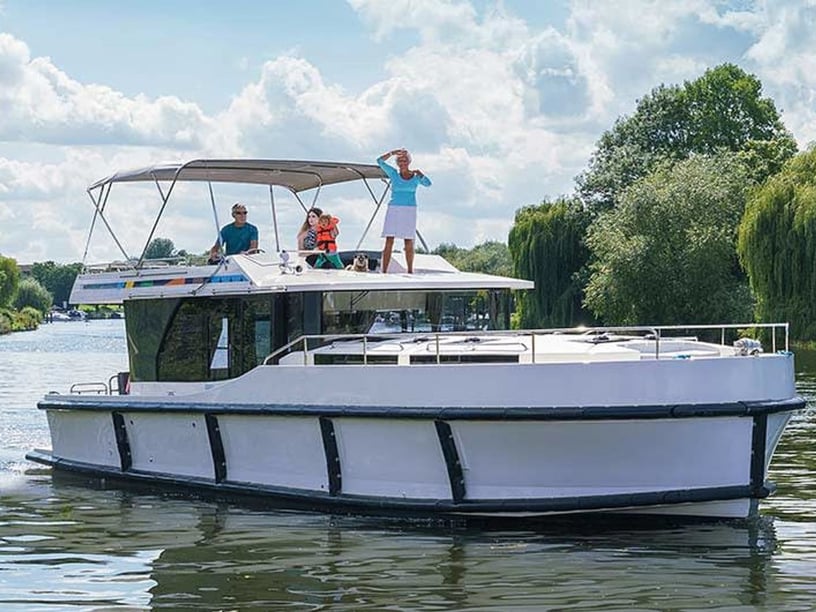
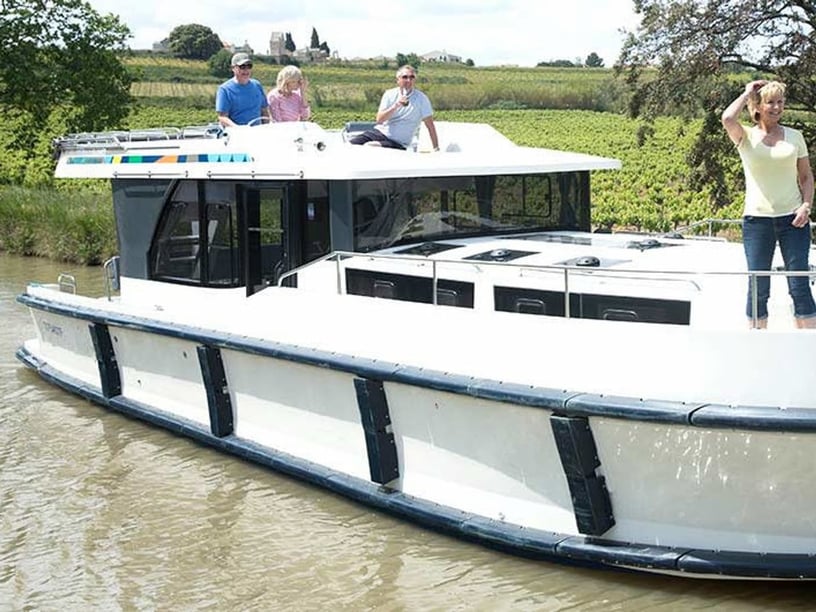
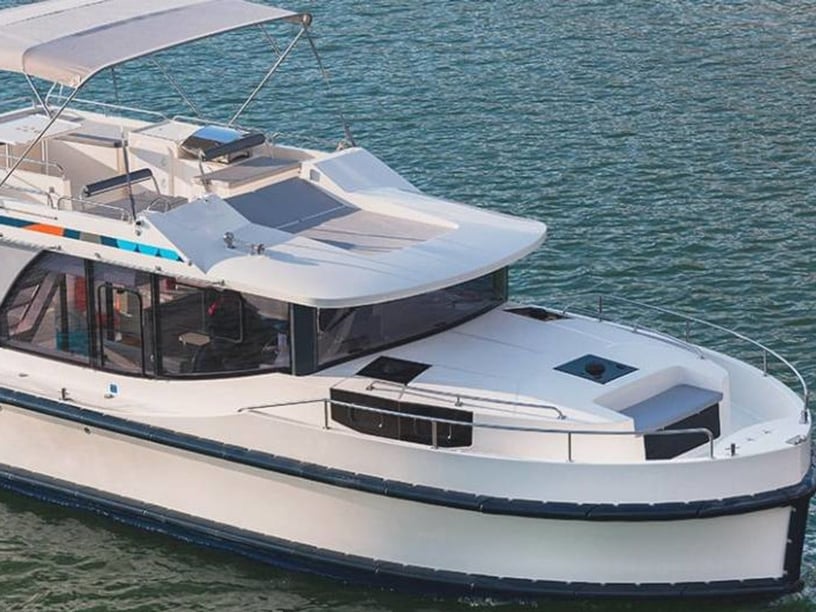
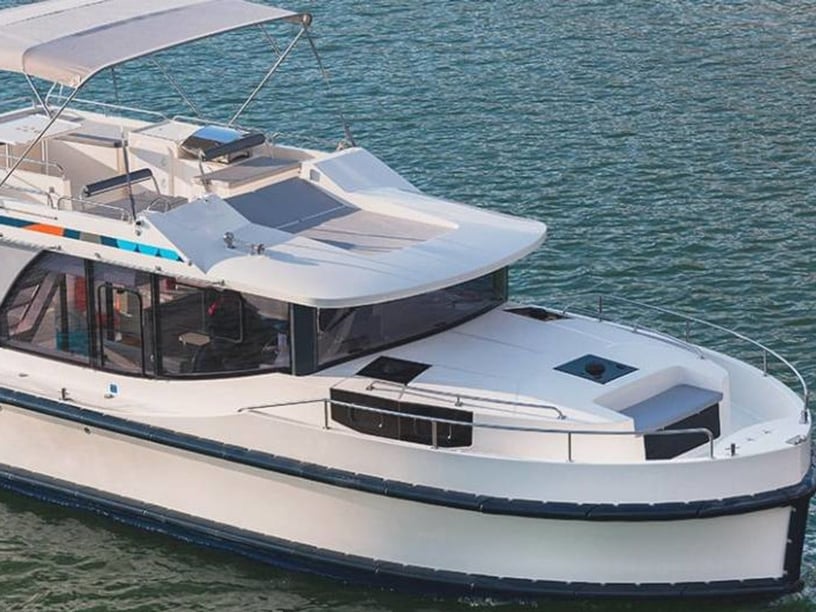
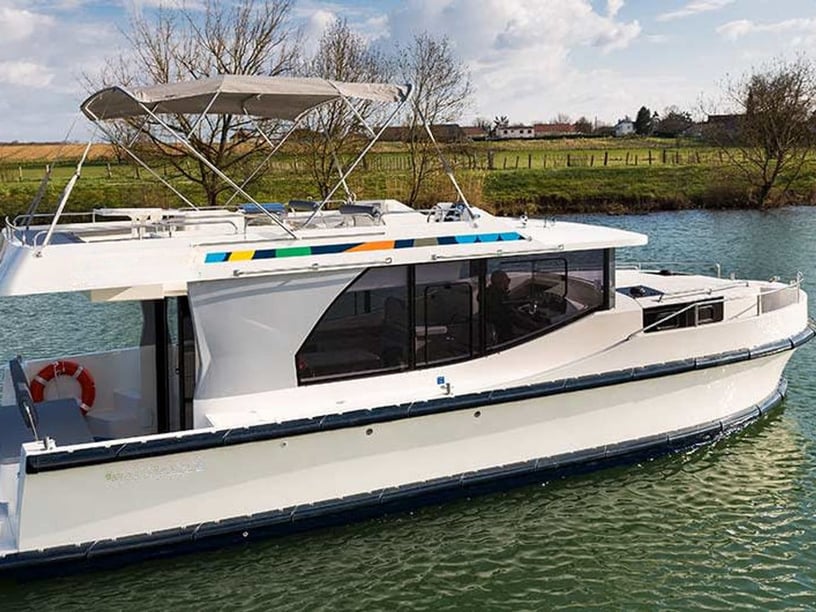
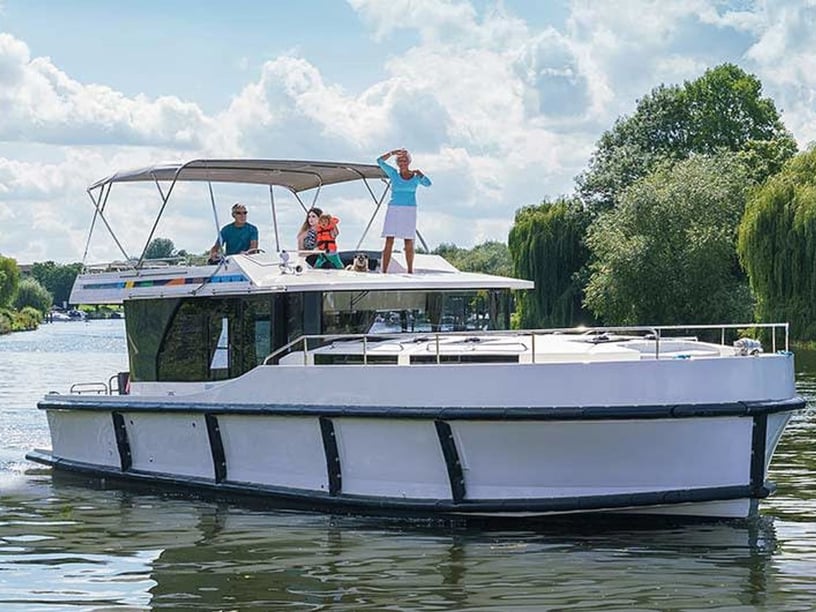
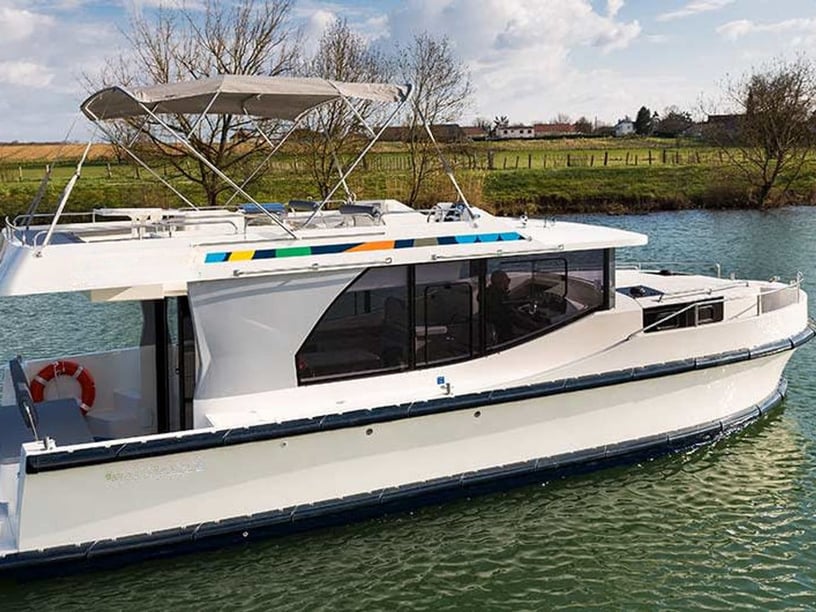
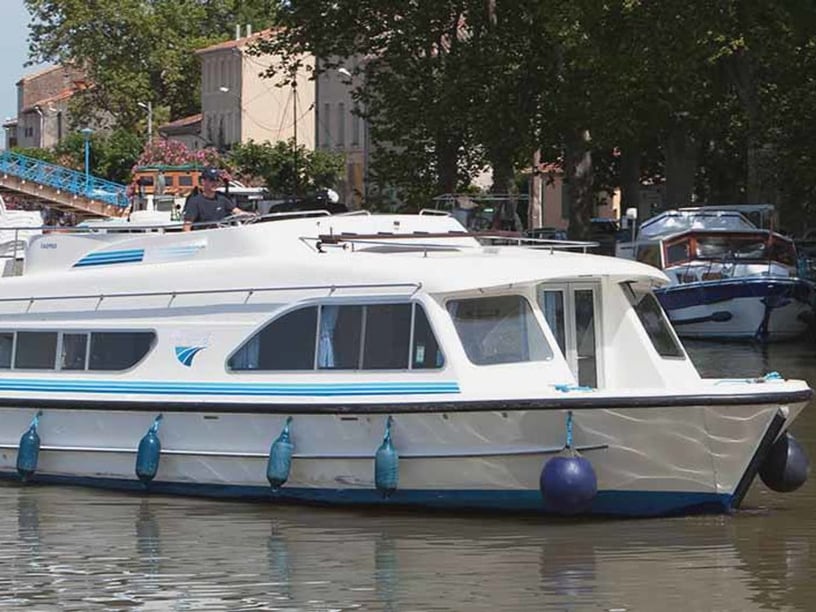
In practical terms, boat rental in Dompierre-sur-Besbre means choosing an inland motorboat or houseboat suited to canals, locks and low-speed travel. Travelers looking for conventional sailing, exposed passages or coastal anchorages should consider that this destination offers a fundamentally different experience. Its appeal lies in manageable navigation, connected waterways and the ability to step ashore regularly.
Before confirming a route, check current VNF notices for navigation dates, lock procedures, maintenance work, permitted draft and water restrictions. Allow generous time once the boat leaves the lock-free Dompierre branch, as locks can significantly affect daily progress. A relaxed itinerary is preferable to one that depends on covering long distances each day.
Provisioning should also be planned before entering longer rural sections, where shops and services are less concentrated. Crews without previous experience should pay close attention during the local handover briefing and divide responsibility for steering, ropes and lock approaches. For one-way itineraries, arrange return transport in advance; for round trips, leave enough time to reach the handover point without rushing the final stages.