Yacht charter across the Greek Islands
A Greek Islands yacht charter is best understood as a choice between several distinct cruising grounds, not as a single route through one uniform destination. The region stretches from the sheltered Ionian Sea west of mainland Greece to the wind-exposed Cyclades, the green Sporades and the long island chains of the Dodecanese and North Aegean.
Exploring by yacht makes it possible to combine swimming and anchoring with time in fishing ports, historic harbor towns and waterfront tavernas. Some areas lend themselves to short passages between neighboring islands; others involve longer legs across open water. This variety allows travelers to shape a trip around relaxed coastal cruising, active sailing, beaches, history or a mixture of time afloat and ashore.
Because the archipelagos are widely separated, the most rewarding approach is usually to choose one cruising region and explore it in depth. Trying to connect distant island groups within a standard one-week itinerary can leave too much time for long passages and too little for the places along the way.
Choosing the right Greek island cruising area
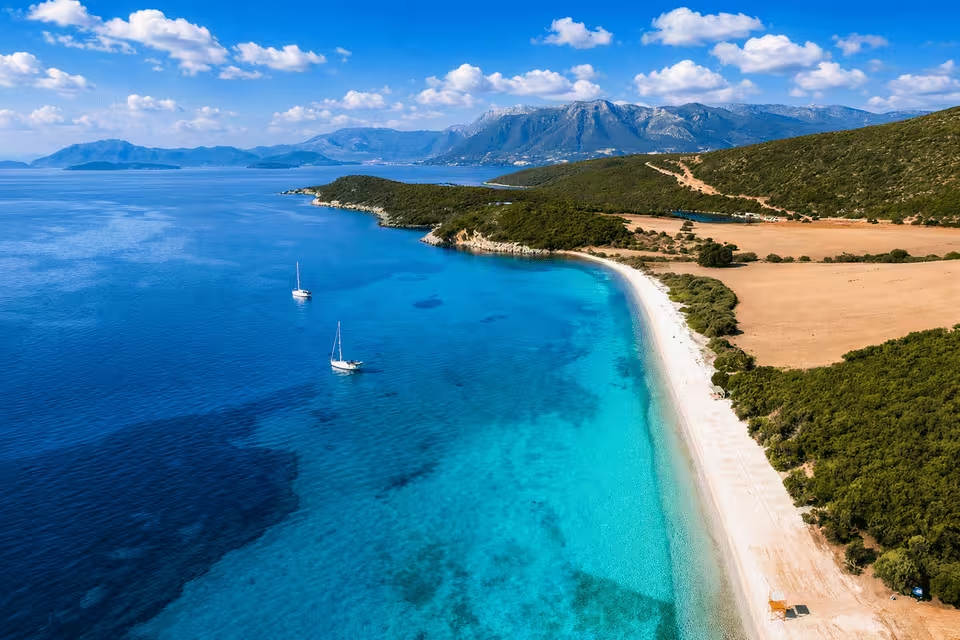
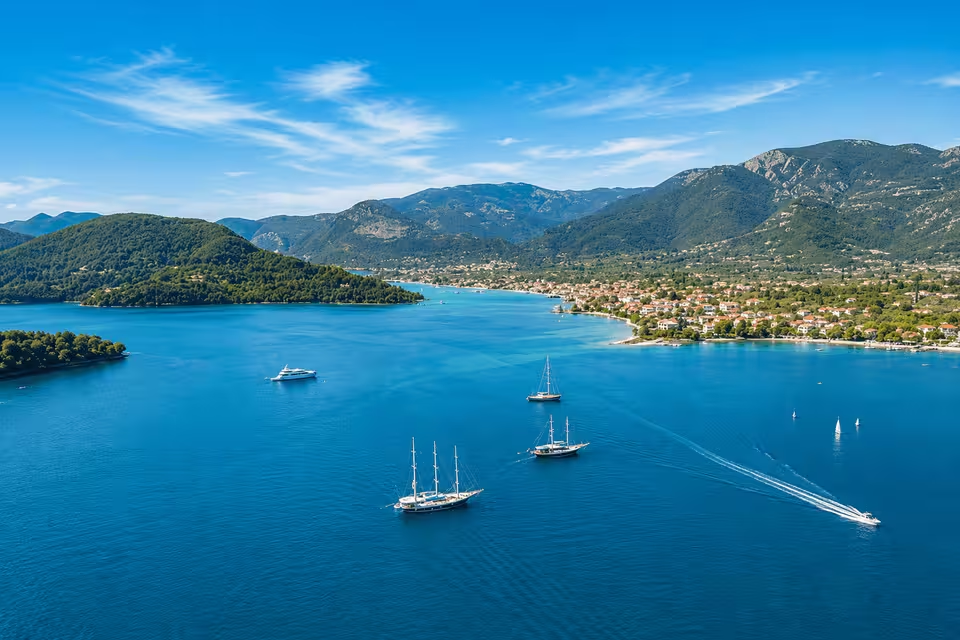
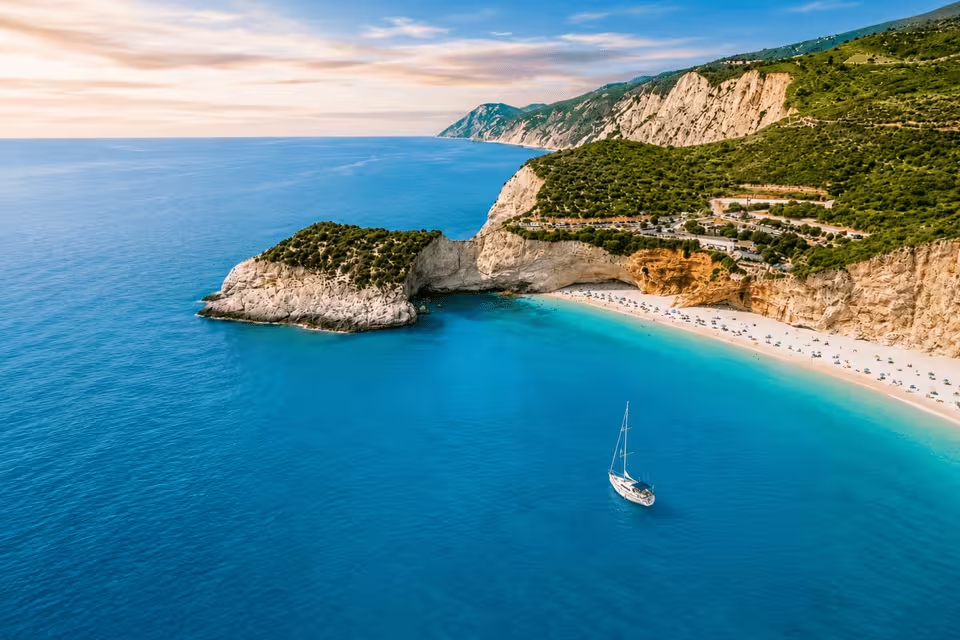
The Ionian Islands suit travelers looking for greener shores, comparatively sheltered waters and manageable distances. A central Ionian itinerary from Lefkada can link Meganisi, Ithaca, Kefalonia and smaller islands such as Kastos. Farther north, Corfu provides access to Paxos, Antipaxos and the Diapontia Islands. The Ionian generally has lighter average summer winds than the Aegean, although local breezes and changing weather still matter.
Close to Athens, the Saronic Islands are practical for a first Greek island circuit or a trip combining sailing with historic harbor settlements. Poros, Hydra and Spetses can be joined with Aegina, Dokos or the Argolic coast. Passages are often shorter and more sheltered than those in the central Aegean.
The Cyclades offer a different experience: arid landscapes, whitewashed settlements and open-water sailing shaped by the Meltemi. Lavrion is useful for the western Cyclades, while Paros supports routes toward Naxos and the Small Cyclades. These waters tend to suit crews prepared for stronger winds and flexible routing.
The Sporades combine pine-covered coastlines with relatively close island connections between Skiathos, Skopelos and Alonnisos. In the southeast, Kos and Rhodes are gateways to the Dodecanese, where longer island chains, fortified towns and varied architectural influences give trips a strong historical character.
Sailing conditions and the rhythm of the trip
Conditions vary markedly between the principal cruising areas. Much of the Ionian, Saronic Gulf and central Sporades allows short, largely line-of-sight passages, making it easier to divide a day between cruising, swimming and going ashore. The Cyclades, Dodecanese and parts of the North Aegean include longer open-water legs and greater exposure.
The defining warm-season wind in the Aegean is the northerly Etesian, commonly called the Meltemi. It is strongest and most persistent around the central and southern Aegean, particularly the Cyclades. It often strengthens during the day and can create significant seas where the wind has a long distance to build waves. High islands and headlands can also accelerate gusts.
Average summer winds are generally lower in the Ionian, but this does not remove the need to account for sea breezes, thunderstorms or passing weather systems. Across Greece, itineraries should retain enough flexibility for an early departure, a sheltered alternative or a changed island sequence when conditions require it.
When to charter in the Greek Islands
The main recreational boating season broadly runs from April through October, with charter activity highest from late June into mid-September. May, June and September are particularly suitable months, generally balancing warm conditions with a more comfortable cruising environment than the hottest part of summer.
July and August bring the warmest swimming conditions and peak summer heat. They also coincide with the strongest recurring Meltemi pattern in the Aegean, so travelers considering the Cyclades should allow for greater wind exposure and possible itinerary changes. The Ionian is generally less affected by this persistent northerly pattern.
April and October sit at the quieter edges of the season. October can remain suitable, especially in western and southern areas, although autumn fronts become more likely. Winter conditions are wetter and less consistently appropriate for leisure cruising, and boating activity is limited.
Route ideas for an island-hopping charter
An Athens-area Saronic circuit can connect Poros, Hydra and Spetses, with possible additions such as Aegina, Dokos or the Argolic coast. It is a practical choice when short passages and frequent harbor stops are priorities.
In the Cyclades, a western route from Lavrion may include Kythnos, Milos, Polyaigos or Kimolos, Sifnos and Serifos. A separate Paros-based circuit can focus on Naxos and the Small Cyclades, with the exact sequence adjusted to the wind. Treating these as separate cruising areas is usually more realistic than trying to cover the entire Cyclades in one trip.
From Lefkada, a central Ionian circuit can link Ithaca, Kefalonia, Meganisi and Kastos. In the Sporades, Volos or Skiathos can serve routes through Skiathos, Skopelos and Alonnisos. Dodecanese alternatives include a Kos circuit through Kalymnos, Leros, Lipsi and Patmos, or a southern route from Rhodes toward Symi, Tilos and Chalki.
Life aboard and experiences ashore
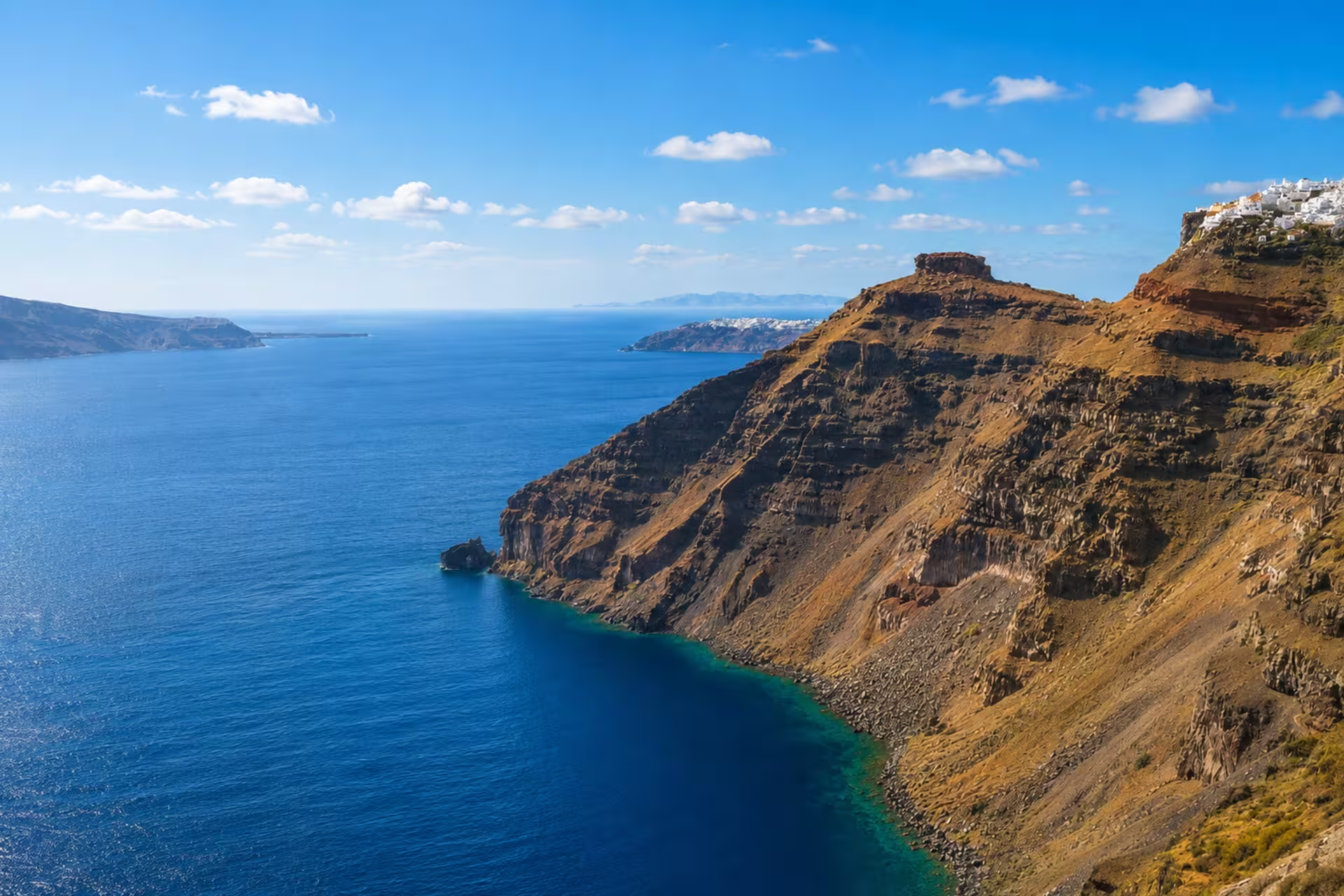
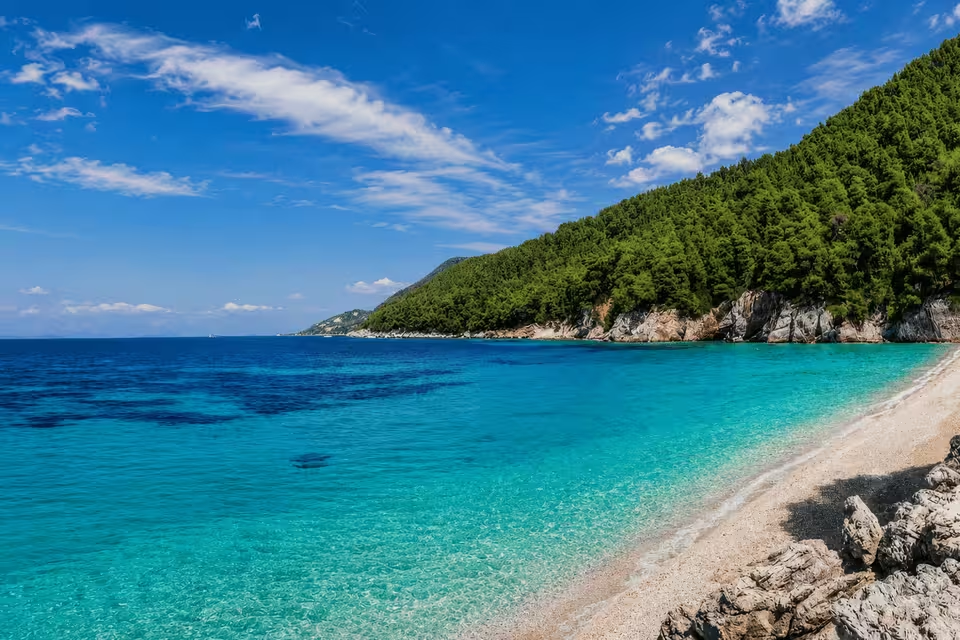
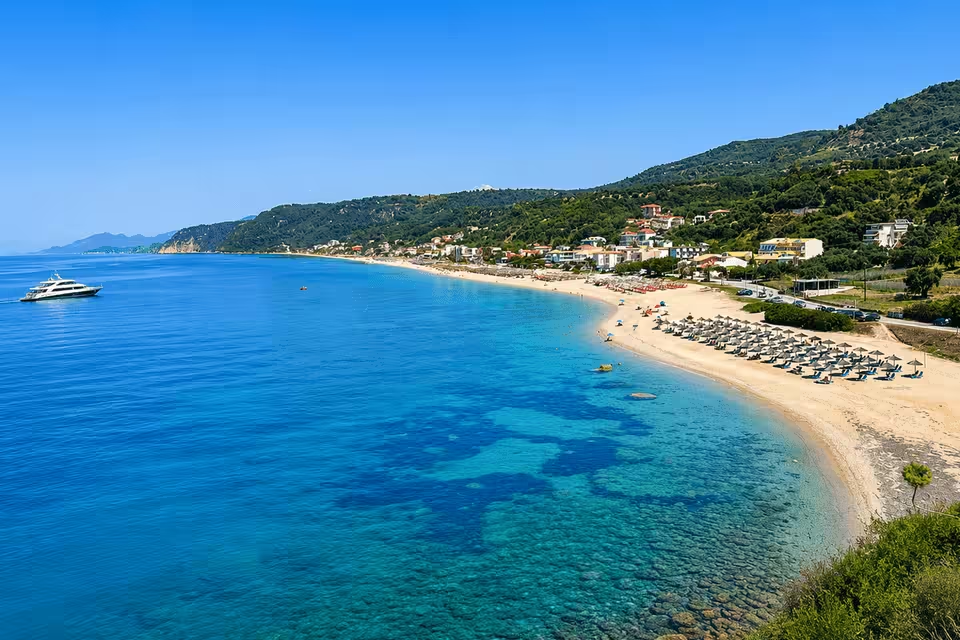
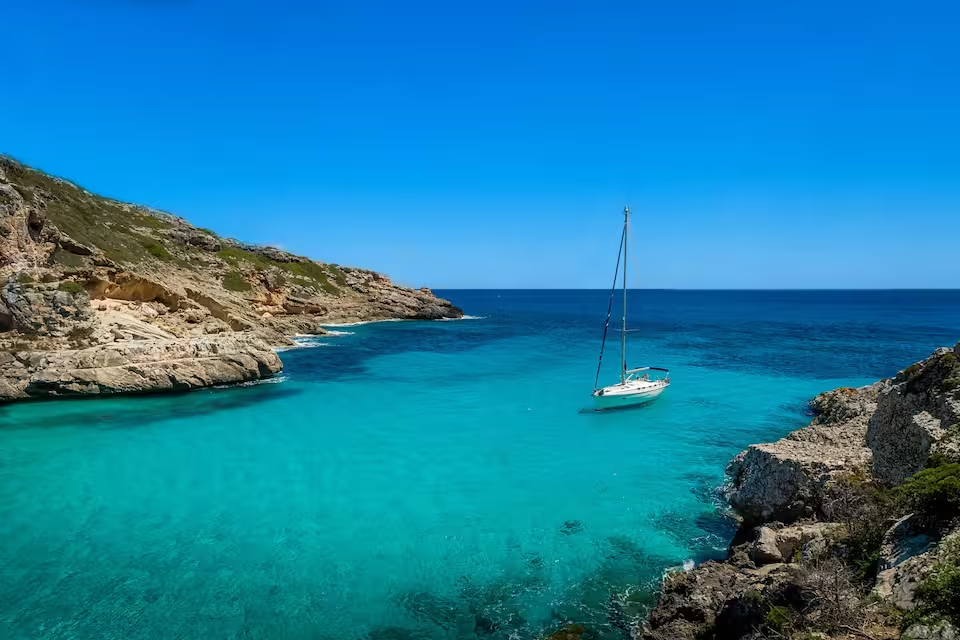
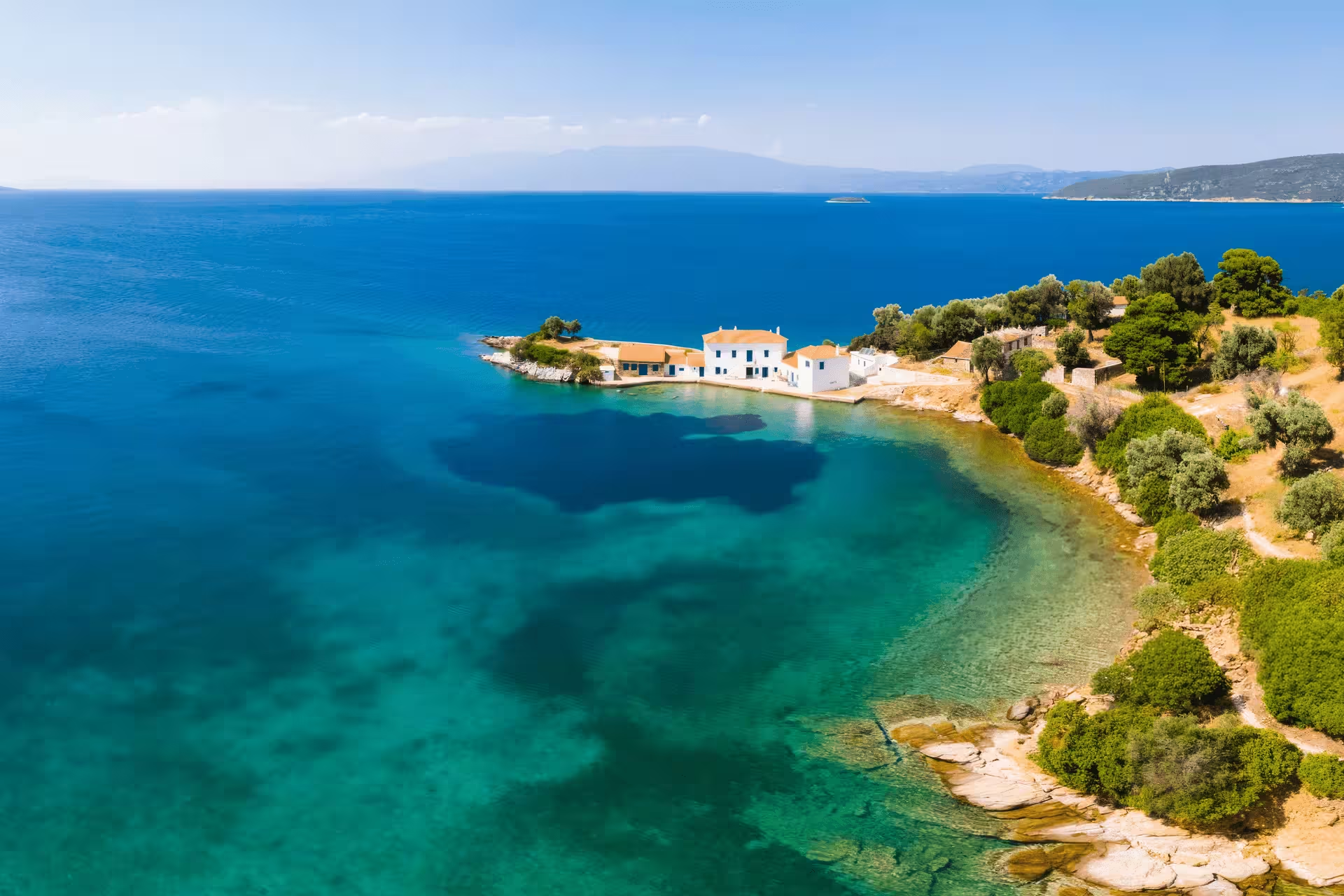
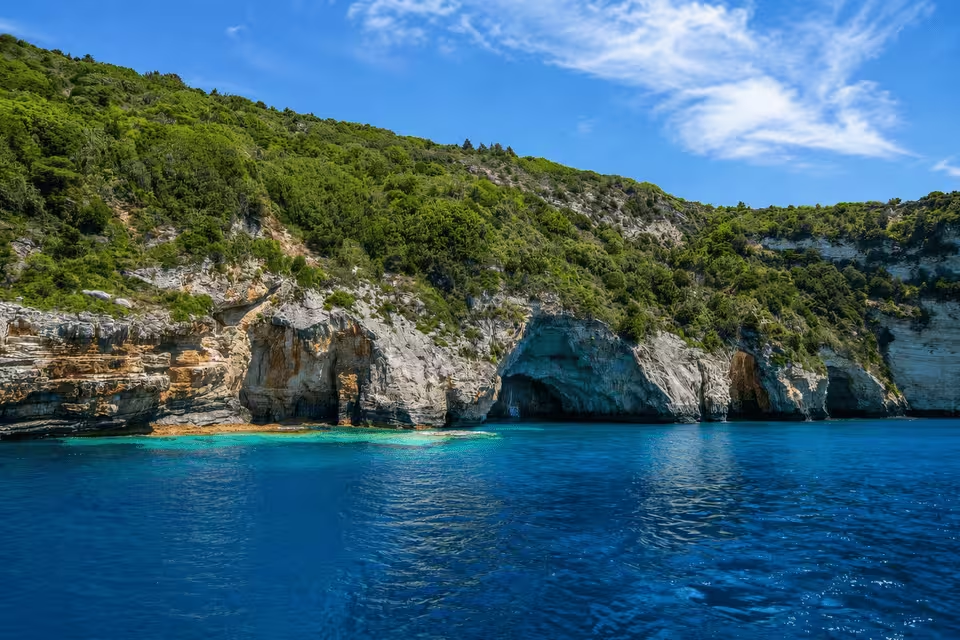
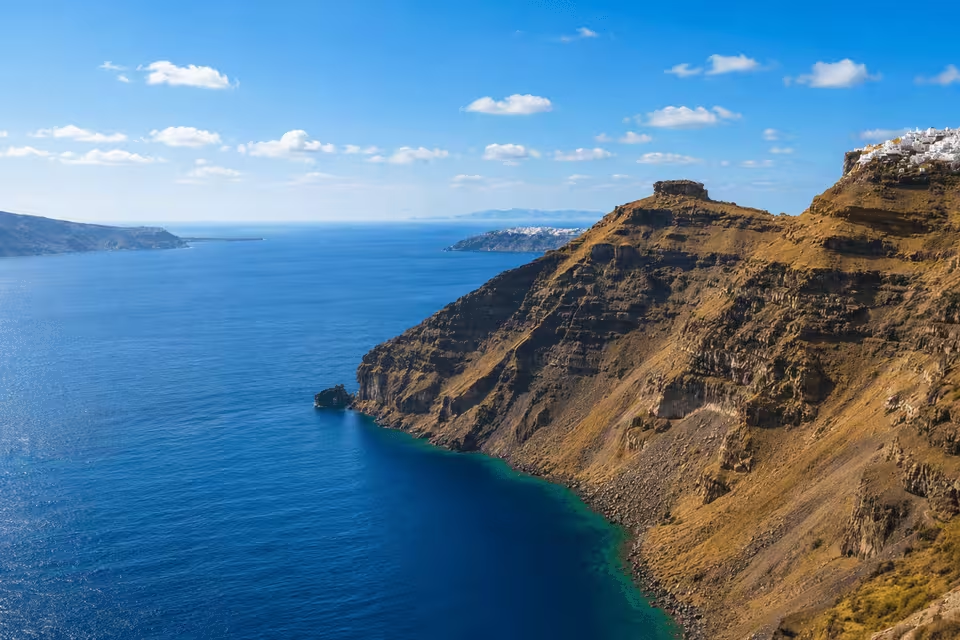
A charter can alternate between quiet anchorages, beaches and harbor settlements without separating the coastal landscape from island culture. The Ionian and Sporades are characterized by greener shores and sheltered bays, while the Cyclades bring rocky, wind-shaped scenery and volcanic coastlines around islands such as Milos and Santorini.
Going ashore adds layers of ancient, Byzantine, Venetian, Ottoman and Italian-period history. Possibilities range from the sanctuary of Delos and the Medieval City of Rhodes to Corfu’s old town and the Monastery of Saint John on Patmos. The harbors themselves also reflect living maritime traditions, including sponge-diving heritage on Kalymnos and wooden-boat craftsmanship on Spetses.
Food changes substantially between island groups. Cycladic fava and kopanisti, Ionian pastitsada, Sporades cheese pies and Dodecanese pitaroudia illustrate why an island-hopping itinerary can also become a regional food journey. Nature has an equally important place: protected waters around Alonnisos support Mediterranean monk seals, while conservation areas around Zakynthos are associated with loggerhead sea turtles.
Gateways and common departure points
Athens is the principal gateway for the Saronic Islands and several Cyclades itineraries. Alimos Marina is a major starting point on the Athens coast, while Lavrion is well positioned for western Cyclades routes. Piraeus and Rafina provide additional ferry connections rather than serving every yacht itinerary directly.
For the Ionian, Corfu International Airport supports northern routes, while Aktion National Airport gives access to Preveza and the Ionian coast as well as Lefkada. Volos and Skiathos are the principal approaches to the Sporades.
Farther east, Rhodes, Kos, Samos and Lesvos have airports and established maritime gateways. Several Cycladic islands, including Mykonos, Santorini and Paros, also have airports. Domestic ferries can help with positioning before or after a charter, but flight and ferry timings should be considered alongside the designated embarkation base.
Planning a Greek Islands yacht charter
The first decision for either a yacht charter or Greek Islands boat rental is the cruising ground. Travelers should match their preferred pace and sailing experience to the area: the Ionian, Saronic and central Sporades generally favor shorter connections, while exposed Aegean routes require greater allowance for wind, sea state and itinerary changes.
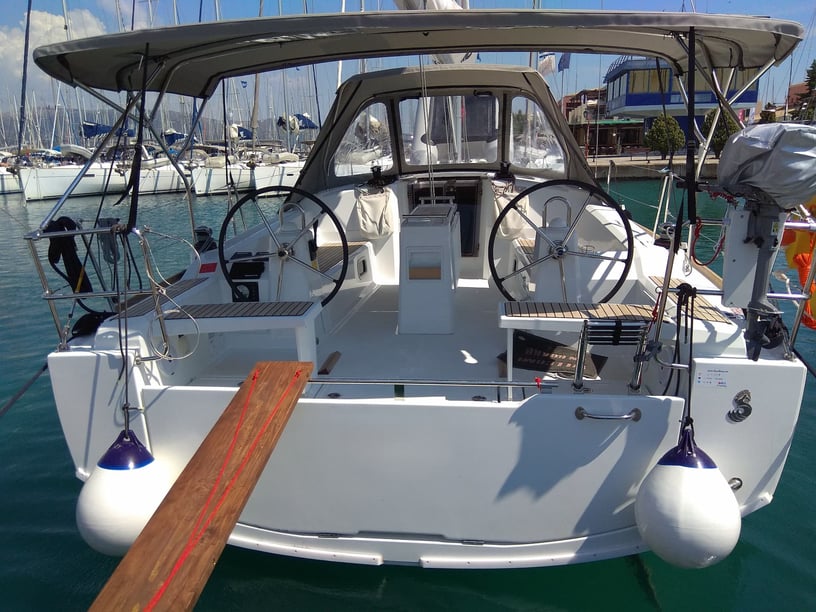
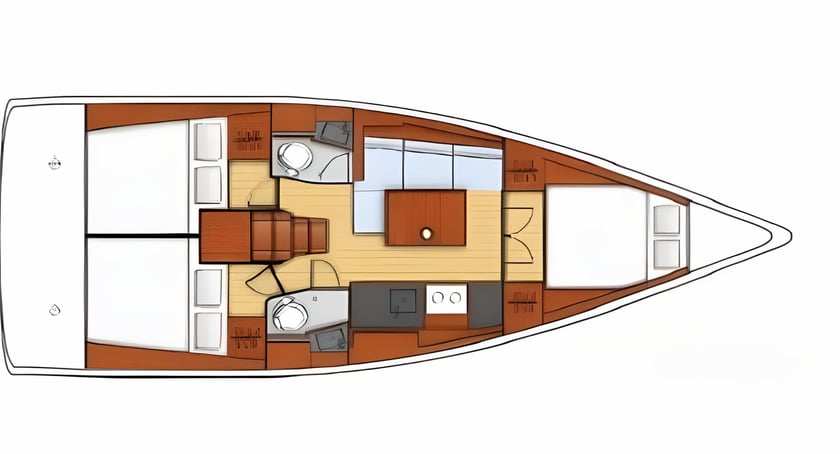
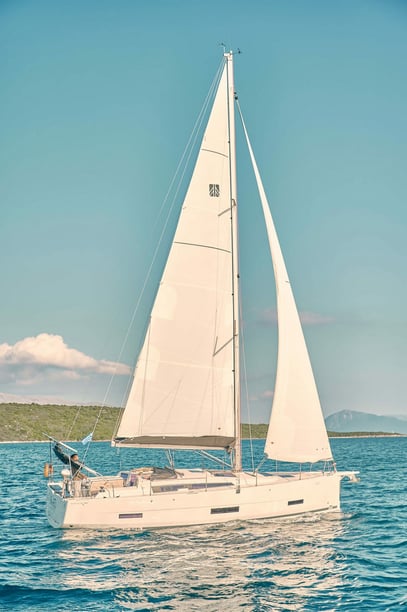
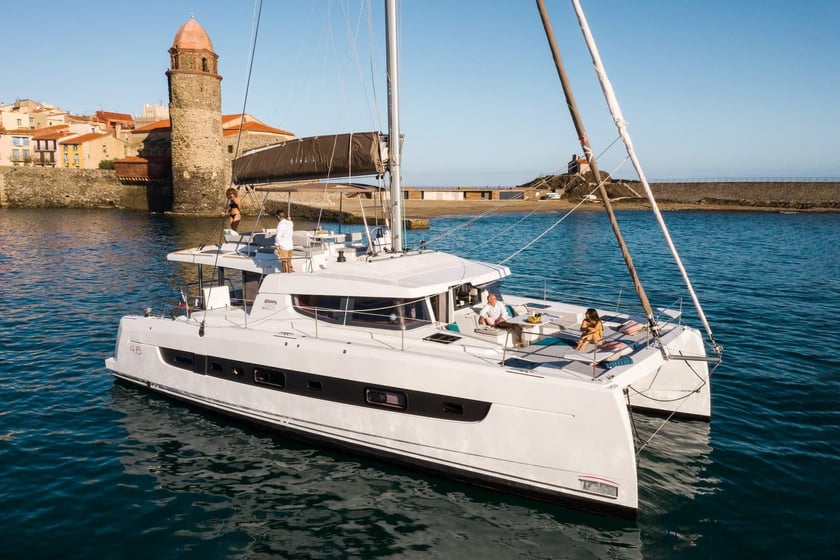
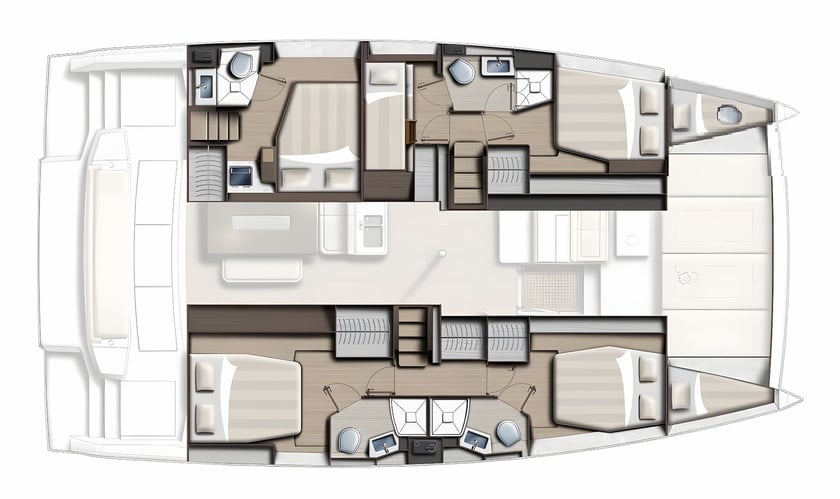
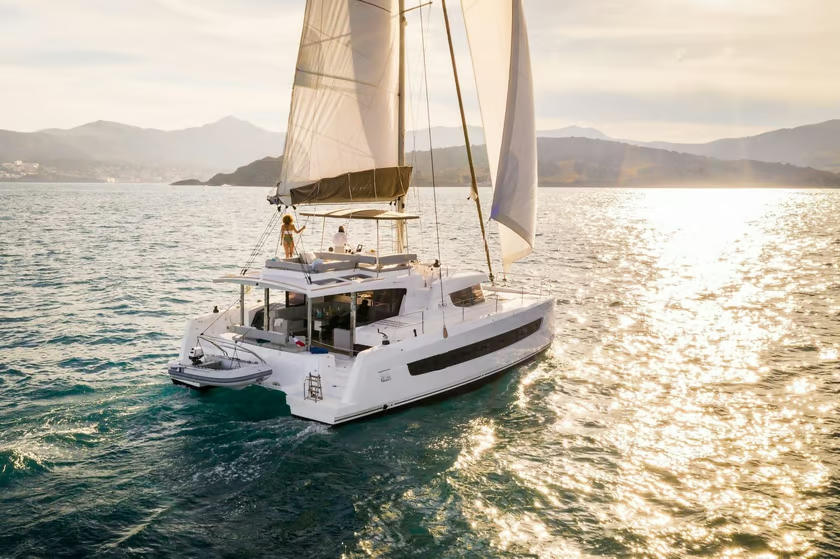
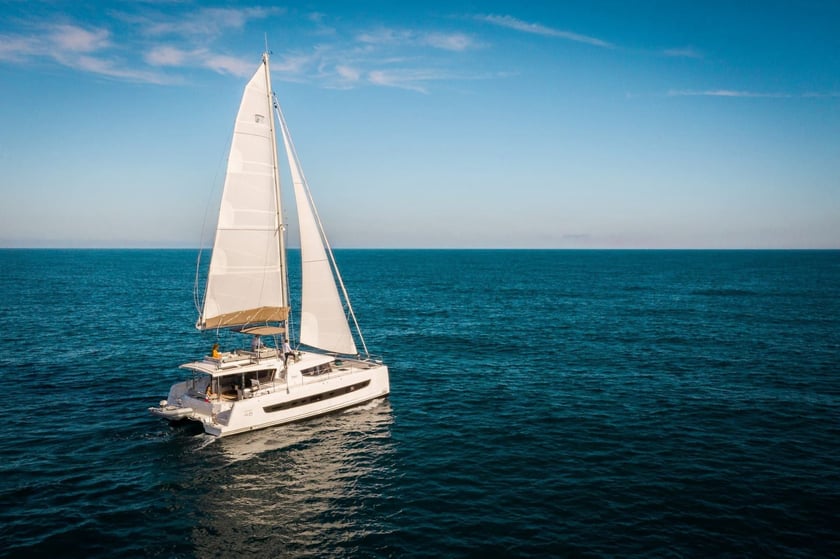
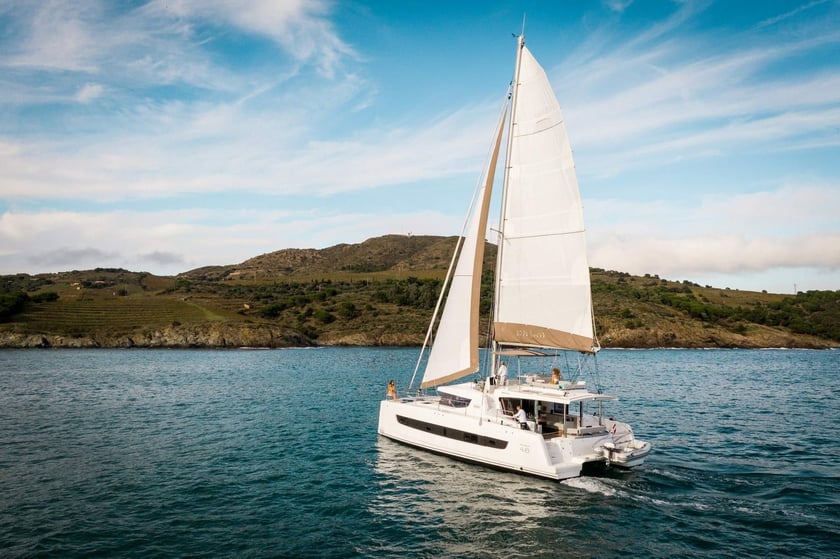
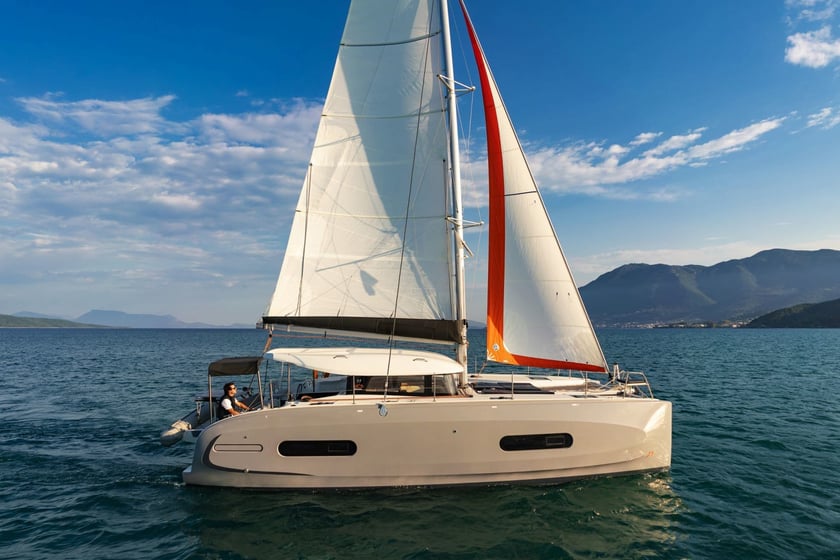
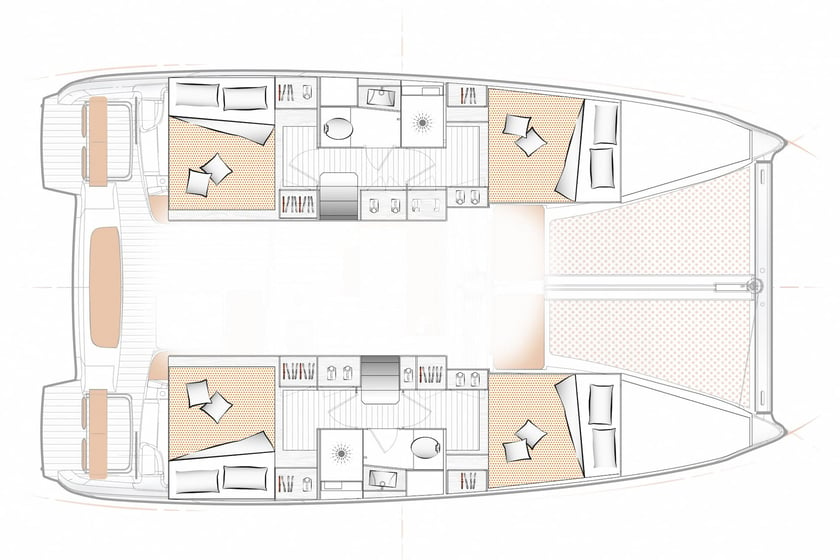
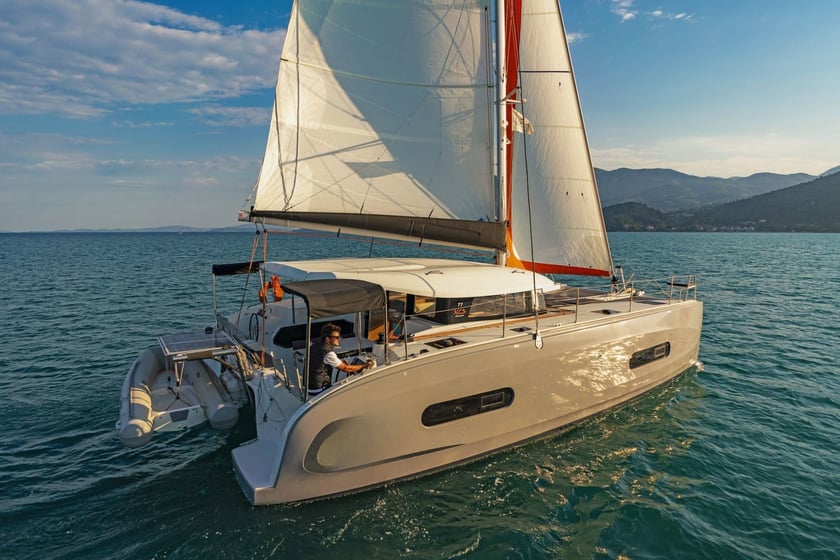
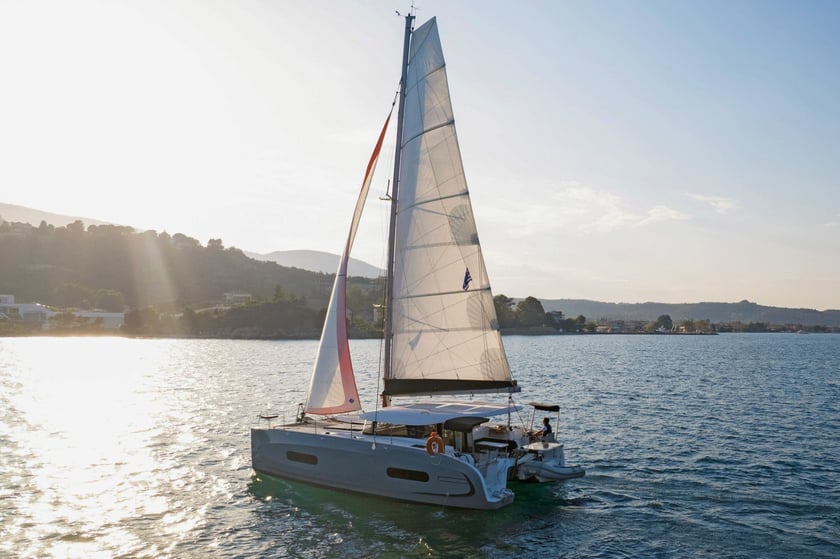
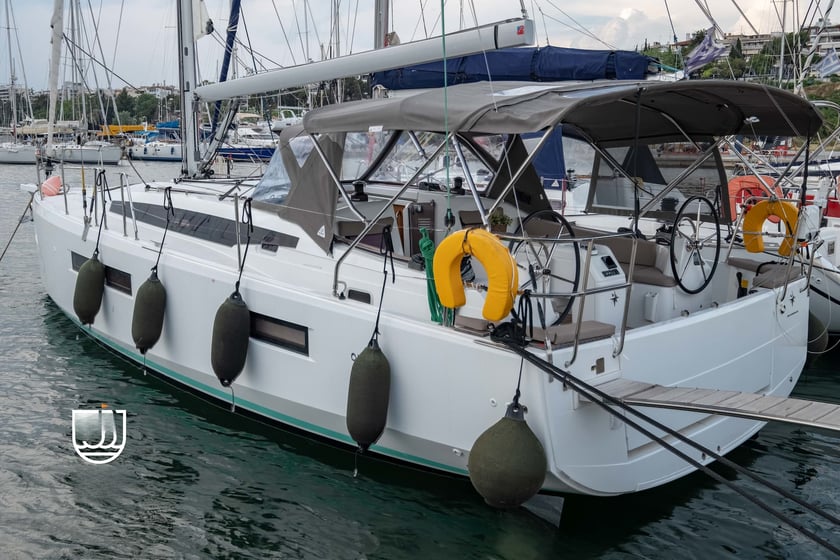
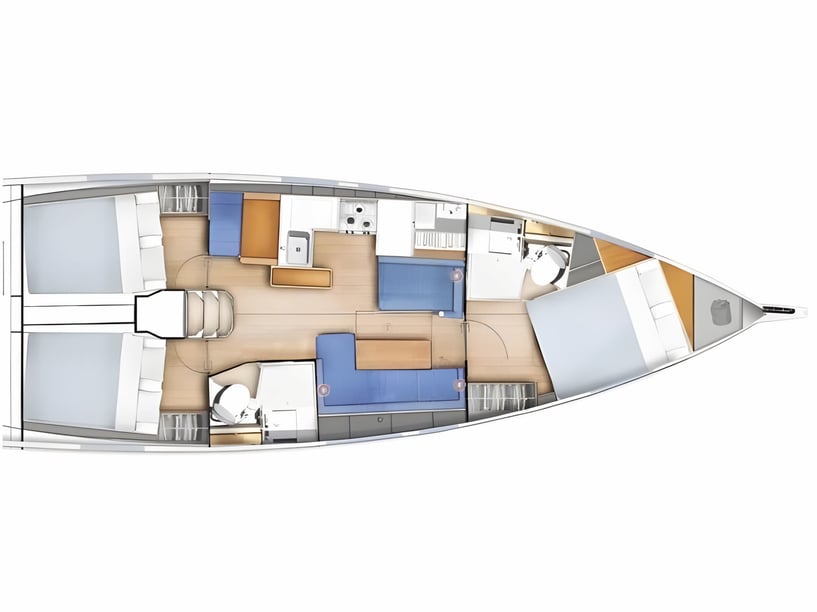
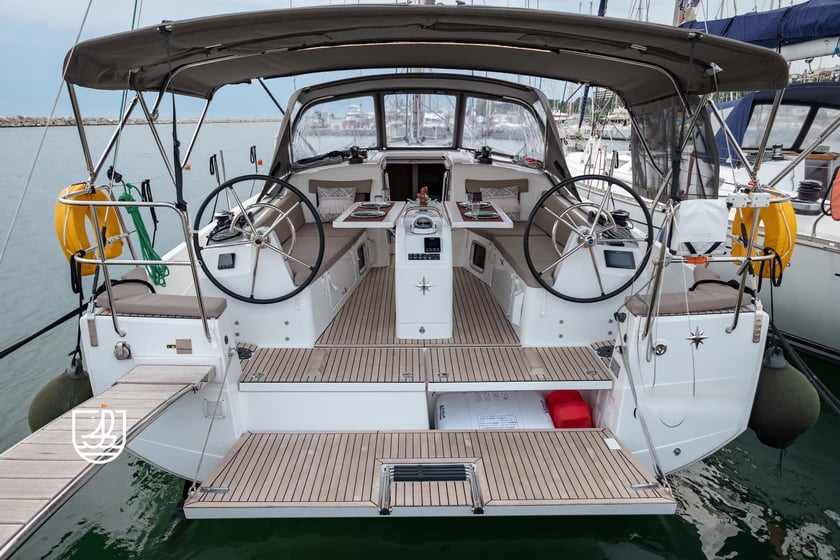
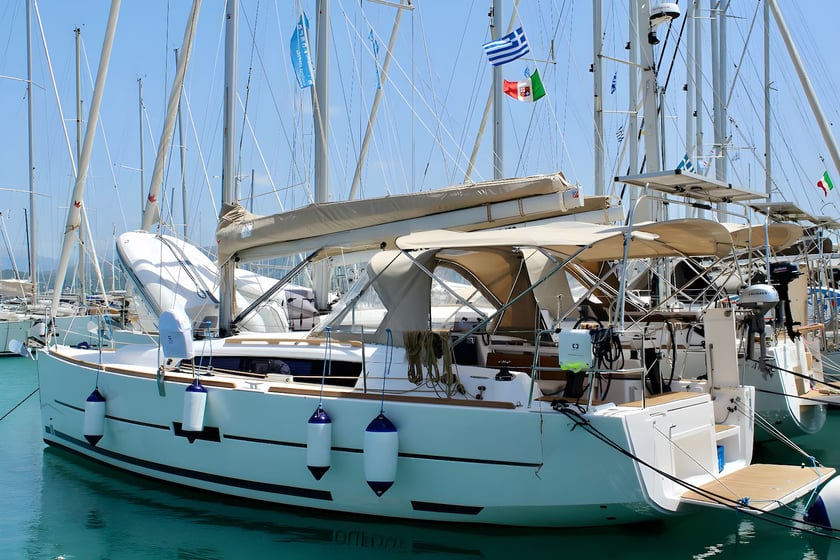
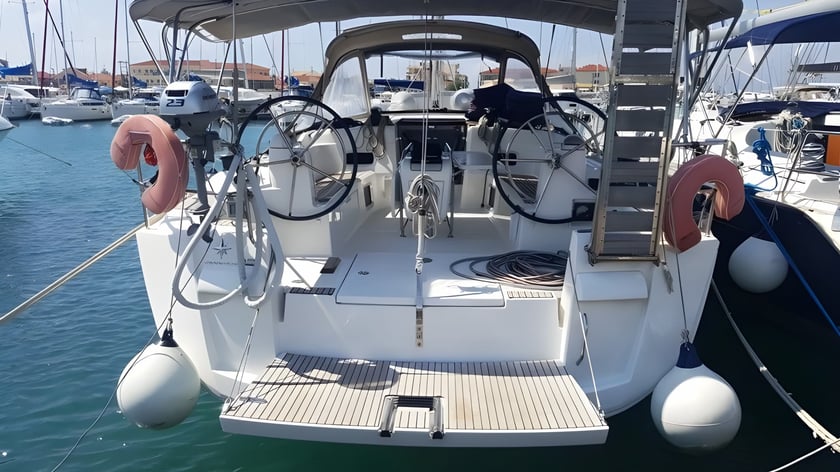
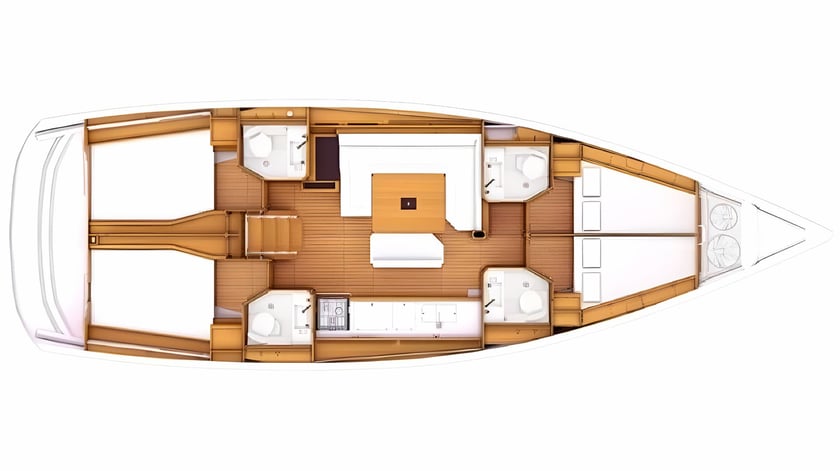
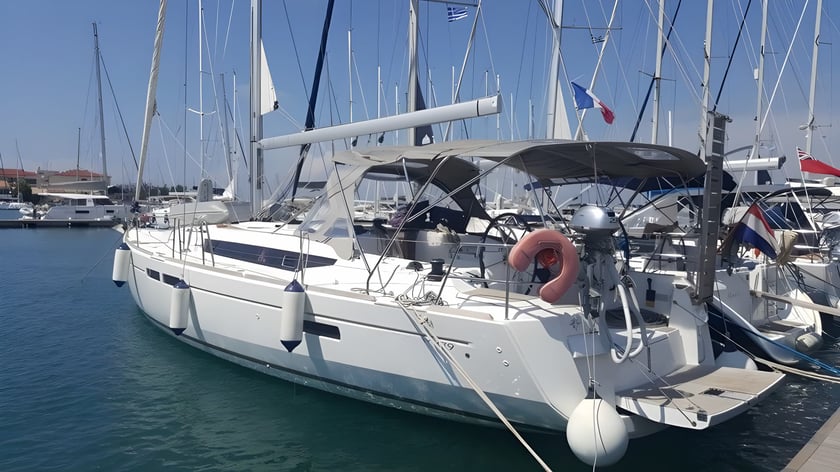
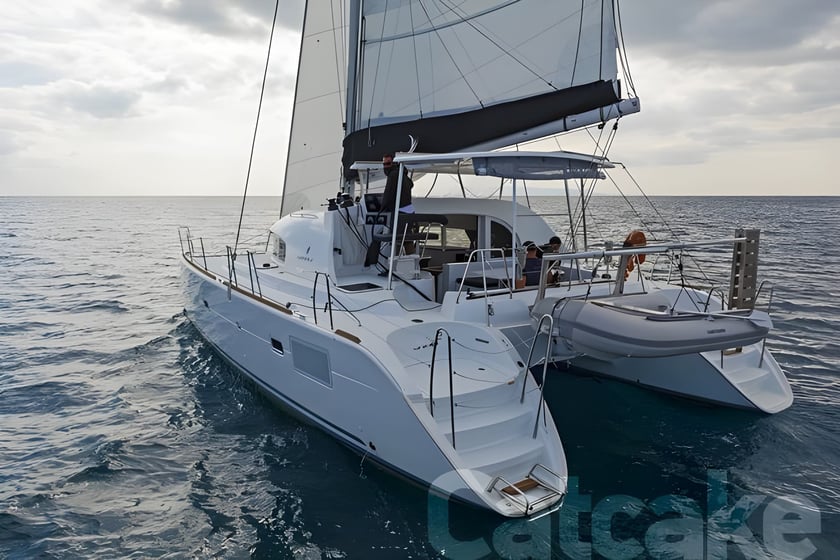
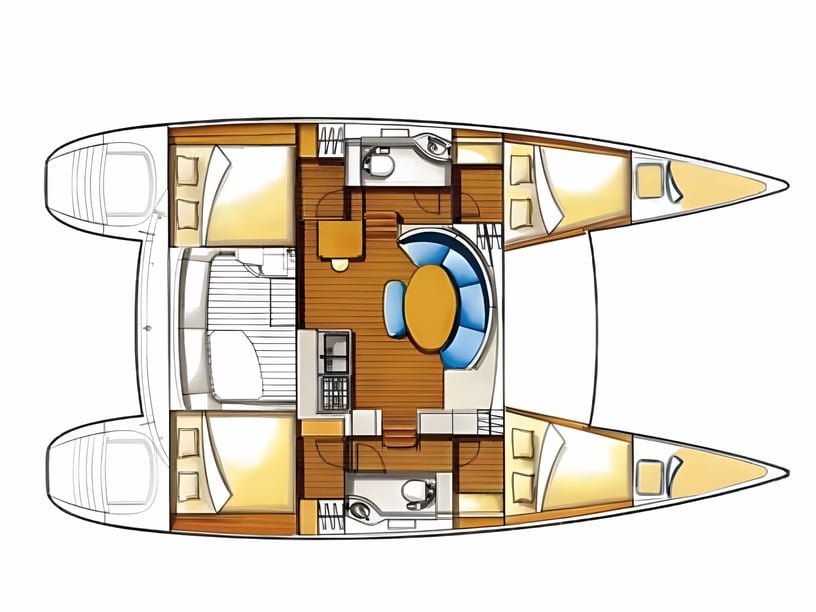
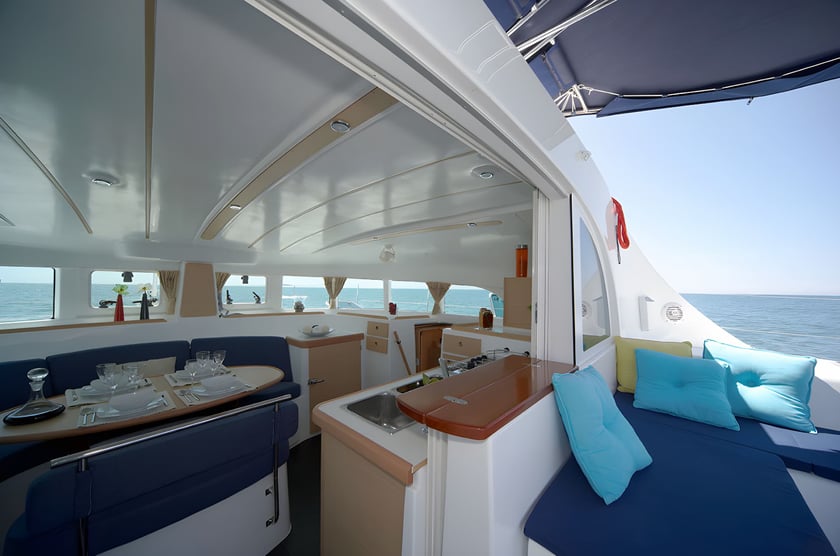
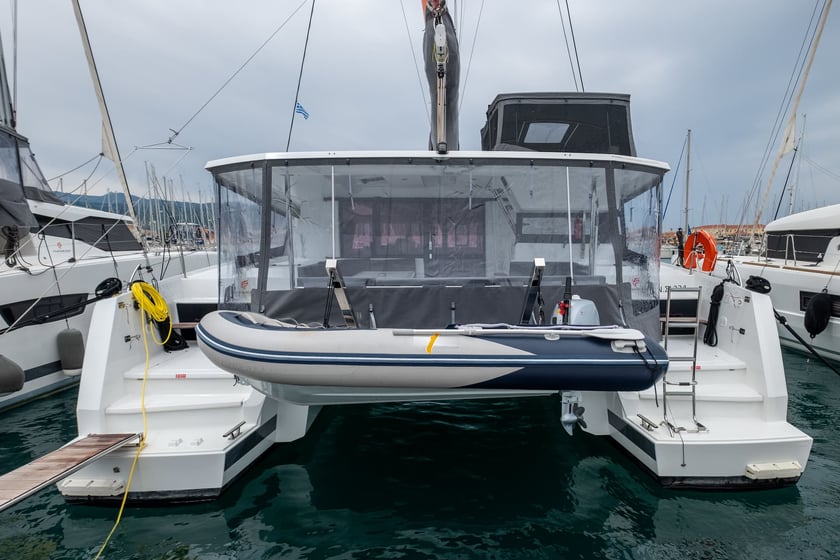
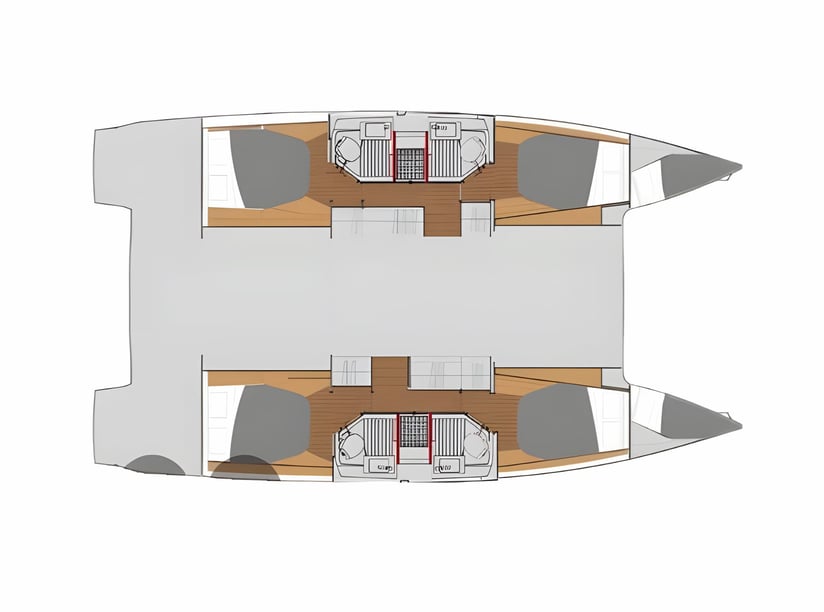
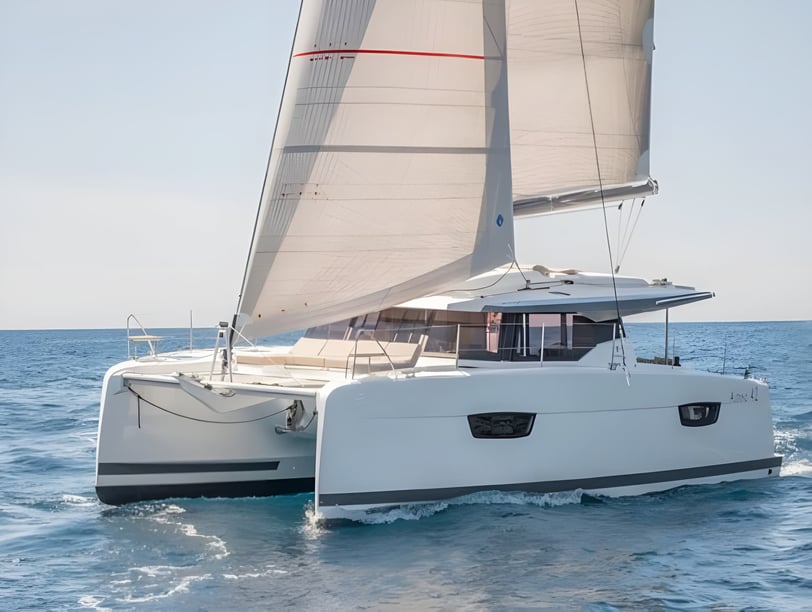
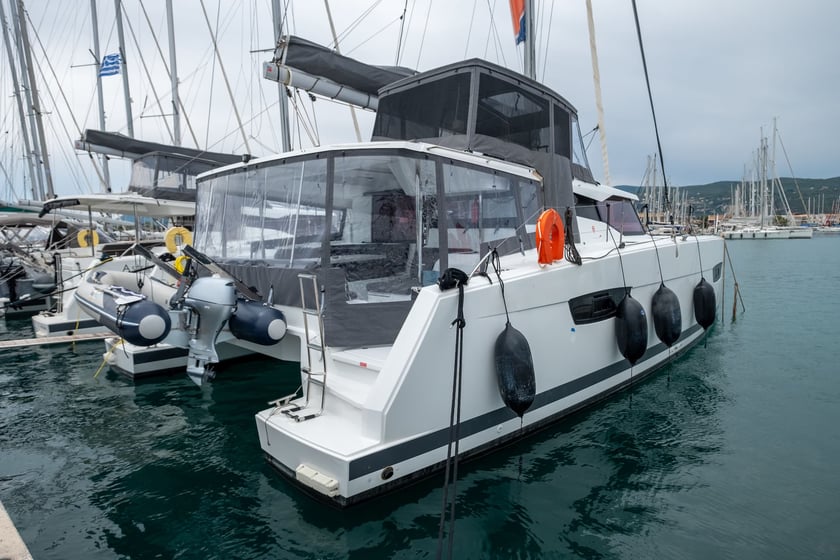
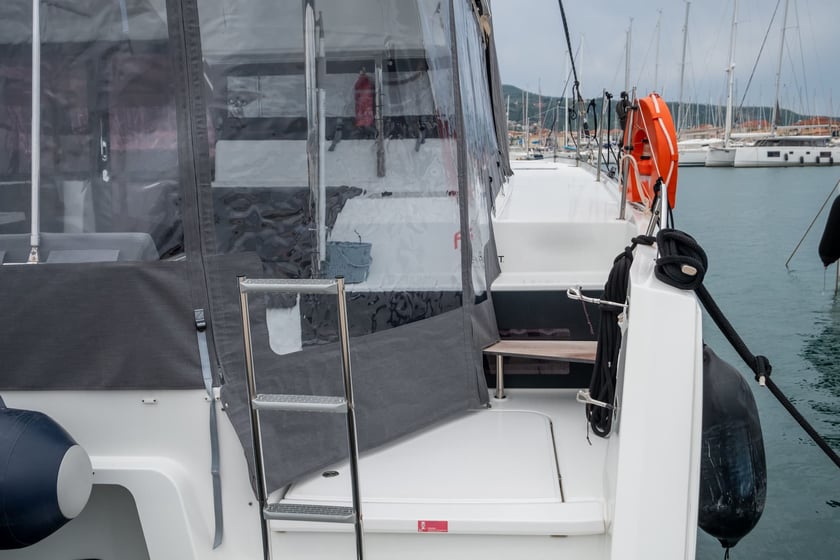
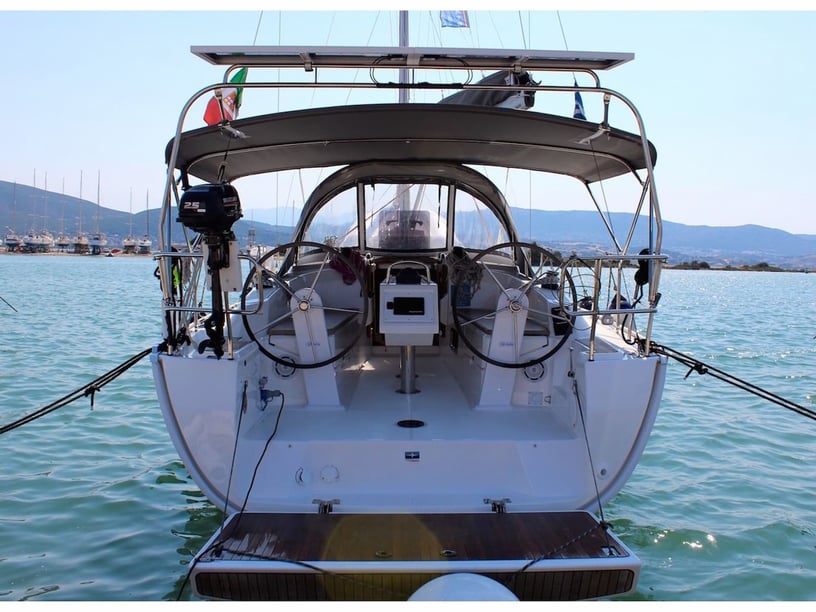
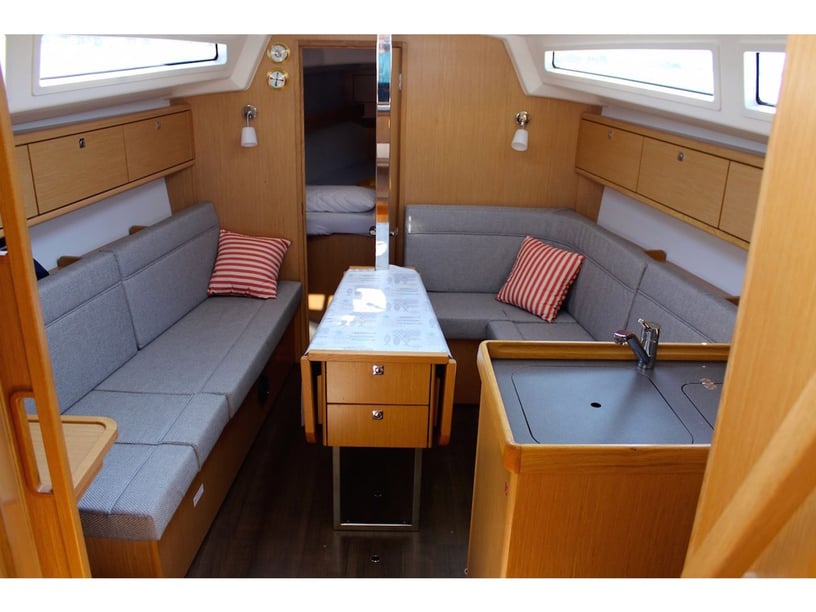
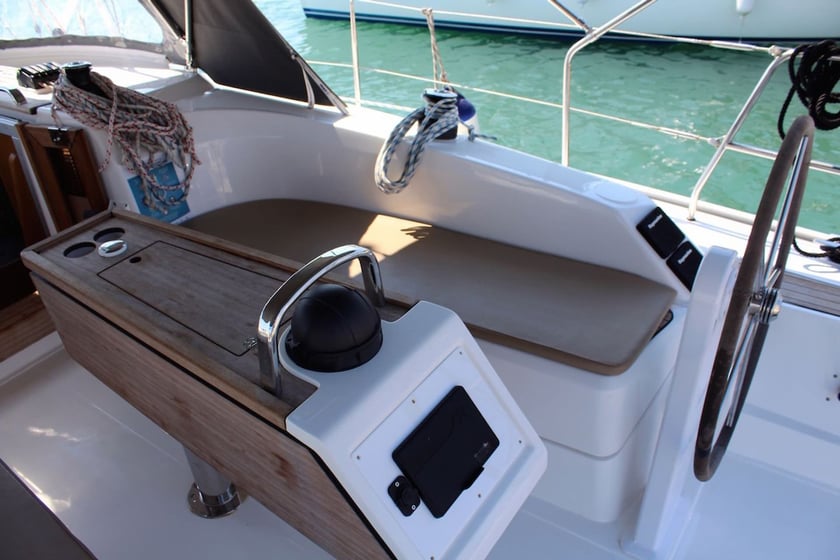
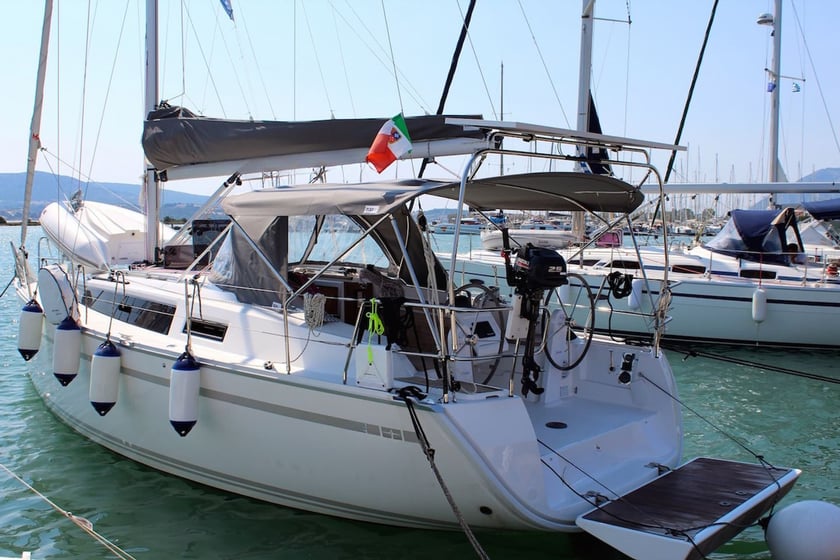
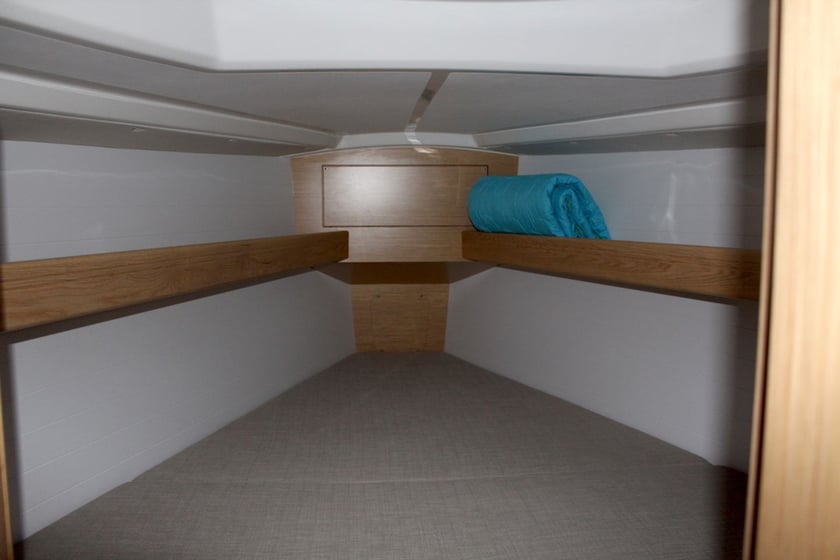
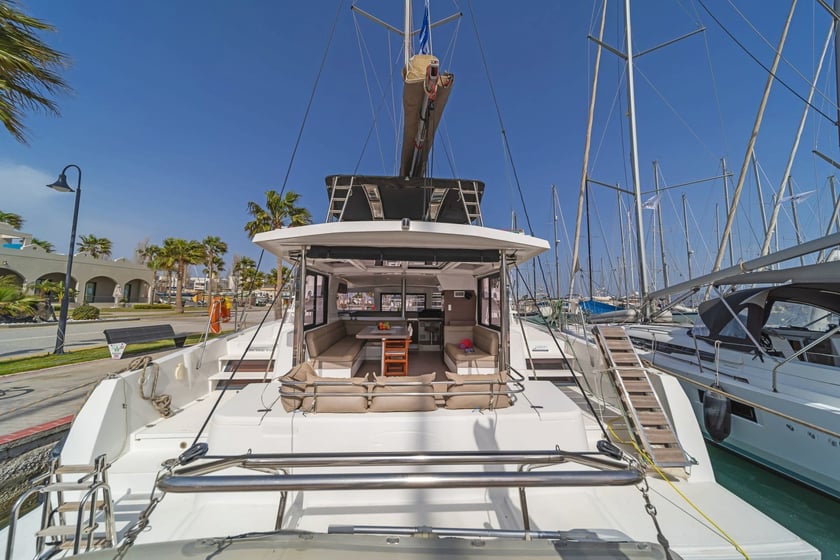
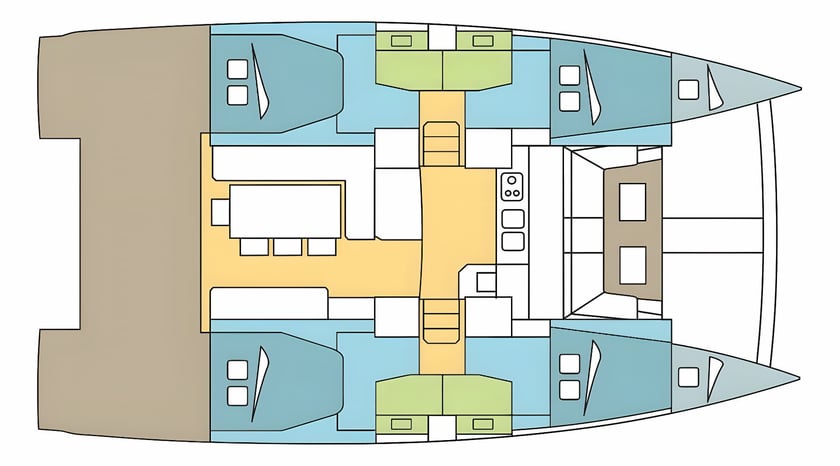
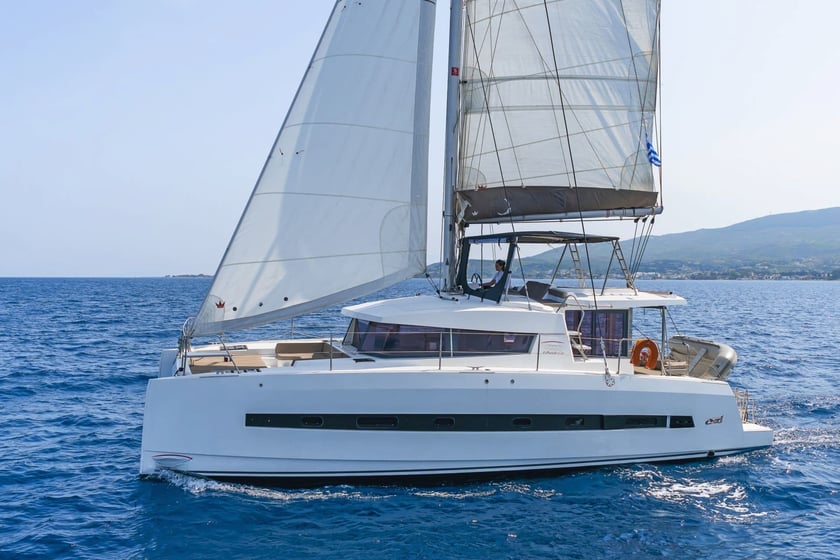
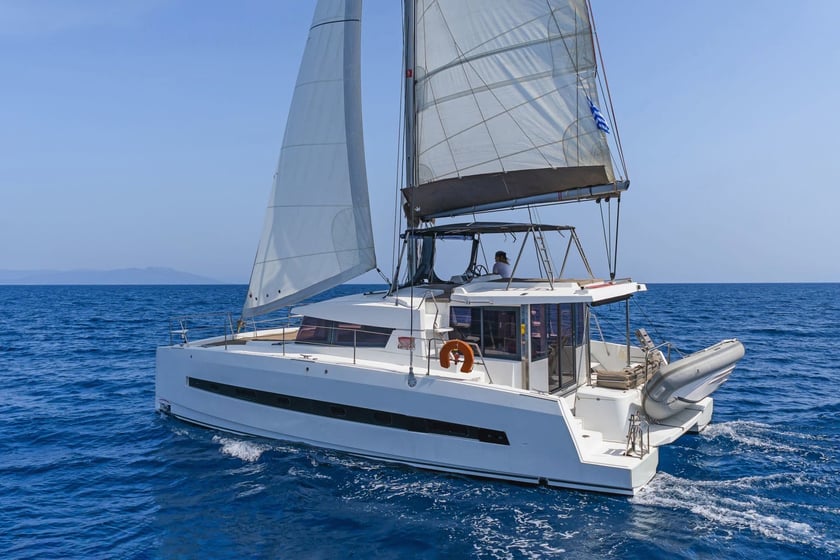
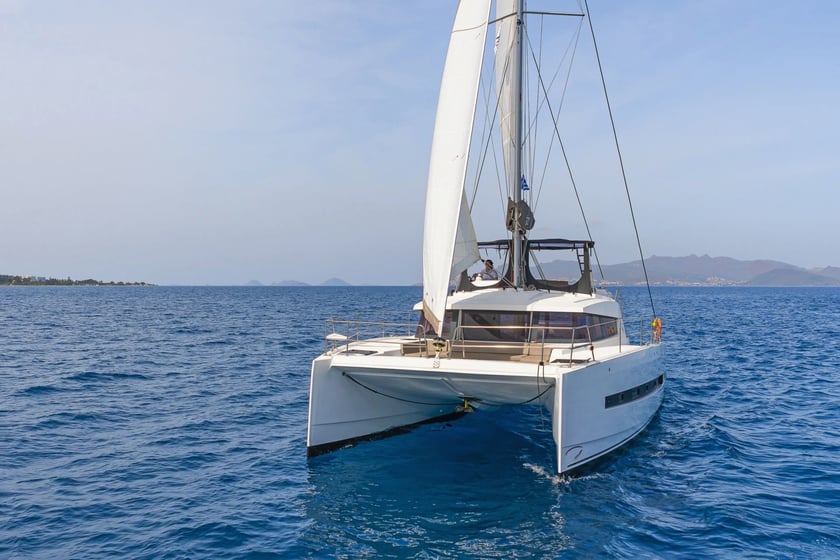
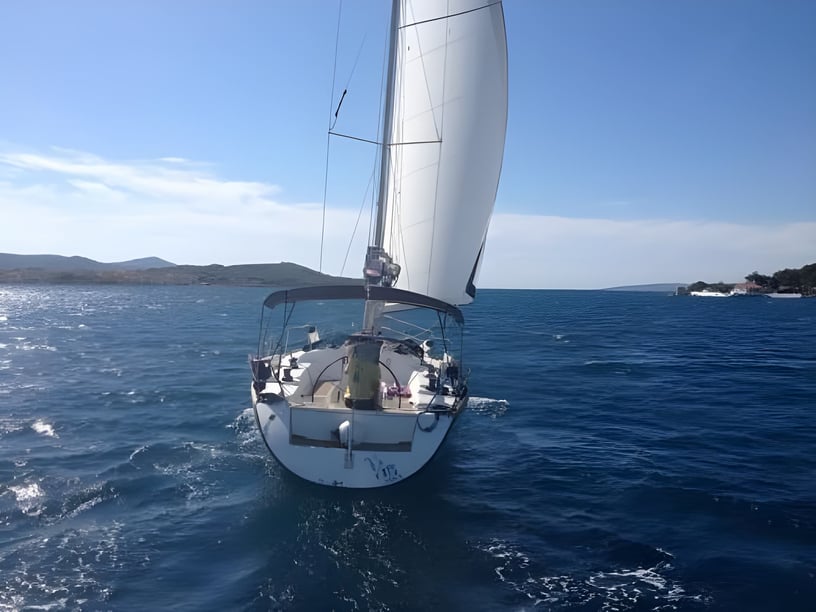
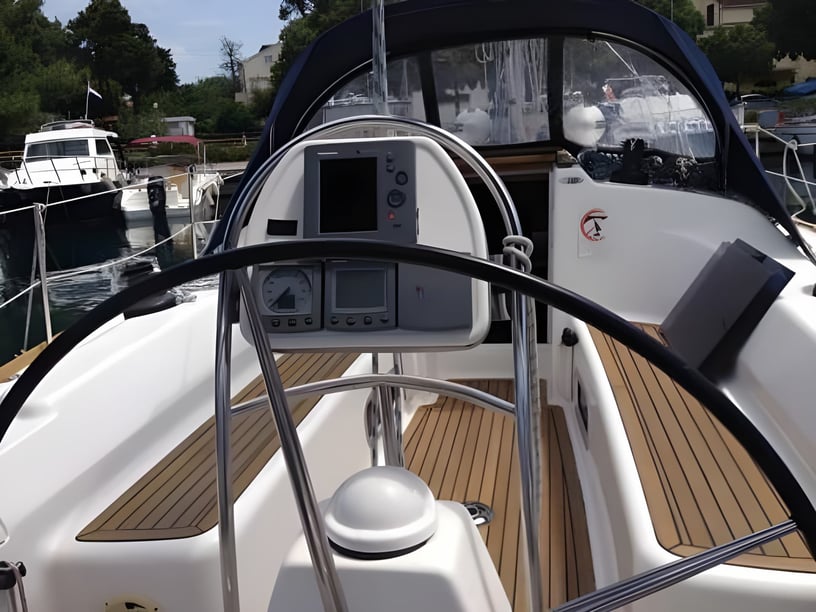
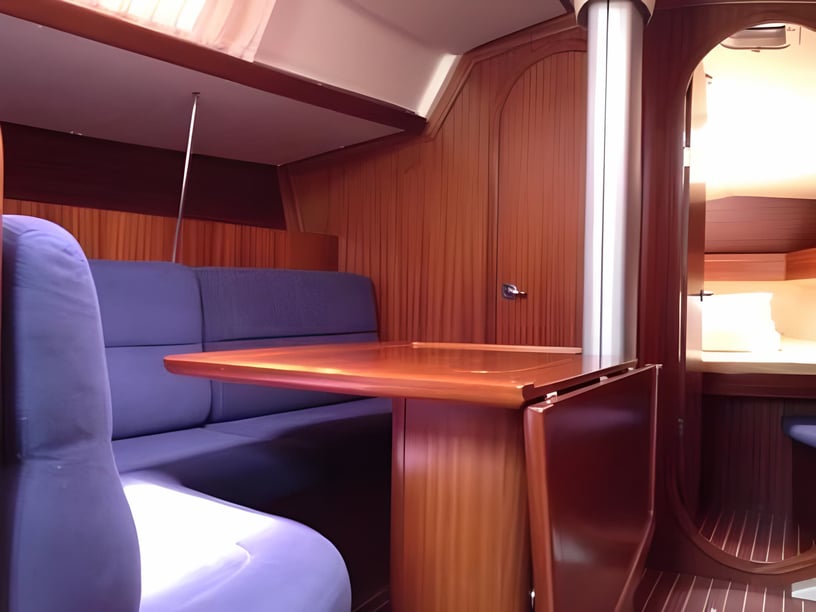
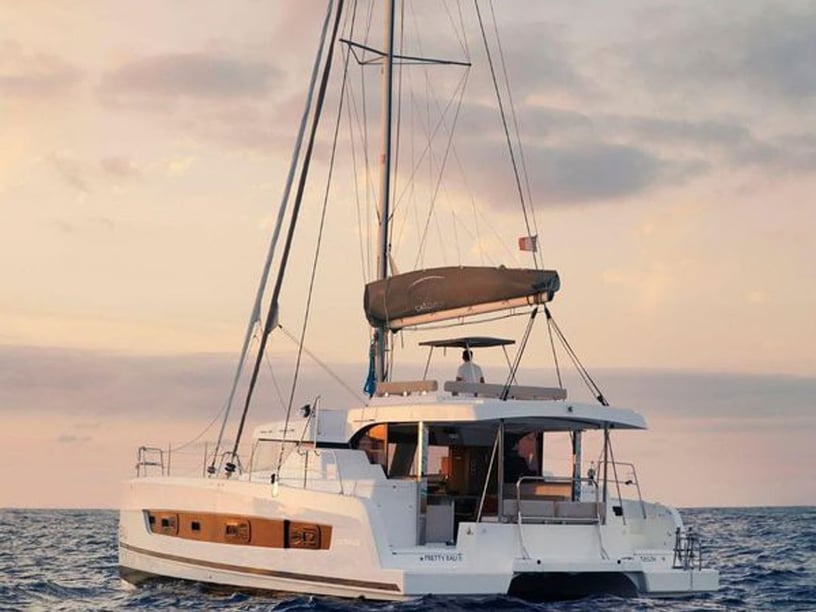
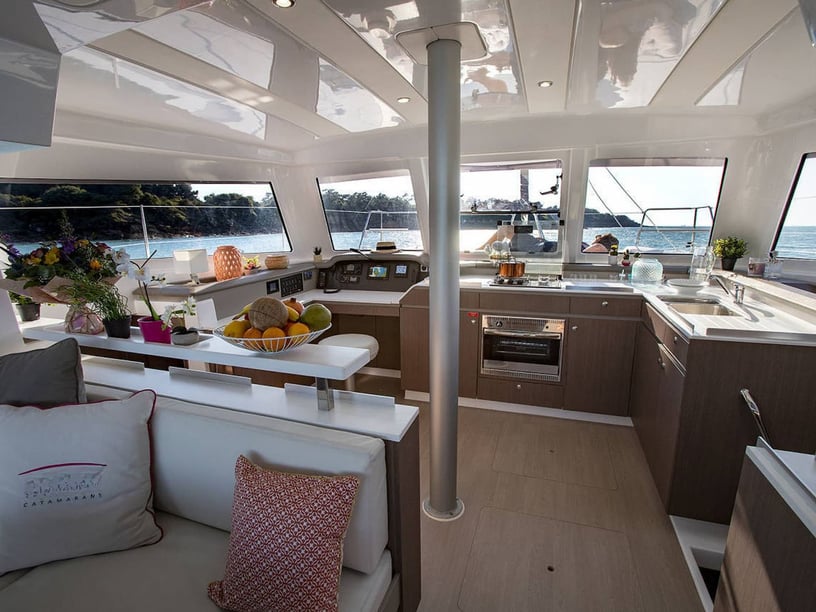
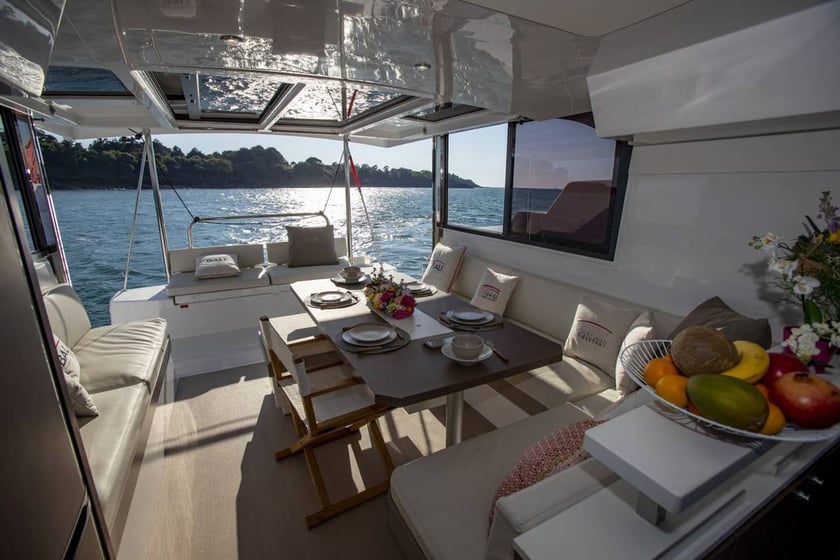
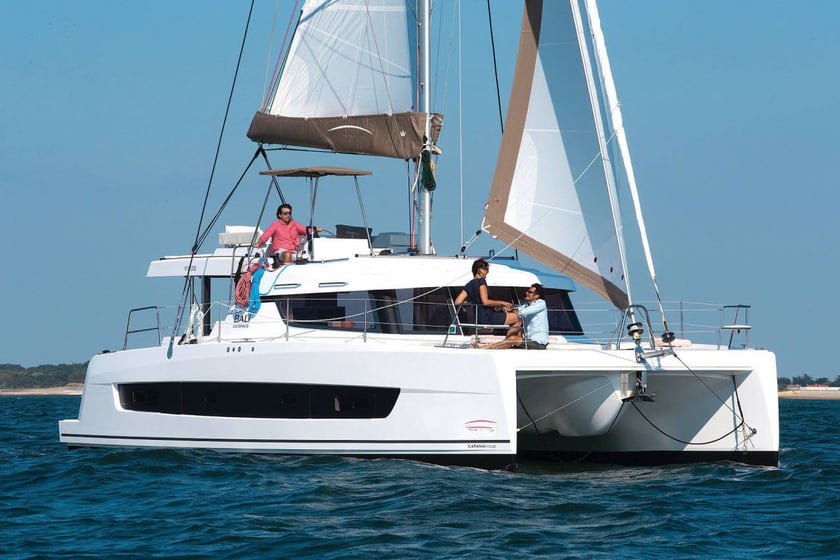
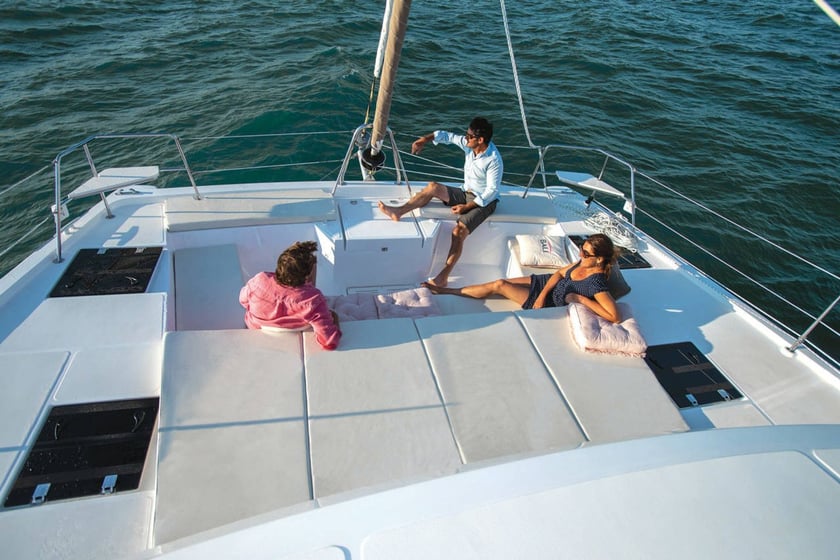
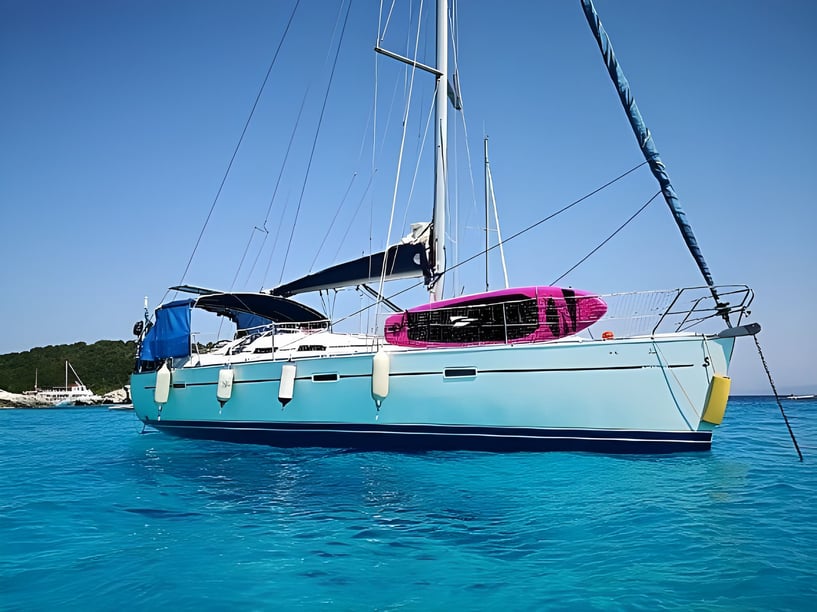
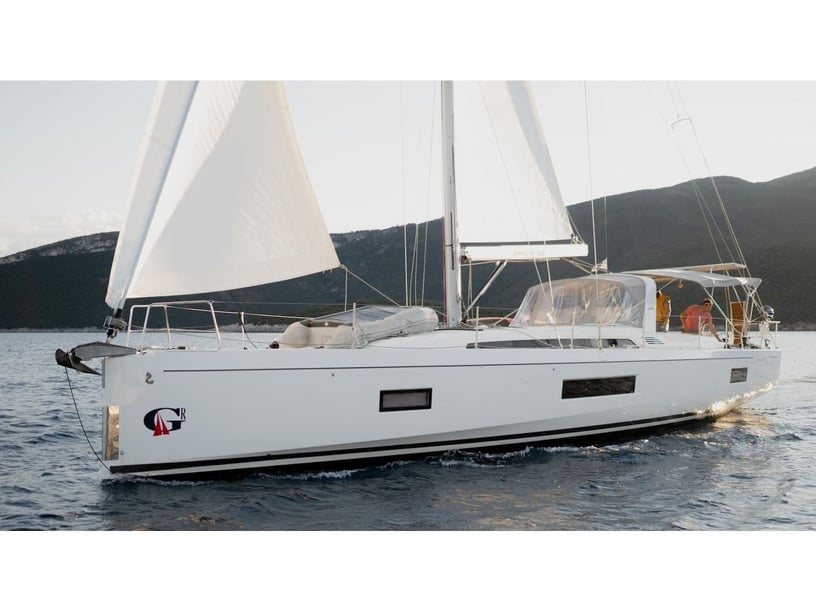
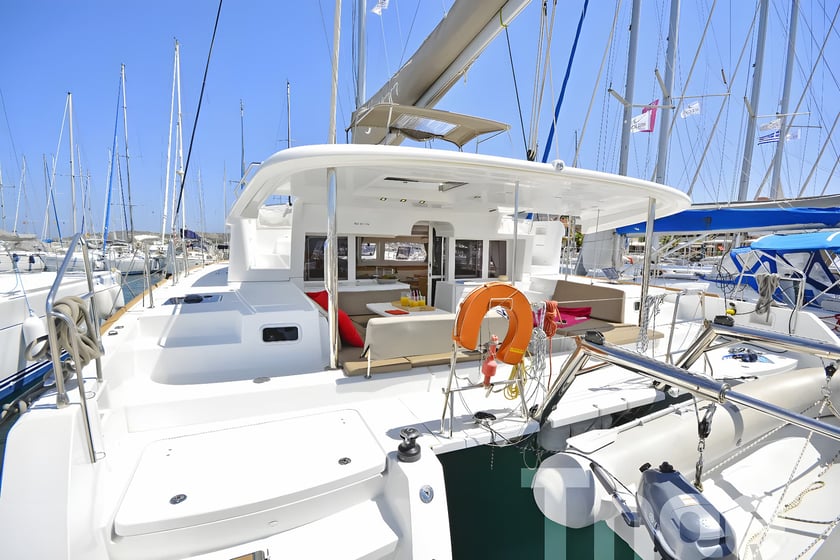
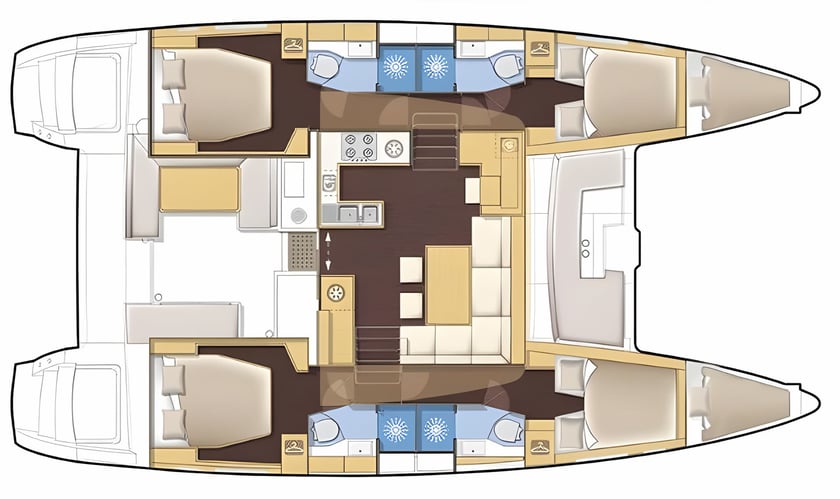
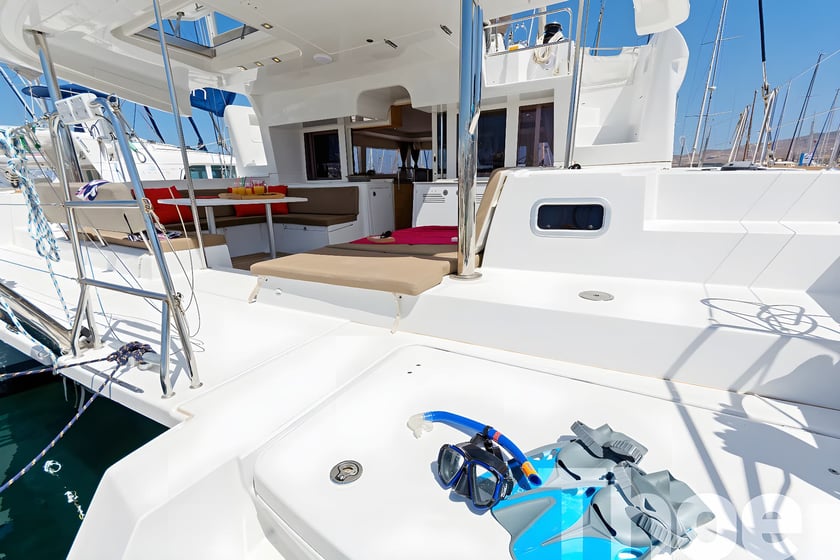
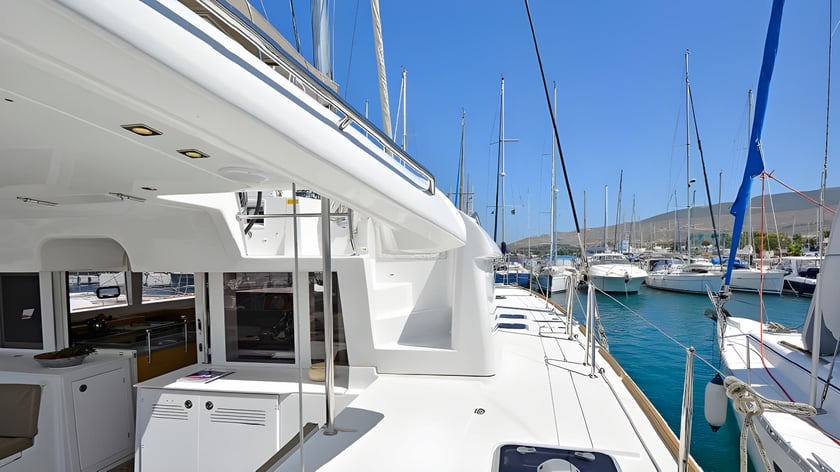
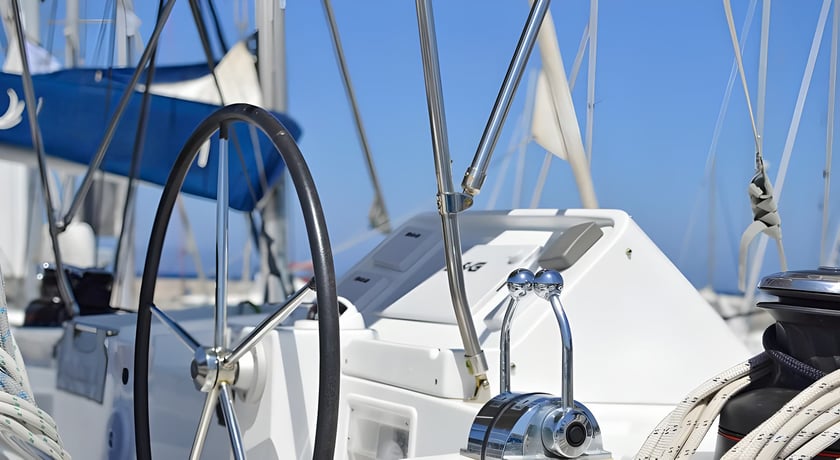
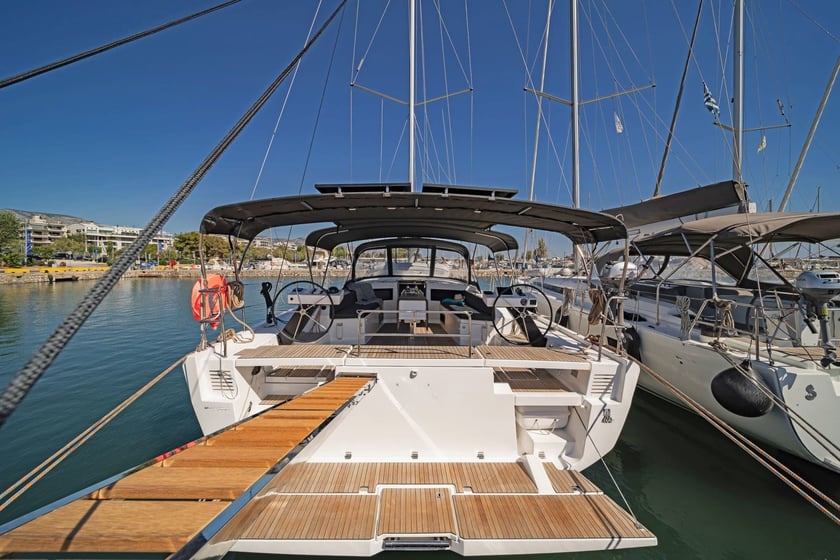
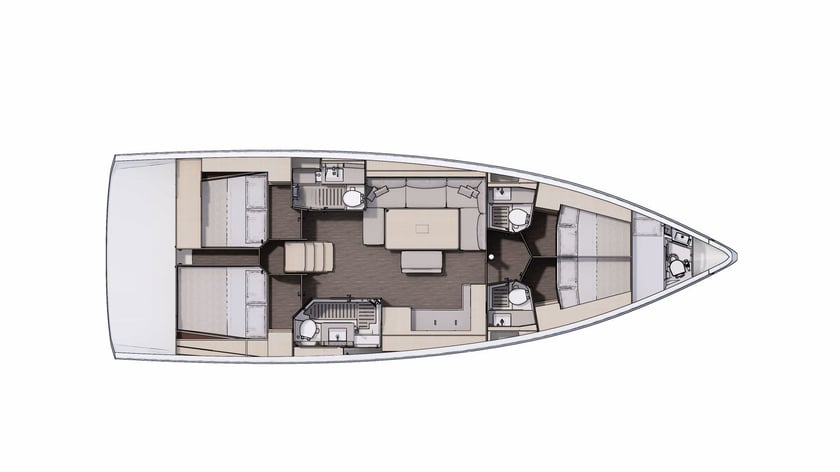
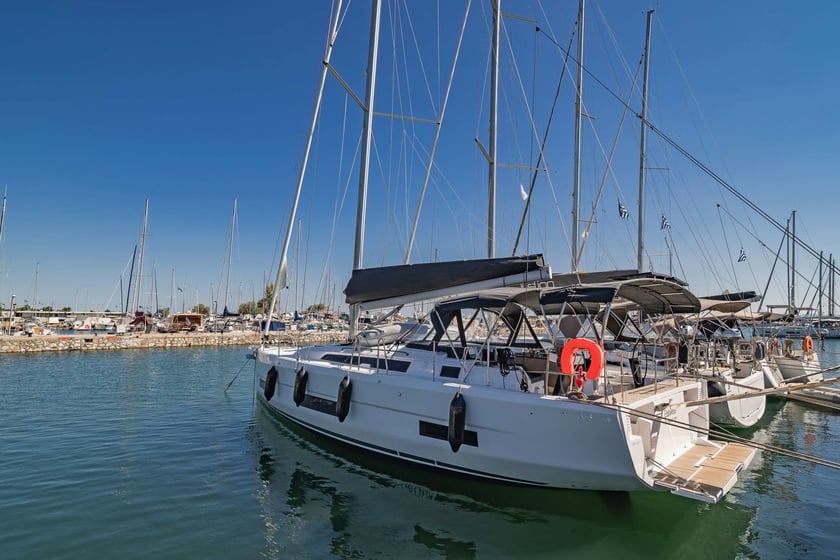
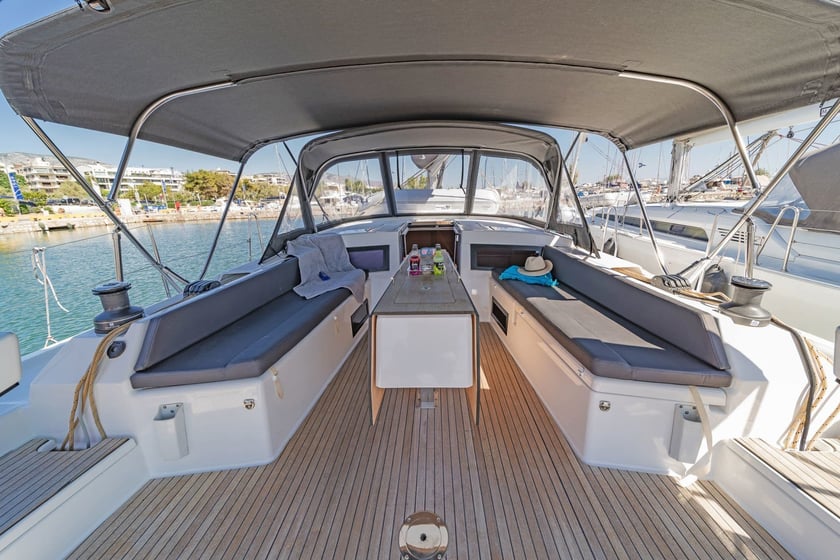
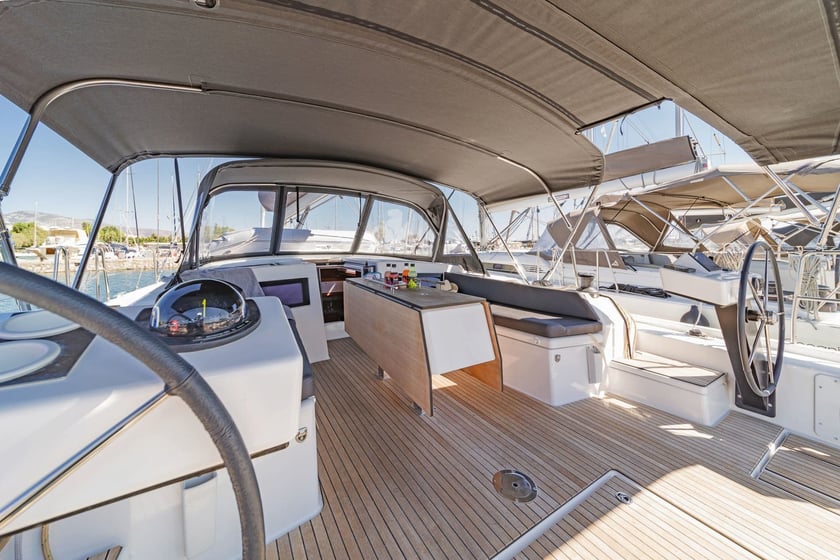
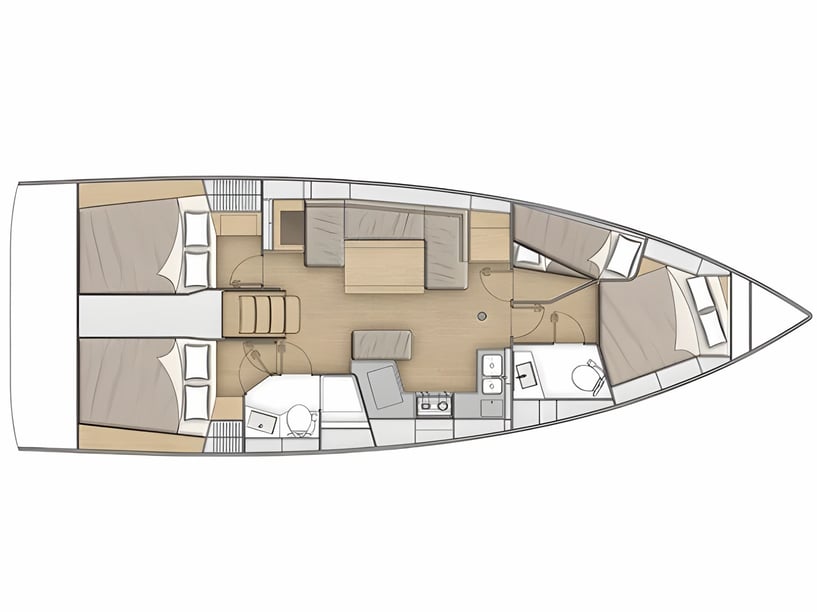
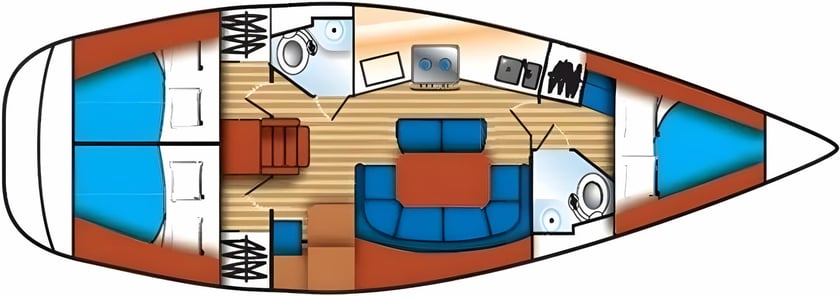
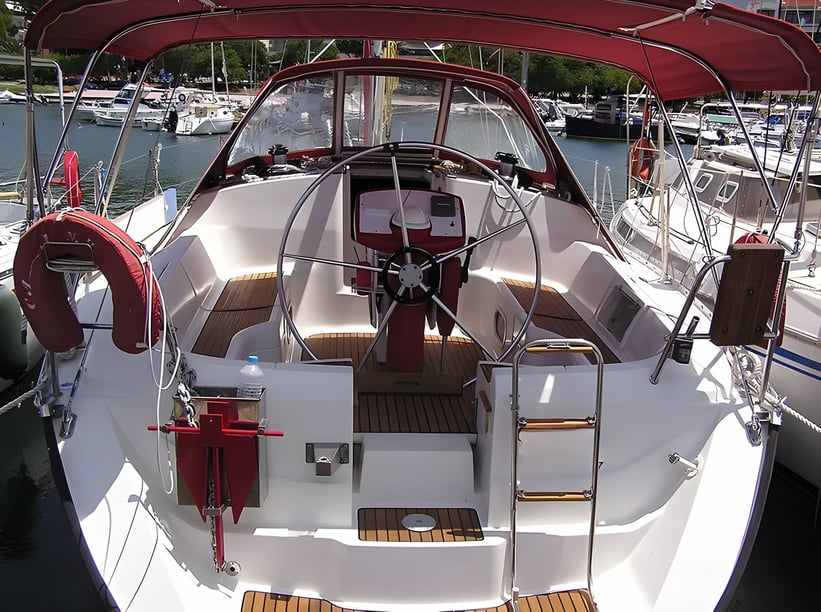
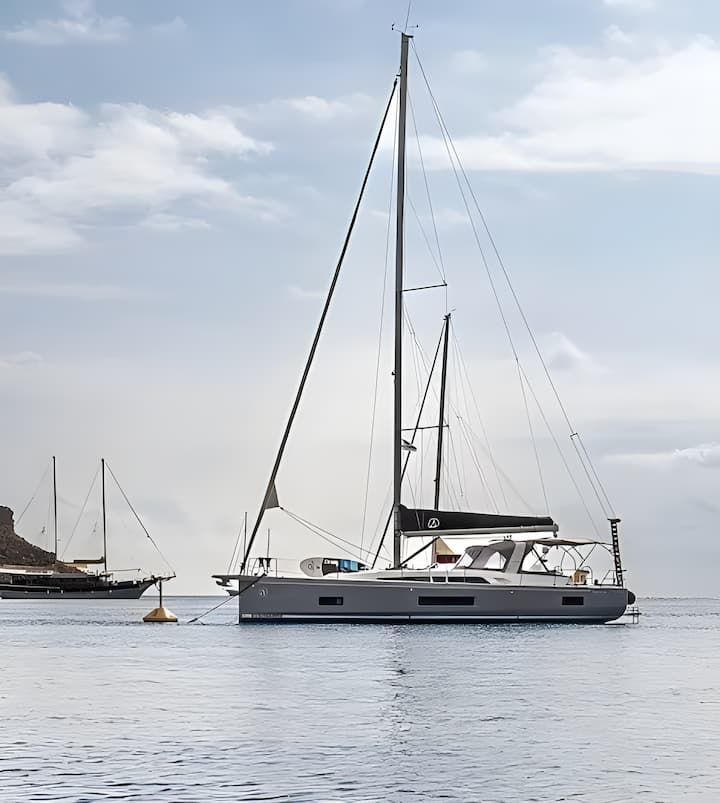
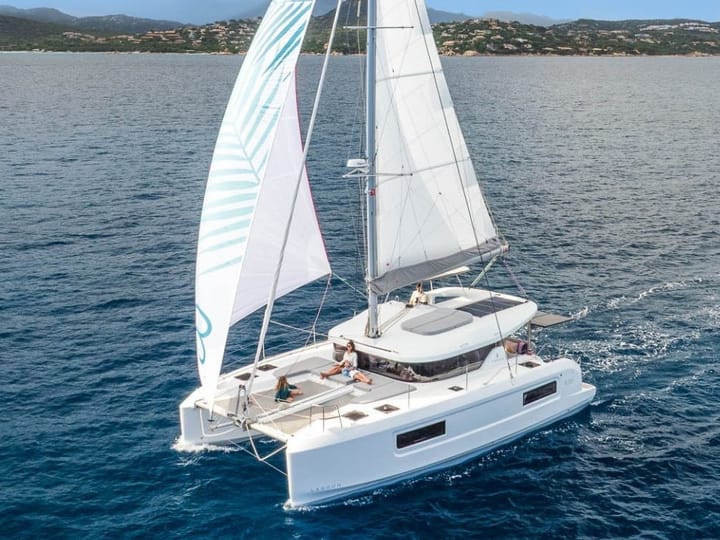
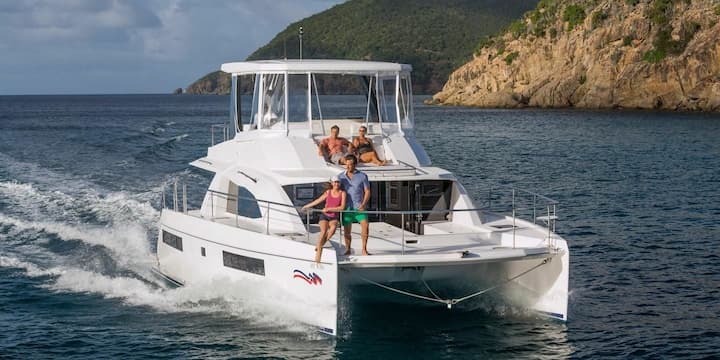
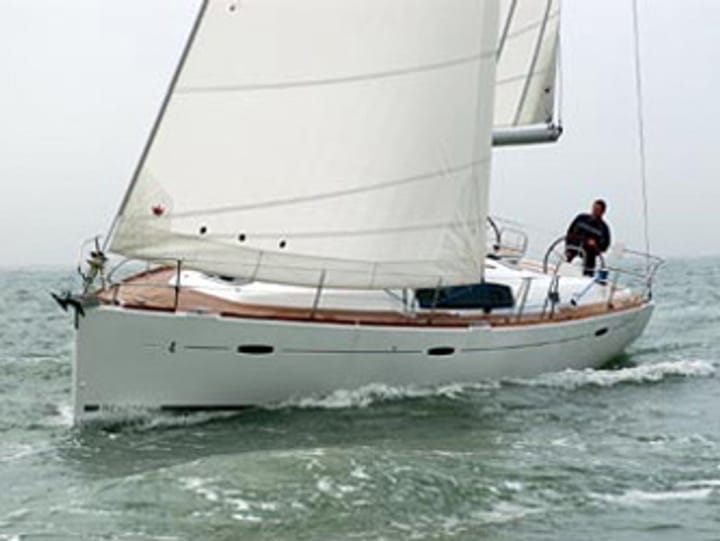
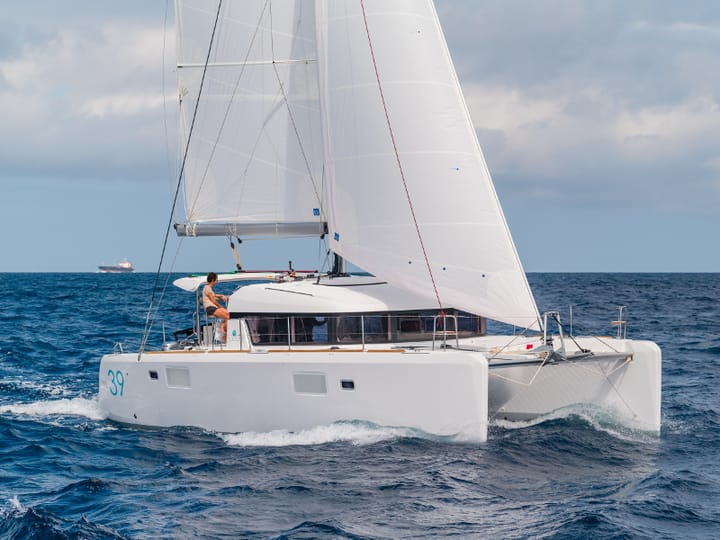
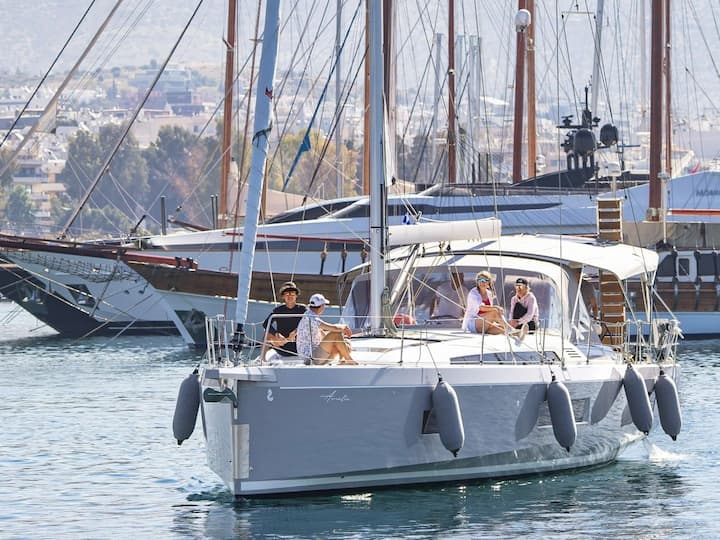
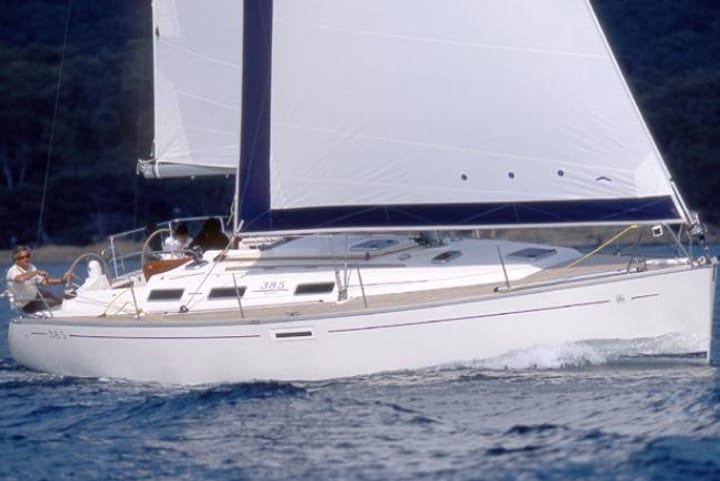
Boat style should also be considered in relation to the route rather than in isolation. Travelers comparing a sailboat charter in the Greek Islands with a Greek Islands catamaran charter should consider passage lengths, expected conditions, anchoring plans and the amount of onboard space they value.
Infrastructure varies. Principal gateways have marinas, but many islands rely on town quays, fishing harbors and natural anchorages rather than full-service facilities. Daily marine forecasts and gale warnings are especially important before exposed Aegean passages. Current charts and official notices should also be checked for conservation zones and anchoring restrictions in protected areas, including those around Alonnisos and Zakynthos. Building spare time into the itinerary makes it easier to respond sensibly to weather without turning every change into a disruption.











Verified
Muhammed A.02 Sep 2026
Our reservation went smoothly. The staff and our captain were very attentive and friendly. We had a wonderful and enjoyable holiday. We would confidently recommend this to everyone.
Listing owner: GeorgiosLefkada / Greece