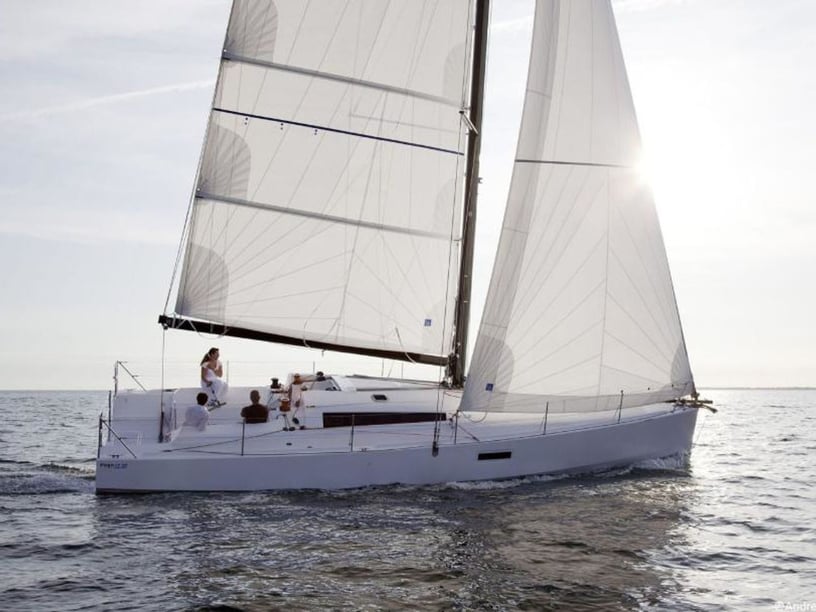
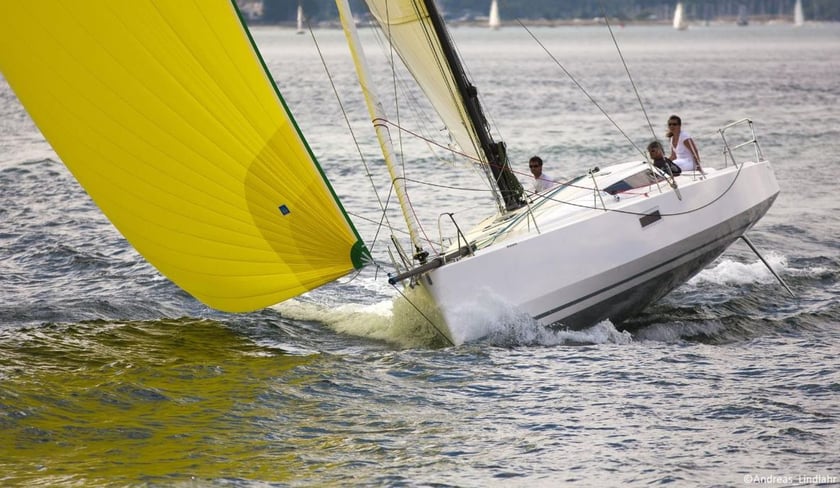
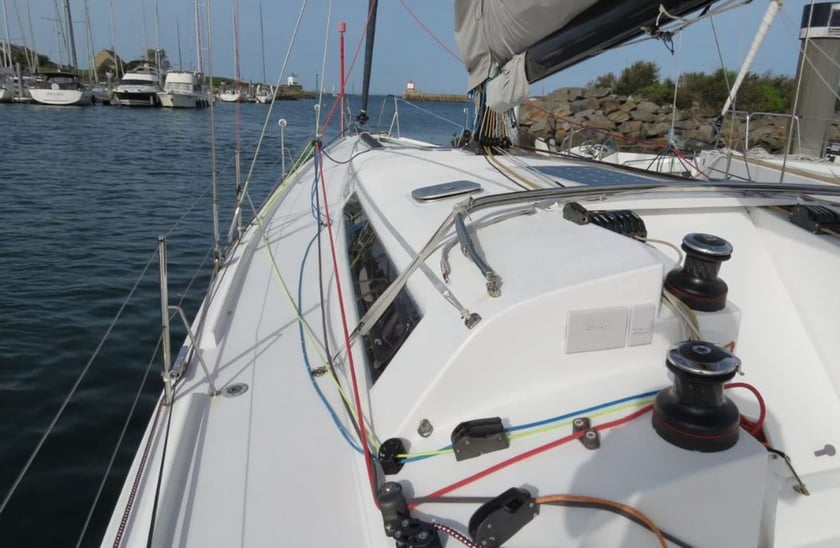
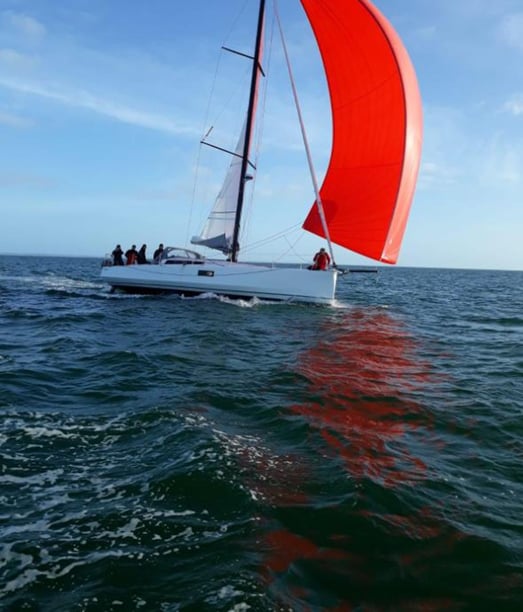
Yacht charter in La Rochelle
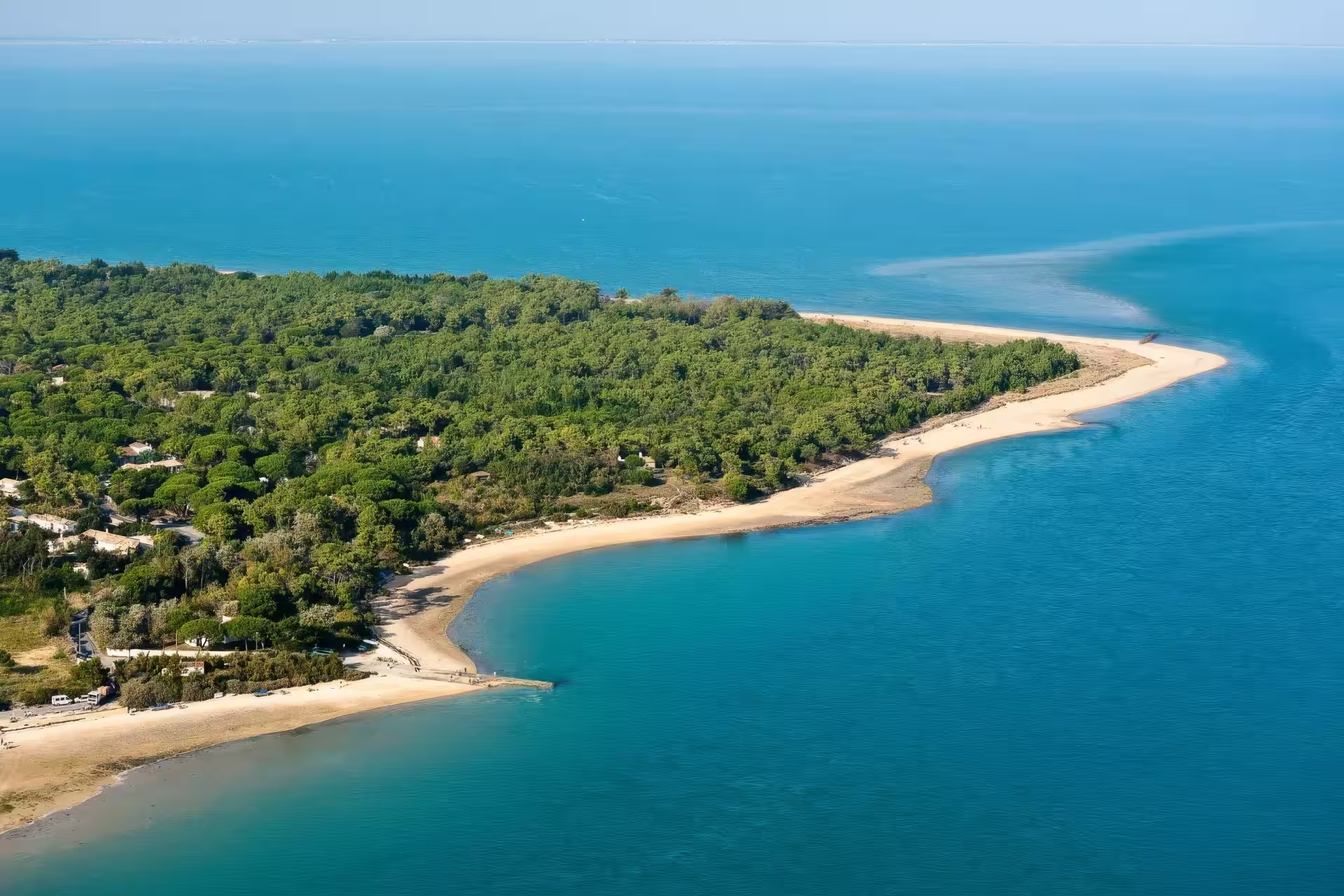
La Rochelle is a historic Atlantic port and an established sailing center on France’s Charente-Maritime coast. Its position behind Île de Ré, Île d’Aix and Île d’Oléron gives yacht charters access to comparatively protected waters within the Pertuis d’Antioche, while the more exposed Bay of Biscay lies close to the west.
A yacht charter in La Rochelle can combine short island passages with time ashore in a walkable city shaped by maritime trade. The medieval towers at the entrance to the Old Port contrast with the extensive facilities of Port des Minimes, and nearby routes lead toward island harbors, Fort Boyard and the Charente estuary. For travelers considering boat rental in La Rochelle, the defining feature is this balance between accessible coastal cruising and the tides, currents and shifting Atlantic weather that require thoughtful planning. It also offers a distinctive Atlantic option within the wider range of yacht charters in France.
Islands and coastal places to explore
Île de Ré is one of the most natural directions for a charter, with possible calls at Saint-Martin-de-Ré, La Flotte and Ars-en-Ré. These ports make it possible to combine sailing with time ashore in established island settlements. Routes toward Ars can continue beneath the Ré bridge and into the Pertuis Breton.
South of La Rochelle, Île d’Aix provides an island stop near Fort Boyard. The fortress is a recognizable landmark from the water and can be incorporated into a short passage before continuing to the island. Farther across the Pertuis, Île d’Oléron offers ports such as Boyardville and Saint-Denis-d’Oléron.
The Charente estuary adds a different dimension. A passage past Île d’Aix and into the river leads toward Rochefort, replacing open coastal views with an estuarine approach influenced by channels and tides.
What sailing around La Rochelle is like
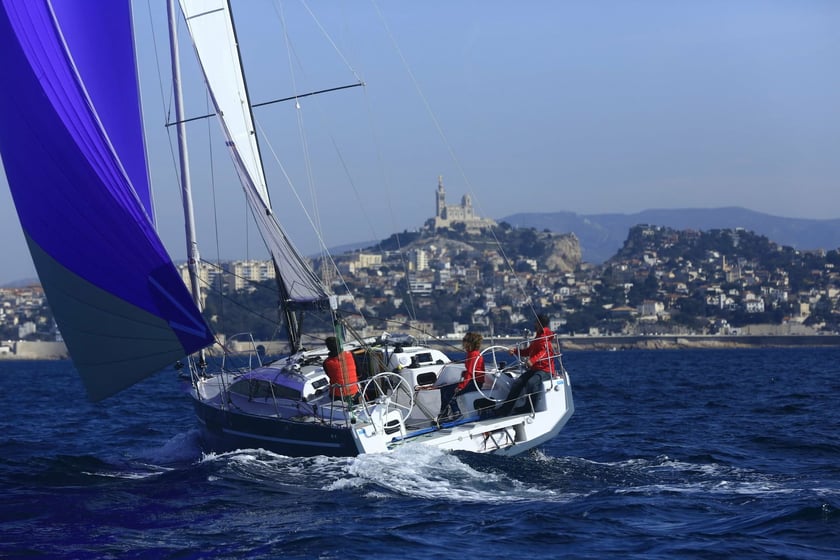
Cruising around La Rochelle is generally based on day sails and short coastal passages. The surrounding islands reduce much of the open-ocean swell within the Pertuis, making the area feel more sheltered than the nearby Bay of Biscay. Routes farther west, however, become exposed to Atlantic conditions relatively quickly.
The sailing difficulty is moderate, largely because tides and tidal currents are central to nearly every passage. Streams can be particularly influential between Île d’Aix and Île d’Oléron and between Île de Ré and La Pallice. Shallow banks, mudflats, shellfish installations and draft-dependent harbor entrances also make timing important.
During settled warm-season weather, mornings may be lighter before a thermal sea breeze develops around midday and strengthens through the afternoon. Local effects near Ré, Chef de Baie and La Pallice can change wind direction or strength. These conditions reward crews that plan around both the forecast and the tide rather than relying on distance alone.
Best time for a La Rochelle yacht charter
May through October is generally the most suitable period for recreational cruising around La Rochelle. June to September usually brings the warmest, sunniest and driest conditions, while July and August form the principal tourism and boating peak. Harbor activity is likely to be at its highest during these two months, so advance itinerary planning is particularly useful.
May and September sit outside the main midsummer peak while remaining among the particularly suitable months for boating. They can suit travelers who prefer a less concentrated holiday period, although conditions still need to be checked for each departure. October can also support rewarding trips but is cooler and less consistent.
Winter has lower boating activity, less sunshine, more rain and a greater likelihood of strong Atlantic winds. April may offer occasional opportunities, but it does not have the same consistency as the main May-to-October season.
Route ideas from La Rochelle
A short route from La Rochelle can pass Fort Boyard and continue to Île d’Aix, combining a notable view from the water with an island visit. A longer east-to-west crossing of the Pertuis can lead to Boyardville or Saint-Denis-d’Oléron on Île d’Oléron.
Northbound itineraries connect La Rochelle with Saint-Martin-de-Ré or La Flotte. Crews continuing toward Ars-en-Ré can enter the Pertuis Breton after passing beneath the Ré bridge. For a change from island cruising, the Charente route runs past Île d’Aix and into the estuary toward Rochefort.
Actual combinations depend on tides, harbor access, draft and weather. For this reason, a modest geographic itinerary can be more satisfying than trying to cover every island and estuary in a single trip.
Maritime culture and time ashore
La Rochelle’s relationship with the sea remains visible throughout a charter. The Saint-Nicolas and Chain Towers frame the entrance to the Old Port; historically, a chain could be raised between them to close the harbor. The Maritime Museum extends this nautical context through its heritage fleet, which includes France I, a former ocean weather ship.
Food is closely connected to the tidal landscape. Oysters, bouchot mussels and other shellfish are cultivated in the waters between the mainland and the islands, making local seafood a natural part of time ashore. Island ports and the historic center allow a charter to alternate between sailing and exploring on foot rather than treating La Rochelle only as an embarkation point.
The surrounding waters also belong to the Gironde Estuary and Pertuis Sea Marine Natural Park. Respecting eelgrass beds and keeping an appropriate distance from birds and marine wildlife are important parts of cruising here.
Access, marinas and departure areas
La Rochelle can function both as a departure area and as a destination within a wider Atlantic itinerary. Port des Minimes is the city’s large, extensively equipped marina complex and an important potential starting point for local trips. The Vieux-Port offers a more historic setting, although its tidal basins use locks and opening bridges, so movements must follow current harbor procedures and high-water timing.
La Rochelle-Ville railway station is within walking distance of the Old Port and is served by TGV, Intercités and regional trains. La Rochelle–Île de Ré Airport is a short road or bus journey from the city and marina areas. Local buses, bicycles and maritime shuttles help connect the center, Old Port and Les Minimes, which is useful when provisioning or spending time ashore before departure.
Planning your charter
When comparing a yacht charter or boat rental in La Rochelle, consider draft, handling requirements and the intended route alongside the size of the vessel. Several neighboring island ports and mooring areas have tidal or draft-dependent access, so the most suitable yacht for a harbor-focused itinerary may differ from one chosen for more exposed passages toward the Bay of Biscay.
Current tide tables, marine forecasts and appropriate SHOM charts are essential planning tools. Strong tidal streams can change both passage time and sea state, while afternoon sea breezes may make the return leg livelier than the morning departure. Main fairways should be followed carefully because the wider area includes shallow banks, mudflats, marked channels and shellfish-growing installations.
Travelers should discuss preferred island calls and time ashore when arranging the trip, while keeping alternatives available for changing conditions. Those seeking a sailing-focused option can also compare sailboat charters in La Rochelle.