Yacht charter in Glénac
A yacht charter in Glénac is an inland boating experience rather than a conventional coastal sailing holiday. This small locality in Morbihan, Brittany, stands where the canalized River Oust meets the Aff. Its port opens onto the reedbeds and wet grasslands of the Marais de Glénac, also known as the Mortier de Glénac.
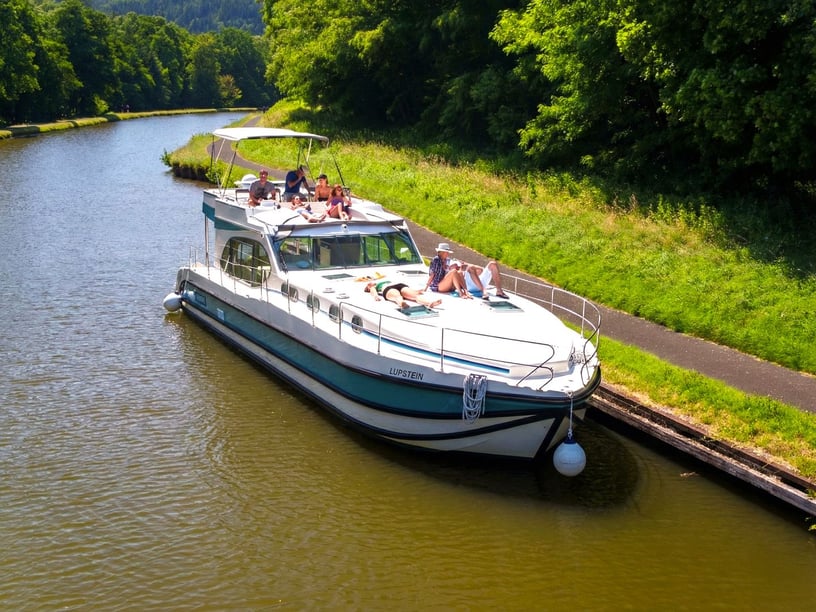
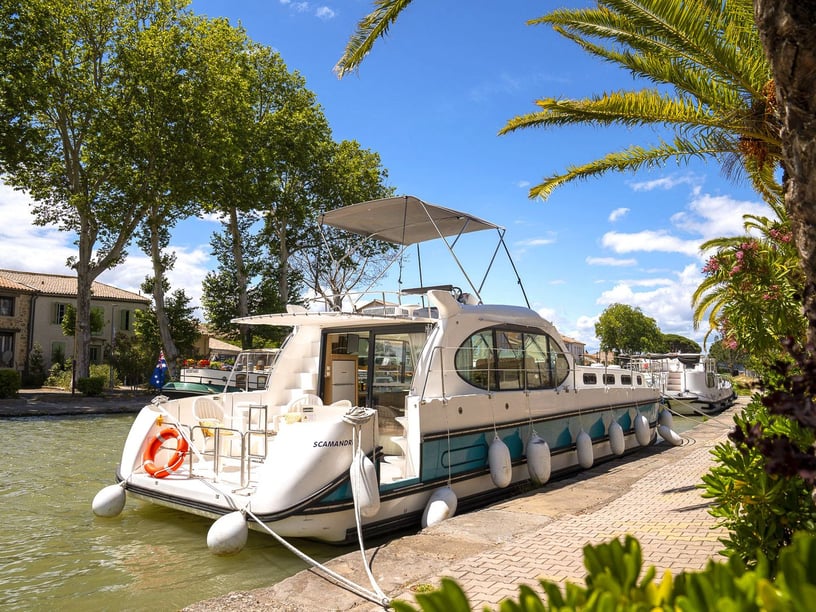
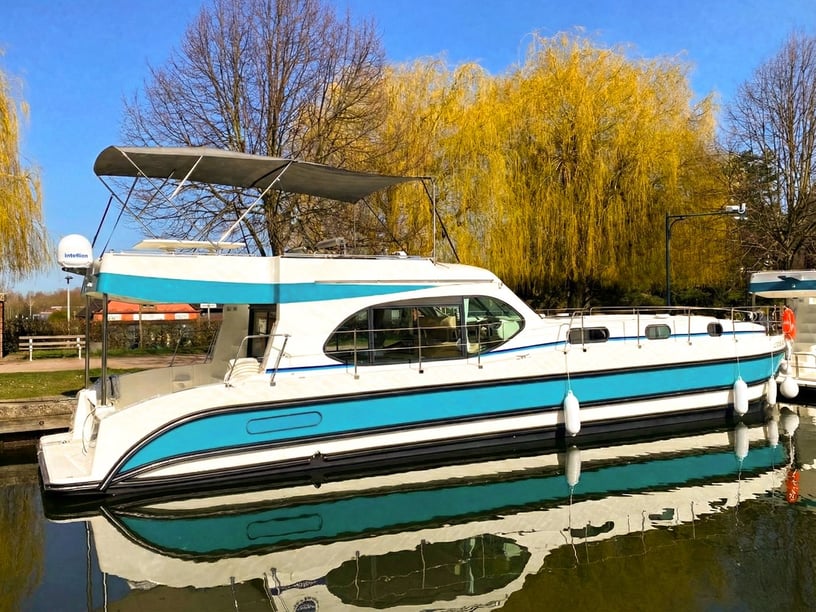
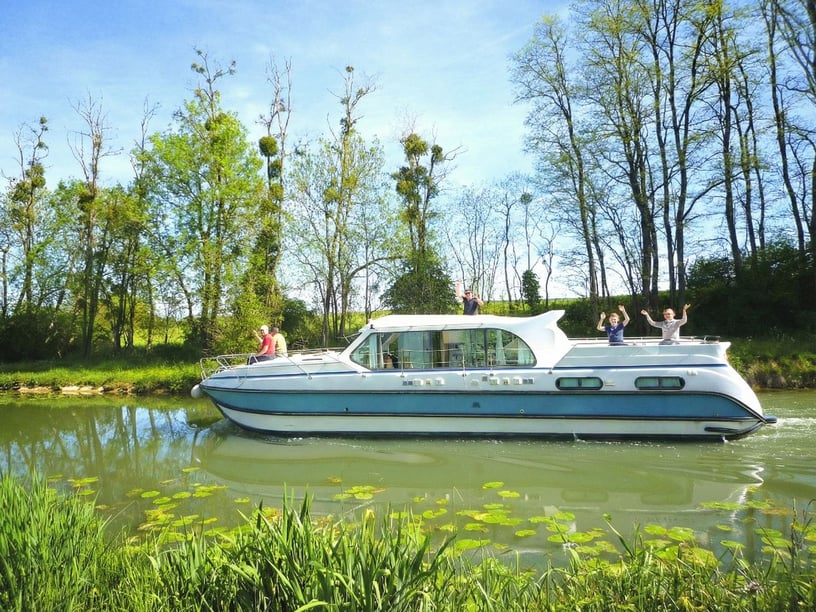
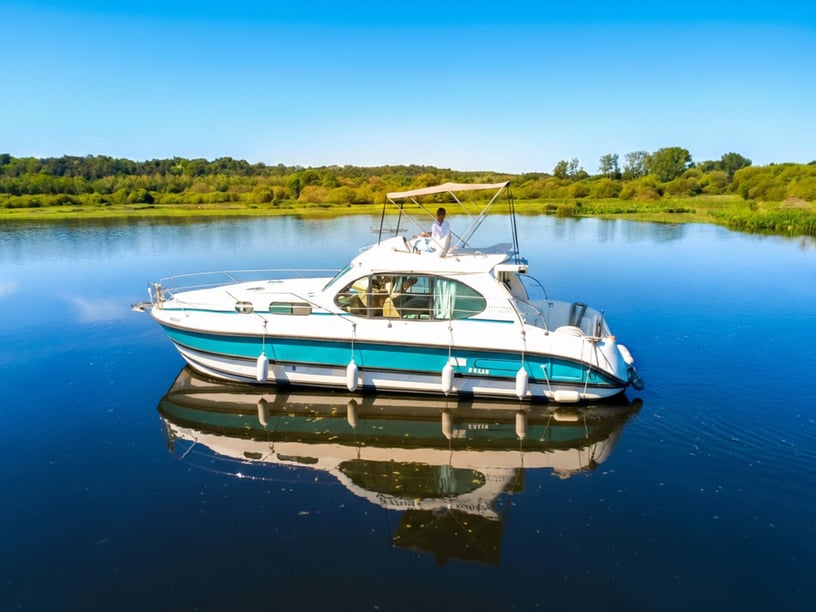
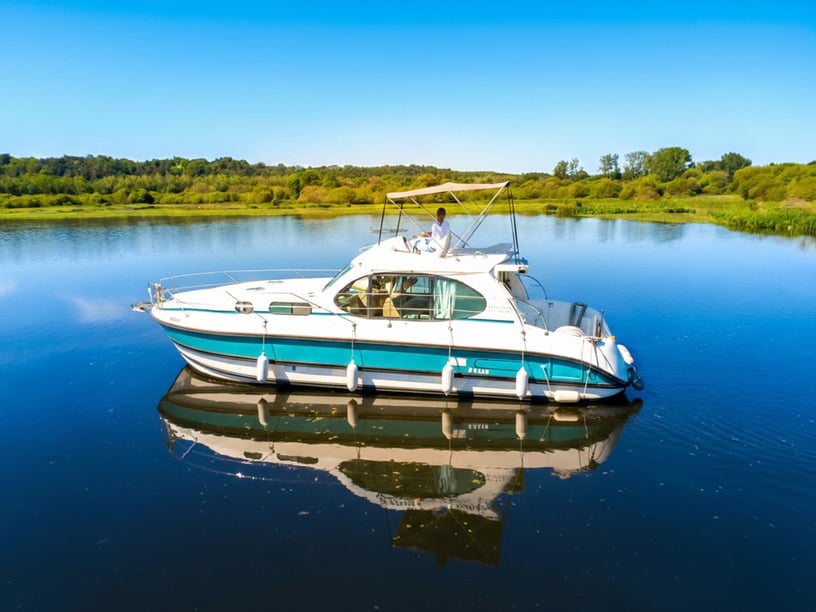
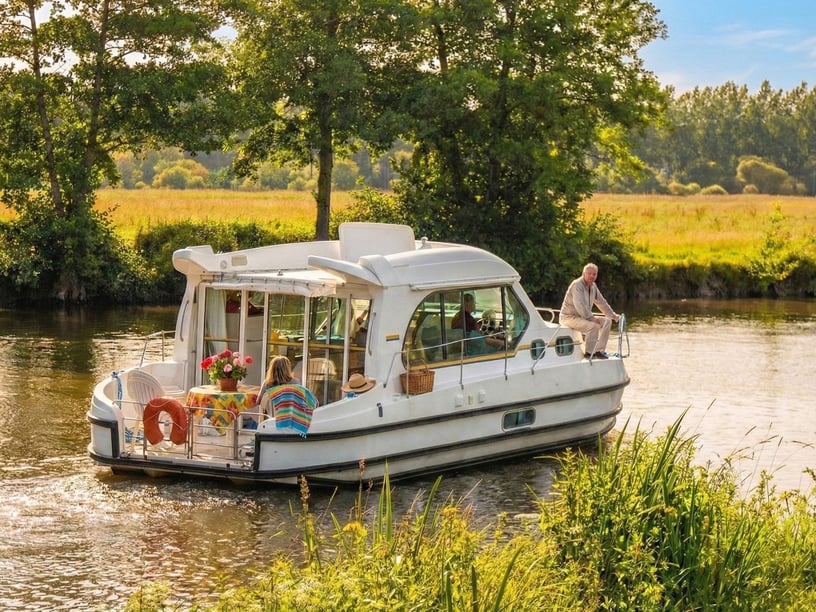
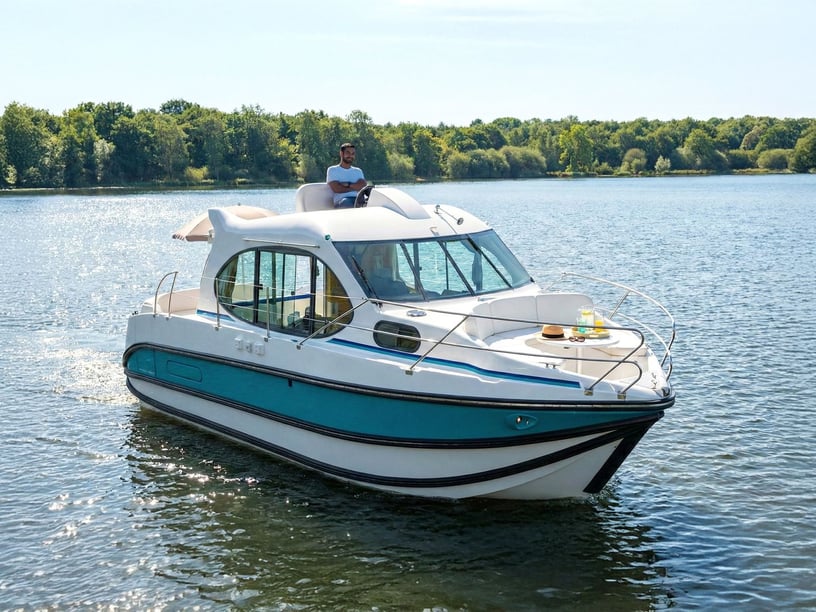
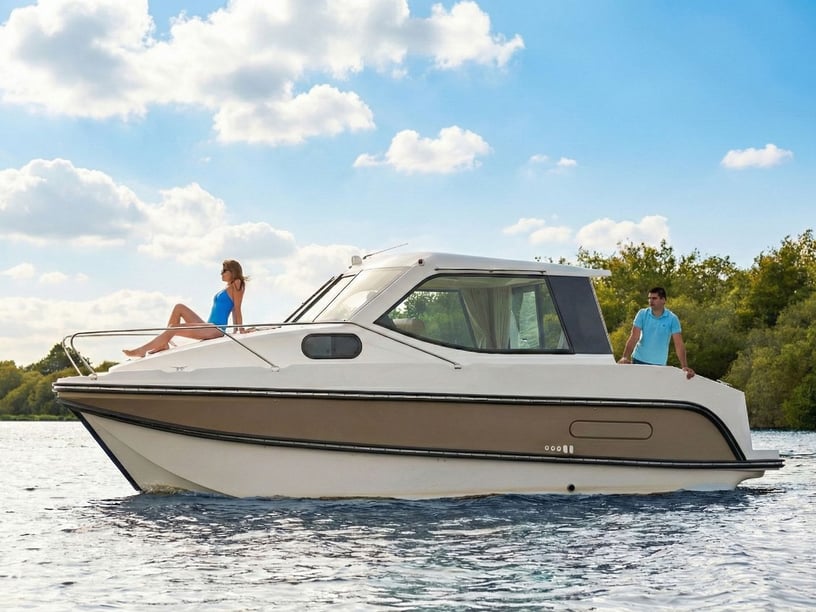
Slow cruising sets the pace. From Glénac, travelers can follow the Canal de Nantes à Brest, enter the narrow Aff toward La Gacilly or continue downstream as the open marsh landscape gives way to the wooded granite gorge around Île aux Pies. Houseboats and small motorboats are particularly well suited to these sheltered waterways, making boat rental in Glénac relevant to families, first-time crews and travelers interested in nature, canal heritage and unhurried time ashore.
Places to explore from Glénac
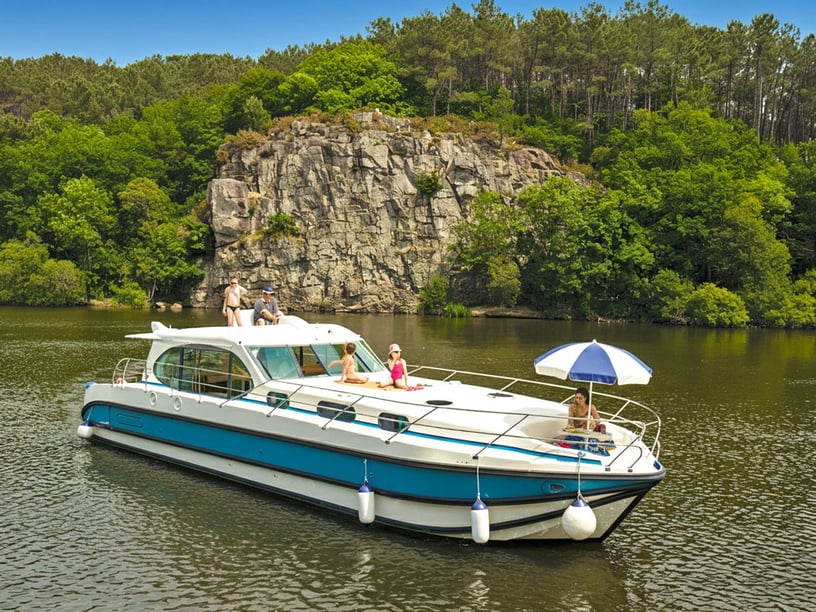
The Marais de Glénac shapes the immediate cruising area. Marked channels cross a broad wetland of reeds and low-lying grassland, with abundant birdlife adding interest to quiet passages. Downstream, Île aux Pies marks a striking change in scale: the river narrows between wooded granite slopes, creating one of the most distinctive stretches of the lower Oust.
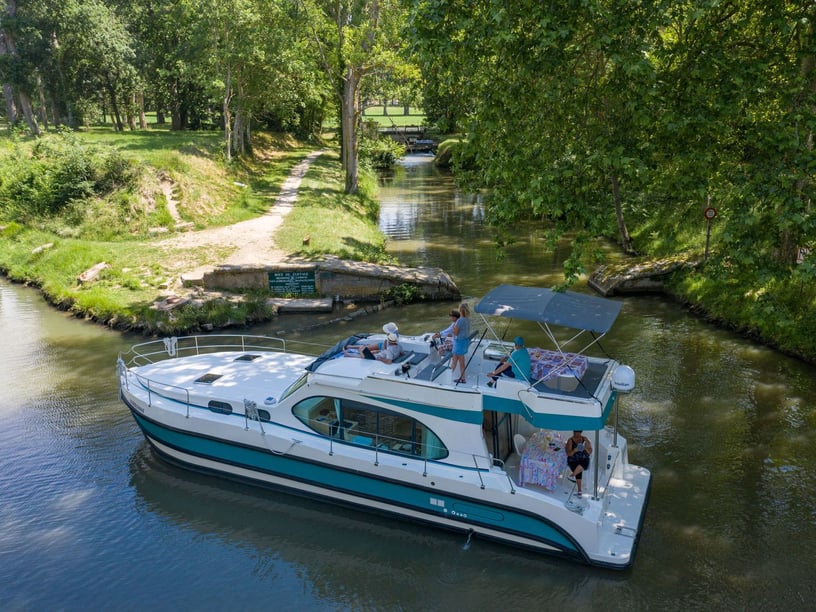
The Aff provides a contrasting side route to La Gacilly. This branch is narrower, shallower and more enclosed by trees than the Oust, and the destination adds an artisan quarter and an appealing shore stop to the journey. Farther along the canal, Saint-Martin-sur-Oust, Malestroit and Josselin extend the possibilities for travelers with more time. Malestroit and Josselin are especially relevant when the aim is to combine cruising with historic town visits, while towpaths beside the canal support walking and cycling between periods aboard.
What cruising around Glénac is like
Cruising around Glénac is generally calm and sheltered from sea swell and tides. The experience centers on low-speed navigation, locks and short passages between river ports rather than wind-driven sailing. This makes the area approachable for first-time houseboat crews, although easy conditions do not remove the need for careful handling.
On the Oust, boats should stay within the marked channel because shallow water extends into parts of the marsh. The Aff demands more concentration: it is narrow and shallow in places, passing space is constrained, branches may overhang the water and bridge clearance is limited. The local speed limit is 6 km/h, which suits the waterway’s measured rhythm.
Rain is possible throughout the season, and changing water levels can matter more than wind strength. Floods, drought, maintenance and aquatic vegetation may temporarily restrict navigation. Travelers should therefore check current waterway and lock notices before departure rather than relying only on a planned itinerary.
The best time to charter in Glénac
Normal recreational navigation runs from early April to late October, with the main operating period extending from mid-June to mid-September. June, July, August and September are the particularly suitable months. July and August offer the warmest conditions, while June combines long daylight with the established summer cruising season. September remains a strong choice when useful daylight and generally comfortable conditions are priorities.
May can also work well for travelers prepared for more changeable weather, while April and October are cooler and less consistent. Winter is not a normal charter period because lock service is substantially reduced or unavailable. At any time of year, recent rainfall, low water or maintenance can affect a canal trip, so operational notices are an essential part of timing the journey.
Cruising routes and itinerary ideas
A short charter can connect Glénac with Malestroit on a documented return itinerary of about 55 km. It involves roughly 11 hours of navigation and 10 lock passages, making it suitable for a weekend when crews want a balance of boating, lock work and time ashore.
For a longer canal journey, the Glénac–Josselin itinerary covers approximately 105 km, with around 23 navigation hours and 30 lock passages over four to five days. The number of locks makes daily timing an important consideration even though the water itself is sheltered.
A compact route from La Gacilly through Glénac to Île aux Pies is about 10 km and showcases the area’s main contrasts: the confined, wooded Aff, the open Mortier de Glénac and the granite-sided lower Oust. Three-day patterns beginning in Redon can combine these places with Pont d’Oust before returning via La Gacilly.
Experiences on and beside the water
Wildlife watching is central to a Glénac charter because the route passes directly through extensive wetland habitat. Canoes, kayaks and paddleboards offer another way to experience quieter sections, while the adjoining towpaths make it possible to alternate cruising with walking or cycling.
The journey also reveals layers of inland navigation history. The Oust forms part of the nineteenth-century Canal de Nantes à Brest, and locks, halts and riverside settlements remain part of everyday cruising. Ashore, Château de Sourdéac recalls the area’s association with the Rieux family, while the marsh itself was formerly connected with local iron-ore extraction. These cultural elements give a charter here a different character from a purely nature-based river trip.
Getting to Glénac and choosing a departure point
Road travel is the usual way to reach Glénac. Redon is the nearest principal railway gateway, with connections toward Rennes, Nantes and Vannes; the final stage requires a road transfer. Rennes Bretagne Airport and Nantes Atlantique Airport are the relevant air gateways for travelers arriving from farther away.
Port de Glénac is an established houseboat departure point and gives direct access to the Oust–Aff confluence. Port de La Gacilly is useful for trips focused on the Aff, while the marina at Redon supports wider itineraries incorporating the Canal de Nantes à Brest and the Glénac wetlands. Glénac can therefore work as both a starting point and a place explored within a longer inland cruise. Travelers comparing this route with other boating regions can also consider yacht charters in France.
Practical charter planning
The first decision is whether the trip should emphasize relaxed houseboat cruising, short outings in a small motorboat or active exploration by canoe, kayak or paddleboard. For overnight itineraries, a houseboat provides the most natural match for the locks, established halts and multi-day canal routes. Many rental houseboats can be operated without a recreational boat licence after an operator briefing, although requirements depend on the vessel and should be confirmed before booking.
Boat dimensions matter if the itinerary includes the Aff. Local guidance indicates bridge clearance of approximately 3.3 metres, and constrained passing can make a smaller, easily handled craft more comfortable. Crews should also allow realistic time for locks rather than judging a route only by distance.
Check official navigation notices shortly before departure for lock availability, water levels, maintenance and vegetation. Reduce speed near dense aquatic plants or weed-cutting vessels, and remain inside the marked Oust channel. Swimming is prohibited in Brittany’s canals and canalized rivers, so planned stops should focus instead on shore visits, walking, cycling or permitted paddling activities.