Yacht charter in Barcelona
A yacht charter in Barcelona offers a distinctly urban Mediterranean experience. Rather than island-hopping between secluded coves, time on the water is shaped by the city skyline, a long sequence of sandy beaches and easy access to waterfront neighborhoods, architecture, dining and nightlife.
Barcelona’s engineered shoreline stretches from the commercial port and Port Vell, below Montjuïc, past Barceloneta and Port Olímpic toward the Fòrum waterfront. Several marinas are integrated into this busy coastal setting, making the city relevant both for short sightseeing cruises and as a possible starting point for longer passages along the Catalan coast. Travelers planning a broader trip can also compare yacht charter destinations across Spain.
Waterfront areas to explore
Port Vell is the natural starting point for understanding Barcelona from the water. The old harbor sits close to Rambla de Mar, the Gothic Quarter and the medieval Drassanes Reials, so a cruise can be paired easily with time ashore in the historic center.
Beyond the harbor, the Barceloneta peninsula opens onto the Mediterranean. Its beach, maritime character and seafood traditions make it a practical stop before or after a trip. Continuing northeast reveals the city’s modern waterfront in sequence: Vila Olímpica and Port Olímpic, the beaches of Nova Icària and Bogatell, and finally the Fòrum area.
This coast is best approached as a continuous urban panorama rather than a chain of protected anchorages. Its appeal lies in seeing familiar landmarks and neighborhoods from offshore, then returning to a marina with the city immediately accessible.
What cruising off Barcelona is like
Cruising around Barcelona generally follows an open, line-of-sight coast. Natural shelter is limited outside the engineered ports, so trips are usually marina-based rather than built around overnight stays in protected bays. This makes the area particularly suitable for short coastal outings, although longer passages are possible with appropriate preparation.
Spring and summer commonly bring moderate daytime sea breezes that strengthen as the land warms. Conditions can therefore be gentler in the morning and livelier during the afternoon. Easterly and southerly winds occur more often in summer, while autumn and winter bring a greater chance of stronger westerly weather.
The overall sailing difficulty is moderate. The open exposure, changing afternoon breeze and substantial commercial, ferry and cruise traffic around the Port of Barcelona all require attention. Current forecasts, port procedures and marina instructions should be checked before departure, particularly by travelers considering a bareboat arrangement.
Best time for a Barcelona yacht charter
The principal boating season runs from late spring into early autumn, with June and July identified as particularly suitable months. Both usually combine warm weather, abundant sunshine and relatively low rainfall; July is normally the driest and sunniest month.
August remains warm and busy on the water, but rain and thunderstorms are more frequent than in July. September can still offer mild conditions, while October belongs more clearly to the shoulder season and tends to be less consistent. April and May are also shoulder-season months, useful for travelers who prefer to avoid the main summer period while accepting cooler or more variable conditions.
Year-round boating is possible, but winter is cooler and more exposed to strong westerly episodes. Forecast flexibility becomes more important outside the main season.
Short cruises and longer passages
A practical local route runs from Port Vell past Barceloneta, Port Olímpic and the beaches toward Port Fòrum. It works well as a short cruise because the shoreline remains visually connected throughout, with changing views of the old port, beach districts and modern waterfront. The itinerary can be adjusted to the available time and forecast without requiring a complex sequence of stops.
Barcelona can also serve as a departure point for passages farther along the Catalan coast. Offshore crossings toward the Balearic Islands are a different undertaking: the established Barcelona–Mahón route leads across open water to Menorca and should be treated as a substantial passage, not an extension of a local day trip. Crew experience, weather windows and the yacht’s suitability become central to planning.
City, coast and maritime culture
The defining experience is the contrast between open Mediterranean water and a dense city waterfront. From offshore, travelers can follow the arc of Barcelona’s beaches and see how Port Vell, Barceloneta and the Olympic waterfront connect—an urban geography that is less apparent when moving around by land.
Ashore, the maritime story continues at the Drassanes Reials, the medieval Royal Shipyards now occupied by the Museu Marítim de Barcelona. Barceloneta adds another layer through its fishing heritage and traditions of seafood, tapas and rice dishes. Port Olímpic reflects the city’s more recent nautical history: it was constructed for the 1992 Olympic Games, part of the redevelopment that reconnected Barcelona with its beaches.
A charter can therefore combine cruising with beach time, historic districts, Montjuïc viewpoints and evening dining, without requiring lengthy transfers between the marina and the city.
Getting there and choosing a departure area
Josep Tarradellas Barcelona–El Prat Airport is the principal gateway. It connects with the city by L9 Sud metro, R2 commuter rail, buses and taxis. Port Vell and Port Olímpic are integrated into Barcelona’s public-transport and road networks, helping travelers combine embarkation with a city stay.
Relevant departure areas include Marina Port Vell, Marina Vela Barcelona, Port Olímpic, Portal de la Pau and the facilities associated with the Reial Club Nàutic and Reial Club Marítim. Port Fòrum serves the eastern metropolitan waterfront, although it is administratively in neighboring Sant Adrià de Besòs.
The appropriate marina depends on the confirmed yacht, operator and itinerary. Barcelona functions as a place to cruise, a convenient urban departure area and a gateway to longer coastal or offshore trips, but the exact embarkation point should always be verified before arranging local transport.
Planning the right charter
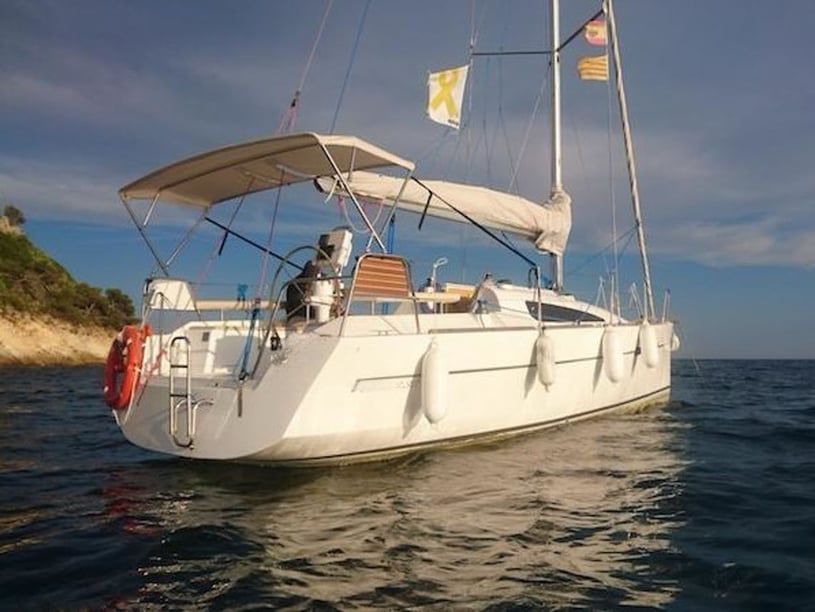
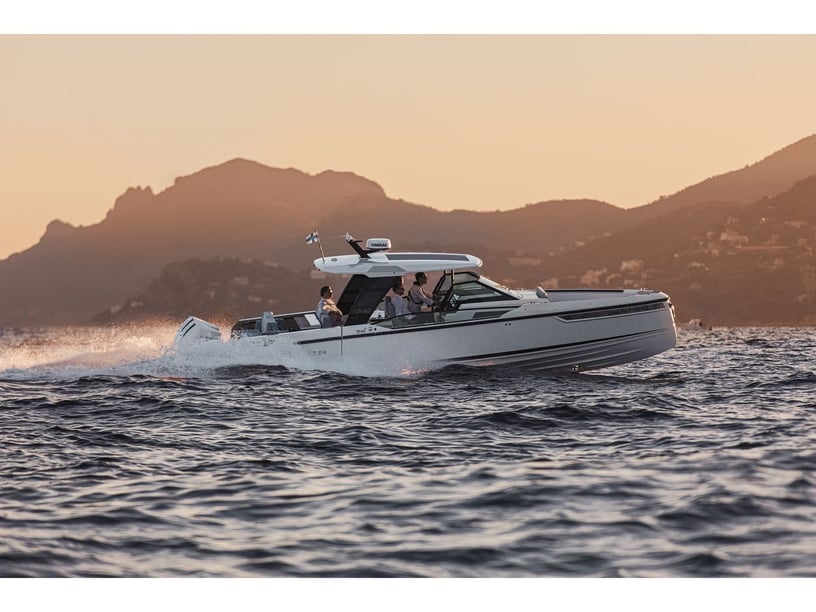
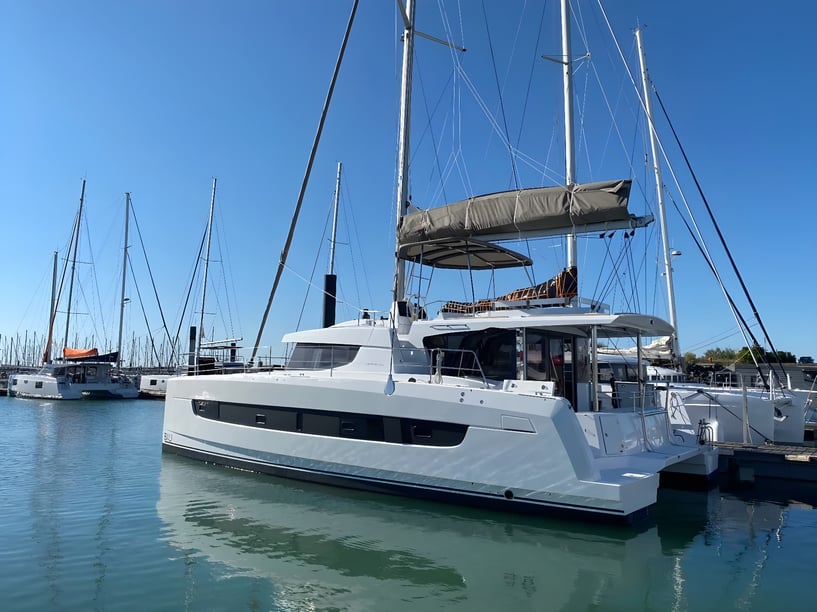
When comparing yacht charter or Barcelona boat rental options, begin with the intended experience. A few hours may suit skyline views and the city beaches, while a longer booking creates more flexibility for coastal travel. An offshore passage requires a very different level of time, preparation and crew capability from a local sightseeing cruise.
Because the immediate shoreline has little natural shelter, confirm where the yacht will berth and whether the plan relies on returning to the departure marina. Ask how the timing accounts for afternoon sea breezes, port traffic and current weather. Travelers without relevant experience should consider whether professional crew or a skipper is appropriate rather than choosing solely by boat size.
Swimming and water sports must remain outside marked bathing areas when beach zones are operating. It is also sensible to clarify what is included, the permitted cruising area, embarkation times and the policy for weather-related itinerary changes. These details make comparisons more meaningful than focusing on appearance or headline capacity alone.