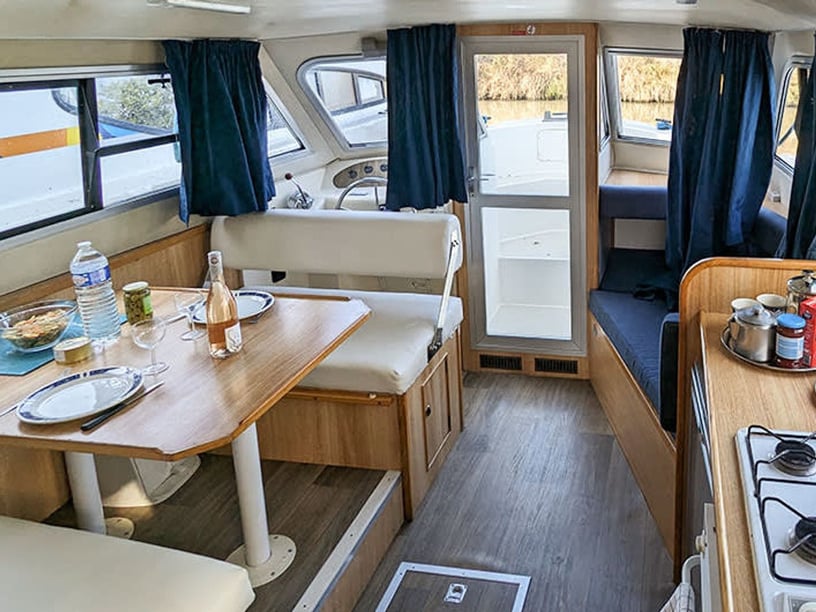
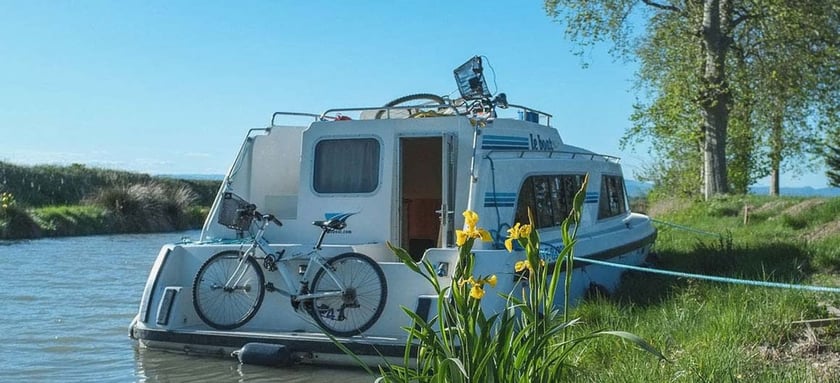
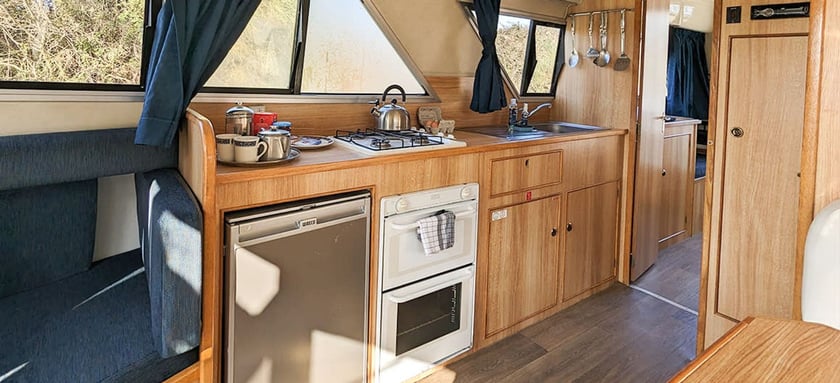
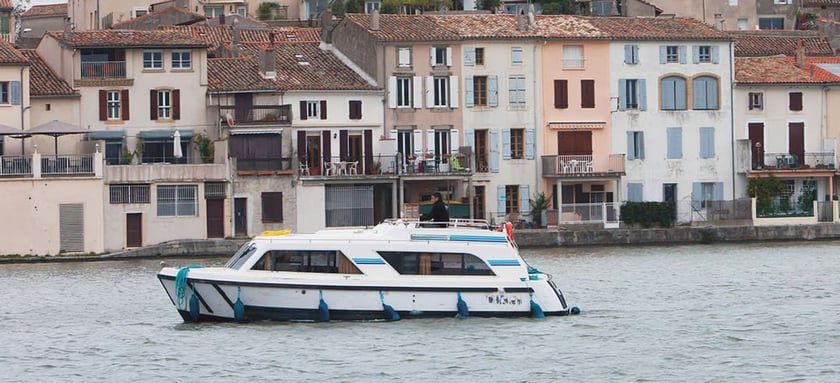
Yacht charter in Homps
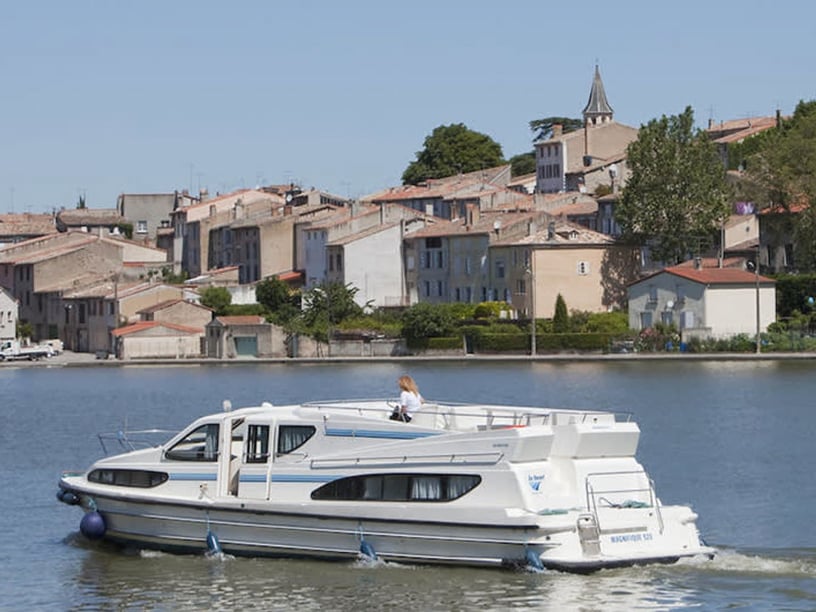
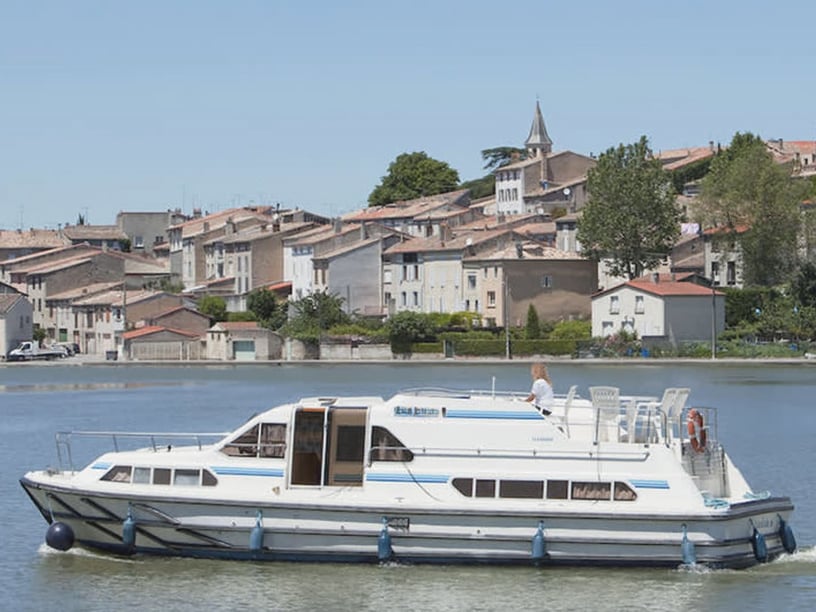
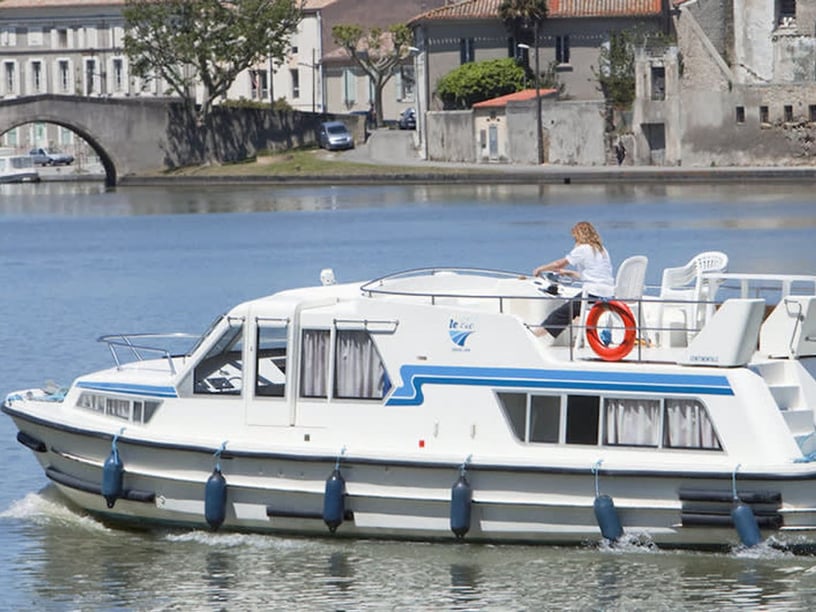
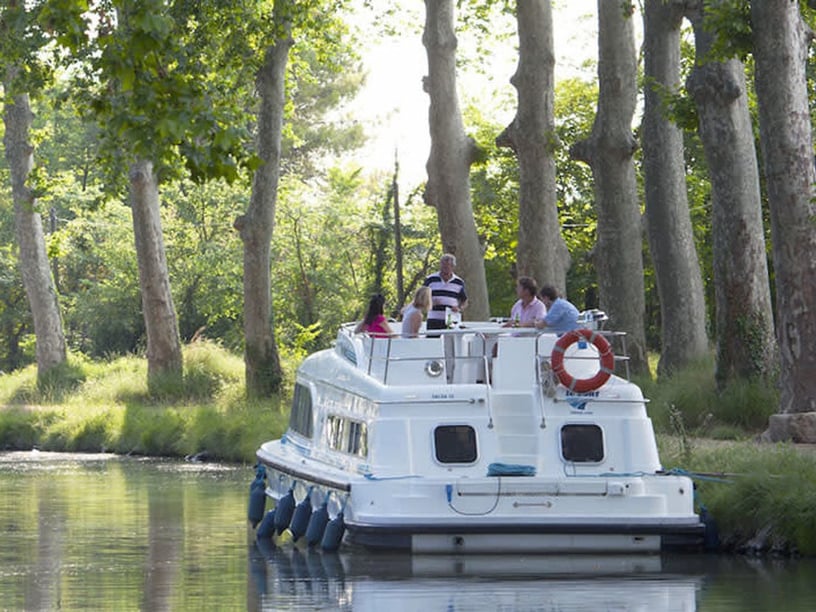
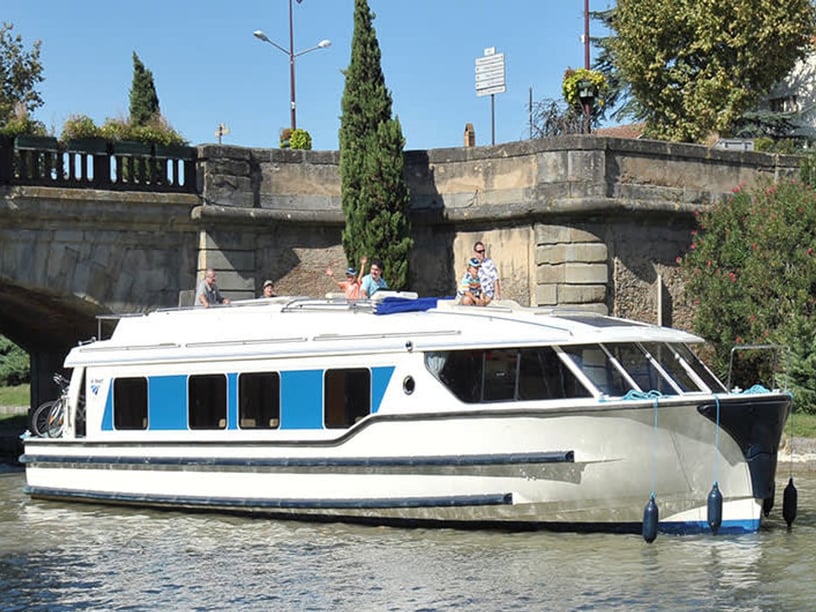
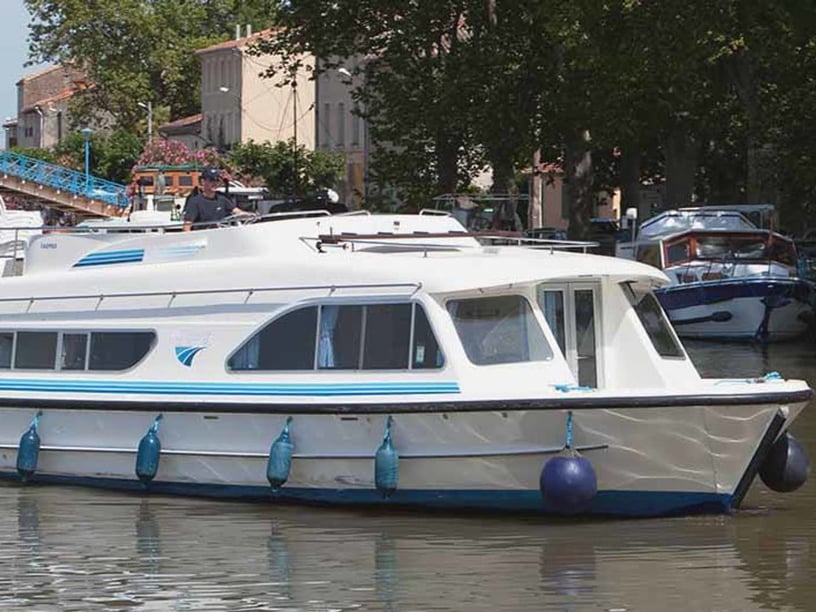
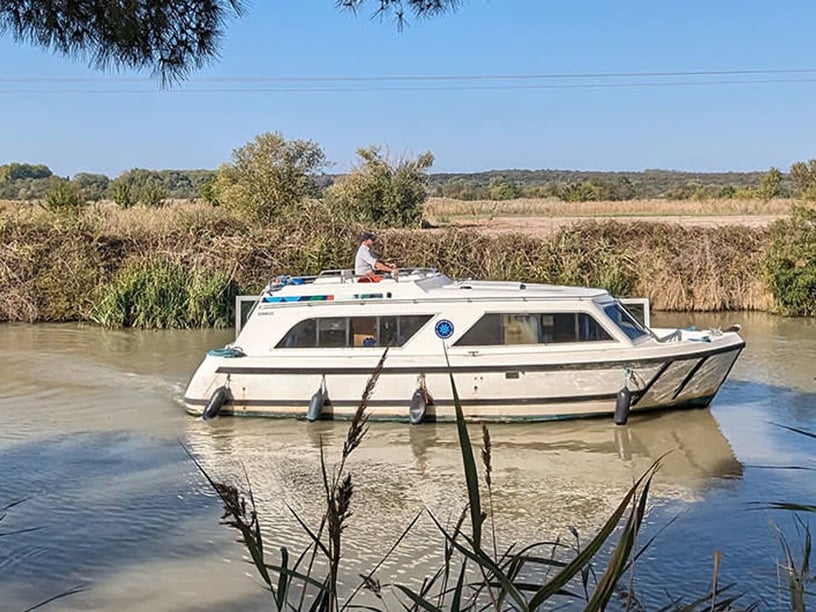
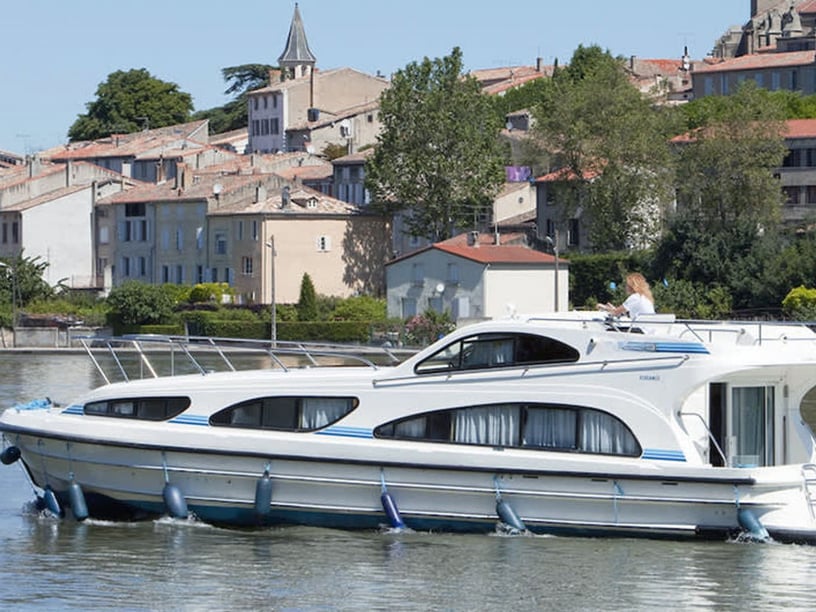
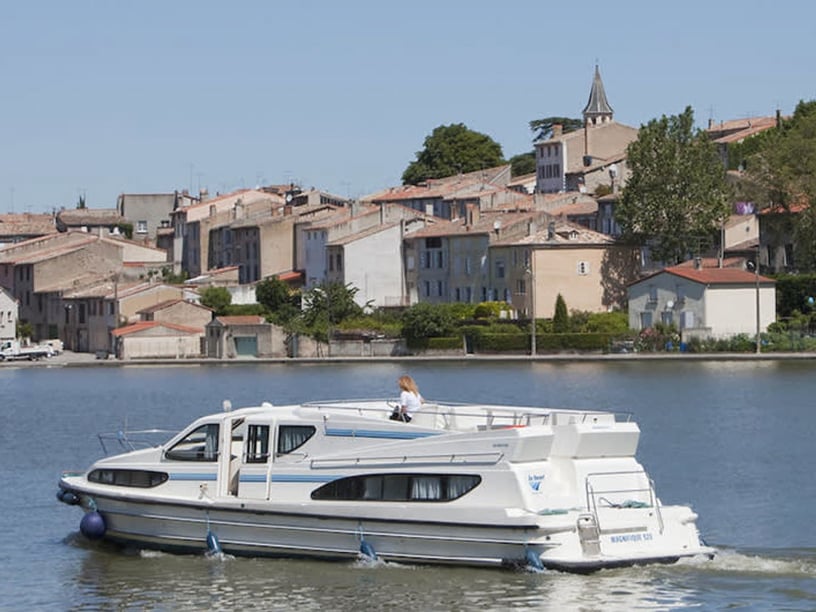
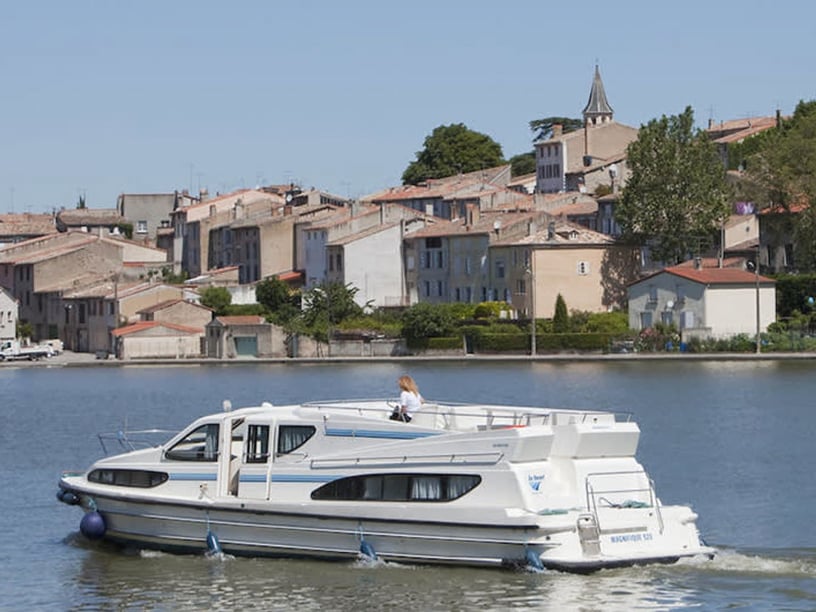
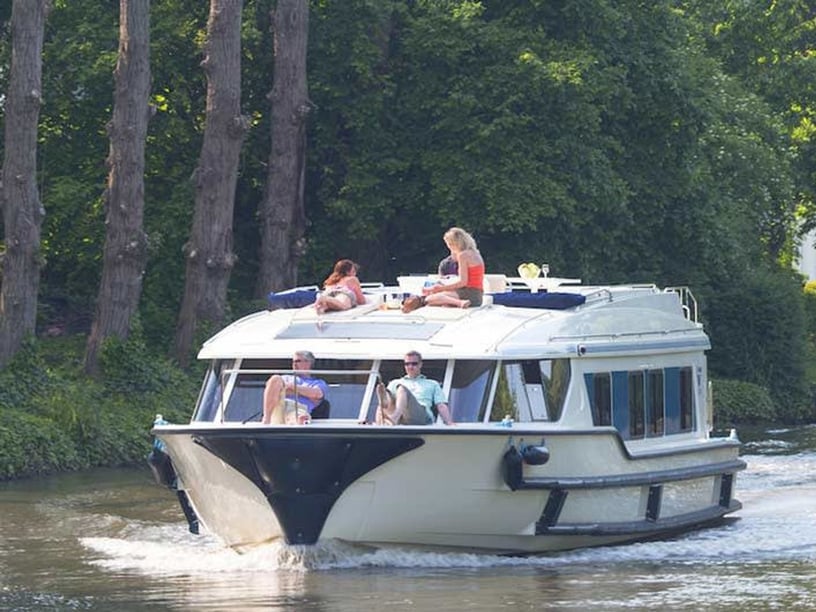
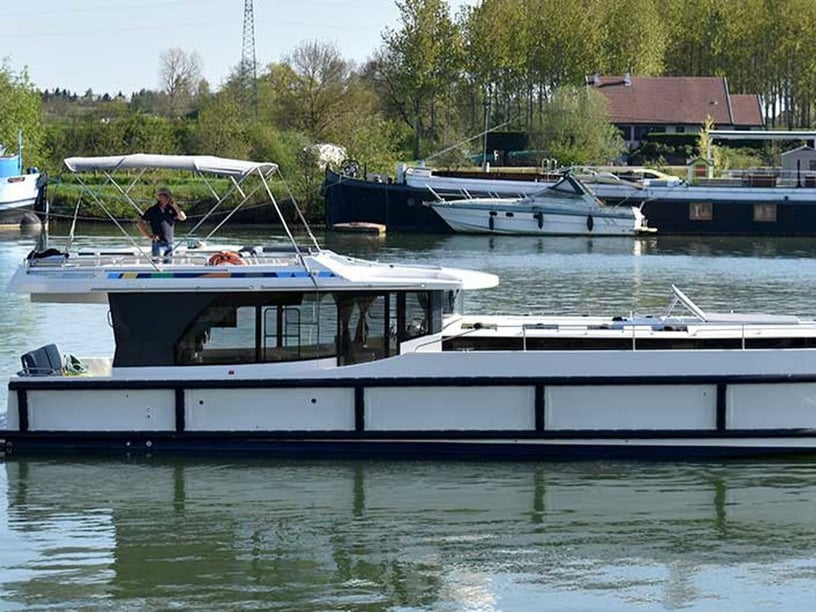
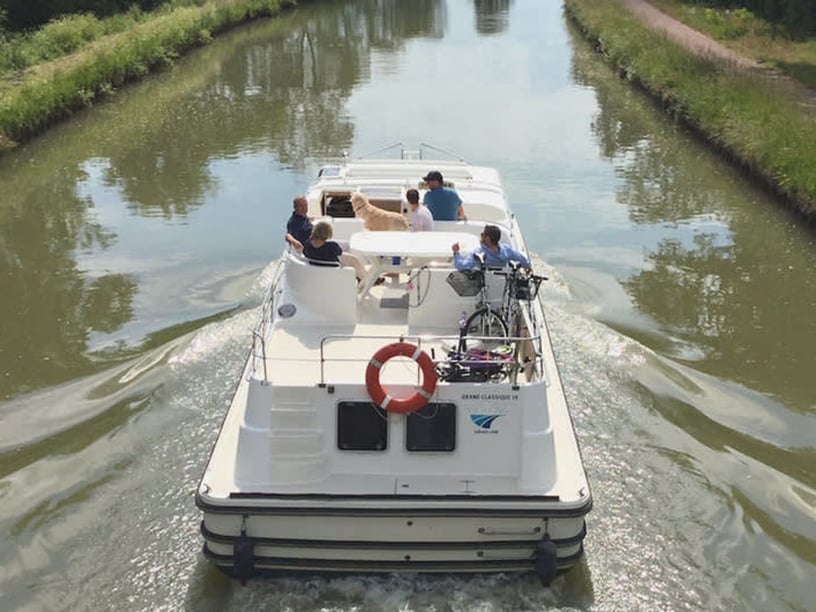
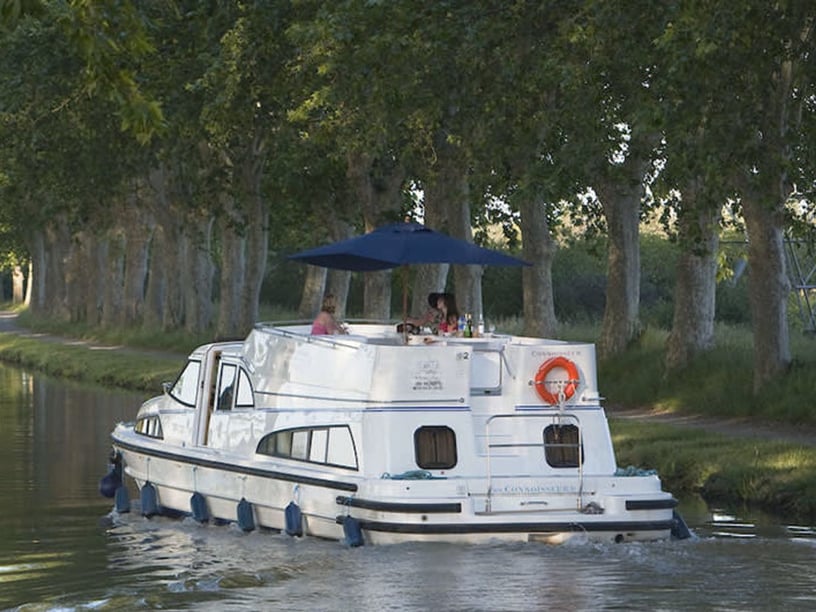
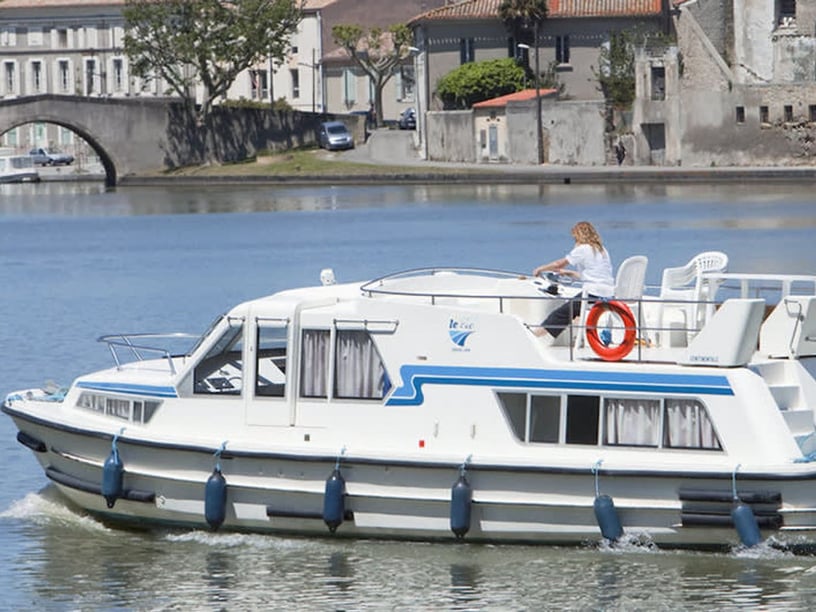
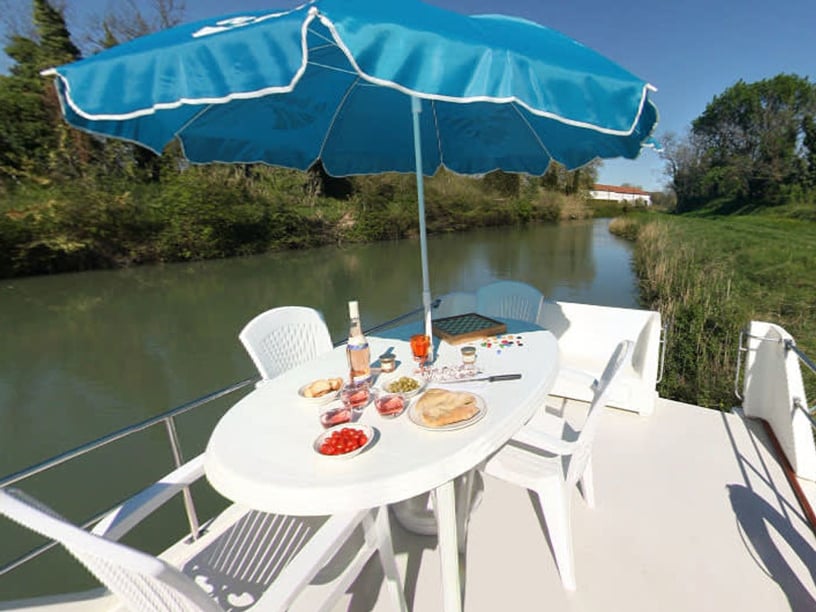
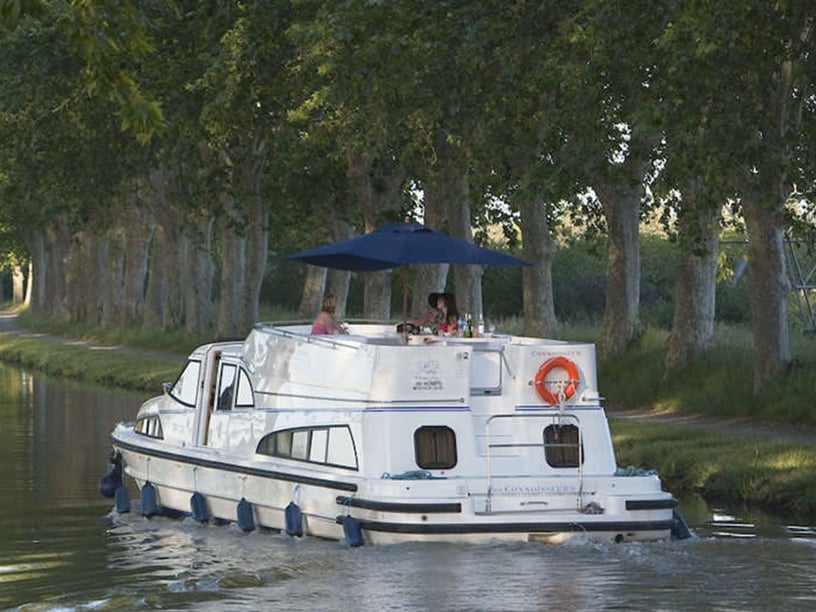
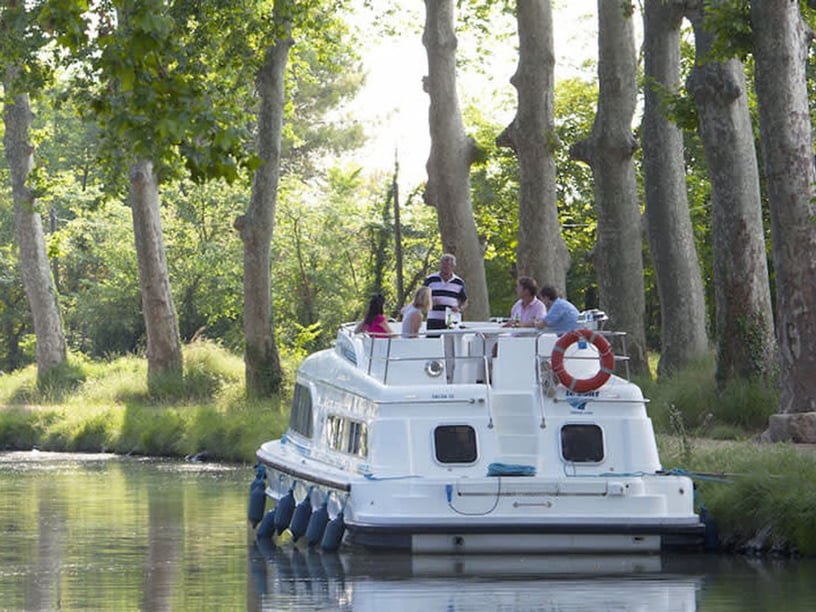
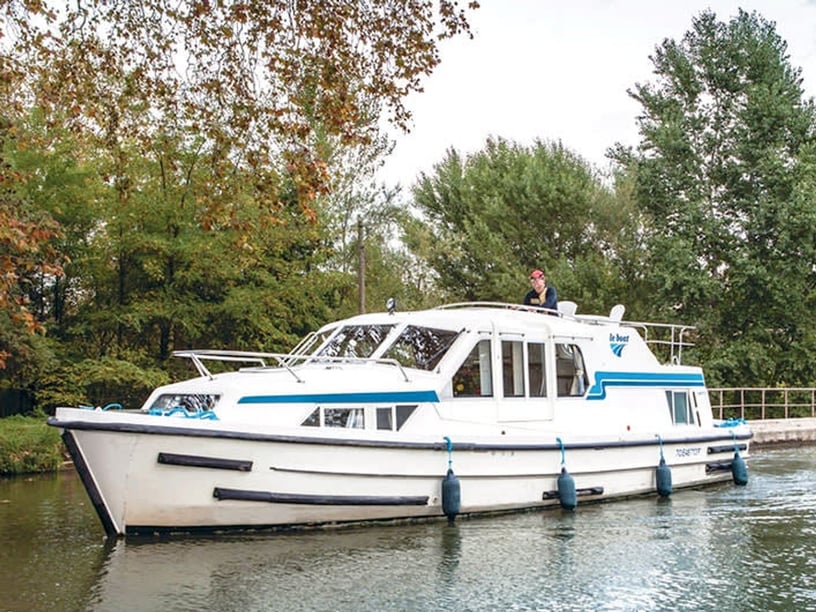
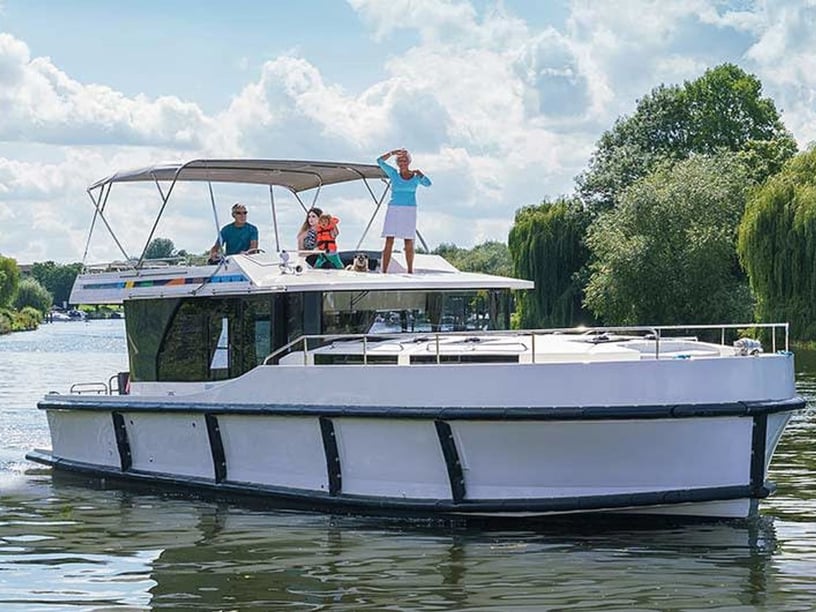
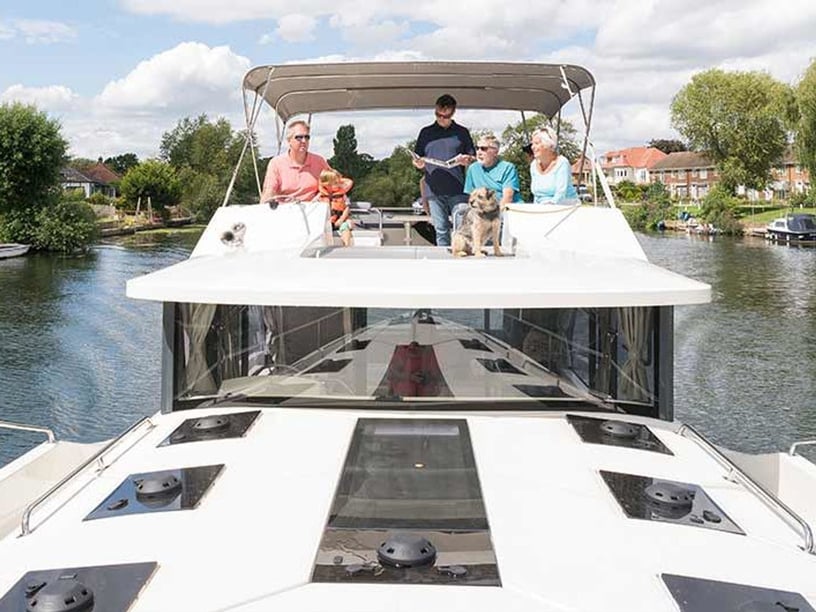
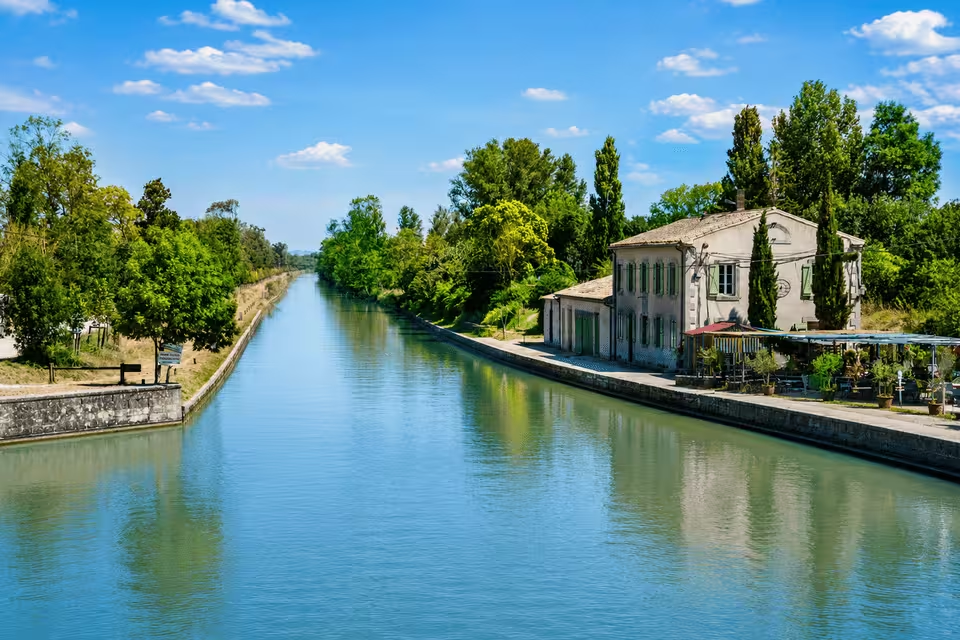
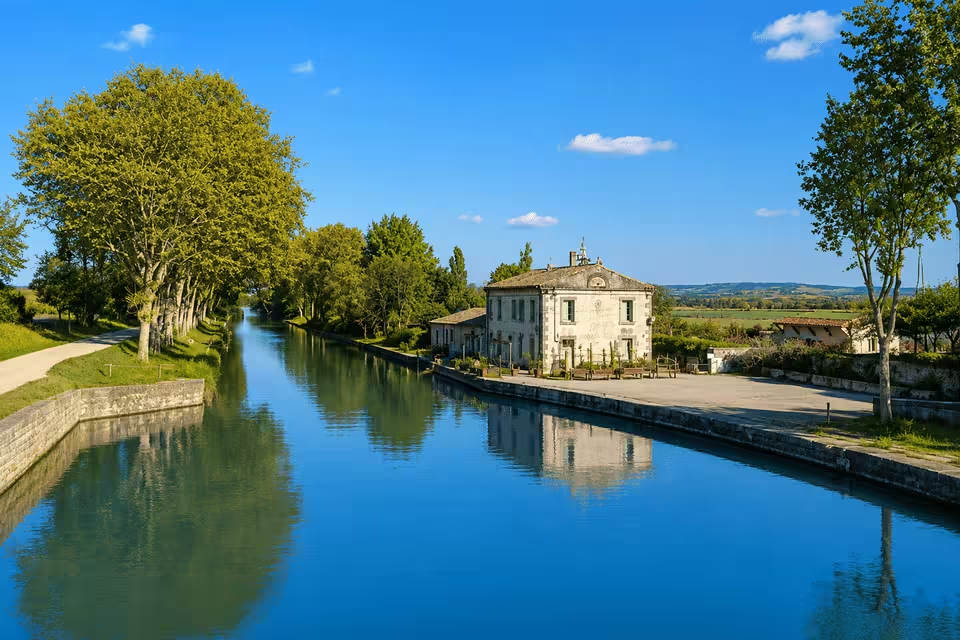
A yacht charter in Homps is an inland journey rather than a coastal sailing holiday. The village stands beside the Canal du Midi in the Minervois area of Aude, surrounded by vineyards between the Montagne Noire and the Corbières. Here, chartering usually means taking a low-speed motor cruiser along sheltered waterways, stopping at locks, canal villages and waterside moorings.
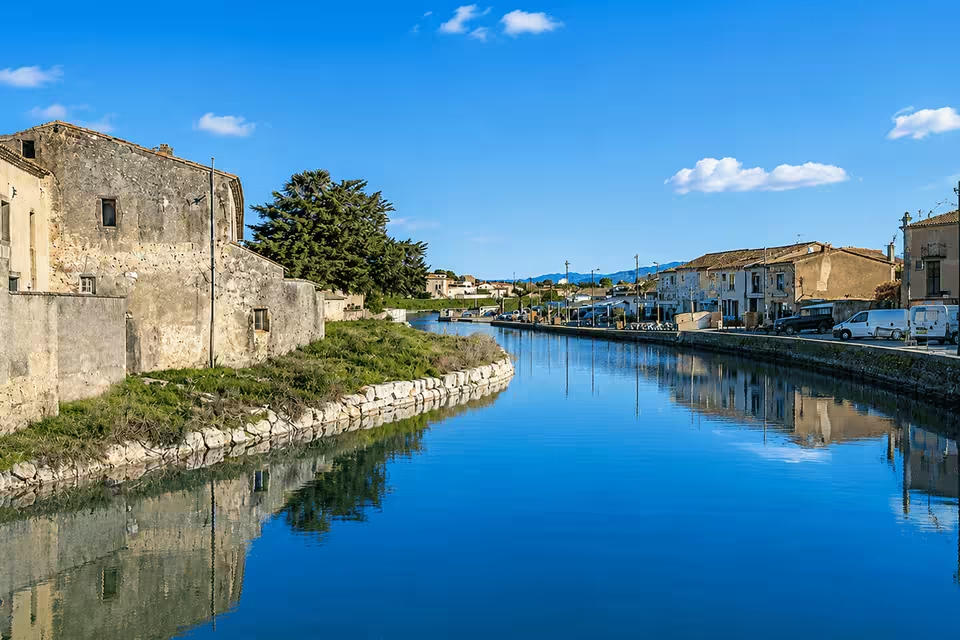
Port d’Homps, also known as Port Minervois, is an established hire-boat departure point. Its central position allows travelers to cruise west toward Trèbes and Carcassonne or east toward Le Somail, Narbonne and Béziers. The compact village also places restaurants, historic buildings and Minervois wine attractions within walking distance of the harbor. Travelers considering boat rental in Homps should therefore expect a relaxed canal itinerary centered on slow travel, local culture and time ashore—not open-water sailing.
Canal villages and nearby places to explore
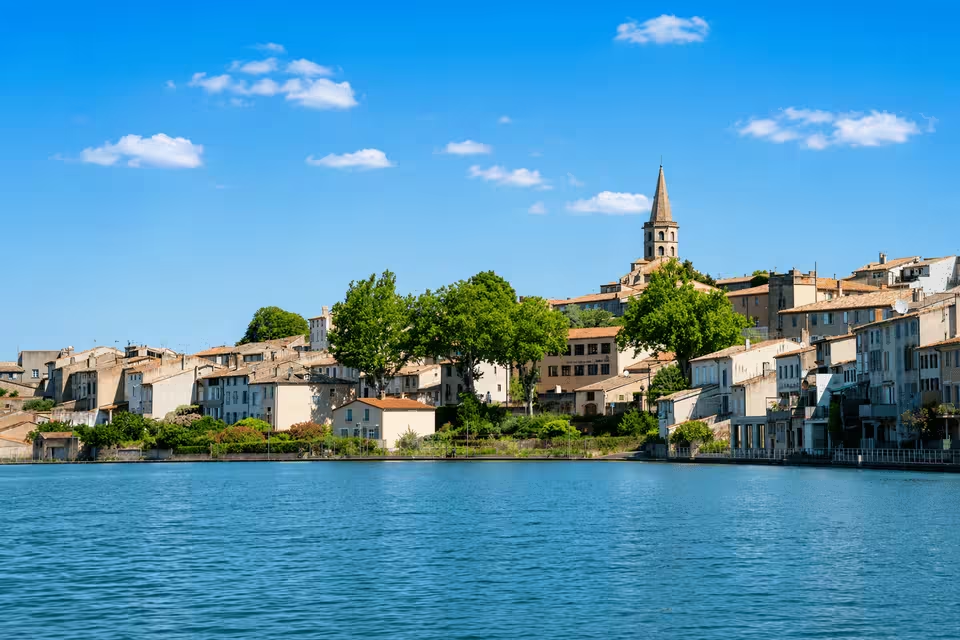
East of Homps, La Redorte and Argens-Minervois provide early stopping points among the Minervois vineyards. Beyond Paraza, Le Somail is a natural objective for a shorter cruise and a gateway to longer routes along the eastern Canal du Midi. Continuing toward Capestang and Béziers brings travelers onto the Grand Bief, a long section without locks that changes the pace of the journey.
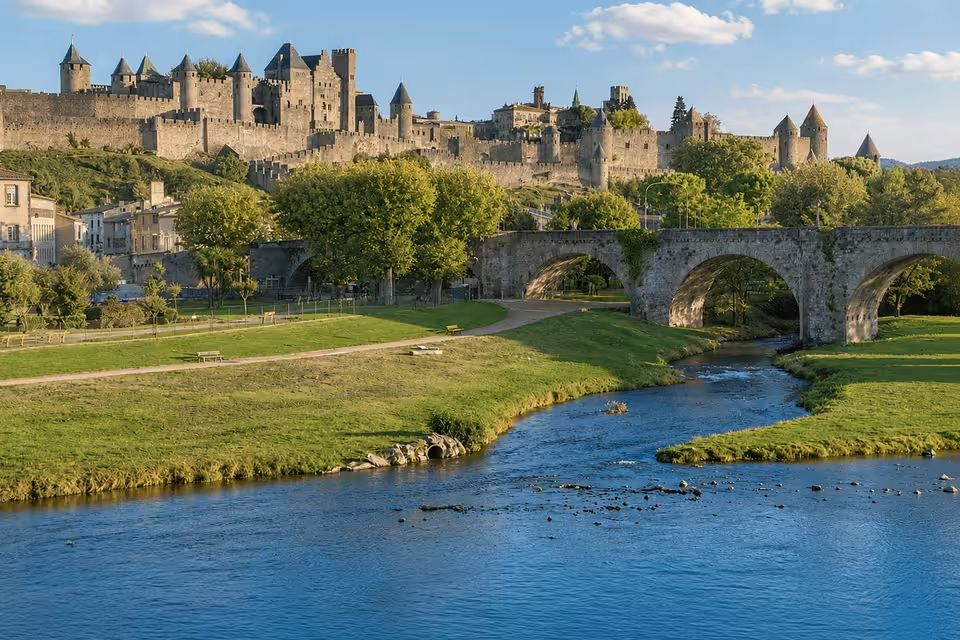
Westbound cruising leads toward Trèbes and Carcassonne. This direction involves more locks, but it connects the rural canal landscape with one of the region’s major historic destinations. Another option branches from the Canal du Midi through the Canal de Jonction and Canal de la Robine to central Narbonne. Close to Homps itself, Lac de Jouarres offers a designated freshwater swimming alternative, since swimming is prohibited in the canal.
What cruising from Homps is like
Cruising around Homps takes place on generally calm, flat water protected from marine swell. The challenge is not rough weather or long passages but accurate low-speed handling. Locks, low bridges, narrow sections, moored boats and canal banks require attention, while lock operations give each day a measured rhythm.
The western route toward Carcassonne is relatively lock-intensive. East of Argens-Minervois, the long lock-free Grand Bief allows more continuous cruising toward Capestang and Béziers. Although the overall boating difficulty is considered easy, travelers should not confuse this with passive sightseeing: at least two people are normally needed, with one remaining at the helm while another handles the lines.
Strong northwesterly tramontane events can affect the Aude valley even though the waterway is sheltered. Crews should check weather forecasts and current navigation notices before setting out.
Best time for a Homps canal charter
The normal recreational navigation period runs from the beginning of April until around the beginning of November, with most trips taking place between April and October. May and September are particularly suitable months, combining favorable boating conditions with milder temperatures than midsummer.
July and August are typically hot and bring the heaviest canal traffic, so locks and popular moorings may feel busier. Spring and late summer generally offer quieter navigation and more comfortable conditions for handling lines or exploring villages on foot. April and October can also work for shoulder-season trips, although travelers should allow for more variable conditions. Autumn rainfall is less predictable, while winter navigation is restricted by the usual lock-maintenance closure period.
Charter routes from Homps
For a shorter return cruise, the route from Homps through Paraza to Le Somail combines manageable distances with Minervois villages and vineyard scenery. It suits travelers who want to divide their time between navigation, local stops and unhurried evenings ashore.
A longer eastbound itinerary can continue from Le Somail across the Grand Bief to Capestang and Béziers. This established week-long pattern includes the Malpas Tunnel and the Fonseranes lock staircase, making canal engineering a central part of the trip. An alternative eastern route turns toward Narbonne via the Canal de Jonction and Canal de la Robine.
Heading west creates a more lock-rich journey through Trèbes to Carcassonne and potentially Bram. This direction rewards crews willing to spend more time working through locks, while the eastern routes generally provide longer stretches of uninterrupted cruising. These contrasting options make Homps useful for choosing between a more active canal passage and a steadier, less interrupted itinerary.
Wine, heritage and time off the boat
A Homps charter connects boating with the wine culture of the Minervois. The Maison des Vins du Minervois near the harbor presents red, white and rosé wines from the surrounding appellation, while the canal itself reflects the village’s commercial past. From the 1830s, the port expanded as local vineyards grew and boats carried wine toward Toulouse.
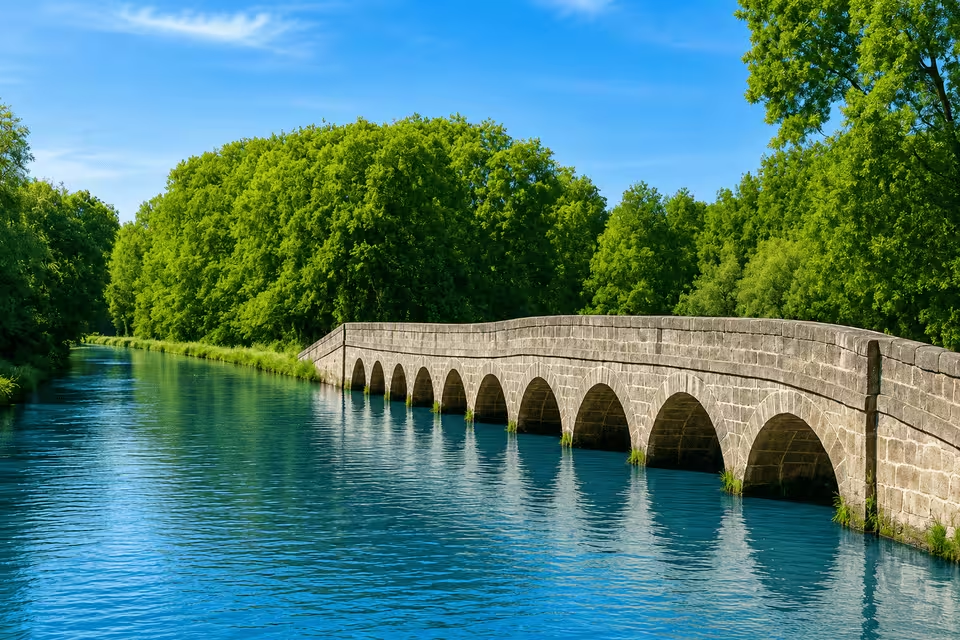
The Canal du Midi opened to its inaugural through convoy in 1681 and has formed part of a UNESCO World Heritage Site since 1996. Locks, aqueducts and historic bridges turn the journey into an encounter with working heritage rather than simply a route between towns. In Homps, travelers can also visit the Romanesque Chapelle Saint-Michel, associated with the medieval Hospitallers of Saint John.
For swimming, the nearby Lac de Jouarres has designated recreation areas. This makes it possible to add freshwater time to the trip without entering the canal, where swimming is prohibited.
Reaching Homps and starting the trip
Charters from Homps typically begin at Port d’Homps, or Port Minervois, the village’s leisure harbor and hire-boat departure point. Homps therefore serves both as a place to explore and as a practical starting point for cruises in either direction along the Canal du Midi.
The village is generally reached by road from the A61 corridor through Lézignan-Corbières. Lézignan-Corbières is the nearest practical railway station, while Narbonne and Carcassonne provide additional rail connections. The final journey normally requires a taxi, arranged transfer or rental car. Carcassonne and Béziers Cap d’Agde are the closest relevant commercial airports; Toulouse-Blagnac provides broader international access. Travelers comparing this inland experience with other yacht charter options in France should account for the onward road transfer when planning arrival times.
Practical planning for an inland charter
Before departure, check the annual opening period and current notices issued by Voies navigables de France. Maintenance, incidents and water-management measures can affect lock operation, even during the normal boating season. Weather forecasts also remain relevant because tramontane winds may affect exposed parts of the Aude valley.
Hired canal boats can generally be operated without an inland boating license after the crew receives instruction. Privately operated vessels require the appropriate license and navigation toll. In either case, suitable dimensions are essential: low bridges, lock sizes and limited draft constrain which boats can use the route.
Plan for a crew of at least two for routine lock handling and consider how much physical involvement everyone wants. An eastbound itinerary can include long lock-free stretches, while the route toward Carcassonne requires more frequent lock work. It is also worth deciding whether swimming is important before choosing stops, as this must take place in designated areas such as Lac de Jouarres rather than in the Canal des Deux Mers.