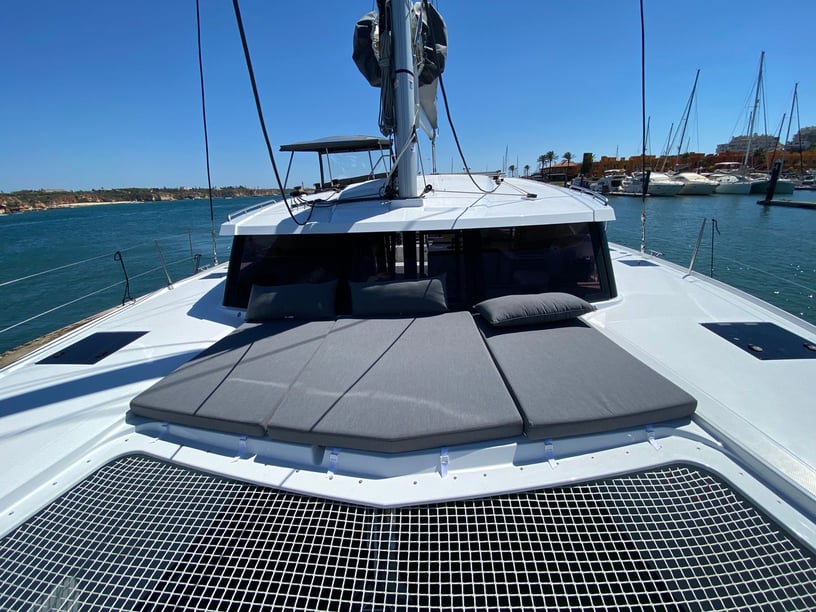
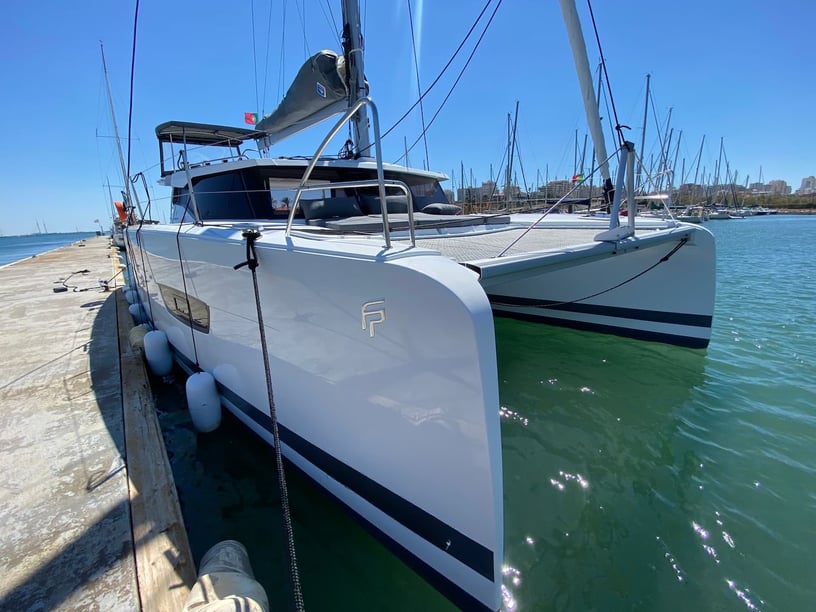
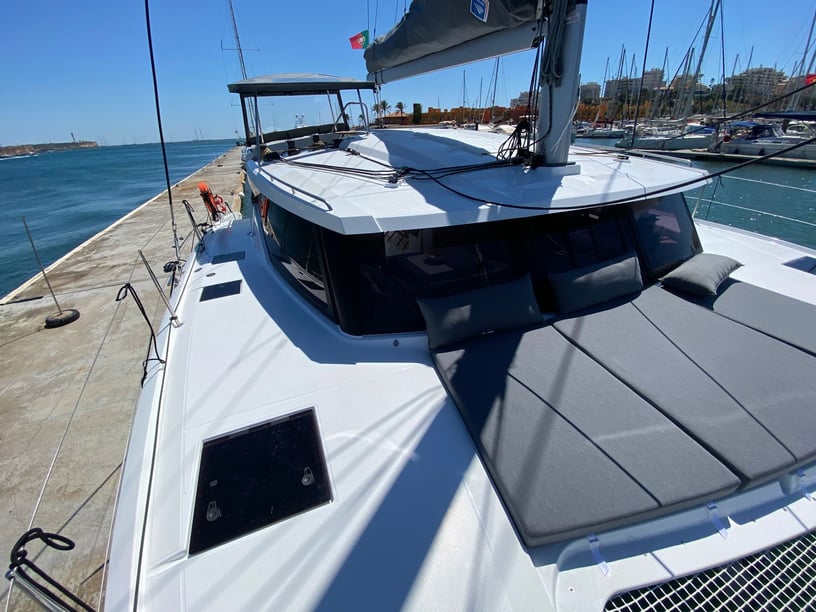
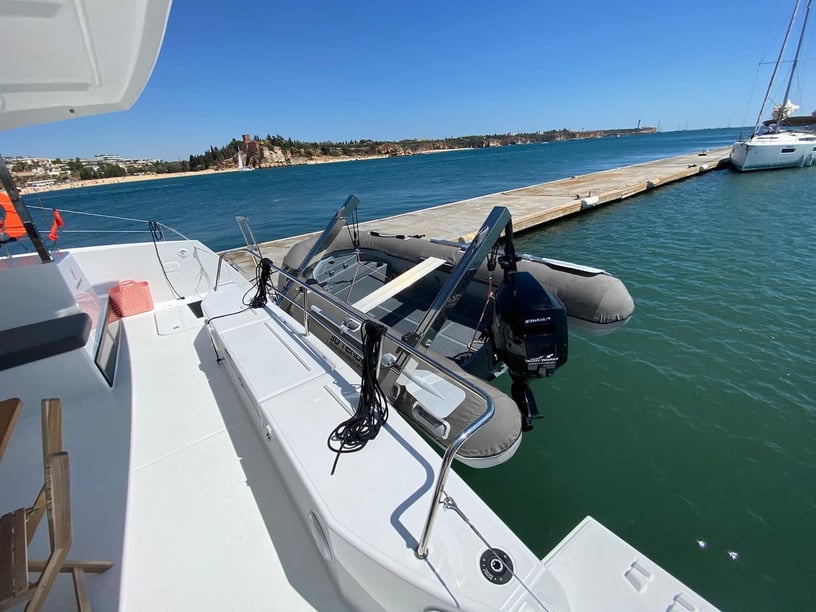
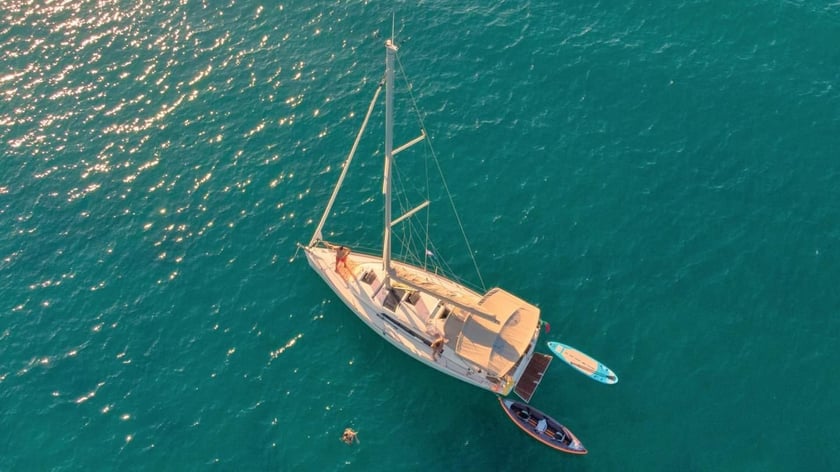
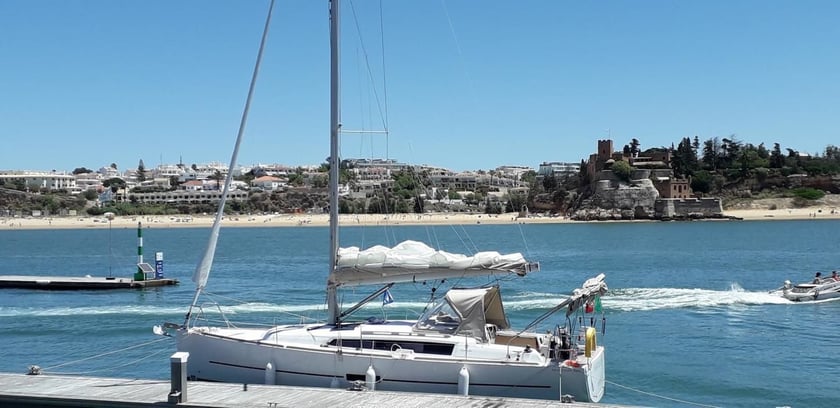
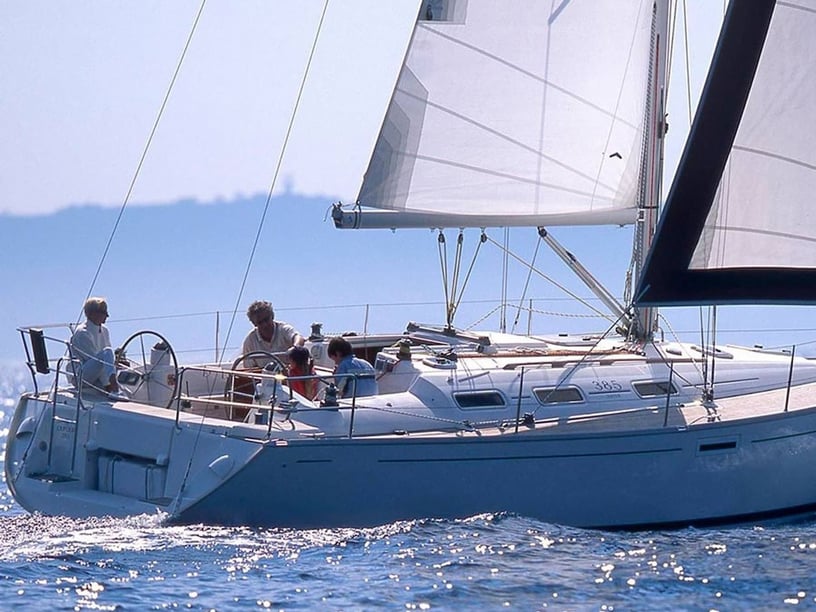
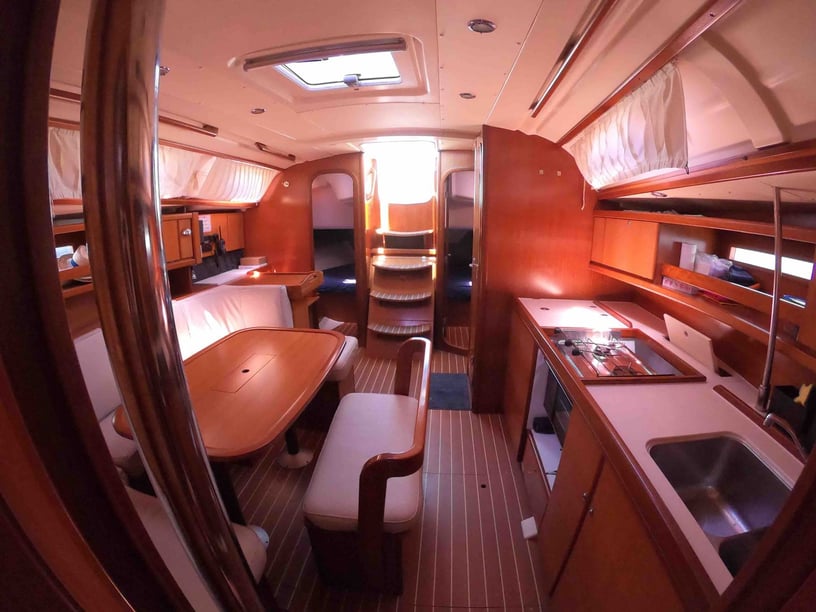
Yacht charter in Portimão
Portimão sits on the western bank of the River Arade, just inside a breakwater-protected entrance to the Atlantic. This setting gives a yacht charter in Portimão two distinct directions: coastal cruising past the beaches and limestone cliffs of the western Algarve, or a tide-dependent journey inland along the river.
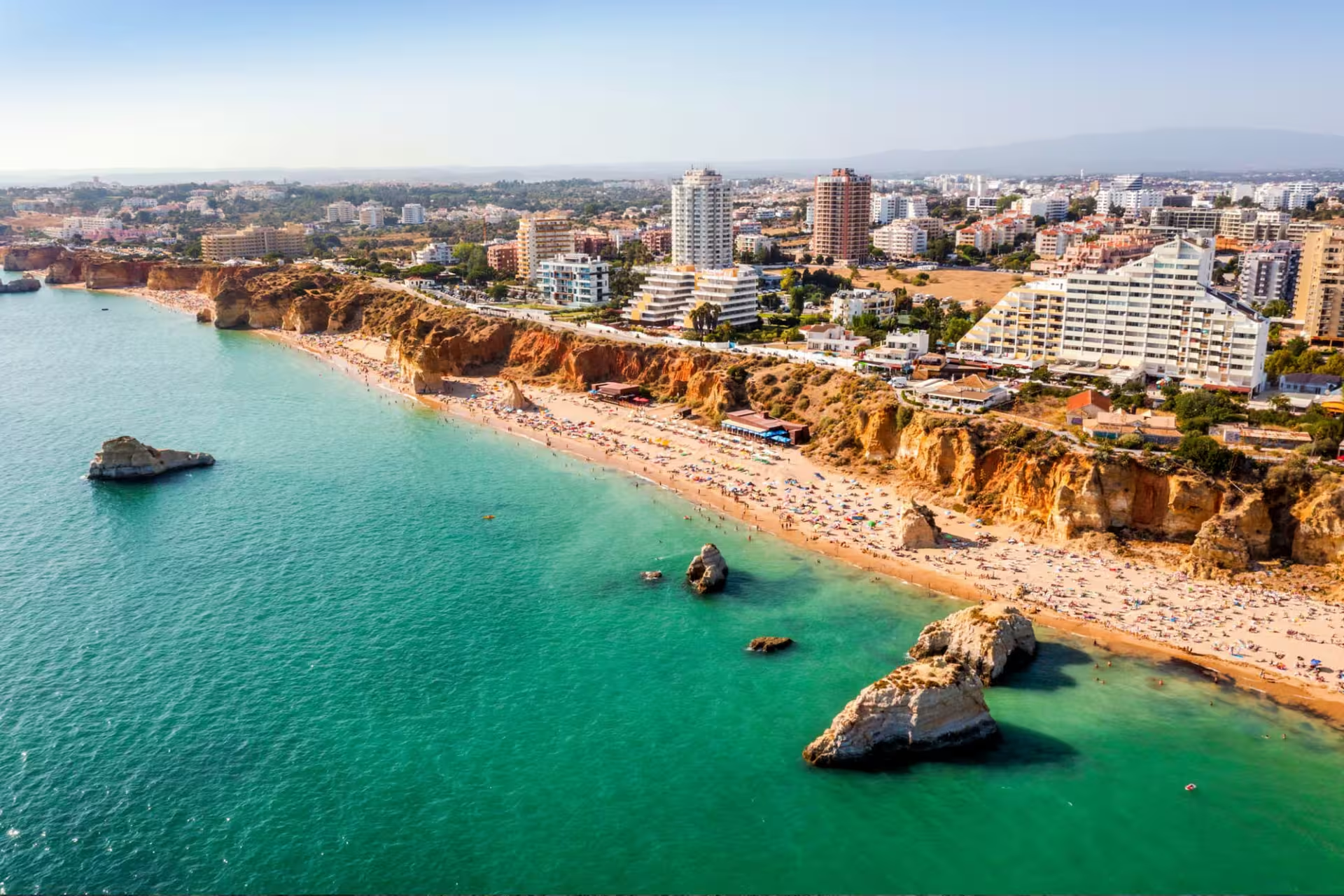
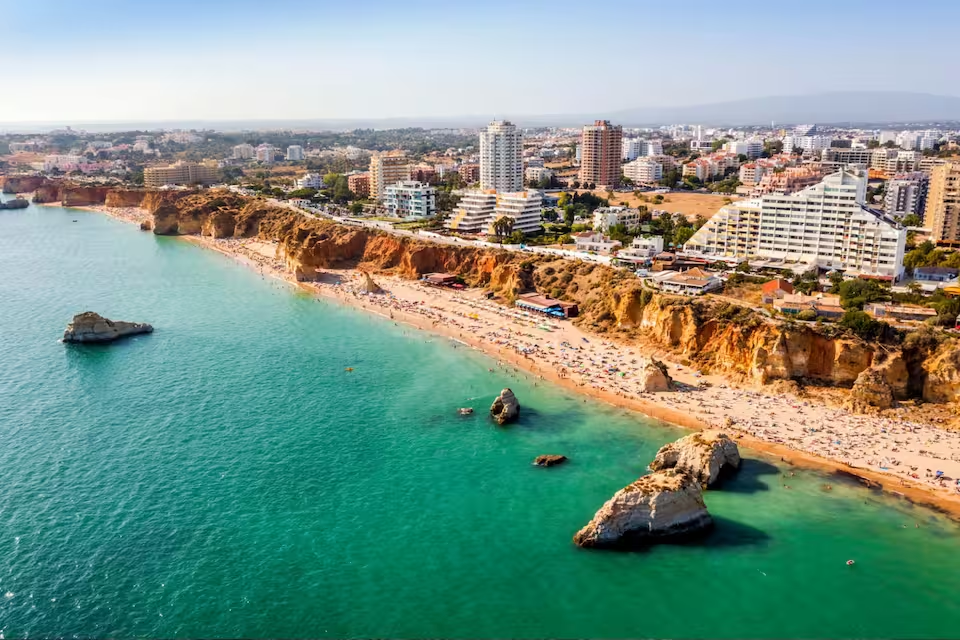
Marina de Portimão lies beside Praia da Rocha, placing a sheltered harbor, a broad beach and an active resort waterfront within the same area. Across the Arade, Ferragudo and the headland of Ponta do Altar frame the river entrance. The city itself adds a working maritime identity shaped by fishing and fish canning, providing more cultural depth than a beach-only stop. Travelers considering a wider yacht charter in Portugal can therefore view Portimão as both a practical departure area and a destination linking Atlantic scenery with the river landscape of the Algarve.
Coastal places to explore
Praia da Rocha is the most immediate coastal stop, with its long beach and waterfront close to the marina. At the eastern side of the river entrance, Ferragudo offers views back toward Portimão, while the forts of Santa Catarina and São João do Arade recall the strategic importance of the estuary.
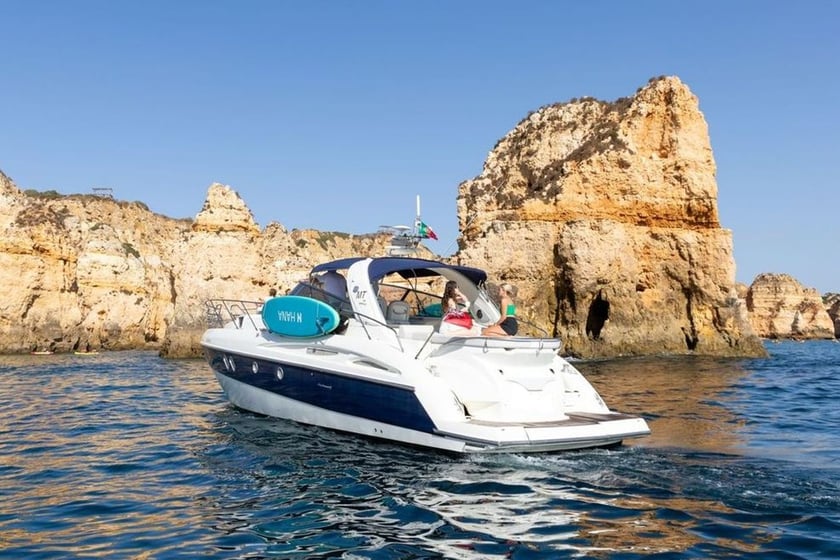
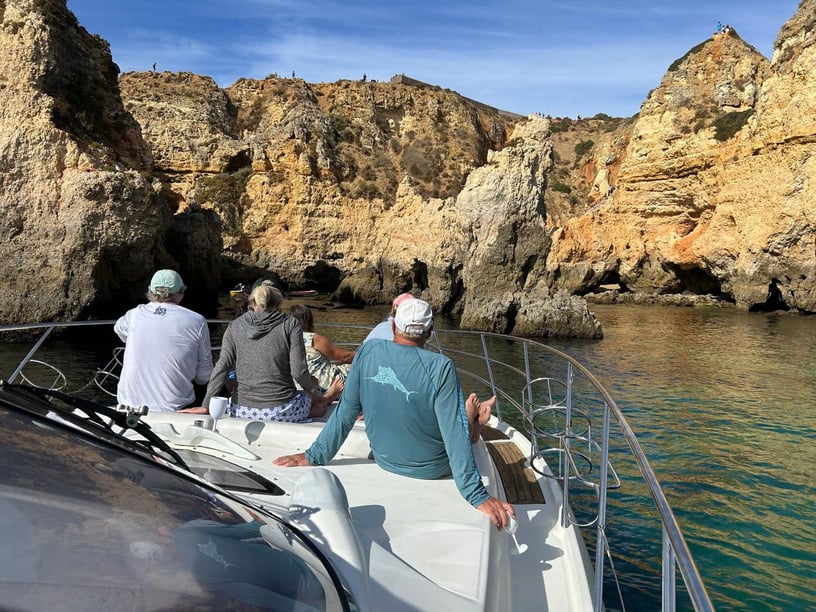
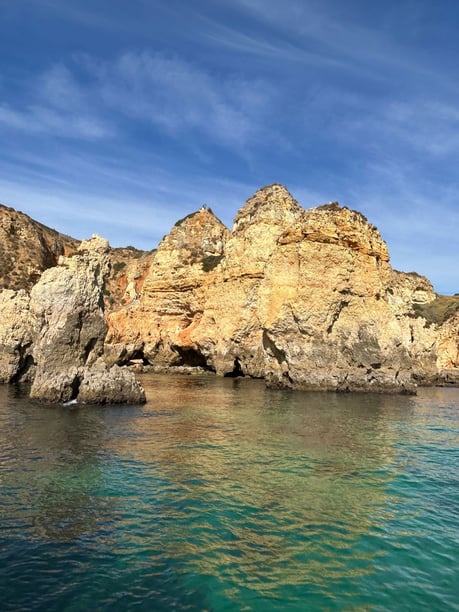
Heading east brings yachts toward Carvoeiro and the Benagil coast, where ochre limestone cliffs, coves and sea caves define the shoreline. Entering caves or approaching cliffs closely is appropriate only for suitable small craft and when wind, swell and visibility allow; an itinerary may need to remain offshore even when the weather feels calm on land.
To the west, the coast extends toward Alvor, known for Praia de Alvor and its estuary. The change from open beach frontage to estuarine scenery makes this direction a useful contrast to the cliff-lined route east of Portimão.
What sailing from Portimão is like
Cruising around Portimão is generally linear rather than based on island-hopping. Once outside the sheltered Arade estuary, yachts follow the coast east or west through open Atlantic water. This creates a clear contrast between the relative protection of the marina and river entrance and the more exposed conditions beyond the breakwaters.
Summer weather is usually dry and settled, but afternoon sea breezes commonly strengthen from the southwest before shifting toward the west or northwest. A calm morning can therefore develop into a livelier return passage, particularly outside the estuary. The local sailing difficulty is moderate: the coastline is straightforward to understand at a broad level, but Atlantic swell, changing wind and exposed cliff sections require careful planning.
The inland Arade route presents a different consideration. Reaching toward Silves depends on the tide, as well as using an appropriate vessel. Current forecasts, nautical information and instructions for the Port of Portimão should always guide operational decisions.
Best time for a Portimão yacht charter
The principal recreational boating season runs from May through October, with the most consistently settled conditions generally occurring from June to September. July and August offer the warmest and driest weather, but they are also the busiest months around the beaches and coastal attractions.
May, June and September are particularly suitable choices. They commonly combine favorable boating conditions with less peak-season pressure, although individual forecasts still determine whether cave visits and exposed coastal passages are possible. Early October can remain pleasant, but conditions become less predictable as the month progresses.
From November through March, Atlantic weather systems bring a greater likelihood of rough seas, colder water and short-notice changes. Winter trips are consequently better suited to flexible travelers who can plan around calm weather windows rather than fixed coastal itineraries.
Route ideas from the Arade
An eastbound coastal itinerary can connect Portimão with Ferragudo, Carvoeiro and the Benagil cave coast. It combines views across the fortified river entrance with open-water cruising beneath the Algarve’s limestone cliffs. The exact approach to caves and coves should remain flexible because swell may prevent close access.
The River Arade provides the contrasting inland route. A cruise toward Silves exchanges the exposed Atlantic coast for a tidal river passage, but departure and return times must be planned around the water level and the vessel’s suitability.
Westbound trips can follow the beaches toward Alvor. Rather than trying to cover every direction in one outing, travelers can choose between cliff scenery to the east, estuary and beach landscapes to the west, or the slower rhythm of an upriver journey.
Experiences on the water and ashore
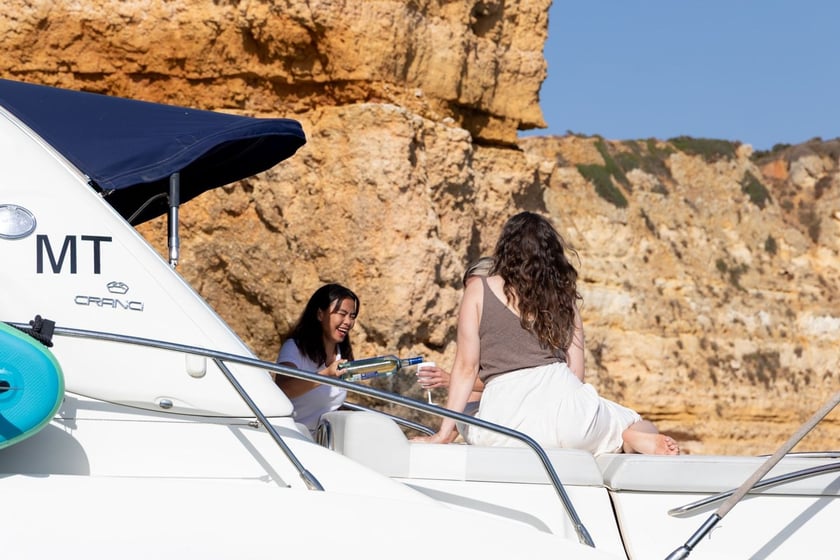
A charter can divide the day between coastal cruising, swimming when conditions permit and time ashore around Praia da Rocha or Portimão’s riverfront. The city’s maritime character is particularly visible at the Museu de Portimão, housed in a converted fish-canning factory, and in the tradition of charcoal-grilled sardines associated with the local fishing economy.
The views around the Arade entrance are another distinctive feature. Portimão and Ferragudo face one another across the water, with historic forts on opposite banks. Farther along the coast, the attraction lies in observing the changing sequence of broad beaches, smaller coves and limestone cliffs from offshore rather than only from roadside viewpoints.
For qualified divers, the Ocean Revival underwater park is a notable local attraction. It consists of four former Portuguese Navy vessels deliberately sunk to form artificial reefs and wreck-diving sites. Diving arrangements and qualifications should be considered separately from the yacht charter itself.
Getting there and departure points
Faro Airport is the principal air gateway, approximately 65 kilometers east of Portimão. The city is connected by the A22 motorway and EN125, as well as by intercity coach and regional rail on the Algarve Line. Local buses link the center with the main beach districts.
Yacht trips may begin at Marina de Portimão, inside the sheltered Arade estuary, or around Cais Vasco da Gama. Vessels enter through the Port of Portimão at the river mouth. The harbor entrance faces south and can be partly obscured from an easterly approach by Ponta do Altar, making current charts and official harbor guidance important for crews.
Portimão functions as a combination of departure area and place to explore. Praia da Rocha is immediately beside the marina, while the riverfront, museum and nearby coastal settlements make it practical to add time ashore before or after cruising.
Planning the right charter
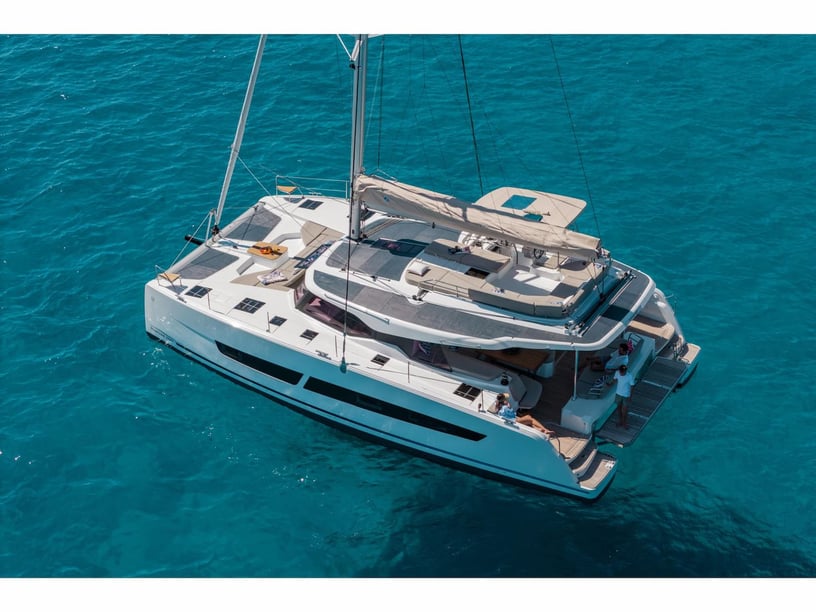
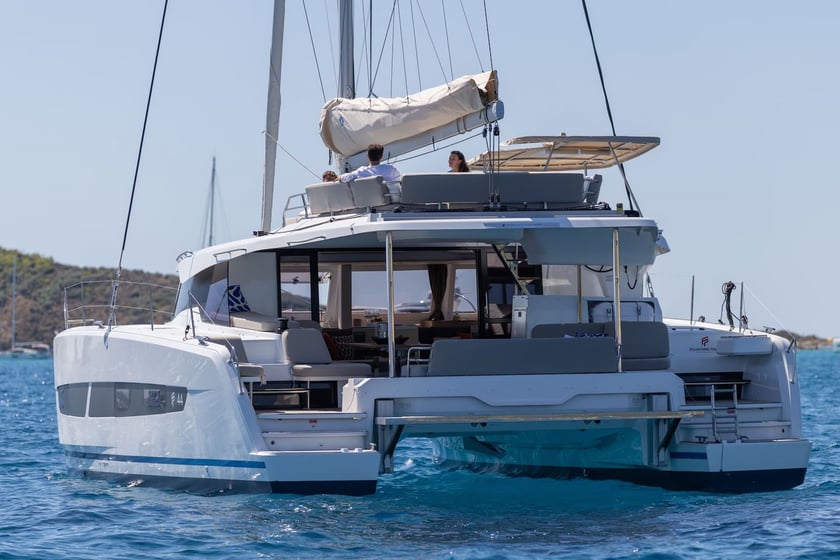
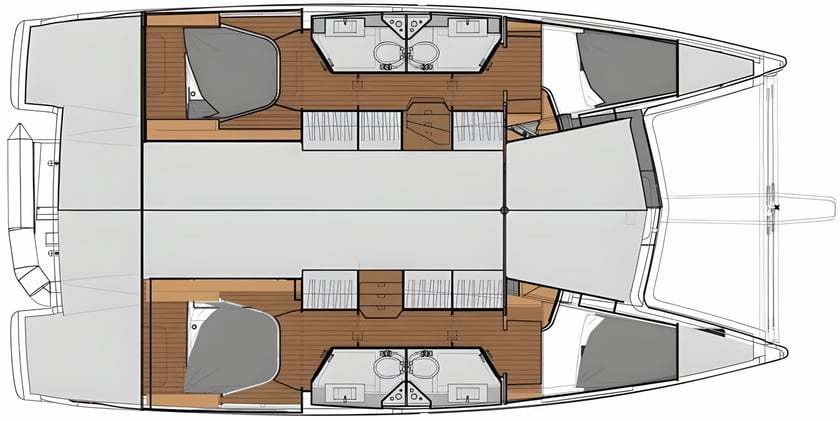
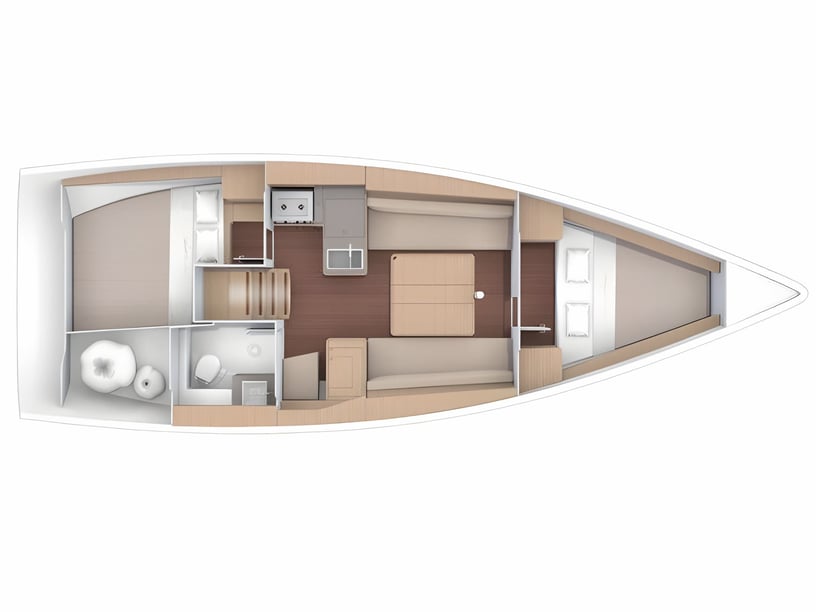
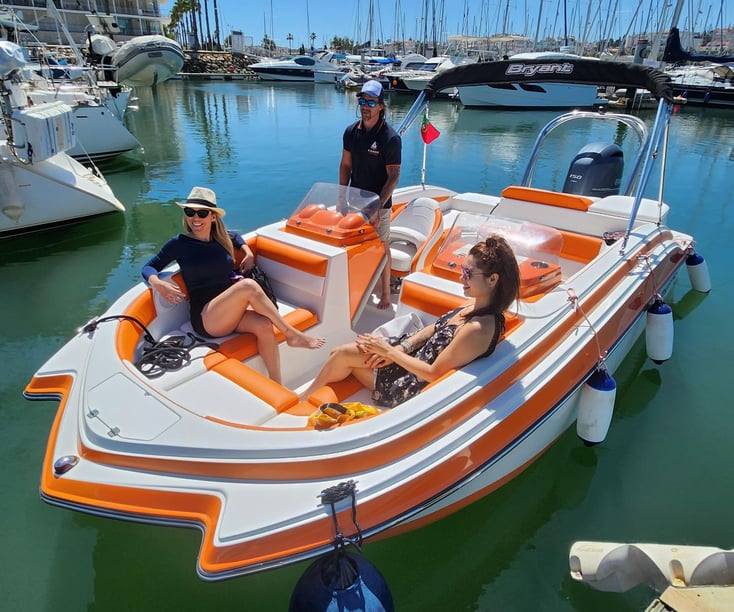
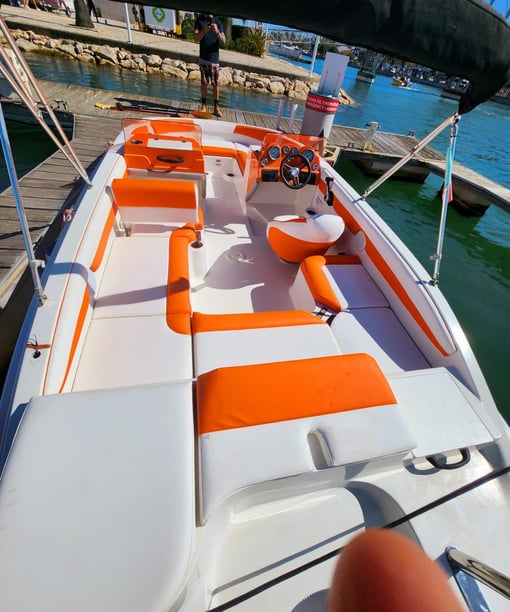
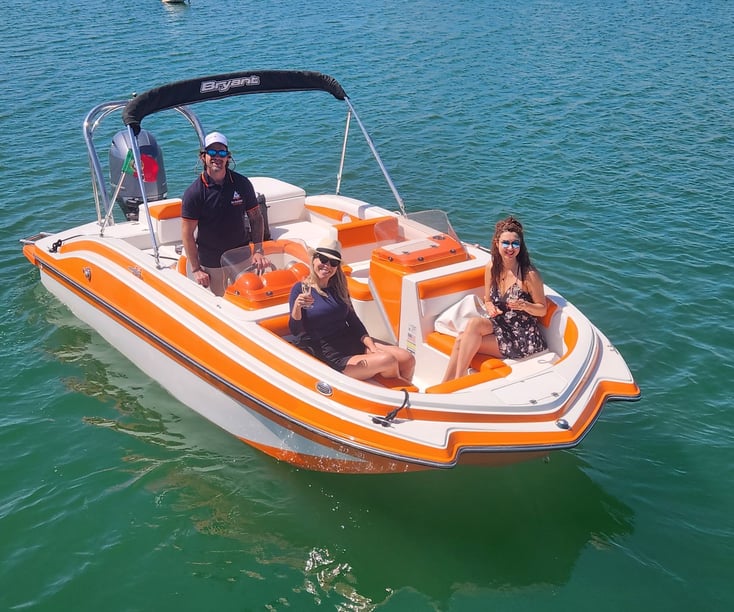
When comparing Portimão boat rental and yacht charter options, begin with the intended route rather than choosing solely by trip length. A coastal journey toward Benagil requires a vessel and itinerary suited to open Atlantic conditions, while an Arade cruise depends on draft, tide and the planned turning point. Close exploration of caves may require a suitable smaller craft rather than the main yacht.
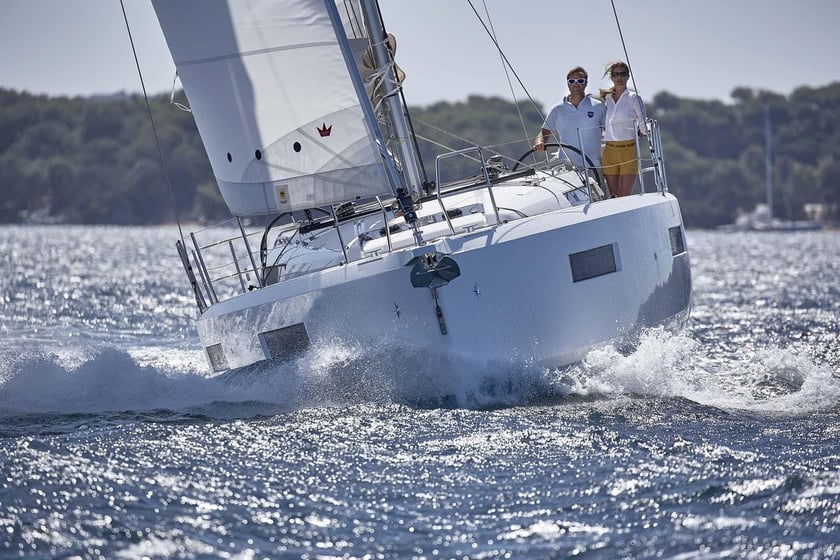
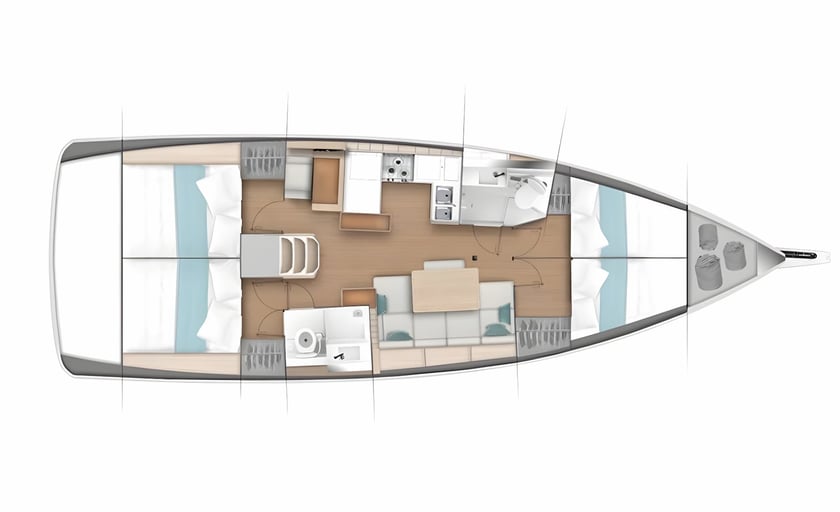
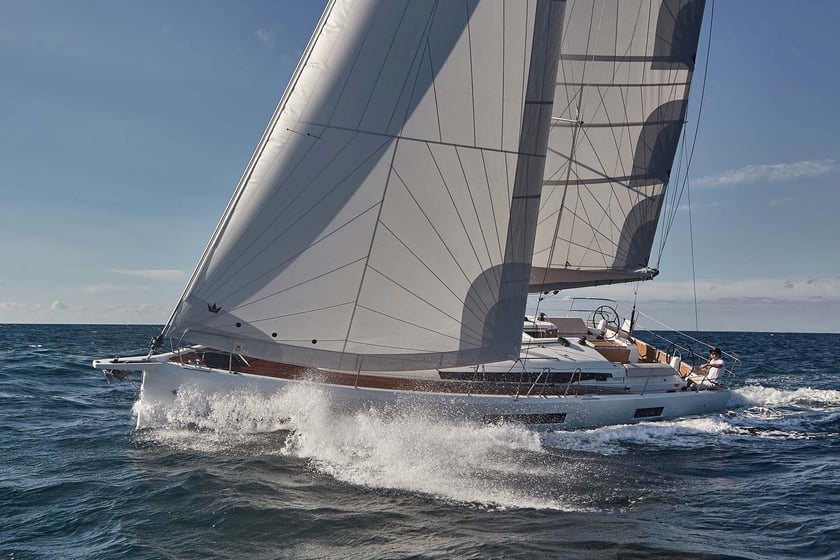
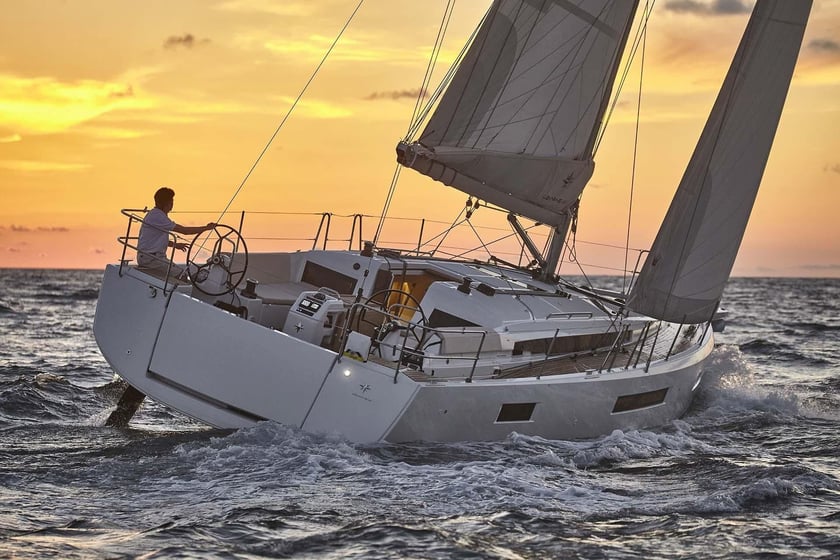
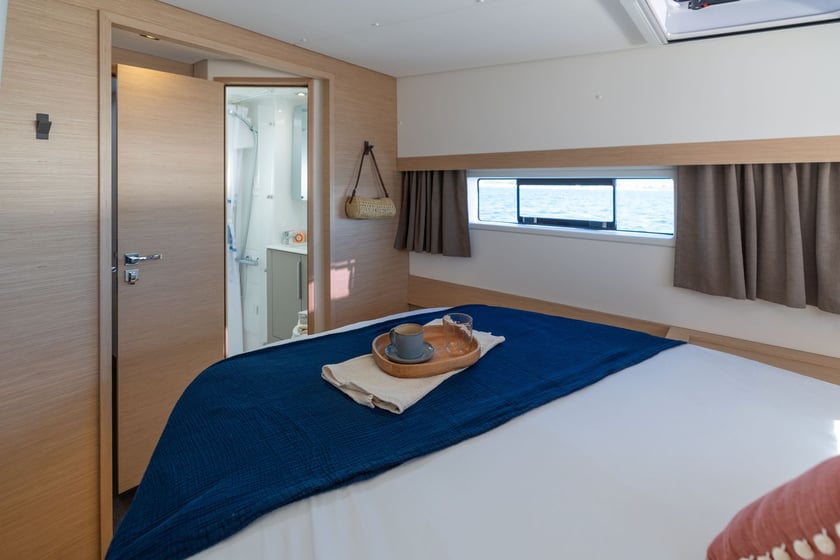
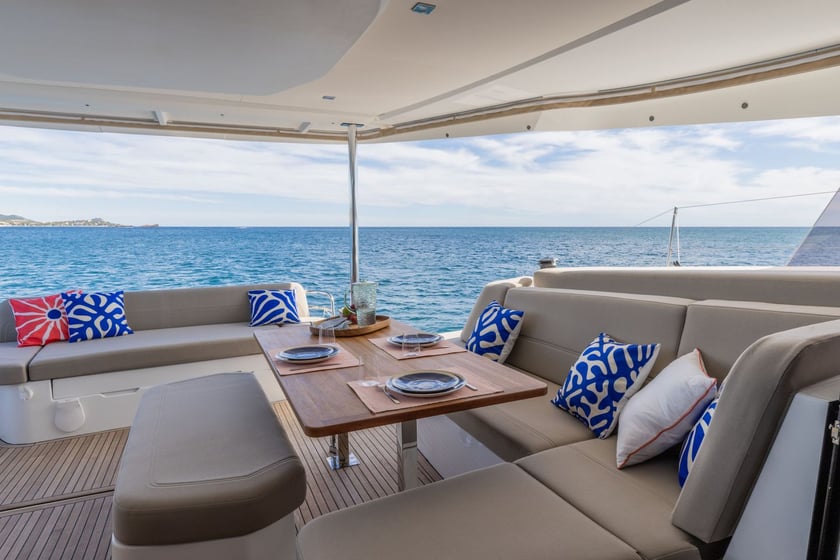
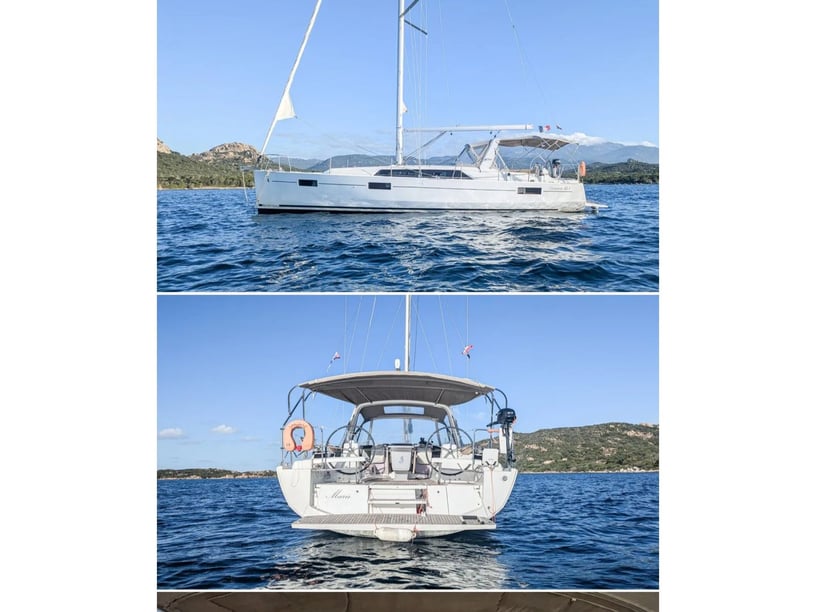
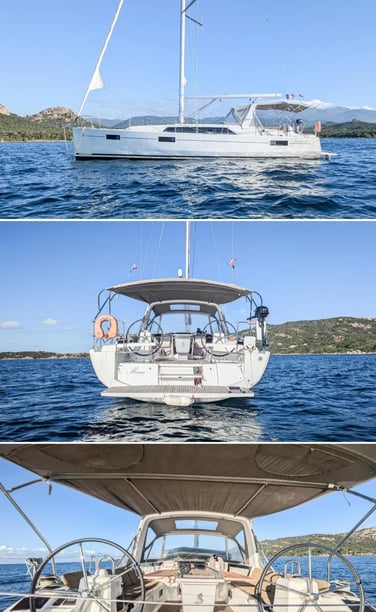
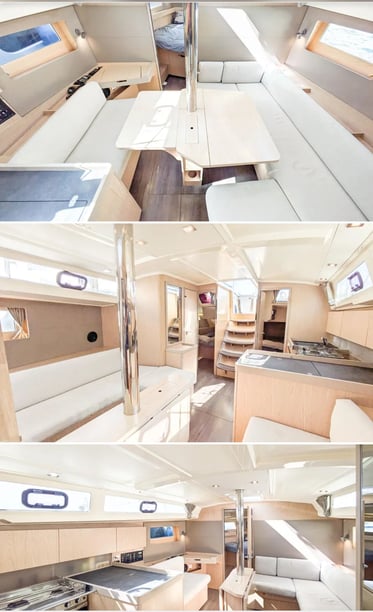
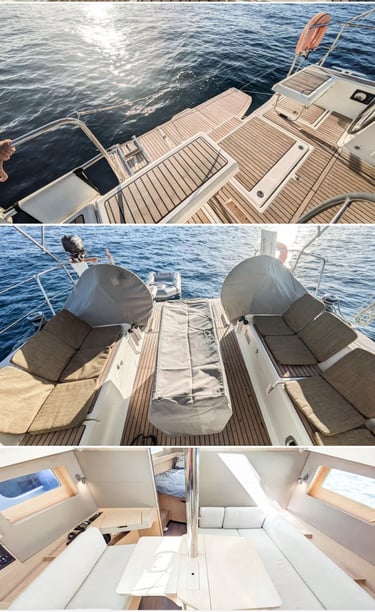
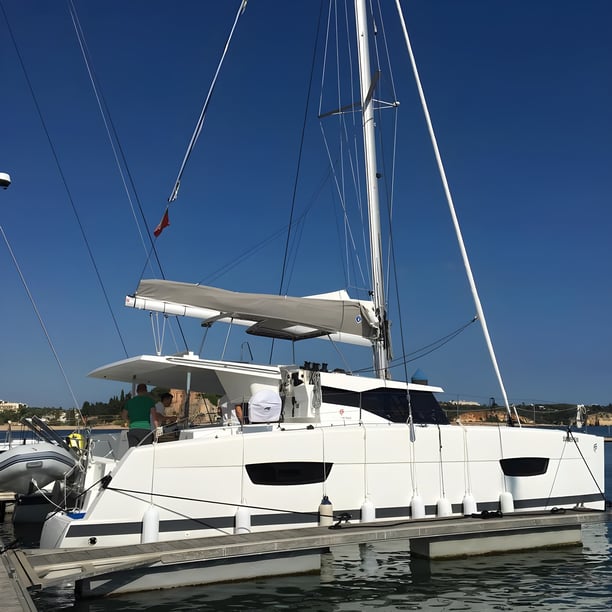
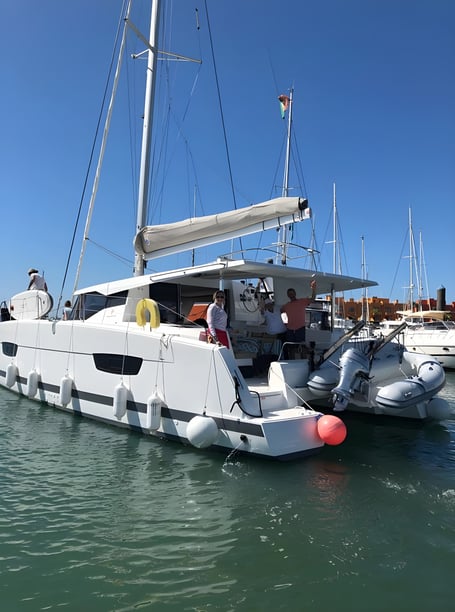
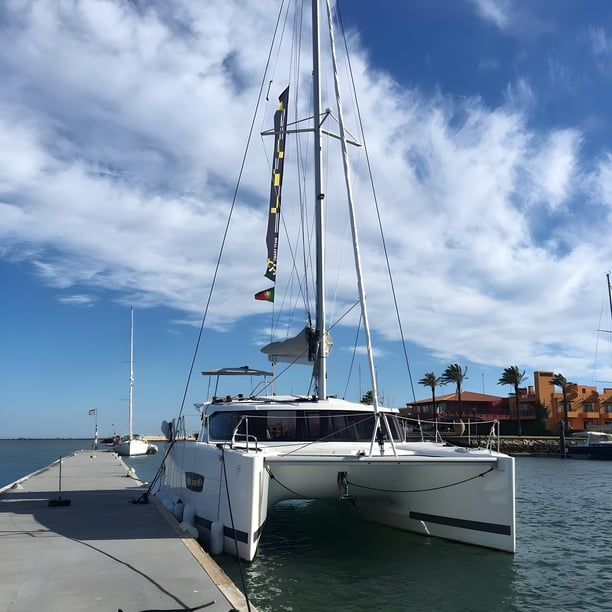
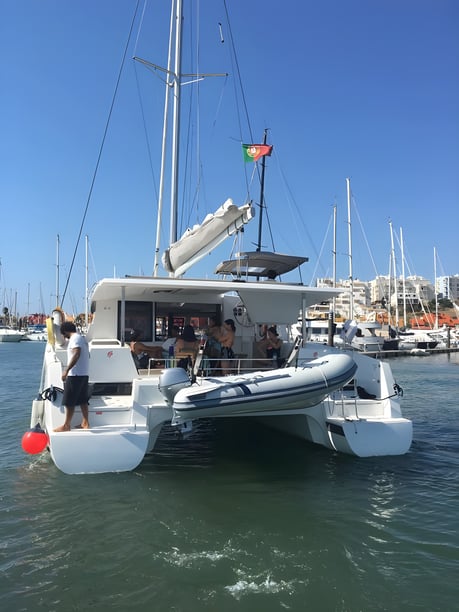
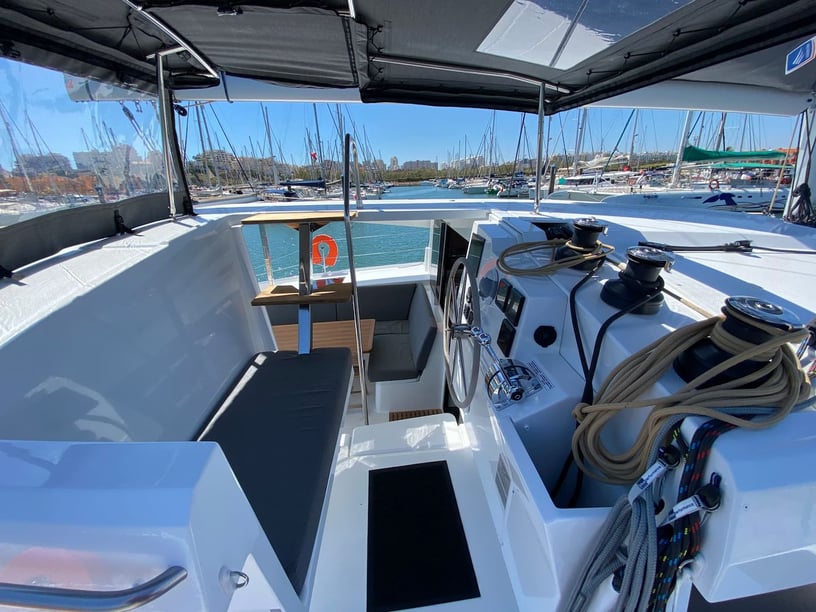
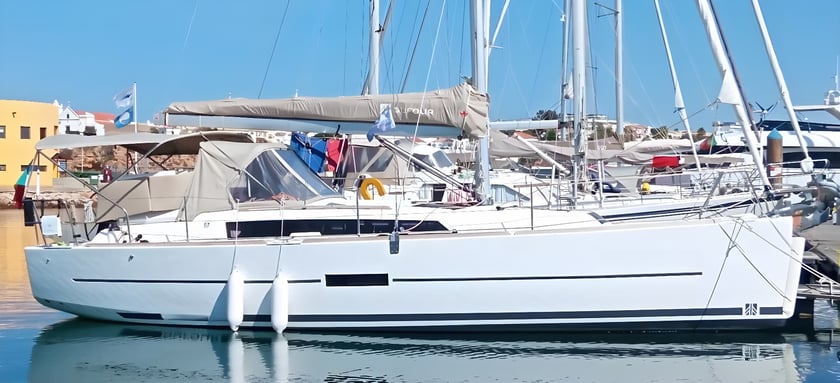
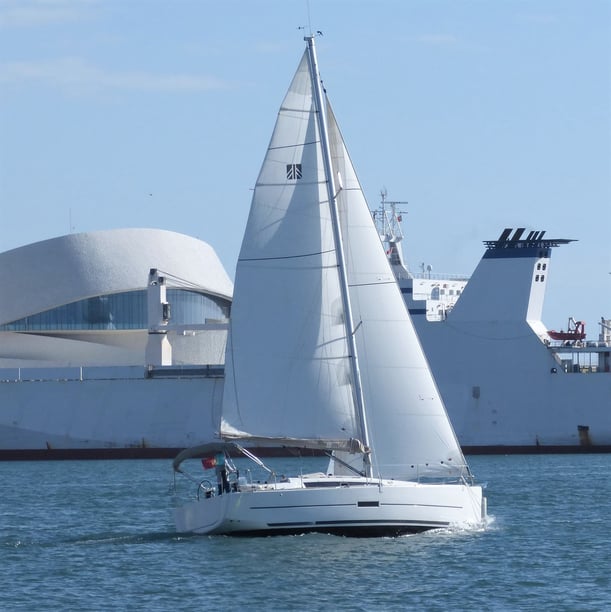
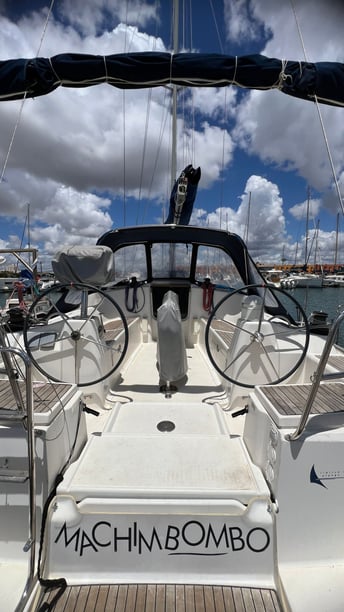
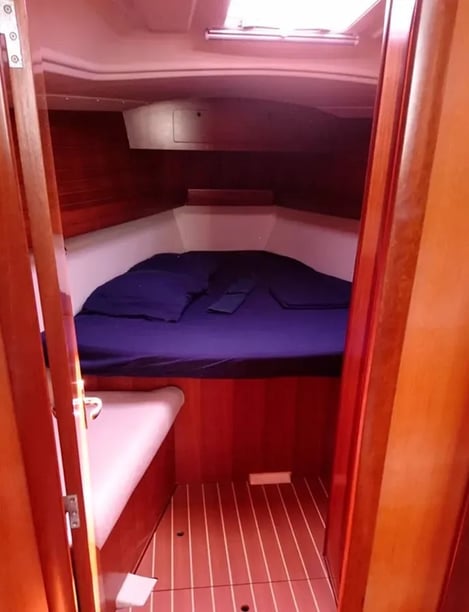
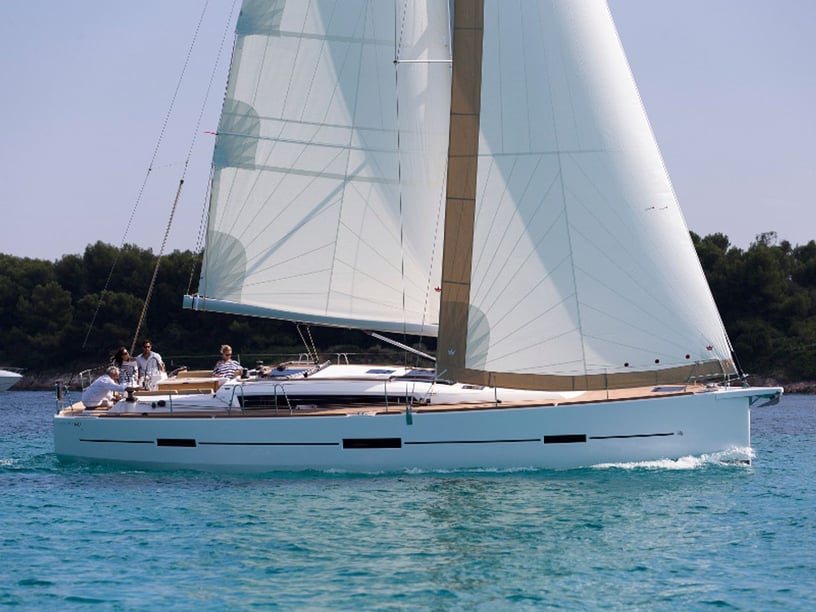
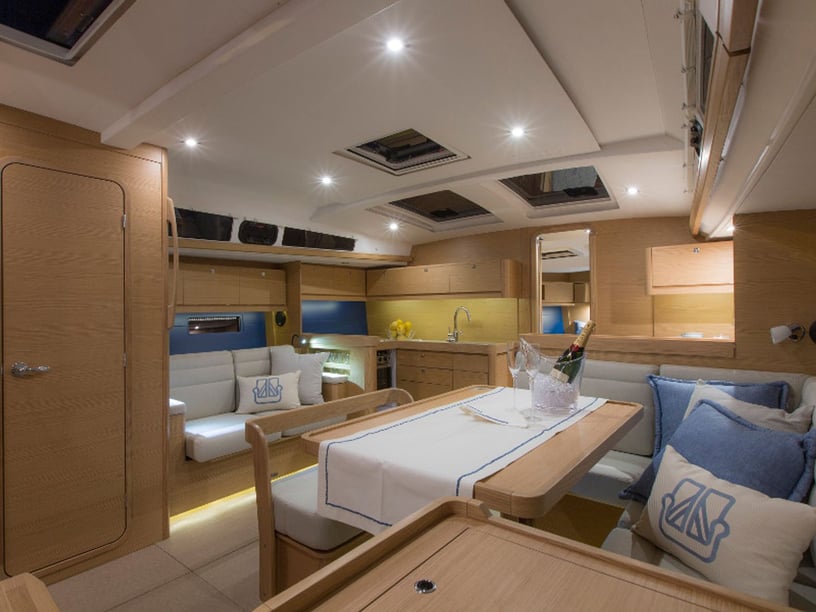
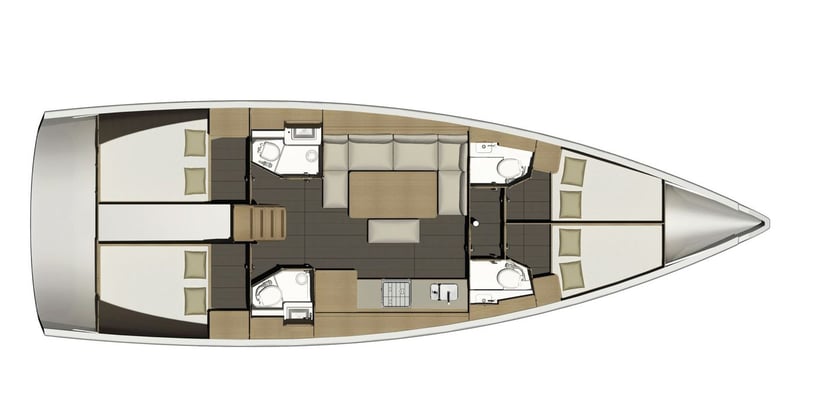
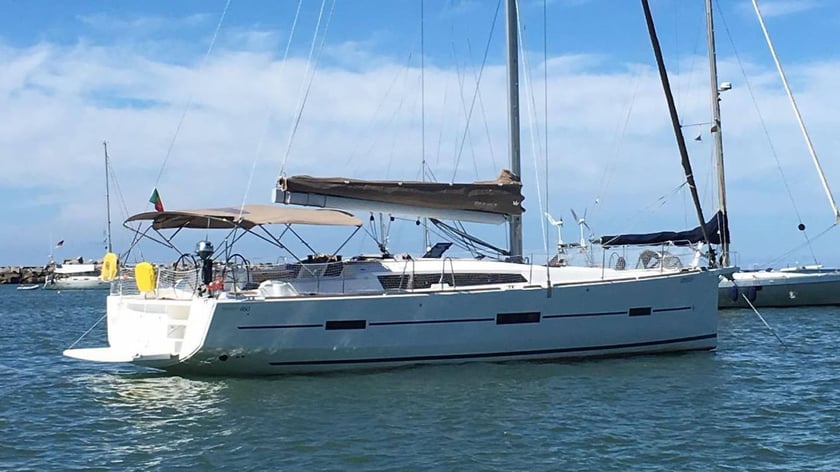
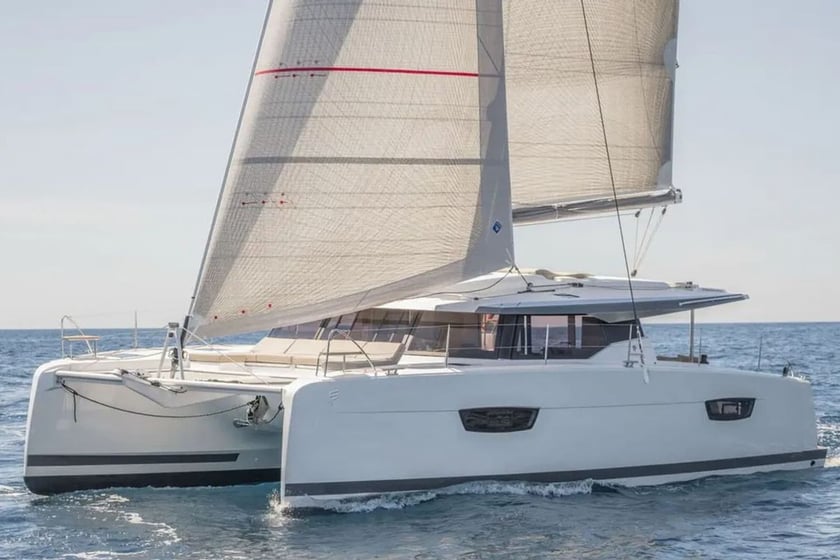
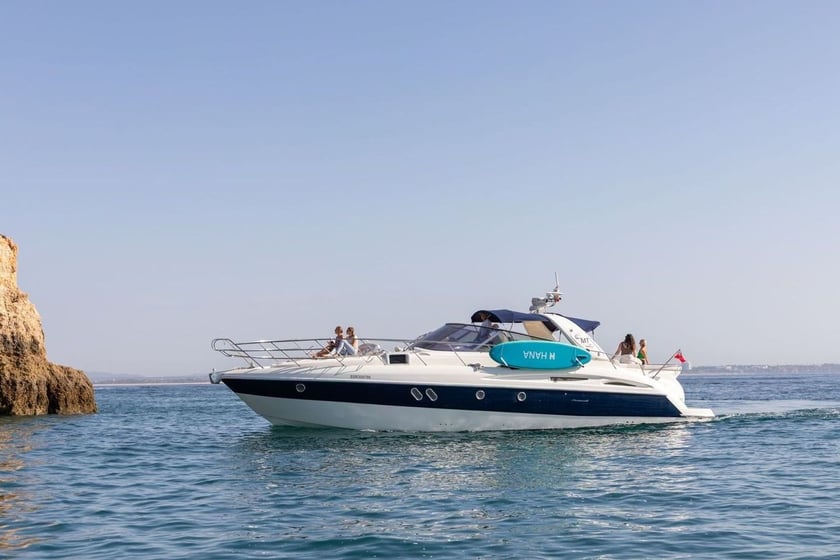
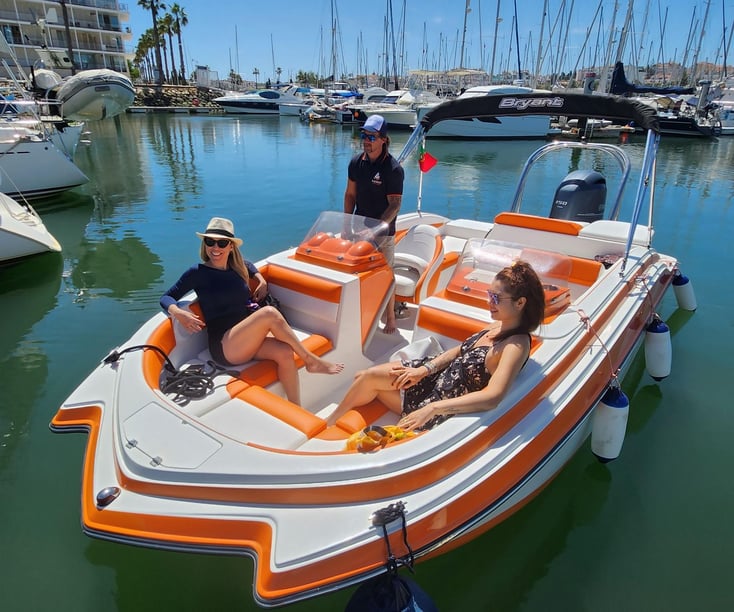
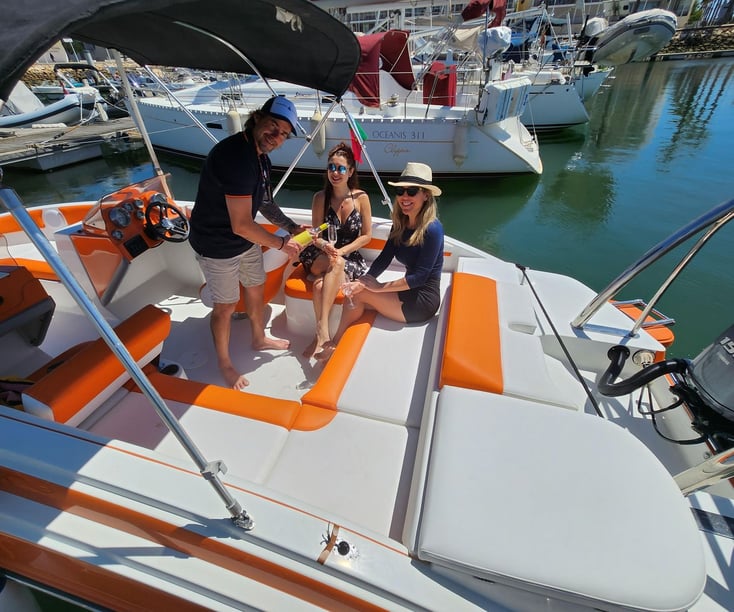
Travelers can also compare the different emphasis of a sailboat charter in Portimão and a motorboat charter in Portimão. Before confirming any option, check the planned cruising area, onboard capacity, skipper arrangements and whether swimming stops or shore visits are included.
Keep the schedule adaptable. Afternoon winds may be stronger than morning conditions, and sea-cave excursions can be changed or canceled because of swell or visibility even when conditions ashore seem favorable. For the upriver route, confirm the tidal window in advance; for winter travel, allow enough flexibility to move the trip to a calmer day.