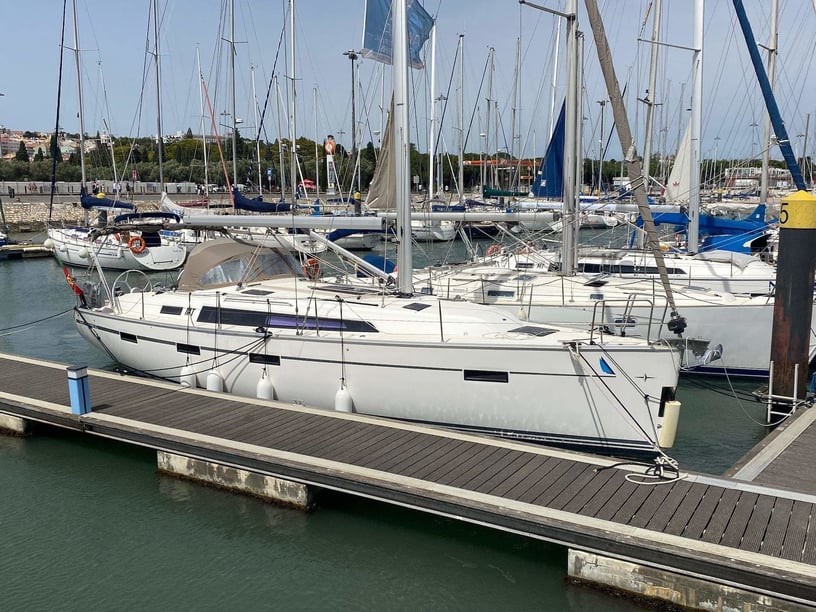
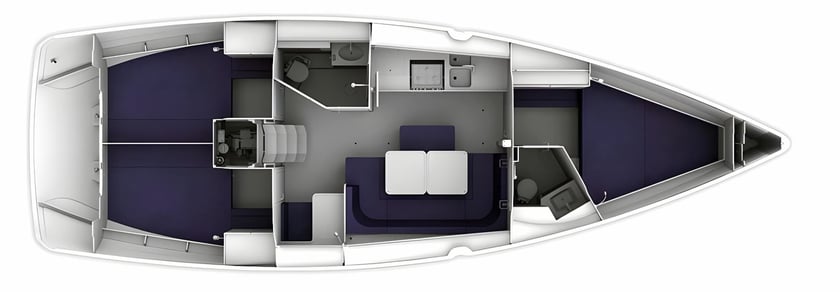
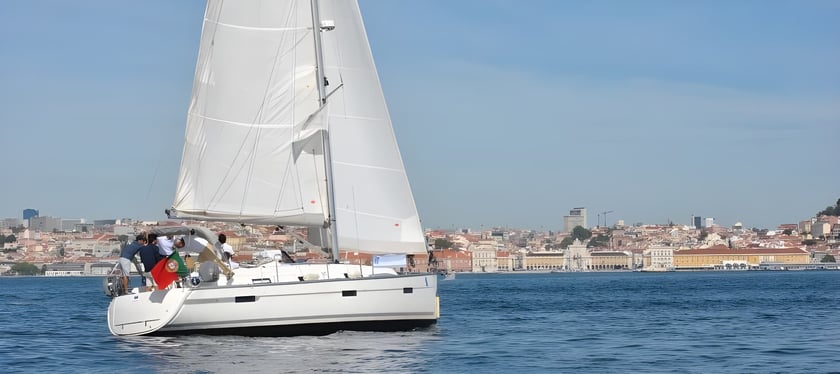
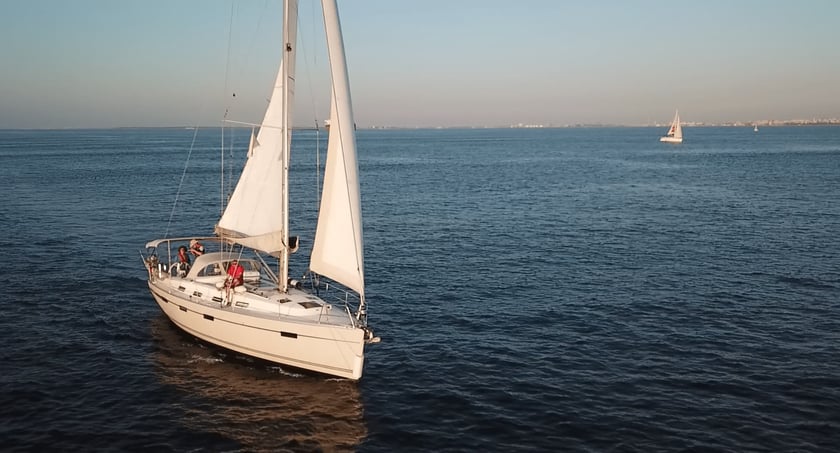
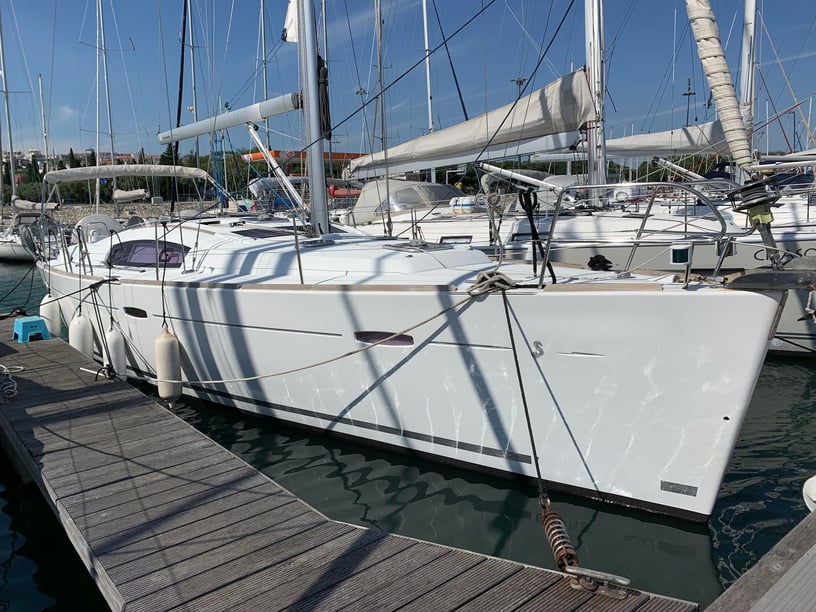
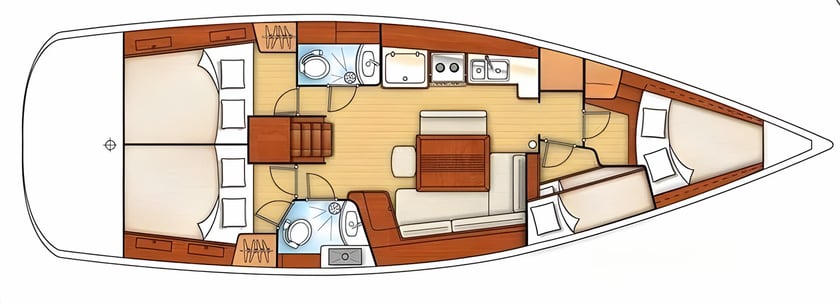
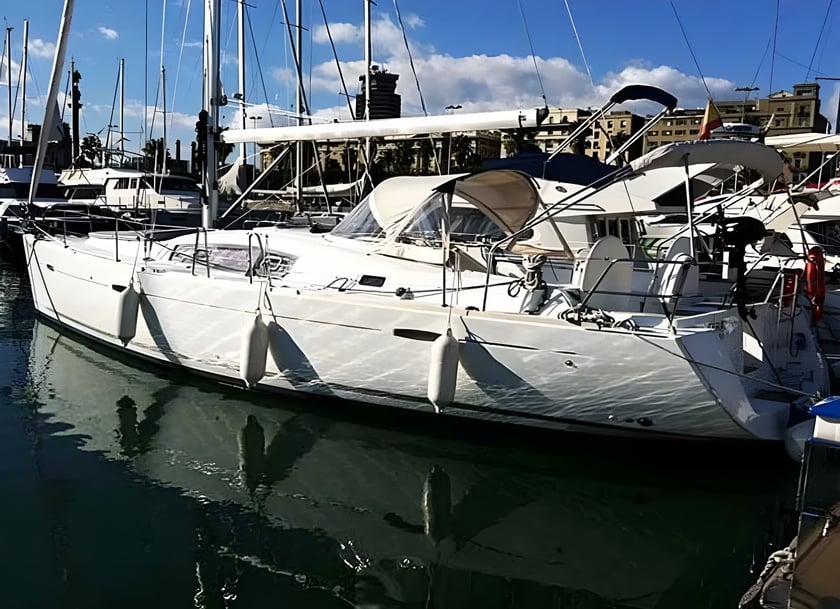
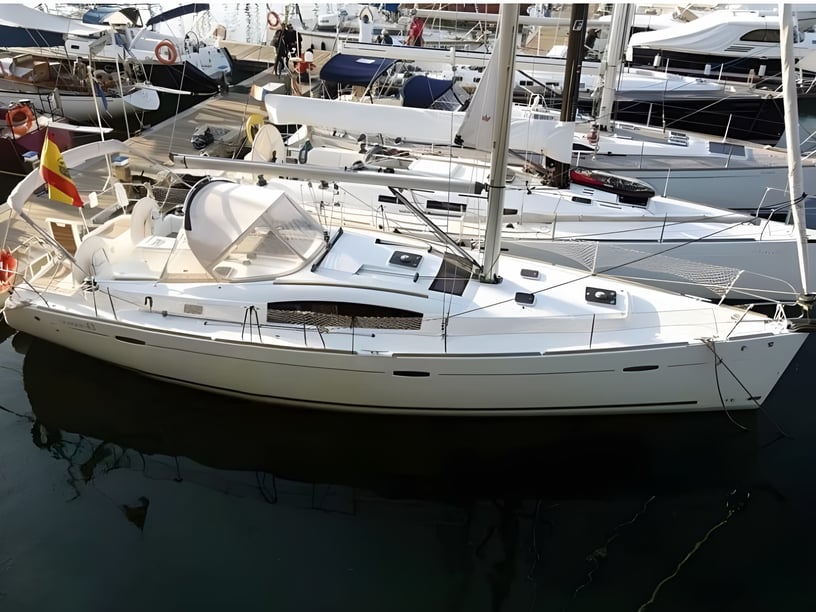
Yacht charter in Lisbon
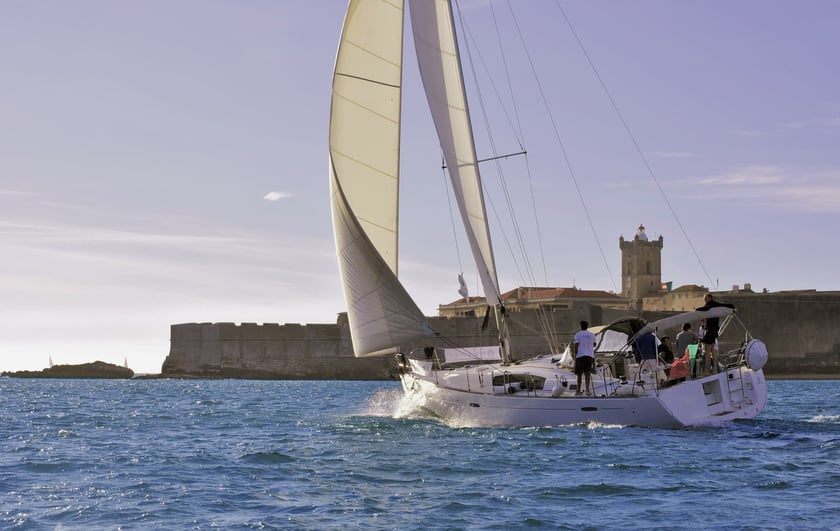
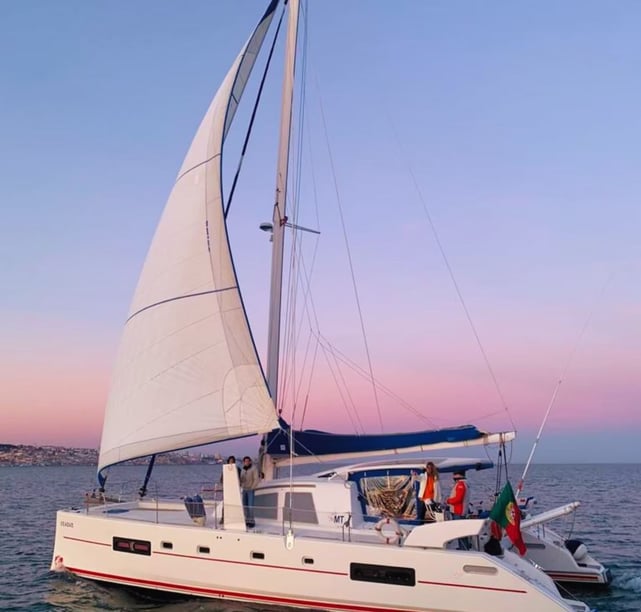
A yacht charter in Lisbon offers a city-based boating experience shaped by the Tagus Estuary. Portugal’s capital stands on the north bank of this broad tidal waterway, which narrows between Oeiras and Almada before meeting the Atlantic. Short cruises place Belém’s maritime monuments, the historic center and the south bank within the same itinerary.
Lisbon is better suited to sightseeing sails, day trips and lower-estuary passages than to island-hopping or secluded anchorage cruising. Its appeal lies in seeing a historic port city from the water while remaining close to restaurants, cultural sites and urban transport. Travelers considering a longer Portuguese sailing trip can also compare yacht charter destinations across Portugal, although Lisbon’s combination of estuary cruising and direct Atlantic access gives it a distinct character.
Places to explore from the water
Belém is a natural focus for trips on the Tagus. From the river, the route takes in Belém Tower, the Monument to the Discoveries and the riverfront near Jerónimos Monastery before continuing beneath the 25 de Abril Bridge. Farther east, Praça do Comércio and the Alfama waterfront reveal how closely central Lisbon developed around its harbor.
Crossing the river brings Cacilhas and the Almada shore into view, including Cristo Rei above the estuary. Seixal Bay, farther upstream on the south bank, represents a quieter estuarine setting with sheltered inlets and shallower margins. At the eastern end of the city, Parque das Nações offers a modern waterfront and a marked contrast with Belém.
For a longer outing, boats can follow the lower estuary past Oeiras toward Cascais. This transition matters: the scenery changes from an urban river corridor to Cascais Bay and more exposed Atlantic-facing waters.
Sailing conditions on the Tagus
Most leisure cruises follow short, visible circuits within the lower estuary, often between Belém and central Lisbon. The inner city reach is relatively sheltered, but it is not a simple lake-like environment. Tidal streams influence the entire estuary, while commercial shipping, controlled traffic areas and shallow margins require an attentive crew.
Conditions around dock entrances deserve particular consideration. During spring tides, cross-currents at several recreational docks can reach 4 to 5 knots, so departure times and approaches may be planned around the tidal stream. In summer, winds generally come from the north or northwest and often strengthen later in the day; a morning and afternoon trip can therefore feel quite different.
Toward Oeiras, Cascais and the river mouth, exposure to wind and Atlantic swell increases. Sheltered conditions beside the city should not be taken as evidence of calm conditions farther west. This contrast allows a charter to range from relaxed urban cruising to more open sailing, provided the route suits the forecast and the experience of those responsible for the boat.
Best time for a Lisbon yacht charter
Recreational boating is possible throughout the year on suitable weather days, but the principal season runs from April through September. May, June and September are particularly suitable months. May generally combines favorable boating conditions with the character of the shoulder season, while June brings warmer summer sailing. September remains within the main season and is also identified as one of the strongest months for being on the water.
July and August form part of the high summer period, with warm conditions, limited rainfall and the likelihood of north or northwest winds becoming more noticeable later in the day. October is transitional and more variable. From November through March, Lisbon remains mild compared with northern Europe, but wetter, less predictable Atlantic weather makes careful day-by-day planning more important, especially for routes toward Cascais.
Charter routes in and around Lisbon
The classic Lisbon circuit begins around Doca do Bom Sucesso or Doca de Belém and follows the city waterfront. It can connect the Belém monuments, 25 de Abril Bridge, Cristo Rei, Praça do Comércio and Alfama before returning, making it practical for a short sightseeing charter.
A longer lower-estuary passage continues west from Lisbon past Belém and Oeiras to Cascais Bay. This route links protected urban waters with a more exposed coastal sailing environment, so weather and tide become increasingly important. Another option is a two-bank heritage cruise, using the river itself to connect Lisbon’s historic frontage with communities on the south bank and the traditions of former Tagus passenger and cargo craft.
History, culture and time ashore
Lisbon’s landmarks are not merely a backdrop to the charter; many reflect the city’s relationship with the Tagus. Belém Tower was built in the early 16th century as part of the defenses at the harbor entrance, while Belém Tower and Jerónimos Monastery share UNESCO World Heritage status. From a boat, these sites can be viewed in their original maritime context rather than as isolated monuments.
The river also provides a clear perspective on the monumental frontage created after the 1755 earthquake and the older slopes of Alfama beyond it. Some heritage cruises draw attention to traditional fragatas, varinos and faluas, vessels once used to carry passengers and cargo between riverside communities and ships in the port.
Time ashore can add food and evening culture to the itinerary, from Pastéis de Belém near the monastery to fado associated with Lisbon’s older neighborhoods. This balance of cruising and city exploration is central to the destination’s yacht-holiday appeal.
Getting there and choosing a departure point
Humberto Delgado Airport is the principal gateway and is connected with central Lisbon by metro, bus, taxi and road services. The city’s urban transport network also serves its main recreational docks, making it possible to combine a yacht trip with accommodation elsewhere in Lisbon.
Common departure areas include Doca do Bom Sucesso and Doca de Belém near the western monuments, Doca de Santo Amaro and Doca de Alcântara closer to the bridge, and Cais do Sodré on the central waterfront. Marina Parque das Nações serves the eastern side of the city. Oeiras and Cascais provide alternatives farther toward the estuary mouth and may be more convenient for itineraries focused on Atlantic-facing waters.
The Cascais railway line connects Cais do Sodré with Oeiras, Estoril and Cascais, while ferries link central Lisbon with Cacilhas, Seixal and other south-bank terminals. Lisbon therefore functions both as a place to explore by water and as a practical departure area, though the most appropriate marina depends on the intended route.
Planning the right charter
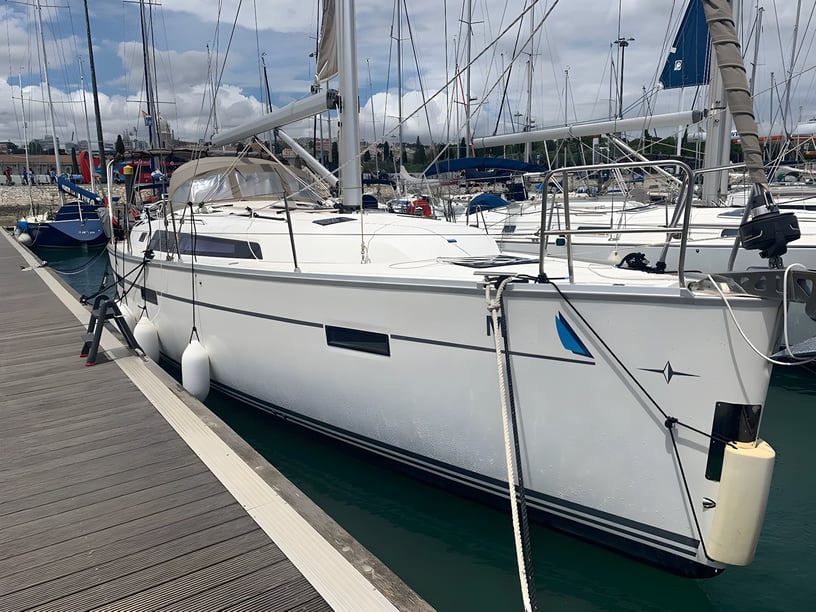
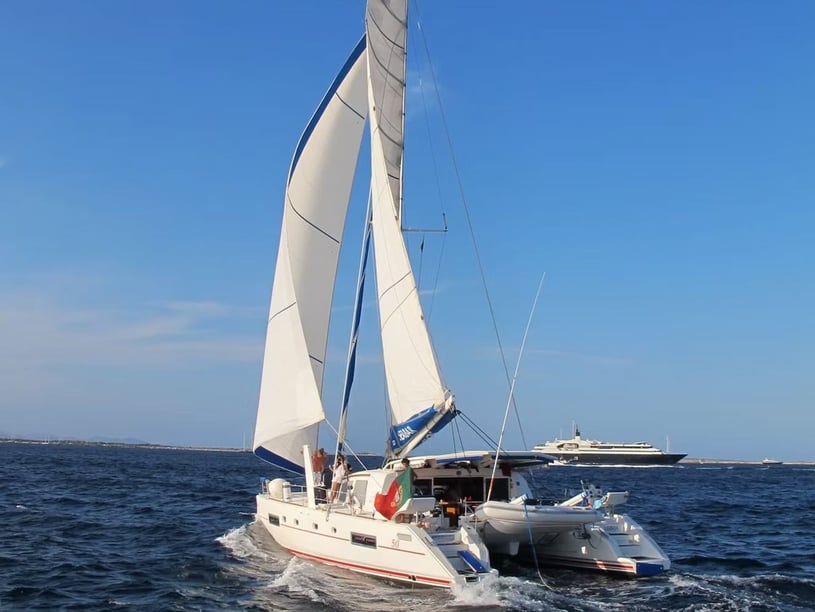
When comparing Lisbon boat rental and yacht charter options, begin with the type of day you want. A short city circuit prioritizes landmark views and time ashore, whereas a passage to Oeiras or Cascais involves greater exposure and more attention to the forecast. Travelers interested primarily in sailing can explore sailboat charters in Lisbon, while still checking that the proposed itinerary matches their experience and expectations.
Confirm the departure dock, trip duration, route limits and whether a skipper is included before booking. For independent sailing, local knowledge of tides, commercial traffic rules and marina approaches is particularly valuable. Ask how the schedule accounts for the tidal stream and summer winds, especially if the plan includes the river mouth.
Visitor-berth availability and marina services should be confirmed directly before arrival. It is also sensible to keep the itinerary flexible: conditions inside the urban estuary can differ significantly from those near Cascais, and a route that is comfortable beside Lisbon may need adjustment when Atlantic swell or stronger winds affect the lower estuary.