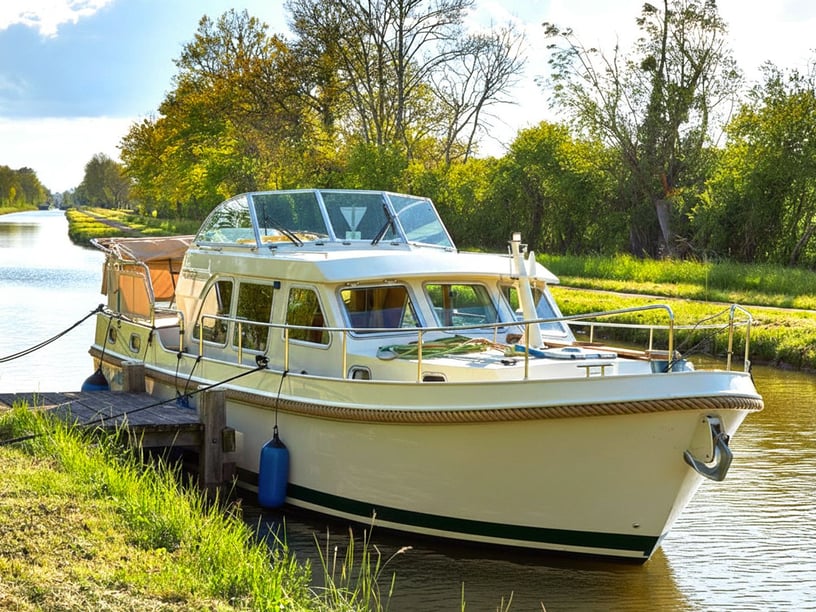
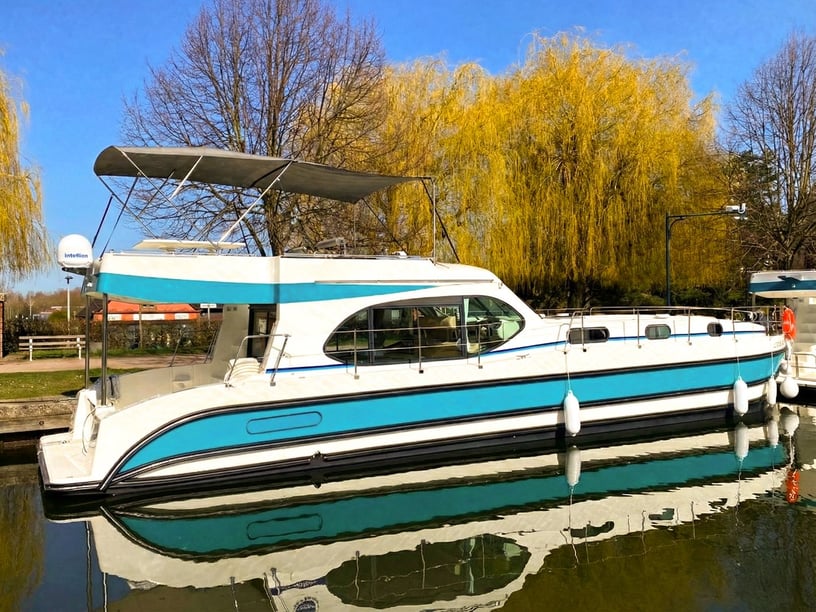
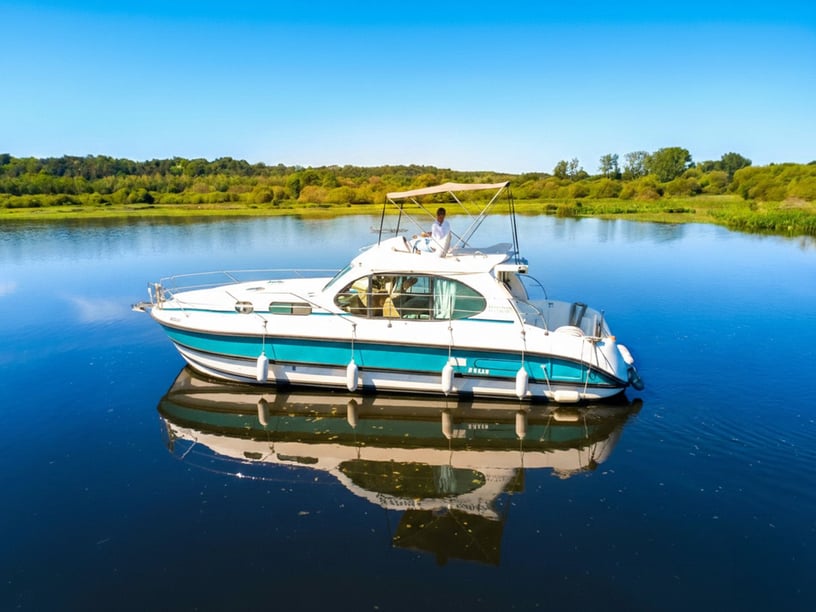
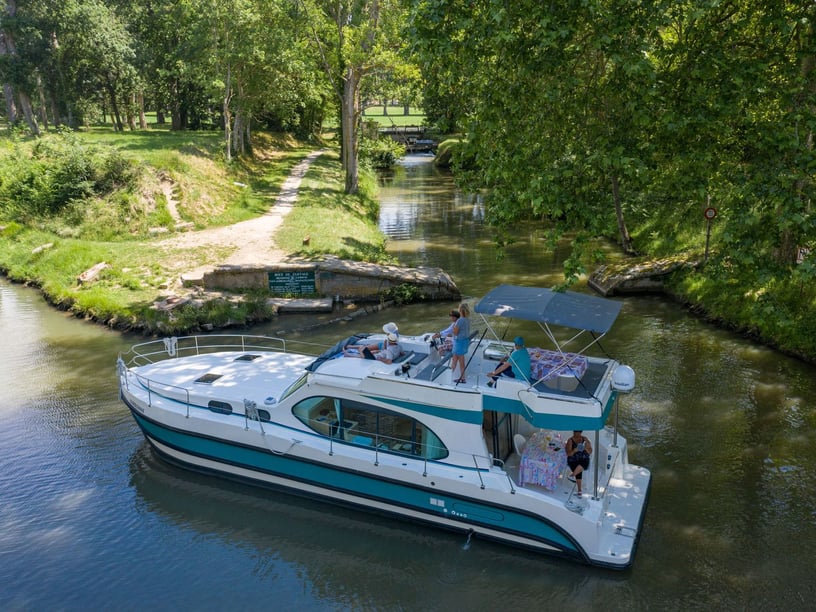
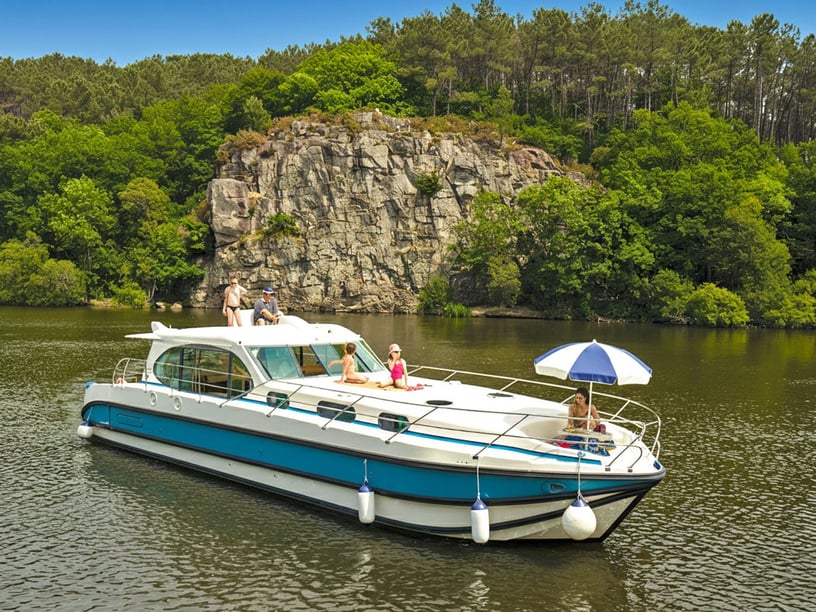
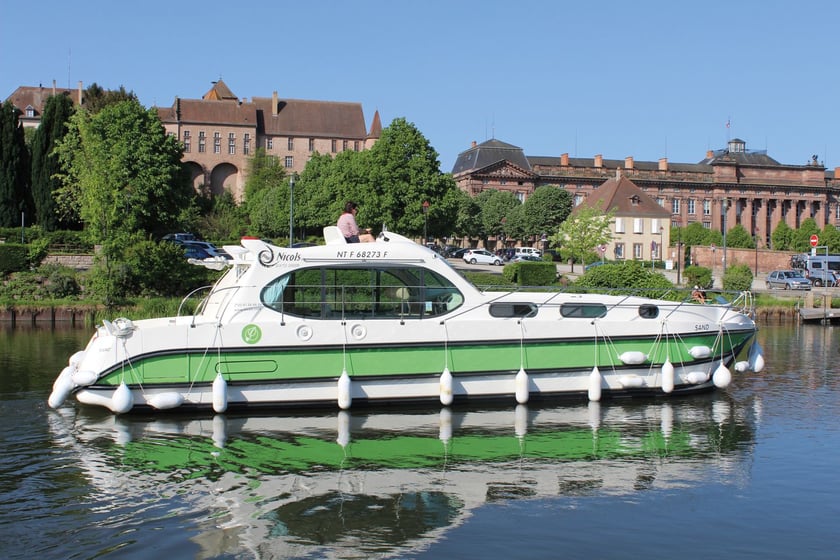
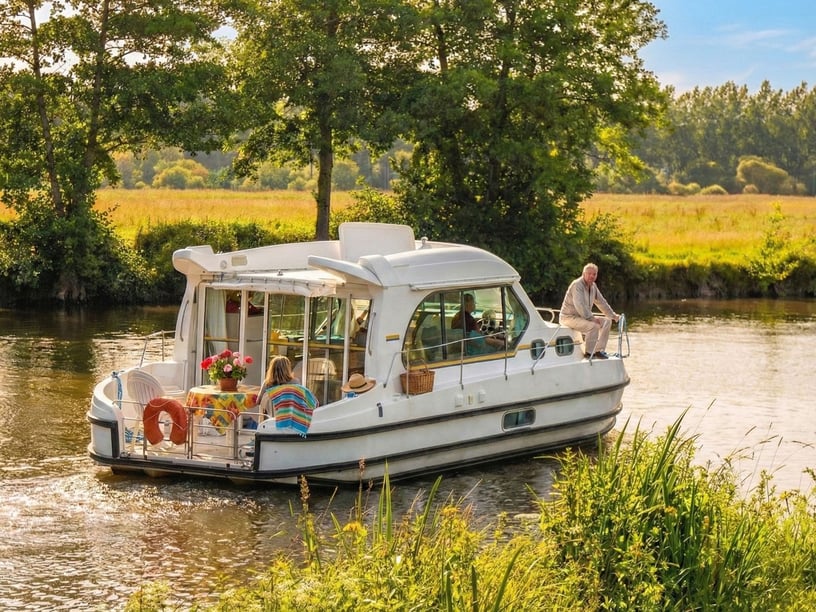
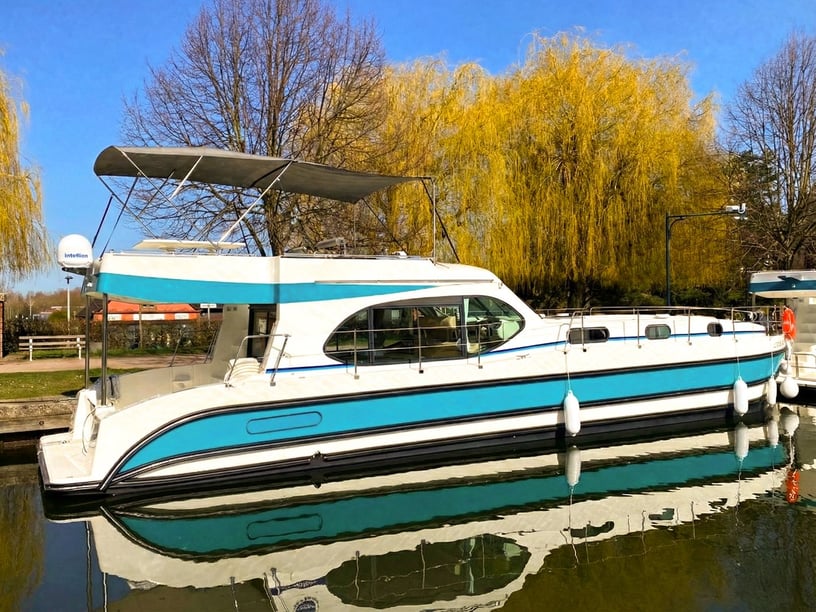
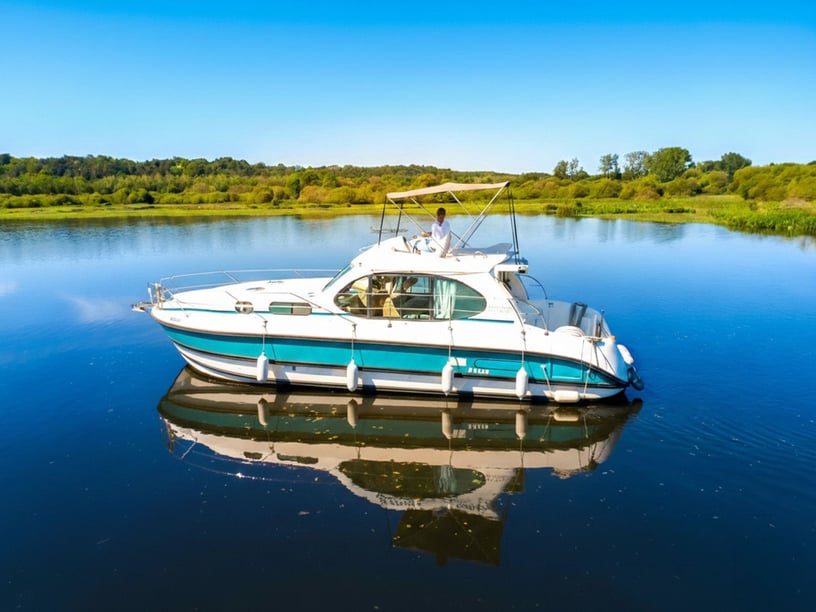
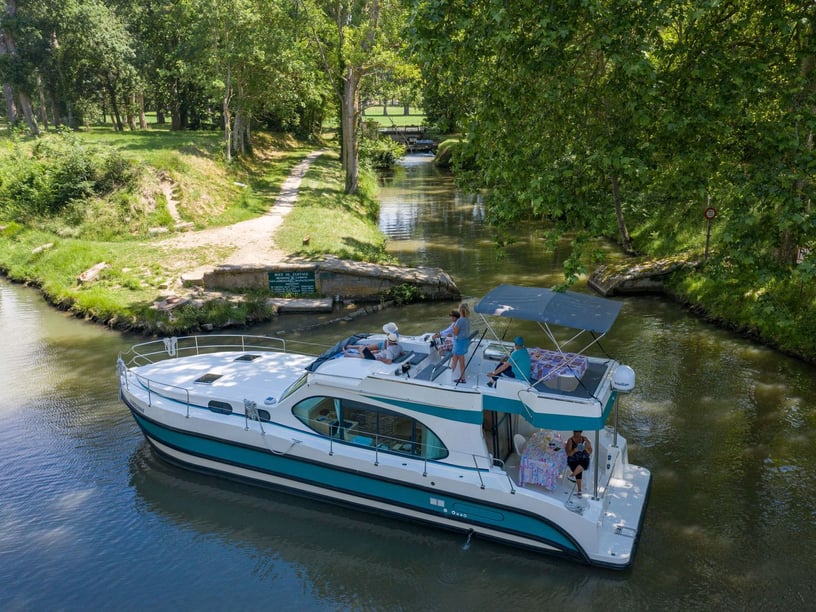
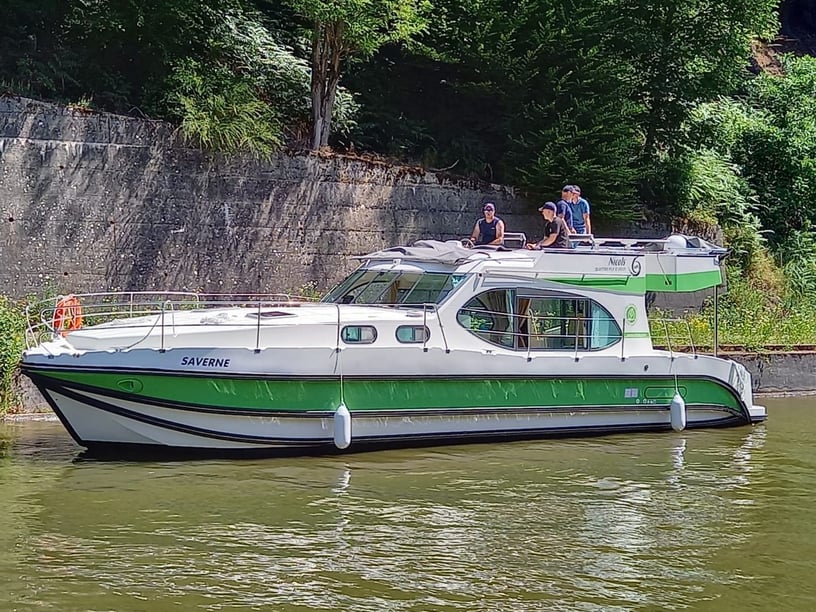
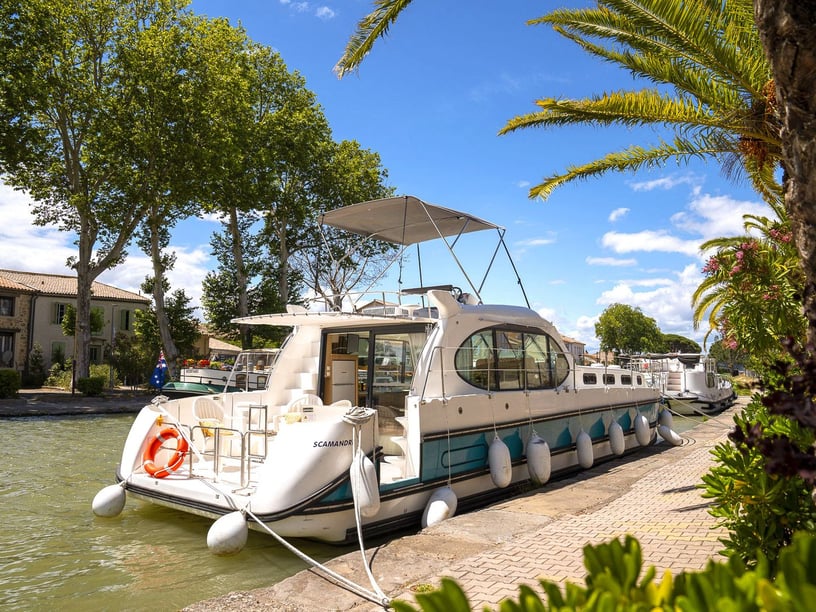
A canal-based yacht charter in Lutzelbourg
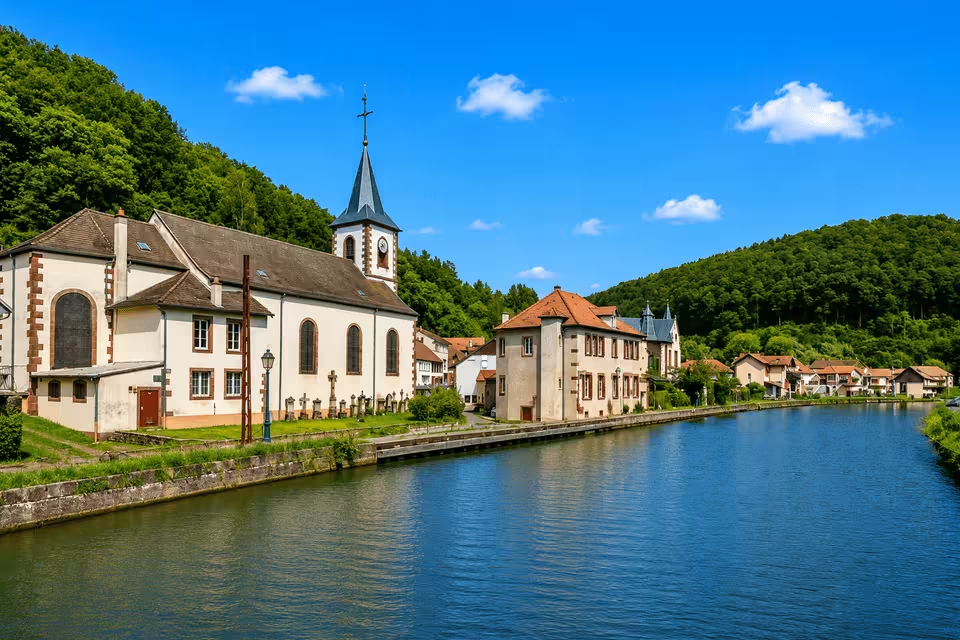
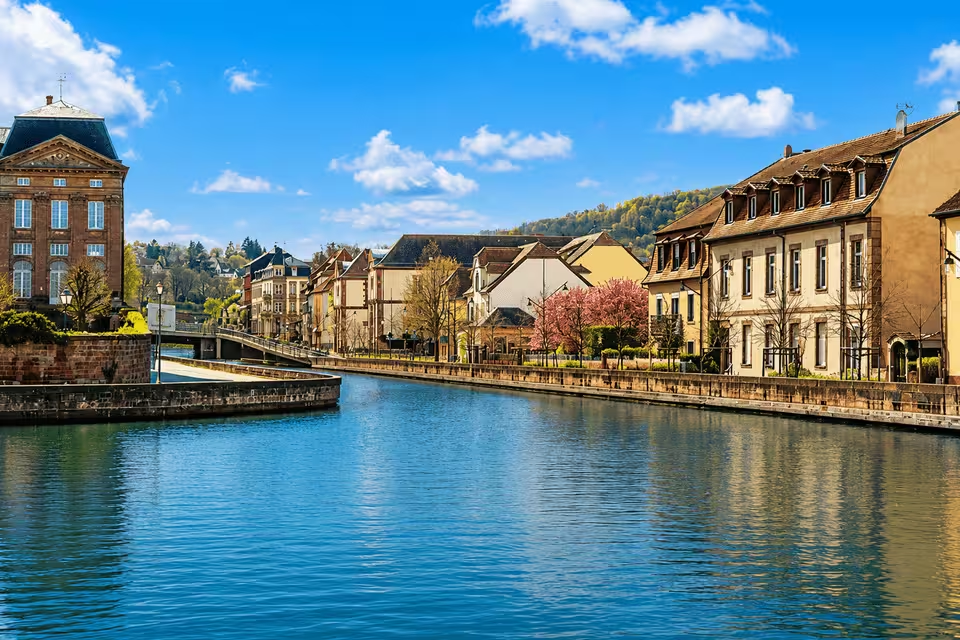
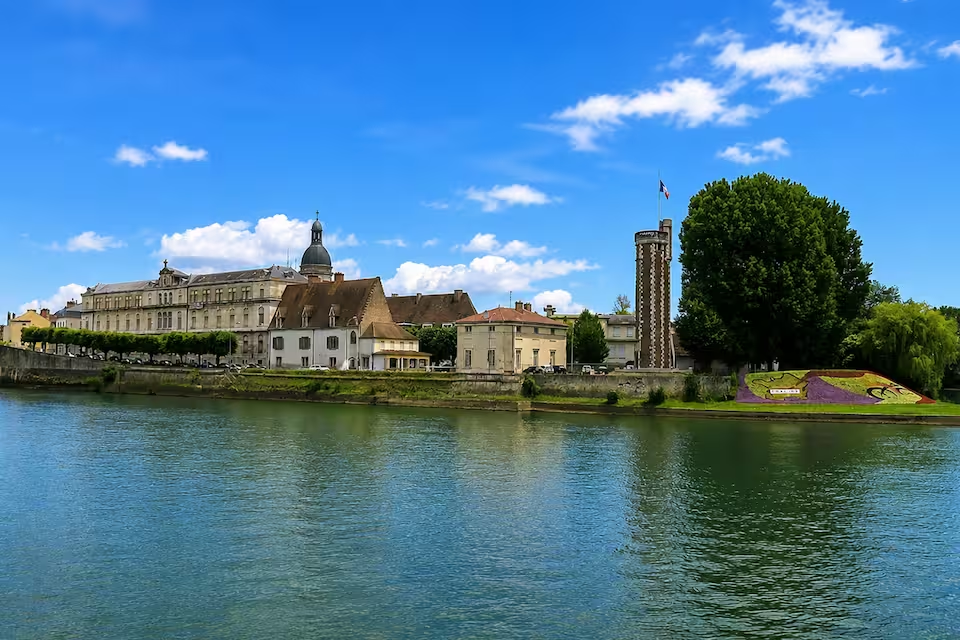
A yacht charter in Lutzelbourg is an inland boating holiday rather than a conventional sailing trip. The village lies on the Canal de la Marne au Rhin in Moselle, where the waterway, River Zorn and railway share a narrow corridor beneath the wooded sandstone slopes of the Vosges. A medieval castle ruin overlooks the canal from a rocky promontory.
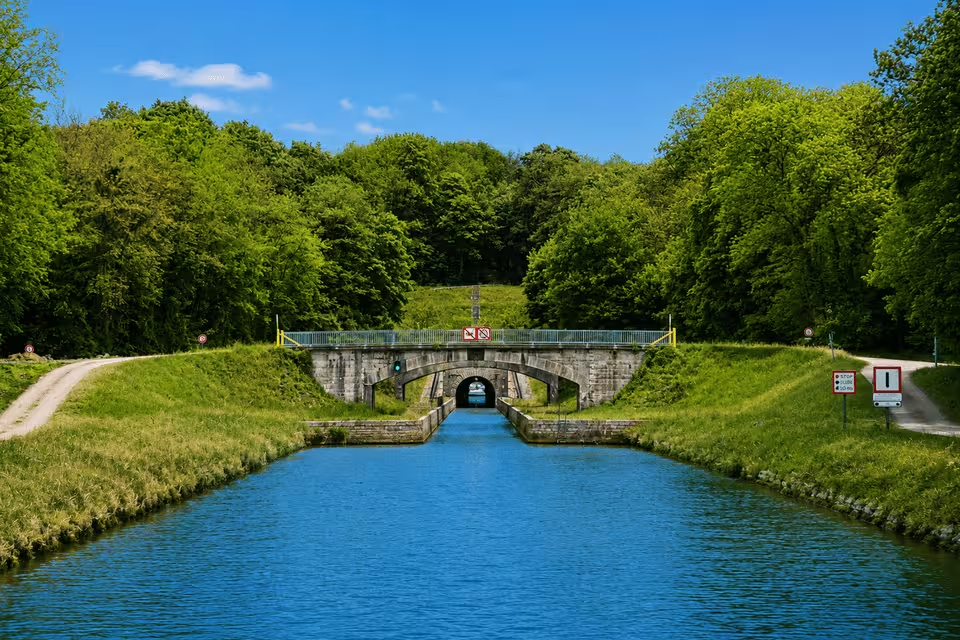
Lutzelbourg is both a peaceful stop and a practical departure point for motorized houseboat cruising. From here, travelers can follow the lock chain east toward Saverne or head west for the Saint-Louis-Arzviller inclined plane and the canal tunnels leading onto the Lorraine plateau. The result is a slow-paced journey shaped by locks, village moorings, woodland scenery and time ashore, rather than long passages or open-water sailing.
Places to explore along the canal
East of Lutzelbourg, the canal follows the lower Zorn valley toward Saverne. The lock sequence gives this stretch a steady cruising rhythm, while Saverne provides a clear destination with a harbor beside the Château des Rohan. It works particularly well for a shorter return trip from Lutzelbourg.
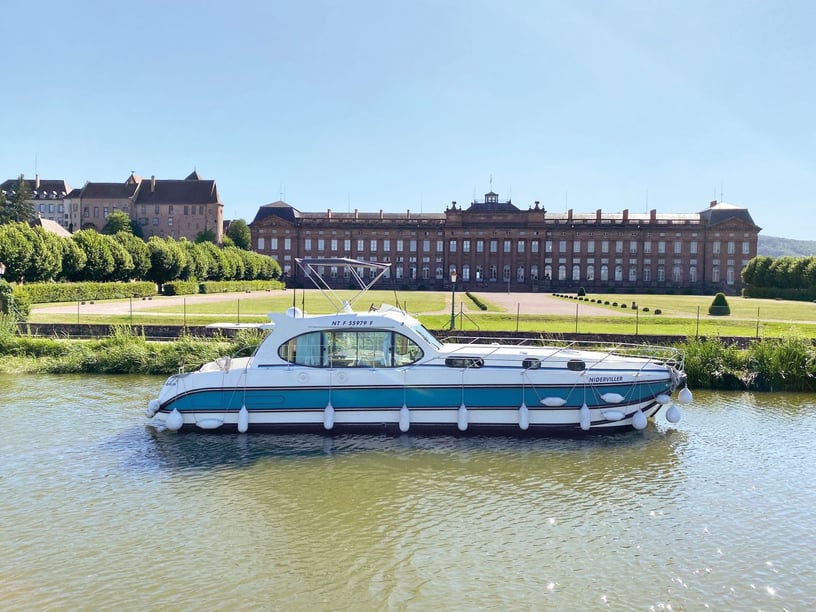
Westbound cruising has a different emphasis. Saint-Louis and Arzviller provide access to the Saint-Louis-Arzviller inclined plane, the major piece of waterway engineering that replaced a chain of 17 locks. Beyond it, the Arzviller and Niderviller tunnels lead toward the Lorraine plateau. Niderviller and Hesse can form part of a longer itinerary linking the tunnels, boat lift and Vosges valley.
What cruising from Lutzelbourg is like
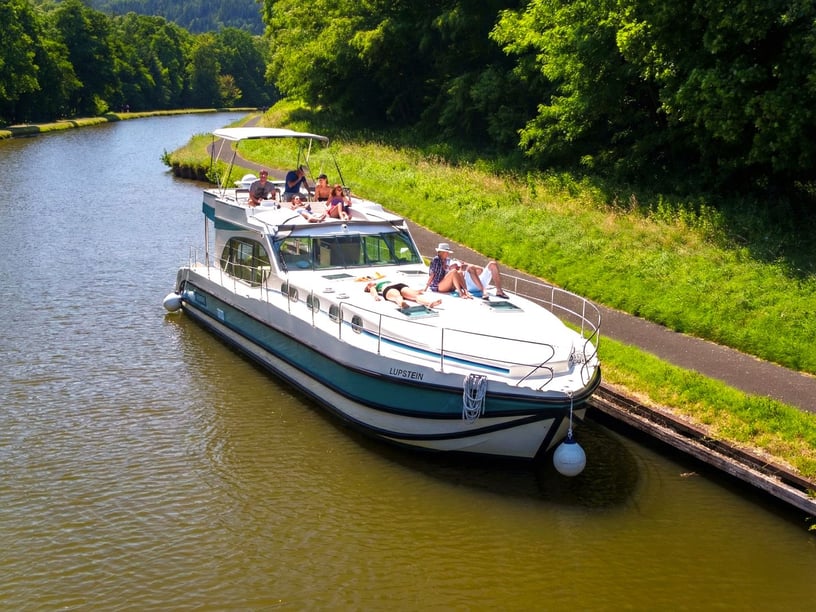
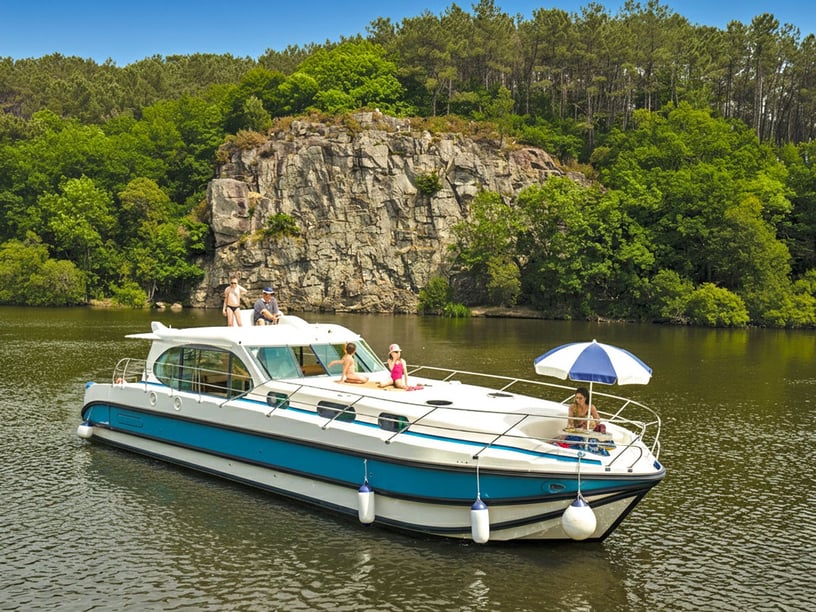
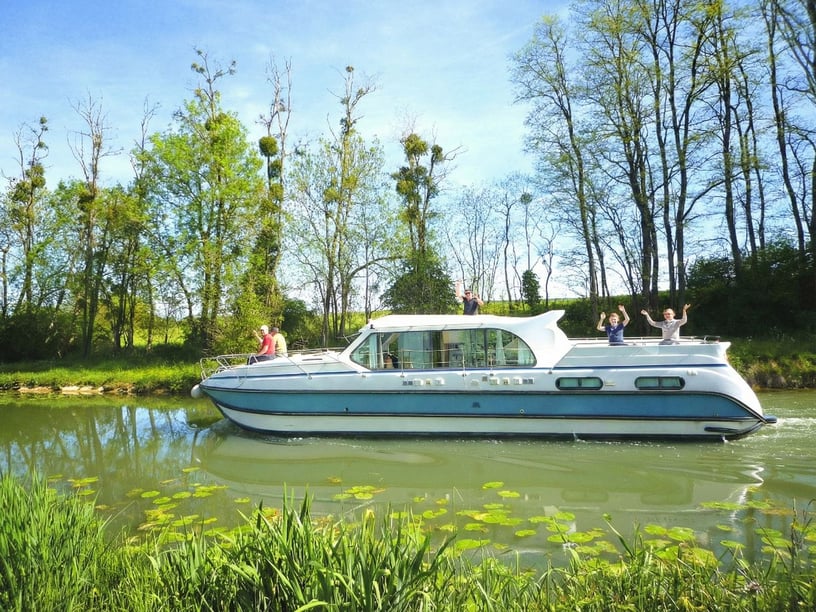
The water around Lutzelbourg is generally flat and sheltered, with no significant wave action. Boats travel at canal speed between locks, controlled structures and village moorings, making the area approachable for travelers who prefer scenic inland cruising to exposed sailing. The surrounding valley creates a close, enclosed landscape of forested slopes, sandstone cliffs and narrow waterside settlements.
Easy conditions do not mean that the crew can remain passive. Lock maneuvers, confined passages, tunnels and the inclined plane all require attention and cooperation. Eastbound routes place more emphasis on repeated locks; westbound itineraries concentrate the principal engineering features into the passage toward Arzviller and Niderviller. Weather affects comfort and visibility more than sea state, although rain, summer thunderstorms and cooler spring or autumn conditions can still influence the day’s pace.
The best time for a Lutzelbourg charter
The principal recreational boating season runs from April through October. June, July, August and September are the most consistently suitable months, combining warmer weather with conditions generally favorable for spending full days on the canal and going ashore. May is also part of the active season, although it is not specifically identified among the best months.
April and October are shoulder-season options. They can suit travelers comfortable with cooler, more changeable weather, but operating schedules and daylight deserve closer attention. Winter is less practical because frost, fog, short days and reduced infrastructure services may affect navigation. Outside the main season, some passages can operate to reduced timetables or require advance notice.
Route ideas from Lutzelbourg
A Lutzelbourg–Saverne return cruise is the most compact established option. It follows the lower Zorn valley through the lock chain and ends at Saverne’s harbor, allowing the same section to be experienced in both directions without extending onto the plateau.
For a route centered on canal engineering, boats can travel west from Lutzelbourg through Saint-Louis-Arzviller, use the inclined plane and continue through the Arzviller and Niderviller tunnels toward Niderviller or Hesse. An established week-scale pattern links Hesse, Lutzelbourg and Saverne, combining the tunnels and boat lift with the wooded valley and the eastern lock sequence. The appropriate turning point depends on available time and current passage schedules rather than distance alone.
History, engineering and time ashore
The defining experience is the close relationship between the village and its transport history. Lutzelbourg developed beneath a medieval stronghold, while the nineteenth-century canal brought boatmen, lock keepers and other navigation-related occupations. The ruined Château de Lutzelbourg, destroyed in 1523, remains a prominent landmark above the waterway.
The Saint-Louis-Arzviller inclined plane adds a striking contrast to the medieval setting. In service since 1969, it replaced 17 locks spread over approximately four kilometers. Travelers can also use canal-side walking and cycling connections through the Zorn valley and the Vallée des Éclusiers. A typical day can therefore alternate between low-speed cruising, working through locks, mooring near a village and exploring the valley on foot or by bicycle.
Reaching Lutzelbourg and finding a departure point
Lutzelbourg has a TER railway station on the Strasbourg–Nancy corridor and road access from the A4 near Phalsbourg. Strasbourg Airport is the relevant air gateway, with onward regional rail connections through Strasbourg. Saverne offers another nearby rail access point for travelers organizing a route through the area.
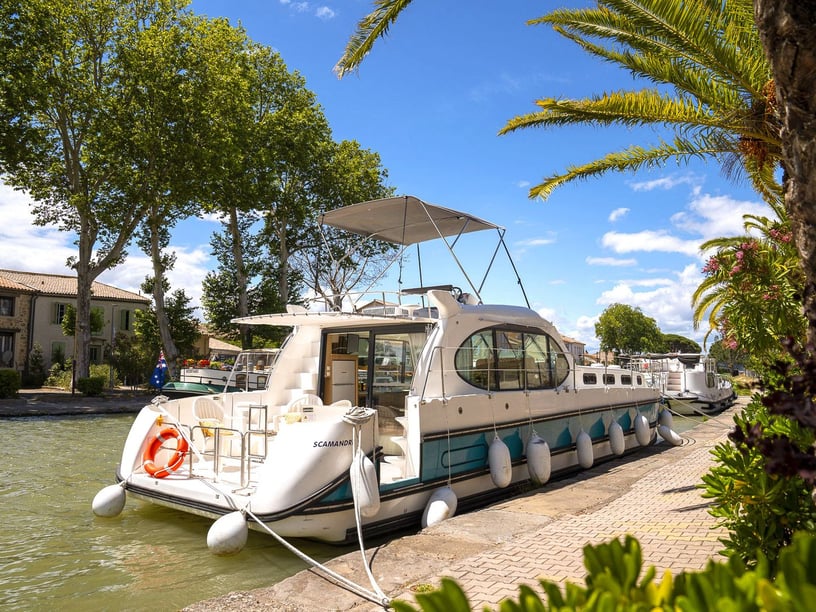
The village combines two roles: it is a place to explore from the canal and an established houseboat departure area. Relevant starting points include Le Port Amont charter base and the Port de plaisance de Lutzelbourg, the municipal pleasure port. The compact setting makes it possible to begin a cruise close to the village, castle and main canal route.
Practical planning for a Lutzelbourg boat rental
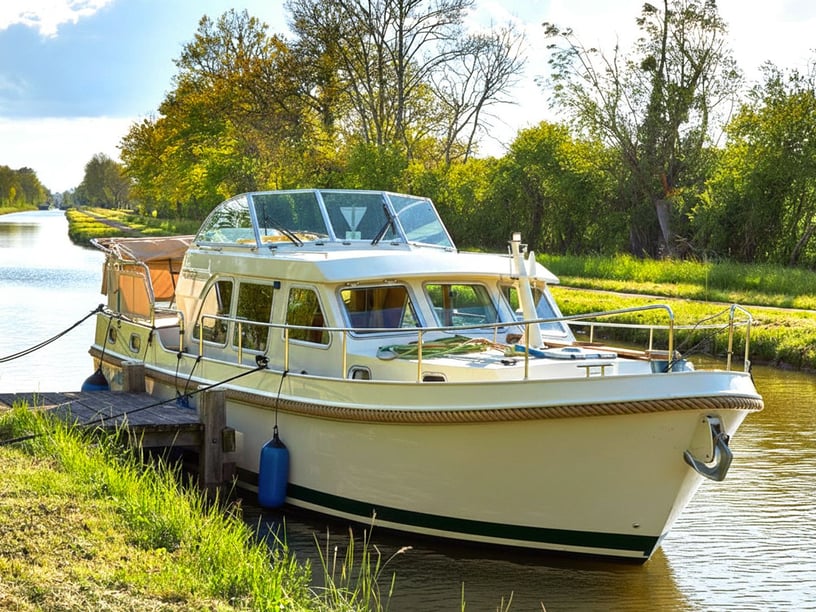
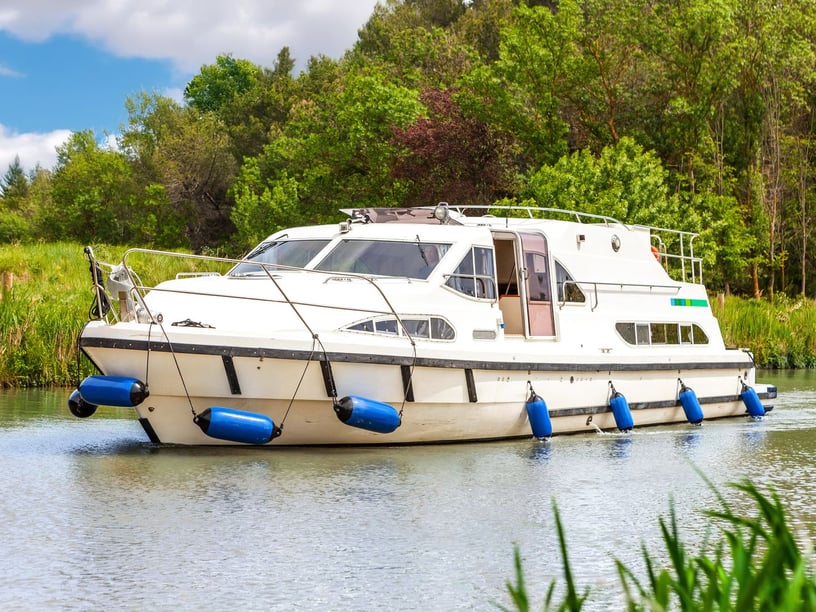
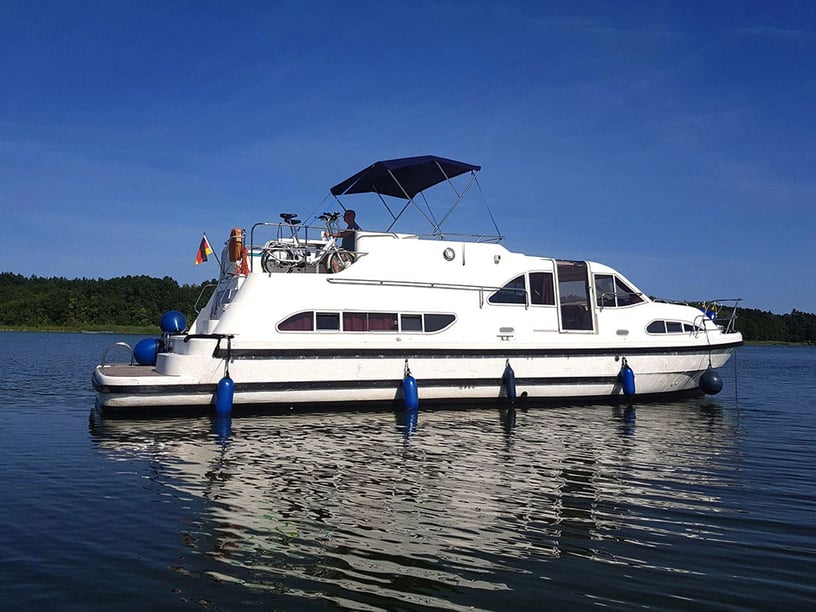
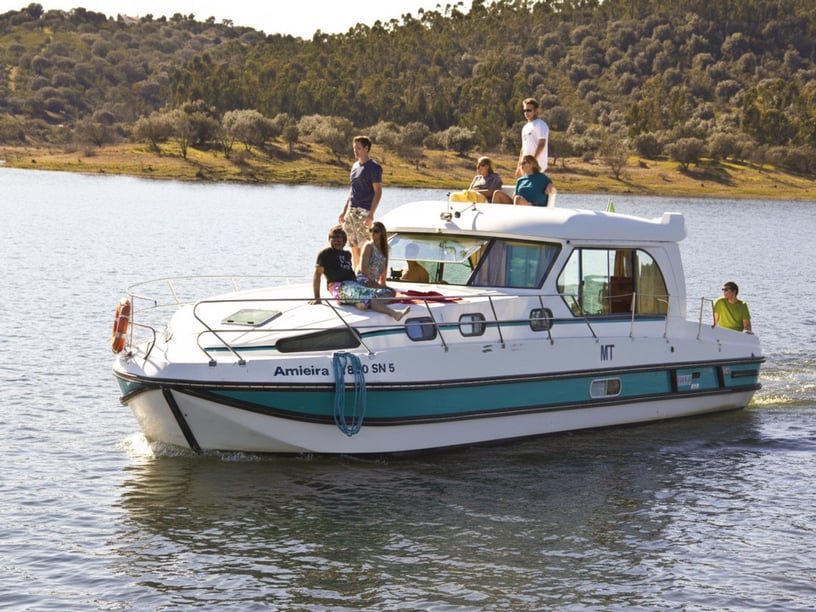
A boat rental in Lutzelbourg should be planned around motorized houseboats and inland craft, not sailing yachts designed for open water. Many local charter houseboats may be operated without a conventional boating licence after an operator briefing, but this depends on the vessel and the applicable navigation rules. Confirm the requirements for the specific boat before departure.
Crew comfort with lock handling is an important consideration when choosing this trip. The cruising itself is gentle, but shared attention is needed at locks, inside tunnels and during passage through controlled infrastructure. Current VNF notices should be checked for operating hours, maintenance, water-management restrictions and any advance-notice requirements, especially outside the main season.
Travelers comparing this canal holiday with other forms of yacht charter in France should expect a different rhythm: modest daily distances, structured passage times and frequent opportunities to go ashore. Allowing flexibility in the itinerary is more useful than trying to cover the maximum possible distance.