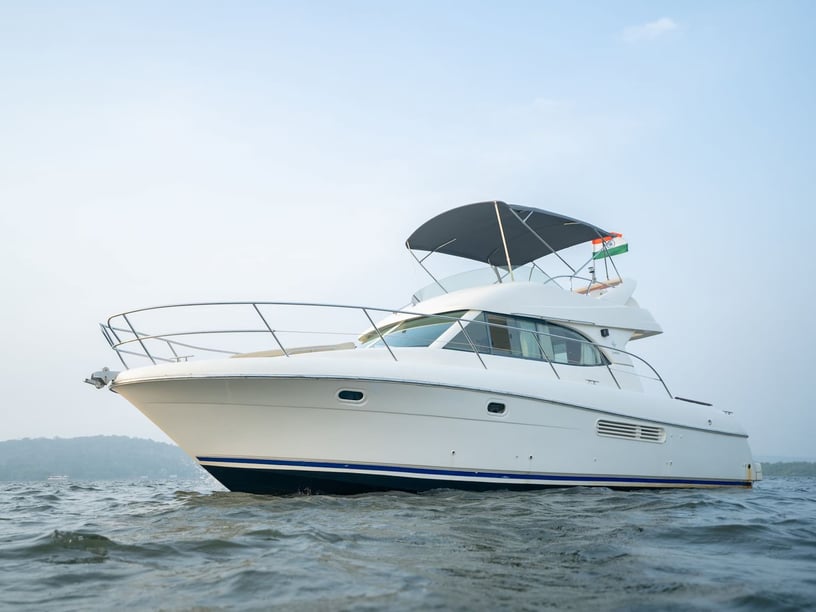
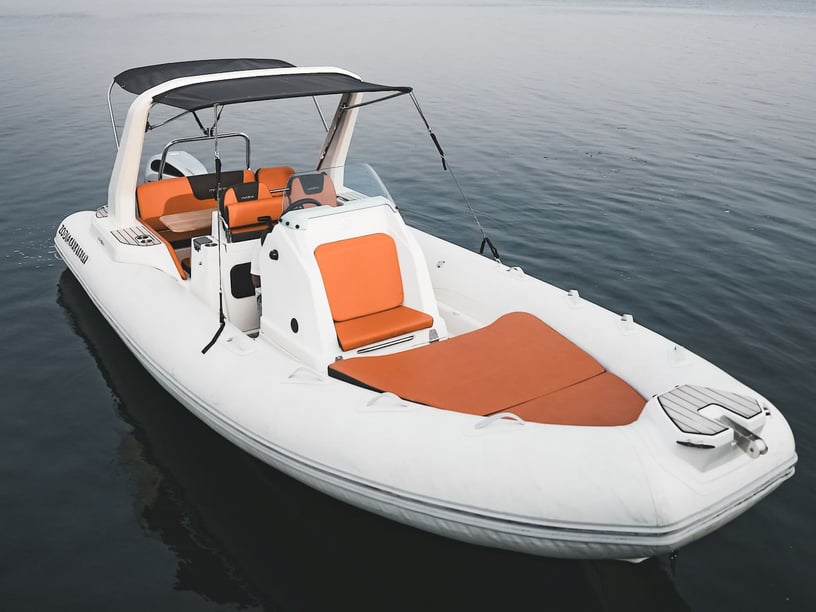
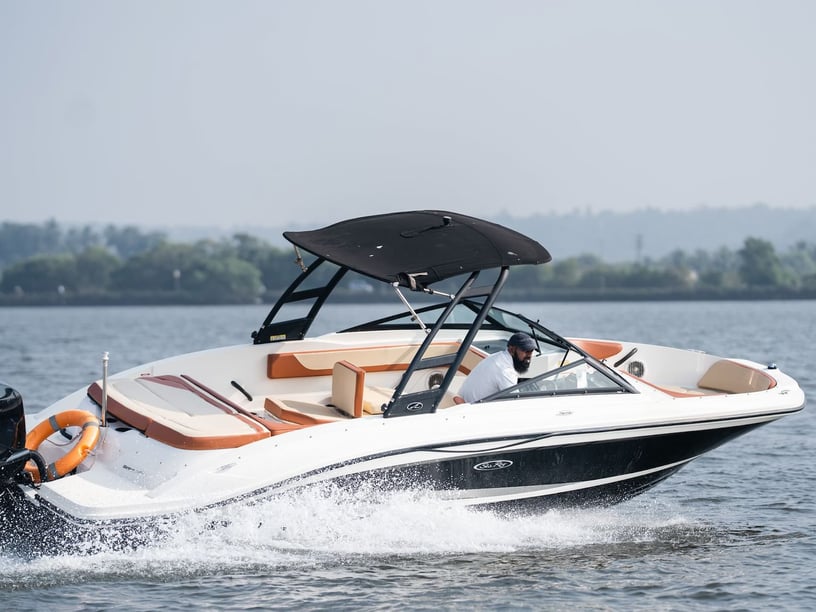
Yacht charter in India
India is not a single, uniform cruising ground. Its mainland coastline extends along the Arabian Sea, Indian Ocean and Bay of Bengal, while Lakshadweep and the Andaman Islands add coral lagoons, reefs and inter-island passages. A yacht charter in India is therefore best approached as a choice between distinct regional experiences rather than as one continuous national route.
Possibilities range from harbour sailing around Mumbai and coastal or estuary trips in Goa to Kerala’s backwaters, the reef-fringed islands of Lakshadweep and the forested Andaman archipelago. Chilika Lagoon and the Sundarbans provide wildlife-focused boating in enclosed waters, although these experiences differ considerably from conventional coastal yacht cruising. Limited purpose-built marina infrastructure also means that departures often use working harbours, jetties, ferry terminals and boat houses. Travelers comparing boat rental in India should first identify the type of water, vessel and trip they want, then examine the local season and operating requirements.
Where to charter and cruise
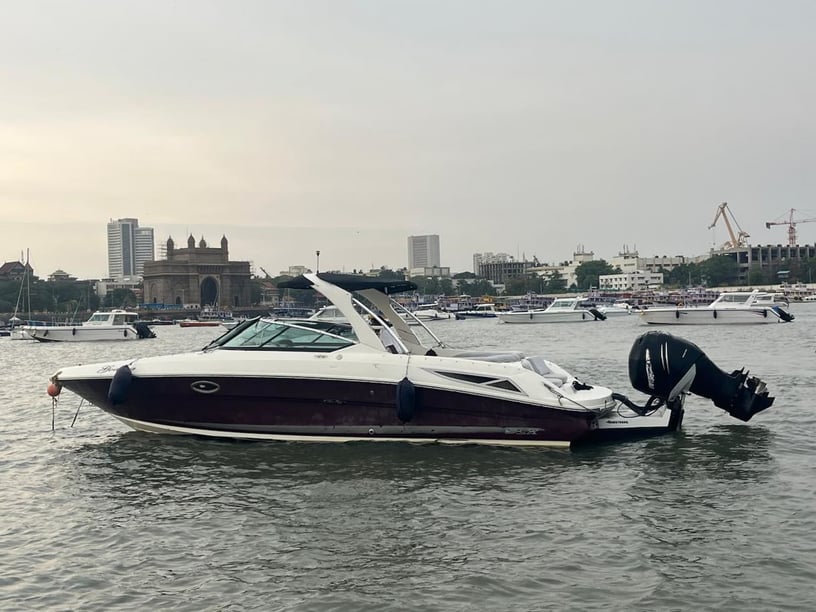
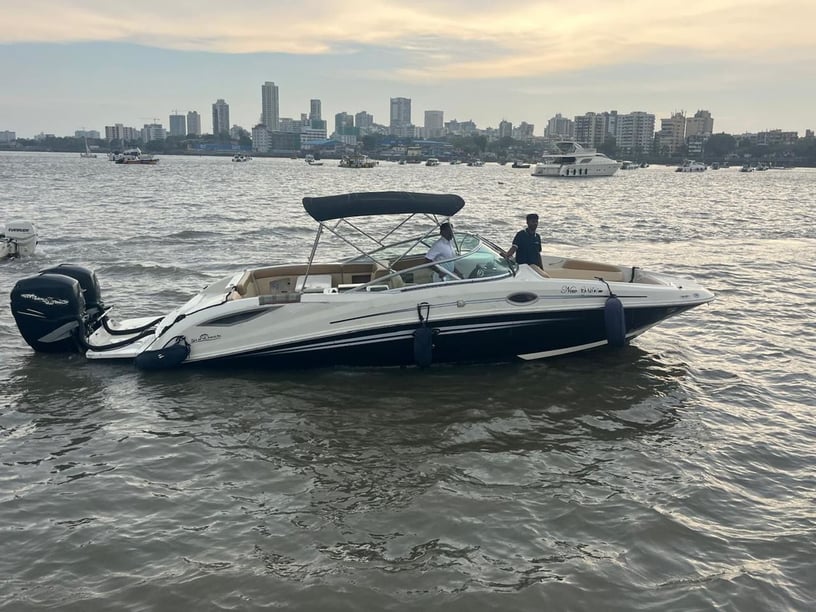
Mumbai is one of the clearest choices for short urban sailing. Trips from the Gateway of India explore Mumbai Harbour, with sunset sails and connections toward Elephanta Island placing historic waterfront landmarks within an easy day on the water. This area suits travelers who want to combine sailing with a major-city stay rather than undertake a remote island itinerary.
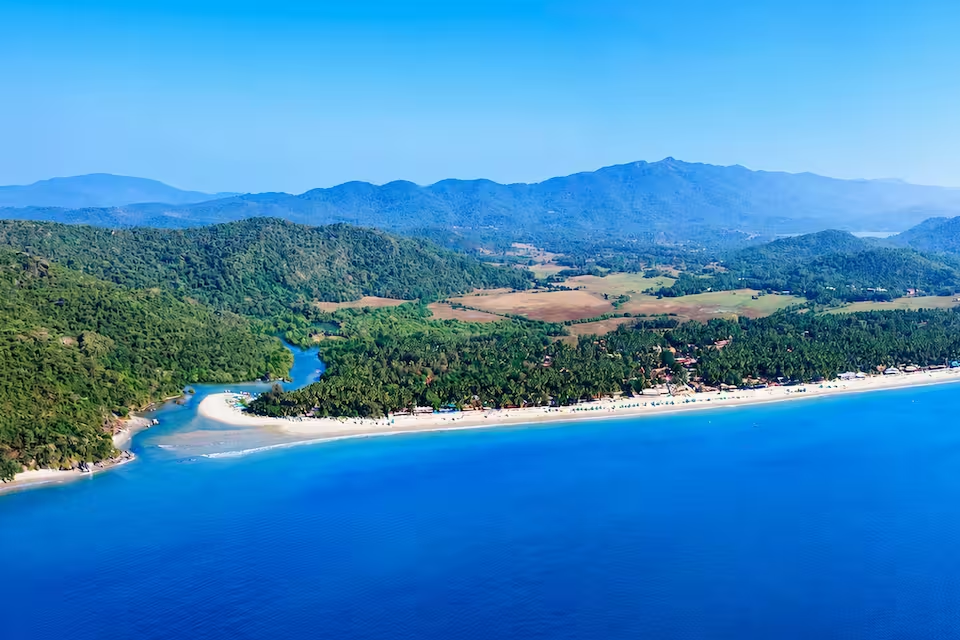
Goa has a different character. The Mandovi and Zuari estuaries offer relatively enclosed cruising, while departures around Panaji, Dona Paula and Coco Beach lead toward Grande Island and nearby coastal waters. Goa is particularly suitable for mixing time afloat with beaches, Portuguese-influenced architecture, local cuisine and visits to places such as Old Goa or Fort Aguada.
Kerala is defined by inland waterways rather than exposed sea passages. Alappuzha, Kumarakom, Kochi and Ashtamudi Lake are connected by lakes, canals and village-lined backwaters. Traditional kettuvallams, once used to transport rice and spices, have often been converted into passenger houseboats. This makes Kerala a strong choice for slow scenic cruising, but the experience is closer to a waterways journey than a sailing-yacht holiday.
For reefs and island scenery, Lakshadweep and the Andamans stand apart. Lakshadweep combines sheltered atoll lagoons with exposed passages between islands such as Agatti, Kavaratti, Kadmat and Bangaram. The Andamans offer protected channels, marine parks and established links around Sri Vijaya Puram, Swaraj Dweep and Shaheed Dweep. Both regions require closer attention to permissions, transport schedules and weather than mainland day-charter areas.
What sailing conditions are like
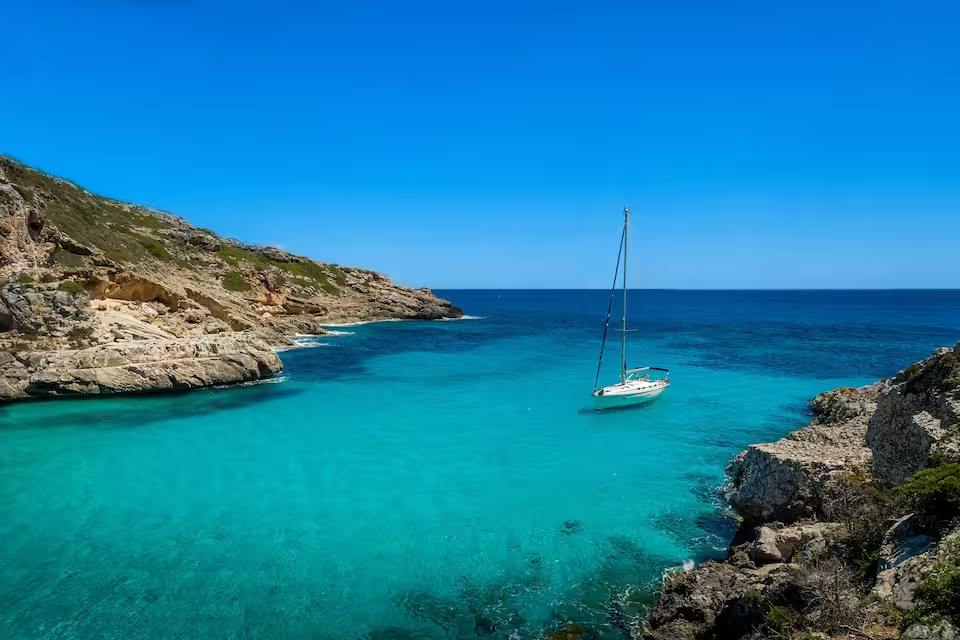
Conditions vary sharply between open coasts, reef lagoons and inland waterways. Arabian Sea and Bay of Bengal passages can be exposed, so sea state, seasonal winds and local forecasts have a direct effect on route choice. Lakshadweep’s lagoons may be sheltered behind reefs, but passages between atolls cross open ocean. The Andamans combine calmer channels and short inter-island links with more exposed stretches.
Goa’s estuaries, Kerala’s backwaters, Chilika Lagoon and the Sundarbans generally offer more enclosed boating. Calmer water does not remove every operational consideration: shallow channels, tides, fishing activity and busy local boat traffic can all shape the journey. These are matters for the operator and skipper, but travelers should expect routes and departure times to follow local conditions rather than a fixed sightseeing schedule.
The southwest monsoon brings stronger winds, heavy rain and increased wave energy, especially along the west coast and around Lakshadweep. Bay of Bengal areas face a greater frequency of tropical cyclones, particularly in pre- and post-monsoon periods. This regional variation makes local operating calendars more useful than a nationwide assumption about sailing conditions.
When to plan a yacht charter
There is no single best boating season for all of India. Along the western mainland coast and in Lakshadweep, leisure conditions are generally more dependable outside the southwest monsoon, commonly from October or November through March. January to April and November to December form the country’s broader high-travel period, while June through September are the principal low-season months for boating because of monsoon conditions.
The Andaman tourism season generally runs from October through May, although rainfall and operating conditions still vary within that period. On the southeast coast, including Tamil Nadu and Puducherry, the pattern differs because much of the seasonal rain arrives with the northeast monsoon from October through December. Bay of Bengal cyclone risk also deserves attention during transitional periods.
May and October often sit between the main high and low seasons nationally, but they should not be treated as guaranteed calm-weather windows. Before confirming dates, compare the regional operating season with current marine forecasts and any transport or permit requirements. A suitable month for Goa or Kerala may not offer equivalent conditions around Chennai, Lakshadweep or the Andamans.
Route ideas for different trip styles
Short charters can focus on Mumbai Harbour or on Goa’s Mandovi estuary and nearby coast. In Kerala, an Alappuzha–Kumarakom–Kochi route links canals, villages and the broad waters of Vembanad Lake, creating a natural multi-stop backwater journey.
Island itineraries require more preparation. In the Andamans, the established Sri Vijaya Puram–Swaraj Dweep–Shaheed Dweep circuit provides a useful framework, while Wandoor is the departure area for authorized excursions into the Mahatma Gandhi Marine National Park island group. Lakshadweep connections may link Agatti with Kavaratti, Kadmat or Bangaram in fair weather. These services and permissions should not be assumed to function like unrestricted private cruising routes.
Chilika Lagoon offers another style of trip, with departures from Satapada, Barkul or Rambha toward lake islands and wildlife-viewing areas. It is better suited to focused lagoon excursions than to a conventional yacht itinerary.
Experiences on and beyond the water
India’s range of waterways allows very different rhythms afloat. Reef-based trips in Lakshadweep and the Andamans can center on beaches, snorkeling, diving and marine life, subject to conservation rules and authorized access. In the Andamans, boat excursions from Wandoor reach protected island environments, while Barren Island—India’s only active volcano—may be viewed from authorized vessels because tourist landings are not permitted.
Kerala’s backwaters offer a slower passage through canals, lakes and settled waterways. Time aboard can be combined with Fort Kochi and Mattancherry, whose history reflects Kerala’s long role in the spice trade. Goa similarly brings coastal cruising together with a distinct architectural and culinary legacy shaped in part by Portuguese rule.
Wildlife rather than beach time defines trips in Chilika Lagoon and the Sundarbans. These landscapes are experienced through lagoons, tidal channels and mangroves, making them relevant to nature-focused travelers rather than those seeking open-sea sailing. Around Mumbai, the appeal lies in seeing the city from its historic harbour and pairing time under sail with the Gateway of India or Elephanta Caves.
Reaching the main departure areas
India’s principal coastal cities are connected by domestic flights, railways and highways. Mumbai charters commonly leave from the Gateway of India, while Goa departures include Panaji, Dona Paula and Coco Beach. Kochi, reached through Cochin International Airport, has the country’s notable yacht-marina facility as well as Marine Drive jetties; Alappuzha and Kumarakom are common starting points for backwater trips.
Sri Vijaya Puram is the main air and ferry hub for the Andaman Islands, with onward services to Swaraj Dweep and Shaheed Dweep. Wandoor serves marine-park excursions. Kochi is the principal gateway for Lakshadweep, while flights operate to Agatti and fair-season sea services connect selected islands. Chilika Lagoon is typically approached through Bhubaneswar and onward road or rail travel to Satapada, Barkul or Rambha.
Choosing and planning your charter
Begin by deciding whether you want open-water sailing, a short coastal outing, reef and island exploration, or an inland cruise. These formats are not interchangeable: a houseboat journey in Kerala has a different pace and vessel style from harbour sailing in Mumbai or an inter-island trip in Lakshadweep. Travelers specifically interested in wind-powered cruising can also review options for a sailboat charter in India.
Ask the operator to clarify the proposed route, expected sea conditions, embarkation point and any weather-dependent alternatives. In areas with limited marina infrastructure, boarding may take place at a jetty, harbour or boat house rather than a recreational marina. For island trips, confirm what permits are required and whether transfers, shore visits, anchoring, snorkeling or diving are restricted. All visitors to Lakshadweep require authorization, while parts of the Andaman and Nicobar Islands prohibit access or require specific permission.
Marine forecasts from the India Meteorological Department and INCOIS are particularly important for exposed passages and during monsoon or cyclone-prone periods. Local conservation rules may also limit routes, fishing, anchoring or landing in reefs and marine parks. Choosing an authorized operator familiar with the specific region is therefore more important than applying a single set of assumptions to yacht charter across India.