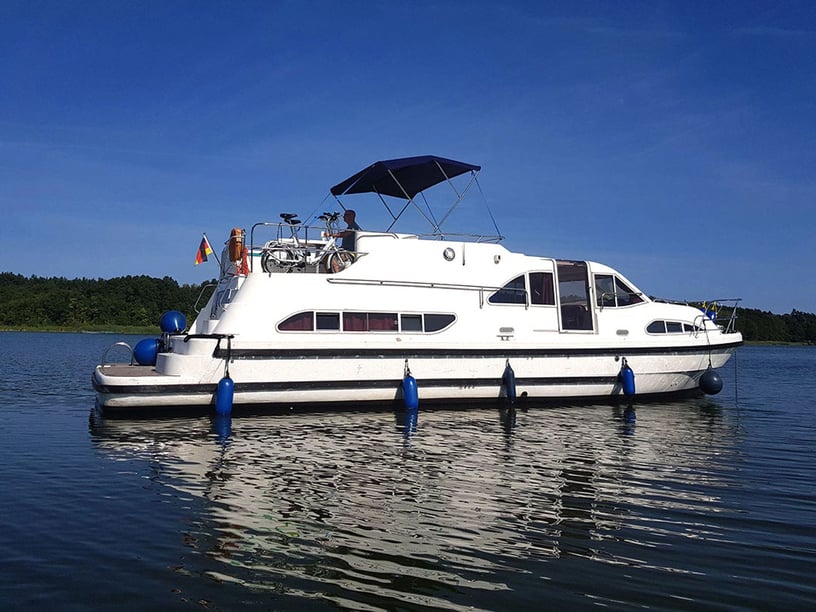
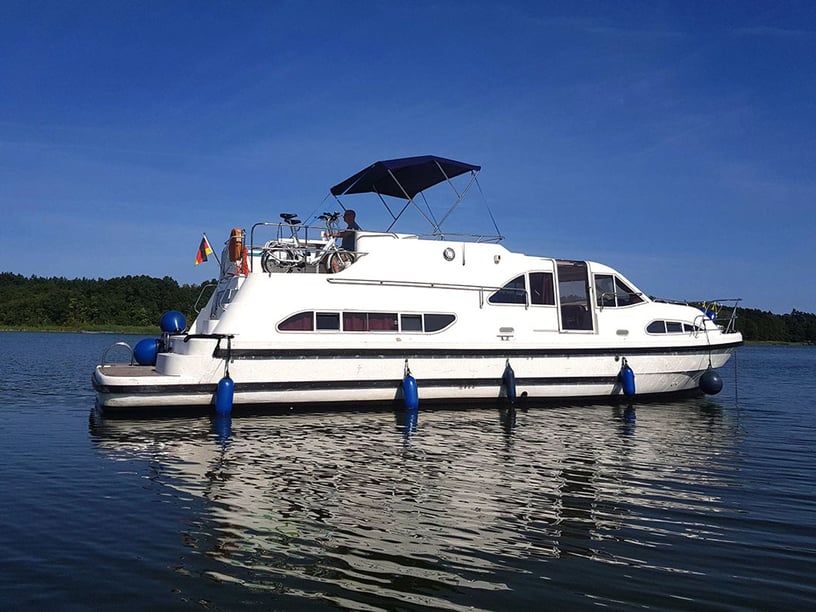
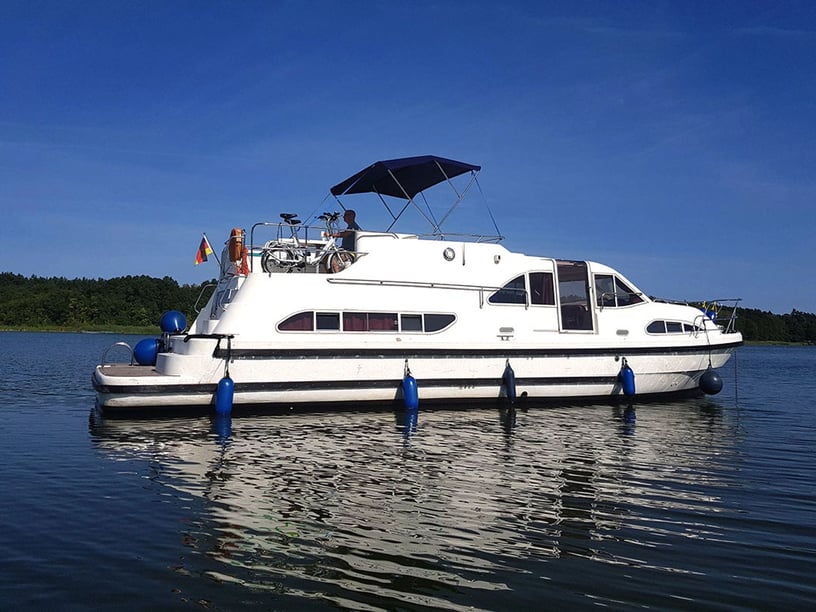
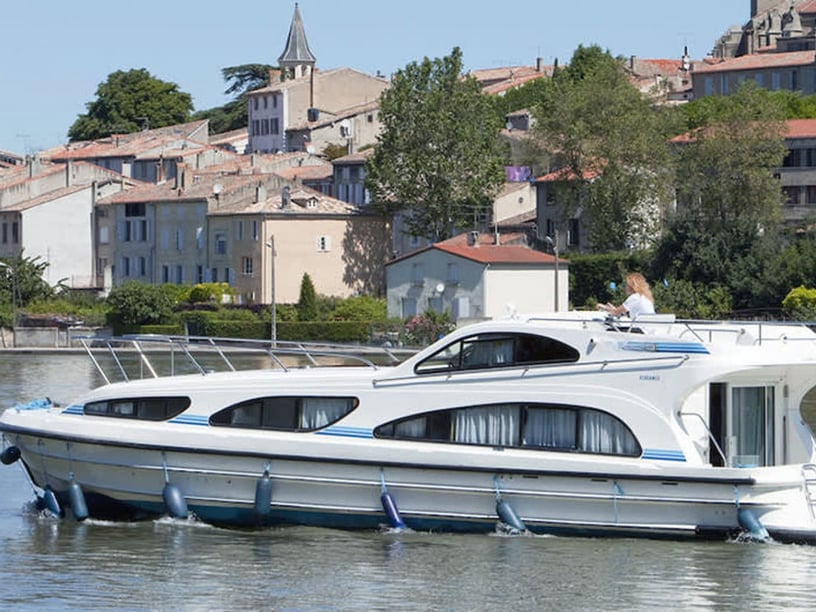
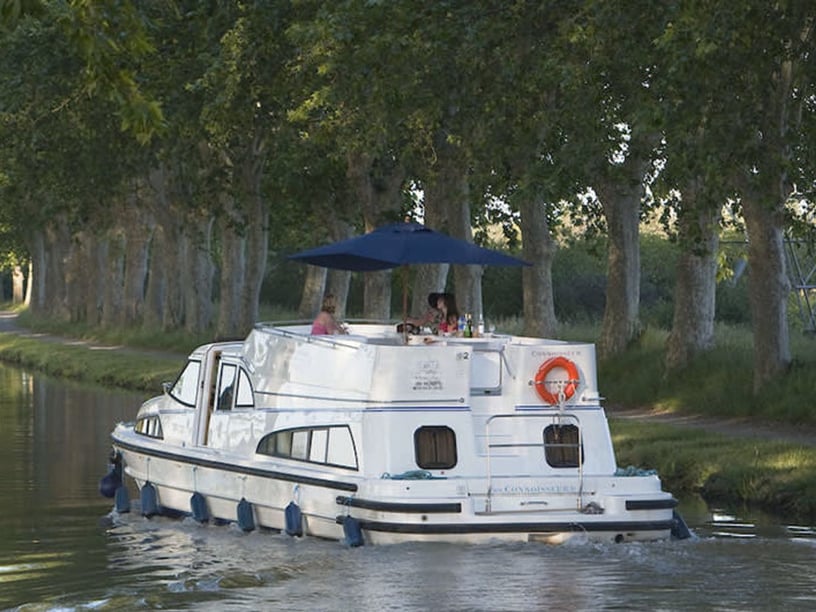
Fürstenberg as an inland yacht charter destination
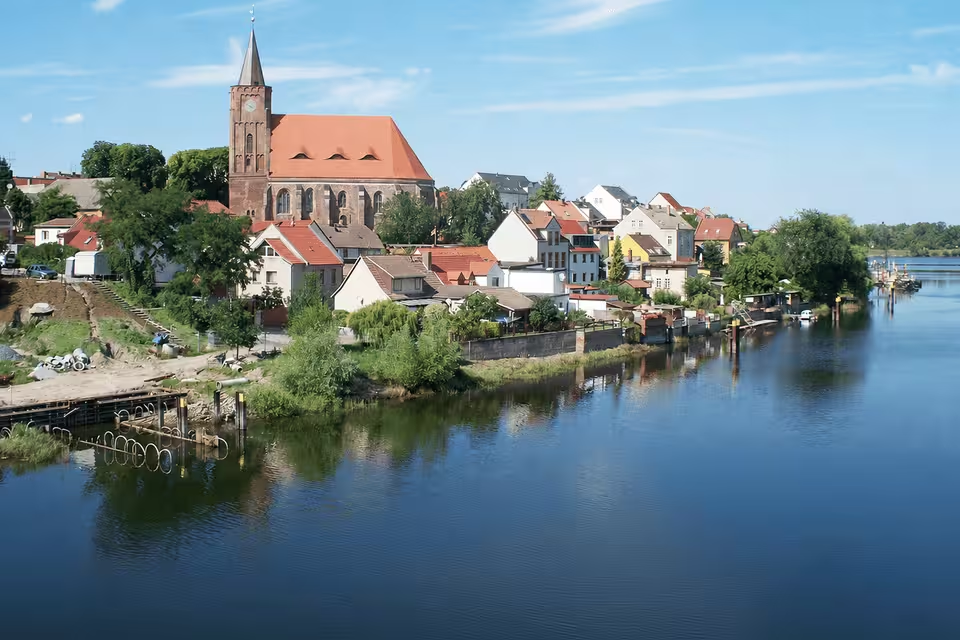
A yacht charter in Fürstenberg is an inland cruising experience shaped by lakes, sheltered river passages and lock-controlled waterways rather than tides and open-sea passages. The town lies on the Upper Havel in northern Brandenburg, at the southern approach to the Mecklenburg Lake District. Its historic center occupies islands and waterside land between Röblinsee, Baalensee and Schwedtsee, with four branches of the Havel passing through the town.
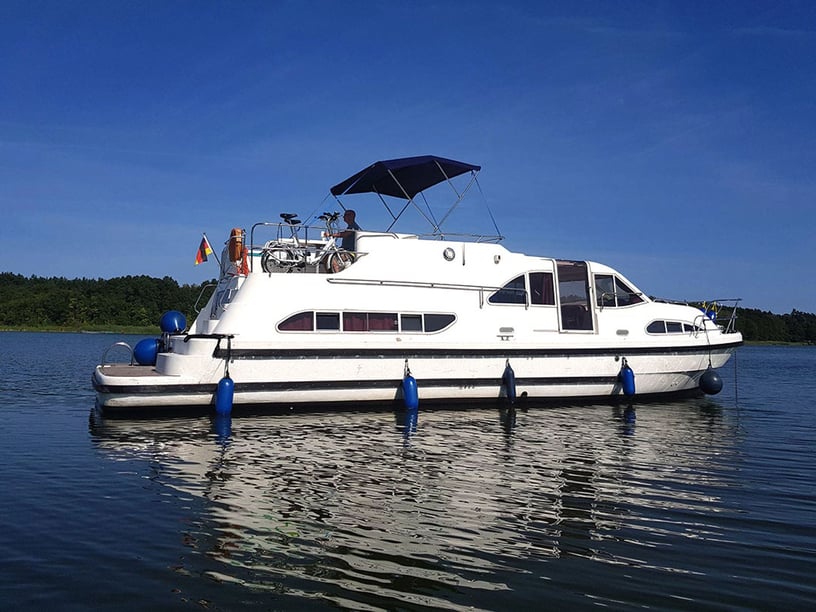
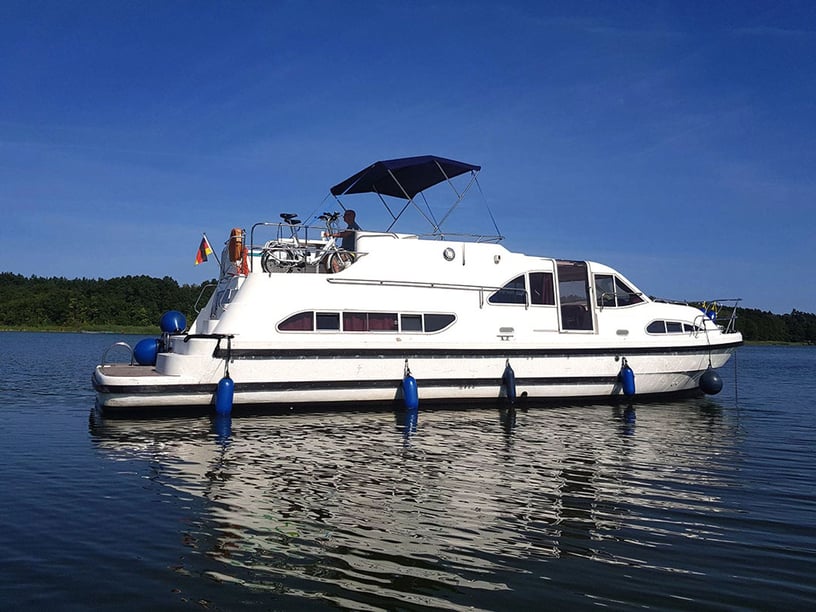
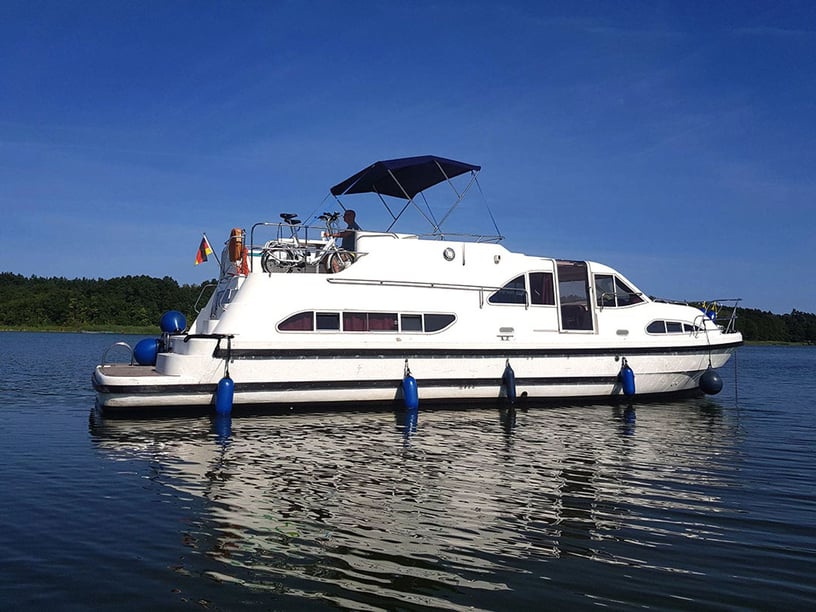
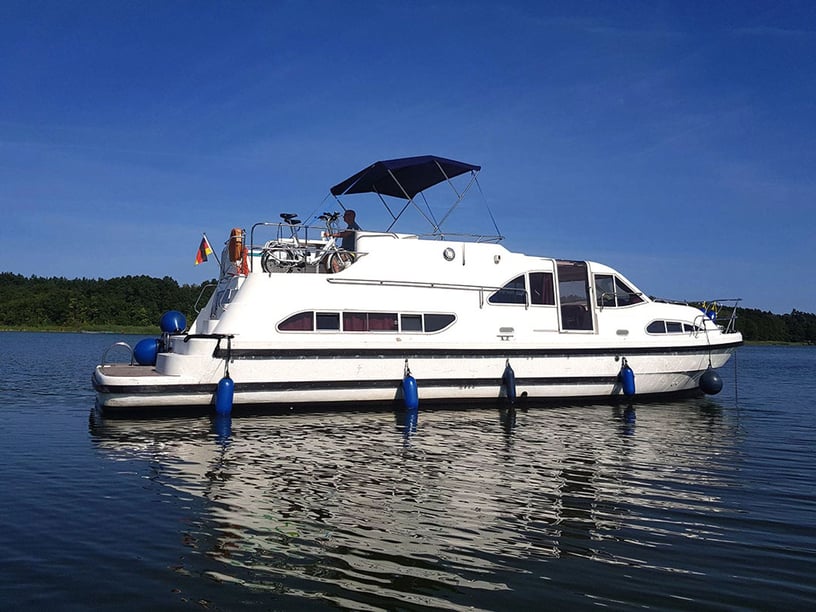
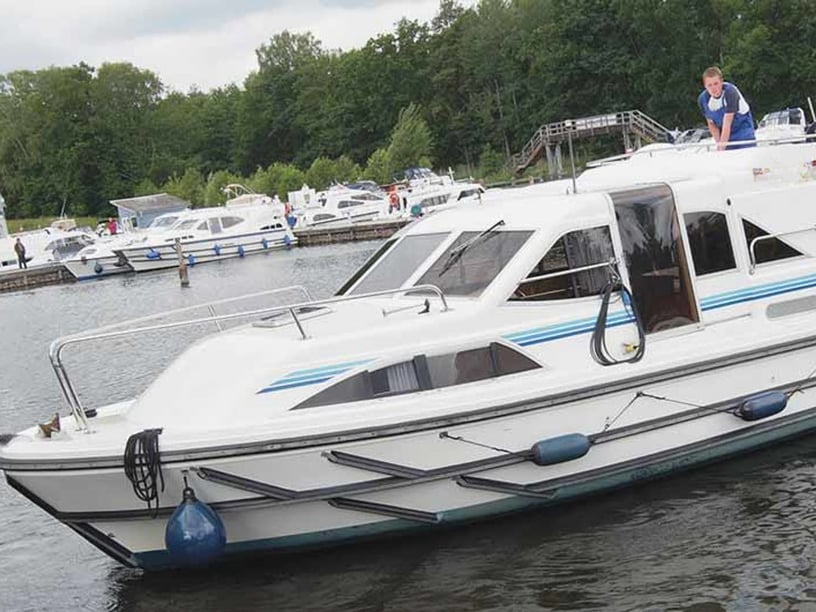
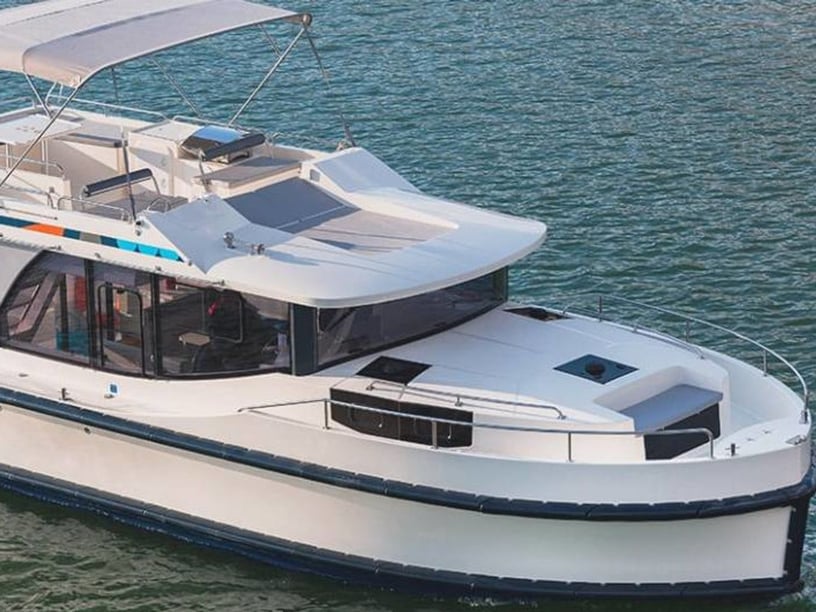
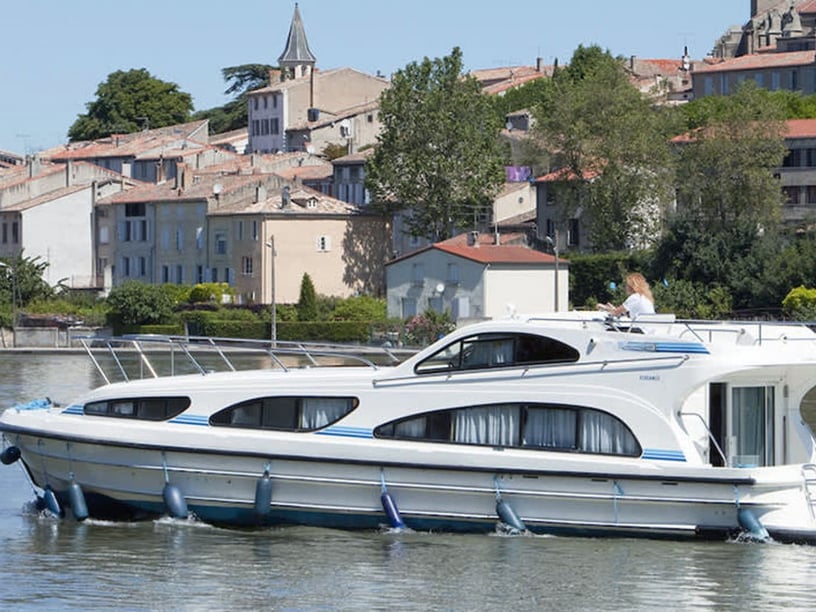
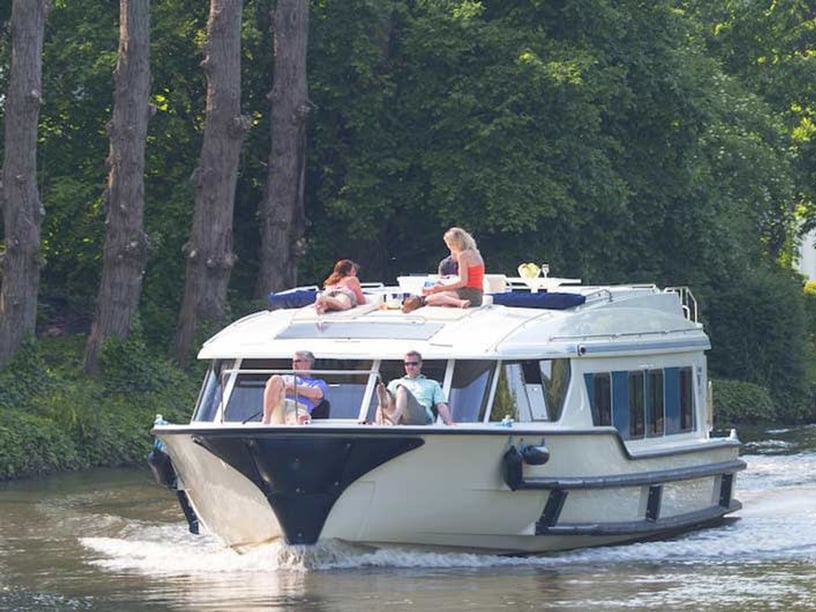
In practical terms, Fürstenberg is best suited to houseboat and motor-cruiser holidays, with paddling as a complementary way to explore smaller waterways. Town moorings and local marinas make it useful both as a departure area and as a stop within a longer lake-country itinerary. Routes can extend north into Mecklenburg, east toward Himmelpfort and the Lychen and Templin waters, or south along the Havel. Travelers considering a wider regional trip can also compare yacht charter destinations across Germany.
Places to explore around Fürstenberg
The immediate attraction is Fürstenberg itself. Approaching and moving through town by water reveals how closely the old center is tied to the surrounding lakes and Havel branches. Röblinsee, Baalensee and Schwedtsee offer contrasting sections of the local water network, while moorings near the center provide access to the market square, town church, palace grounds and city park.
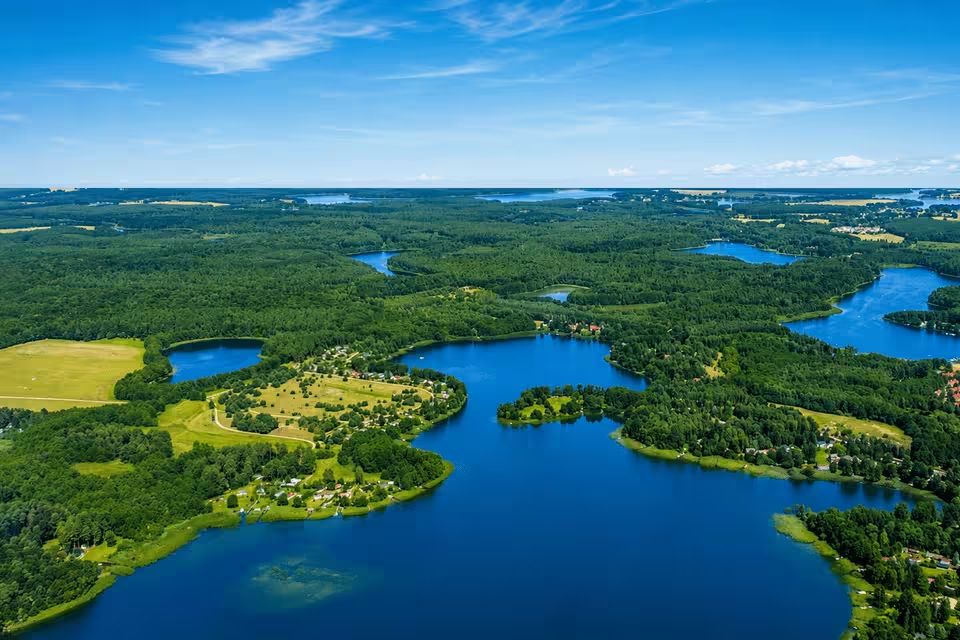
To the east, Himmelpfort combines a lock passage with access toward the Templin and Lychen waters. Its monastery ruins add a worthwhile shore visit. North of Fürstenberg, the connected route through Ziernsee and Ellbogensee leads toward Priepert, Canow and, on longer itineraries, Wesenberg. This area is characterized by forested shores, reed belts and a succession of lakes joined by narrower passages. Southbound cruising follows the Upper Havel toward Steinförde, Bredereiche and eventually Zehdenick, allowing the trip to shift gradually from lake country to a more river-focused journey.
What cruising on the Upper Havel is like
Cruising around Fürstenberg is generally approachable, especially compared with exposed coastal waters. The Upper Havel normally carries little significant current, and much of the network is protected by forests and narrow connecting channels. This makes relaxed two-way cruising practical and gives travelers time to alternate between passages, swimming stops and visits ashore.
The main considerations are locks, bridges, boat dimensions and channel awareness rather than tides or ocean swell. Fürstenberg, Steinhavel, Strasen and Himmelpfort are among the locks that may shape an itinerary. Waiting and operating times can affect daily progress, so route distances alone do not tell the full story.
Westerly winds predominate. Although river sections are usually sheltered, stronger winds can raise waves on broader lakes and make crossings less comfortable, particularly for canoes, small craft and high-sided houseboats. Recreational motorboat wakes also require attention during busy summer periods. Overall difficulty is easy, but an appropriate weather check and realistic daily schedule remain important.
Best time for a Fürstenberg yacht charter
The normal recreational boating season runs from early April to late October. June, July and August are the most suitable months overall, bringing the warmest air and water and favorable conditions for combining cruising with swimming and outdoor time. They are also the core high-season months, so waterways, locks and popular moorings may feel busier.
May and September fall outside the main summer peak while remaining within the generally comfortable late-spring-to-early-autumn cruising period. They can suit travelers who prefer milder conditions and a quieter rhythm, although temperatures are less consistently warm than in midsummer. April and October can still support a boating trip, but shorter days, cooler weather and more limited seasonal services require greater flexibility. Winter activity is low, with cold, ice and closed facilities potentially affecting navigation.
Cruising routes from Fürstenberg
A practical multi-day option runs north from Fürstenberg through Röblinsee, Steinhavel, Ziernsee and Ellbogensee toward the Pälitz lakes and Canow. The return can be shaped through Großer Priepertsee, creating a varied circuit of open lake sections and narrow connections rather than retracing the entire route.
Travelers with more time can continue toward Priepert and Wesenberg, while an eastward itinerary through Himmelpfort opens the way toward the Lychen and Templin waters. Southbound routes follow the Havel toward Zehdenick and can form part of a substantially longer journey in the direction of Berlin.
Fürstenberg also has short routes intended specifically for paddle craft, including a circuit around the old town and the dedicated Fish-Canoe Pass. These should not be treated as motor-cruiser passages, but they can add a separate canoe outing before or after a longer charter journey.
Water, nature and history ashore
The defining experience is the close connection between town and water. A day may move from a sheltered lake crossing to a narrow Havel passage, then finish at a town-center mooring with historic buildings within walking distance. Forested banks, wetlands and reed beds also create opportunities to watch waterbirds and other wetland wildlife from the boat without turning the trip into a dedicated nature expedition.
Swimming, fishing and scenic cruising are natural parts of the area’s recreational character, while the largely protected waterways are well suited to family trips planned at an unhurried pace. Fürstenberg’s history adds depth to time ashore: the town developed as a trading point and boatmen’s community, with fishing and timber rafting closely connected to the waterways.
The Ravensbrück Memorial Museum is an essential and serious part of the local historical context. The former concentration camp site near Fürstenberg preserves the history of the largest women’s concentration camp in the German Reich and warrants time for a considered visit.
Getting there, marinas and departure points
Fürstenberg can be reached by regional rail, with connections through Berlin and toward northern Germany, or by road via the B96. Berlin Brandenburg Airport is the relevant major airport for travelers arriving from farther away. The railway station, historic center, public canoe landing and principal town moorings are relatively close together, which can simplify arrival and provisioning arrangements.
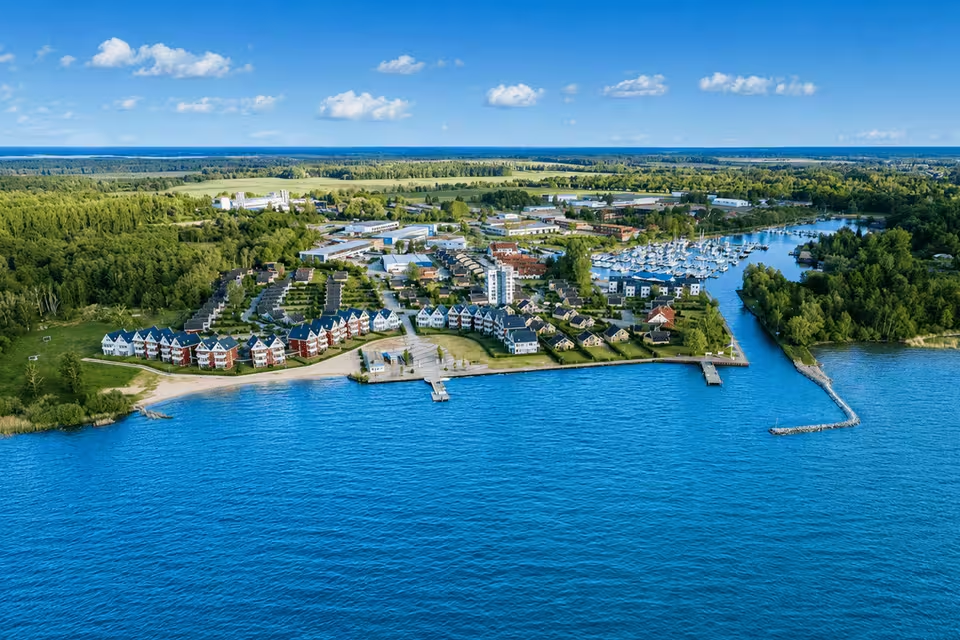
Marina Fürstenberg and Marina Röblinsee are the principal local marina references, while the mooring at Stadtpark Fürstenberg provides another central departure or stopping point. The Havelstraße canoe landing is intended for paddle-based outings. Fürstenberg therefore functions as a combination of waterside destination, possible departure area and connecting point between the Brandenburg lake country and the Mecklenburg waterways, rather than solely as a conventional coastal charter base.
Planning the right charter and route
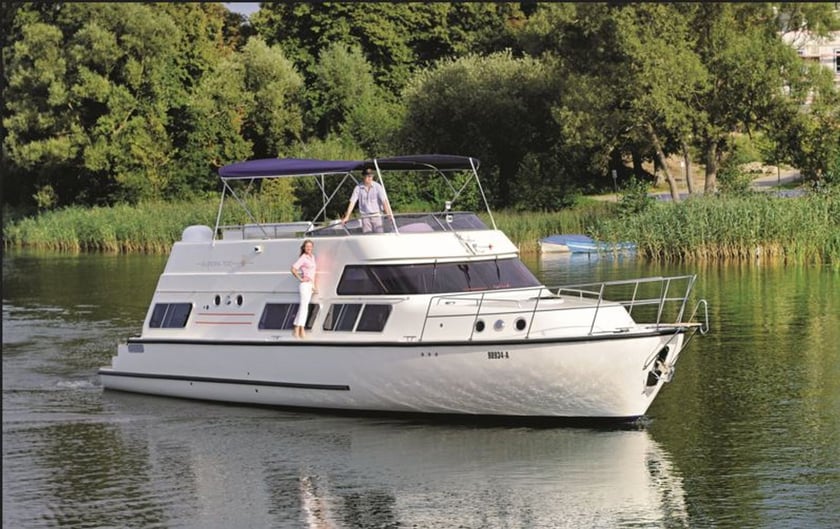
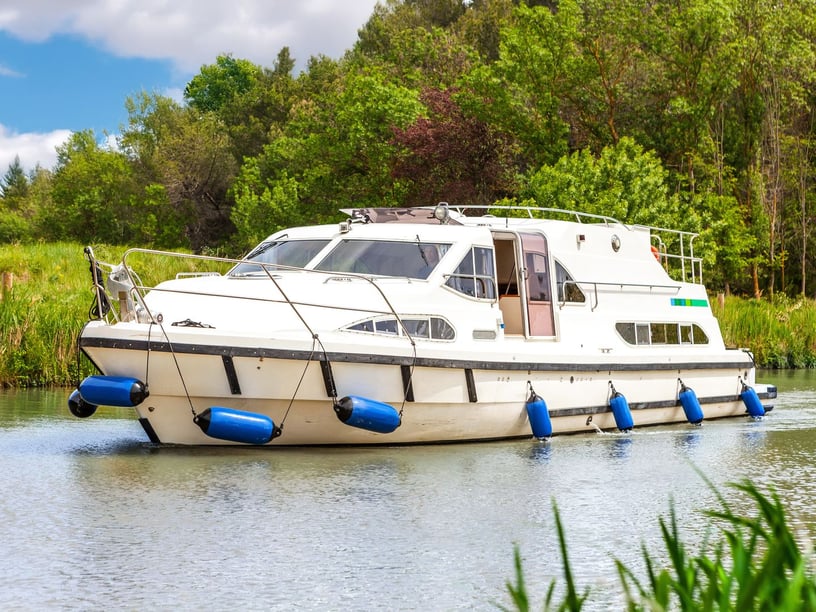
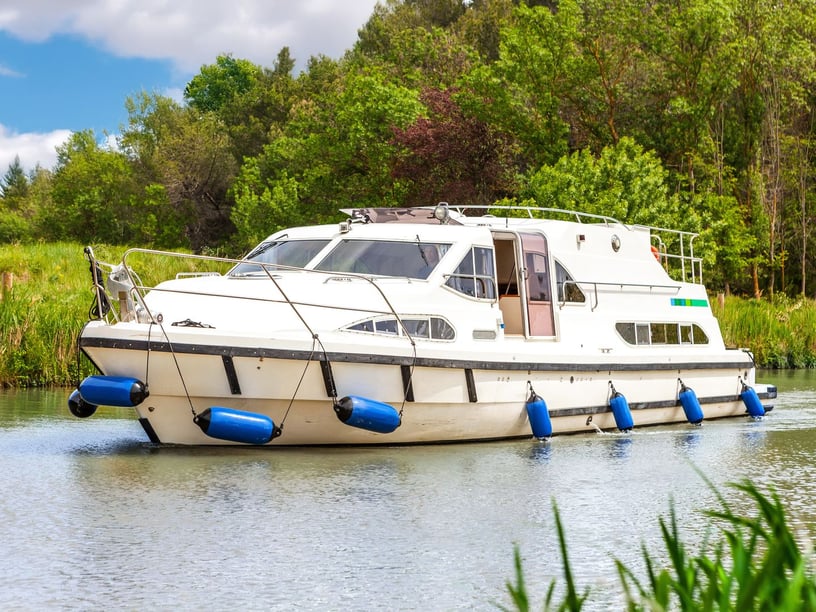
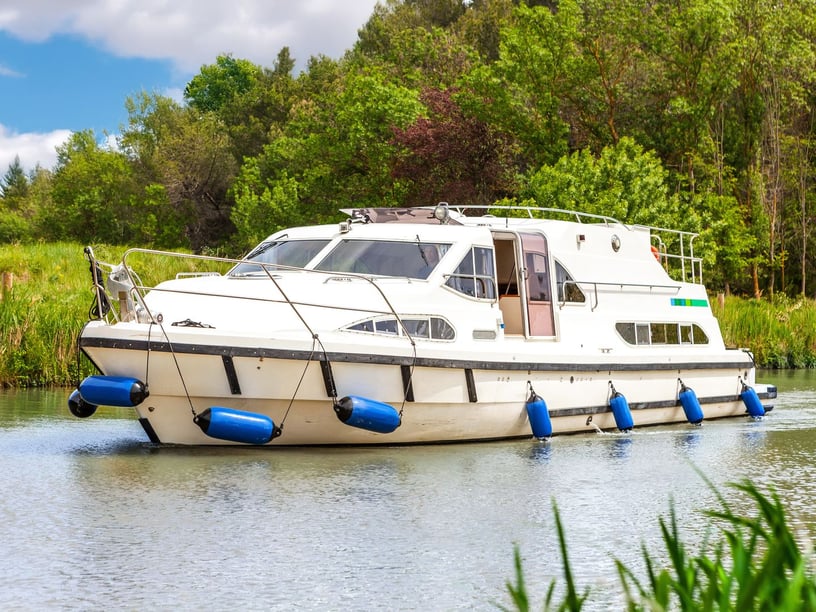
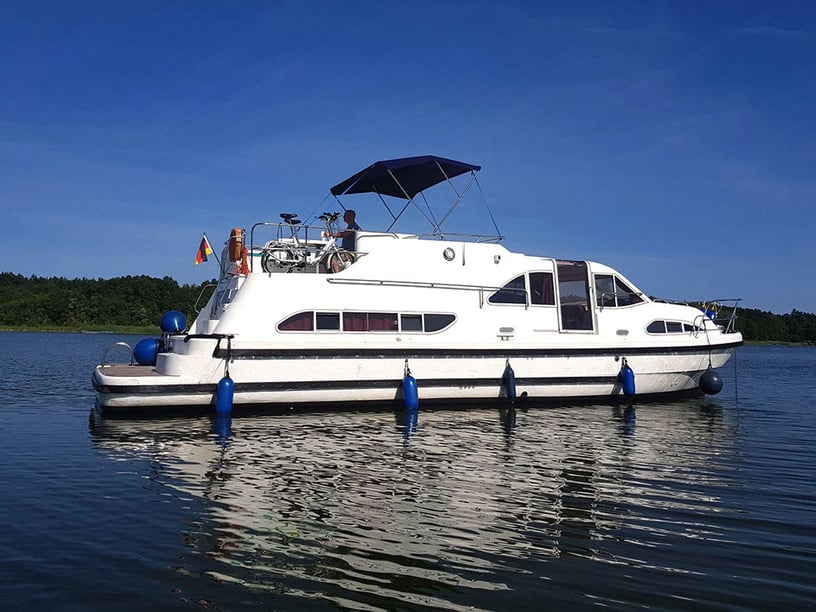
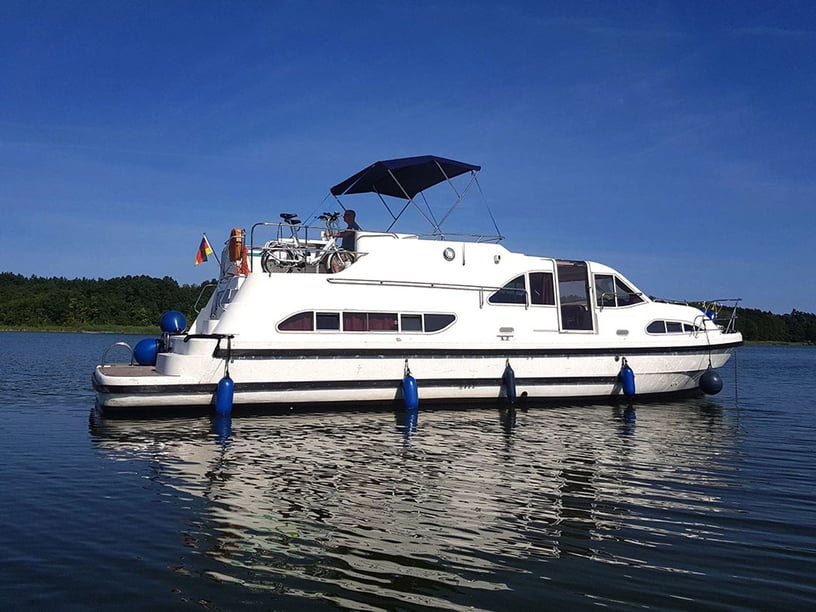
Boat choice should be guided by the intended waterway rather than by size alone. For a multi-day inland trip, consider how the vessel handles locks and narrow channels, whether its draft suits seasonal water levels, and whether its height is compatible with bridges on the planned route. High-sided houseboats provide generous living space but may be more affected by crosswinds on open lake sections. Travelers focusing on powered inland cruising can also review motorboat charter in Fürstenberg.
Some qualifying charter boats can be operated under Germany’s Charterschein system after the required local instruction. This exemption applies only to approved boats and designated waterways; it should not be assumed to cover every vessel or itinerary. Confirm licensing requirements, permitted cruising areas and handover arrangements for the specific boat.
Before finalizing a Fürstenberg boat rental, check current lock information, bridge clearance, water levels and official navigation notices. Build time into the itinerary for lock passages and weather-related changes, especially when crossing broader lakes. A shorter route with flexible stops will often be more enjoyable than a schedule that depends on reaching a distant mooring at a fixed time.