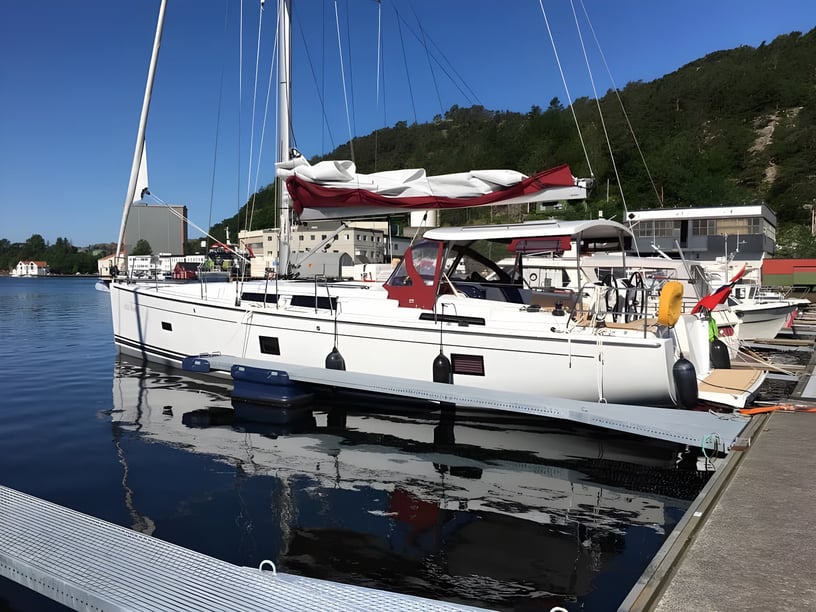
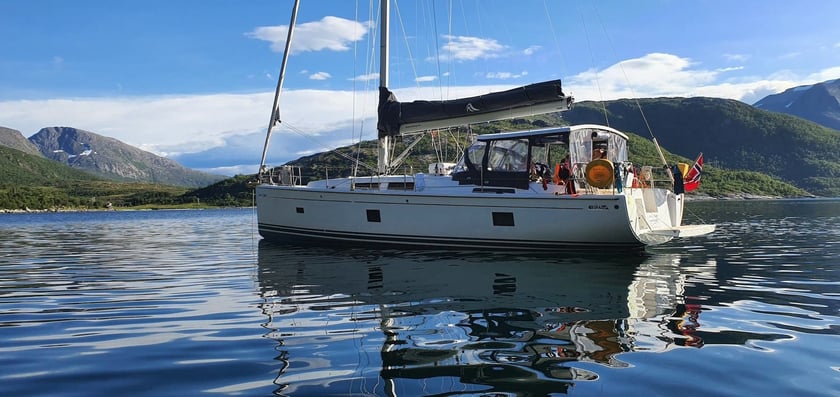
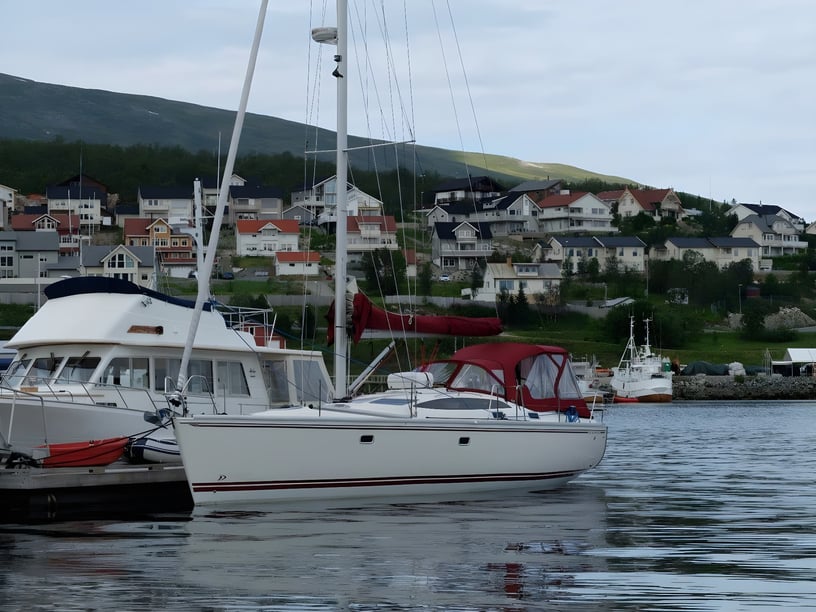
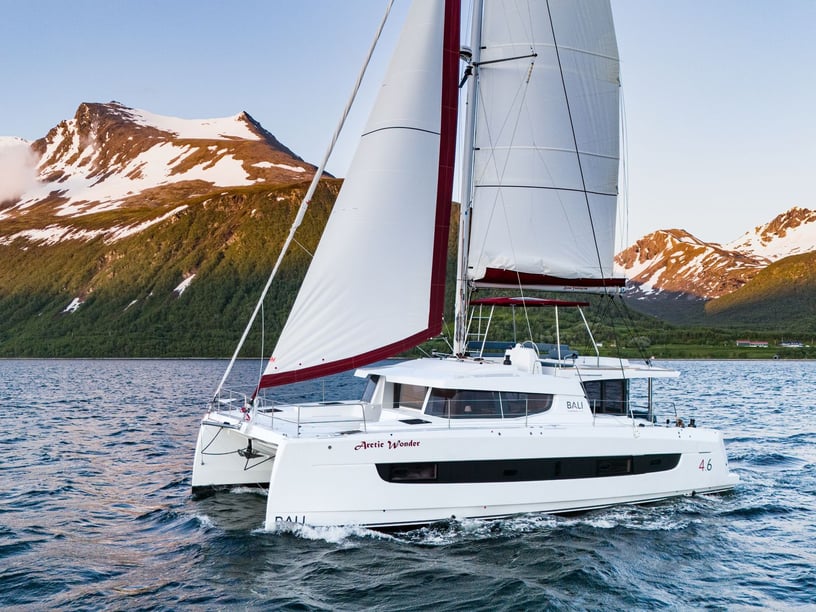
Yacht charter in Tromsø
Tromsø occupies Tromsøya, an island set between the mainland district of Tromsdalen and the larger island of Kvaløya. Its urban waterfront opens directly onto Arctic sounds, fjords and island passages, allowing a yacht charter in Tromsø to combine time in the city with cruising through a varied coastal landscape.
The immediate waterways are relatively sheltered, and short trips can begin close to the city centre. Longer itineraries can extend toward Sommarøy, Senja, Lyngen or the outer coast, where distances, exposure and passage requirements increase. Tromsø is therefore both a place to explore from the water and a practical gateway to a wider northern cruising area. Travelers considering a longer journey can place it within the broader context of yacht charter in Norway.
Fjords, islands and coastal places to explore
Around Tromsøya, the waterways offer city views alongside mountain-backed shores and nearby islands such as Håkøya, Grindøya and Ryøya. Tromsdalen lies across Tromsøysundet, while Ramfjorden provides an option for cruising farther into the sheltered fjord system. These areas suit shorter outings that keep the city within easy reach.
Kvaløya marks the transition toward a more rugged outer coast. Its eastern waters remain connected to Tromsø’s protected passages, while the west faces more exposed Atlantic conditions. Ersfjordbotn introduces travelers to the island’s steep-sided coastal scenery, and the settlements around Kvaløysletta and Eidkjosen can serve as useful points within the local boating area.
Farther west, Sommarøy and Hillesøya are known for an outer-island setting of mountains and white-sand beaches. From Sommarøy, trips may continue through the island landscape toward Hekkingen Lighthouse. This is a more exposed environment than the waterways near central Tromsø, so its inclusion depends on the forecast, yacht and available time.
What cruising around Tromsø is like
Cruising around Tromsø is characterized by a strong contrast between sheltered inner waters and the open coast west of Kvaløya. The sounds around Tromsøya allow relatively short passages, but the surrounding mountains can channel and accelerate the wind. Conditions remain cool and changeable even during summer.
The outer coast is more affected by Atlantic swell and requires larger weather margins. Tidal planning is also important in narrow passages. Rystraumen can exceed six knots during its strongest spring flow and may form eddies, so passage timing must account for the tidal stream rather than distance and boat speed alone.
The overall sailing difficulty is moderate, but the appropriate itinerary depends heavily on weather, tides and the experience available aboard. A sheltered city-centre fjord cruise and a voyage toward Sommarøy or beyond should not be treated as equivalent undertakings.
The best time for a Tromsø yacht charter
The principal recreational sailing and charter season runs from May through September, with June, July and August forming the main summer period. Continuous daylight from late May until late July provides considerable flexibility for passage planning and time ashore, although weather and tidal windows still determine the day’s schedule.
July is generally the most suitable month and is typically the warmest and calmest part of the local season. May and September sit outside the principal peak and can still support cruising, but cooler conditions and more variable weather should be expected.
Autumn and winter are colder, wetter and windier, with limited daylight. Guided excursions may operate for experiences such as northern-lights viewing, but ordinary winter cruising calls for suitable equipment, local knowledge and much greater margins for cold, darkness and rapidly changing conditions.
Route ideas from the Tromsø waterways
A compact itinerary can begin at the city-centre harbor and follow the local waterways toward Ramfjorden, Olavsvern and Rya before returning to Tromsø. This keeps passages within the inner fjord system while offering a clear change from the urban waterfront to mountain and island scenery.
Another short option follows Tromsøysundet and nearby fjords and islands, connecting views of the city with places associated with coastal trade, sealing and polar exploration. Travelers with more time can move west around Kvaløya toward Sommarøy. From its harbor, a trip toward Hekkingen Lighthouse enters the outer-island landscape and requires a suitable forecast. Longer voyages toward Senja or Lyngen demand additional time and planning rather than simply extending a local day route.
Experiences on the water and ashore
A charter can divide the day between scenic cruising, fishing, wildlife watching and stops for hiking ashore. Summer’s extended daylight makes it easier to combine several of these activities without forcing them into a narrow daytime schedule.
Tromsø’s maritime and polar history adds depth to a city stop. The Polar Museum, the preserved sealing vessel MS Polstjerna and the historic Sjøgata and Skippergata waterfront reflect the roles of fishing, sealing and Arctic expeditions in the city’s development. Tromsø also forms part of Sápmi and has an active contemporary Sámi cultural presence.
Restaurants within reach of the harbor draw on Northern Norwegian seafood, seasonal produce and regional fisheries. Other possible shore visits include Polaria, the Arctic Cathedral and the Fjellheisen cable car, allowing a yacht itinerary to include cultural attractions as well as fjord cruising.
Access, marinas and departure points
Tromsø Airport, Langnes is located on Tromsøya and connects with the city centre by airport coach, public bus, taxi and road. Regional express boats use Prostneset on the central waterfront, making the harbor area accessible for travelers arriving through different parts of northern Norway.
Possible starting points include Tromsø city-centre harbor, Prostneset, Eidkjosen Marina and Sommarøy harbor, depending on the trip and operator. The Tromsø City-Centre Guest Marina provides shore power, fresh water and waste facilities. Eidkjosen is reached by road from both the airport and central Tromsø, while Sommarøy is connected by road across Kvaløya.
Tromsø should be viewed as a broader destination and departure area rather than assumed to be the starting point for every itinerary. Confirm the actual embarkation location before arranging airport transfers or accommodation.
Planning your charter
When researching yacht charter or boat rental in Tromsø, begin with the intended cruising area. A short trip through sheltered inner waterways has different requirements from an itinerary around western Kvaløya or the outer islands. Check the yacht’s operating area, the planned route and how decisions about weather and tidal timing will be handled. Travelers comparing formats can also review sailboat charter in Tromsø and motorboat rental in Tromsø.
Marine forecasts, official nautical charts and tide information should be checked before every passage. Cold water, cool air and wind chill remain relevant in summer, making flotation, waterproof outerwear and thermal layers important even during the main season.
Port rules also deserve attention. Black-water discharge is prohibited at the city-centre guest marina, and an unattended boat must have a locally responsible person reported to Port Control. Clarifying these operational details before departure leaves more time to focus on the route and shore visits.