Yacht charter around Kvaløysletta and Tromsø
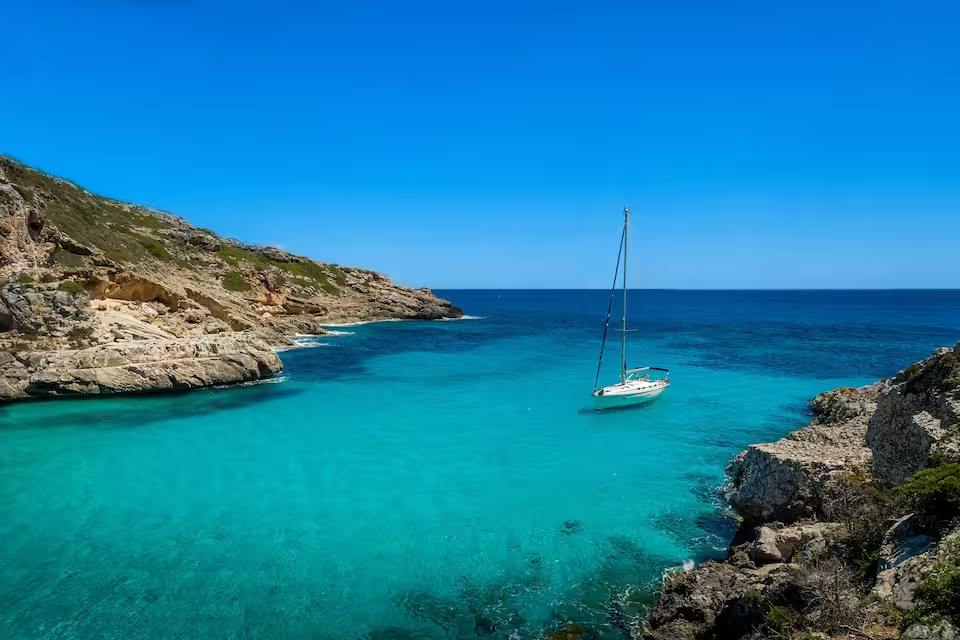
A yacht charter in Kvaløysletta–Tromsø provides access to an Arctic cruising area of mountainous islands, fjords and contrasting coastal waters. Kvaløysletta occupies the eastern shore of Kvaløya, across Sandnessundet from Tromsøya and Tromsø Airport. It is primarily a residential and access district rather than a harbor resort or anchorage destination, but its proximity to yacht facilities at Eidkjosen makes it a practical gateway to the surrounding coast.
Trips can combine relatively protected inner passages with more exposed waters around the outer side of Kvaløya. Tromsø’s services and waterfront are also close at hand, allowing travelers to balance time aboard with city visits and provisioning ashore. For a wider view of cruising regions beyond Tromsø, travelers can compare yacht charters across Norway.
Coastal places to explore
Eidkjosen is one of the most relevant starting areas near Kvaløysletta. Its small-craft harbor, marine services and established Arctic sailing base place boats within reach of sheltered local waters. Nearby Håkøya and Håkøybotn can form part of shorter cruising plans, with the mountainous shoreline creating a distinctly different perspective from a land-based visit.
Tromsø city center offers another useful stop, particularly for crews who want restaurants, supplies and urban time within a broader fjord itinerary. To the west, Sommarøy and the outer coast of Kvaløya introduce a more exposed maritime setting shaped by island communities and fishing traditions. These waters demand a suitable forecast, so they are better treated as flexible itinerary options than fixed commitments.
Longer charters can reach toward Ringvassøya, the Lyngen area or Senja, depending on trip length, conditions and crew experience.
Sailing conditions and cruising character
Cruising around Kvaløysletta ranges from protected passages near Tromsø and the inner side of Kvaløya to open-coast sailing exposed to swell and fast-changing weather. This variety supports adaptable trips: a forecast may favor an outer-island passage one day, while sheltered anchorages and inner waterways provide alternatives when conditions deteriorate.
Summer winds of roughly 10 to 20 knots are common, although stronger periods occur. Mountainous terrain can accelerate local winds, and tidal streams, cold water and marked shoals in Sandnessundet remain relevant even in summer. The outer coast is more demanding than the inner passages and requires greater flexibility around wind, visibility and sea state.
For travelers, the main consideration is not simply distance but exposure. Short routes can still deliver substantial Arctic scenery without committing to open-water passages, while longer itineraries toward Lyngen, Senja or Lofoten call for more time, settled conditions and appropriate experience.
The best time for a yacht charter
May through September is the principal season for independent recreational cruising and bareboat sailing around Tromsø. June, July and August are the most suitable months overall, bringing peak boating activity and the most favorable window for summer itineraries. From approximately late May to late July, continuous daylight gives crews considerable flexibility when organizing passages and shore visits.
May and September are quieter shoulder-season options, but conditions tend to be cooler and less consistent. September also brings earlier darkness and the possibility of seeing the aurora, although this should not replace weather and route considerations when choosing dates.
Boating continues outside summer through guided whale-watching, northern-lights and ski-and-sail operations. Autumn, winter and early spring are specialist Arctic seasons requiring thermal equipment, flexible plans and, in most cases, an experienced local crew rather than an independent summer-style charter.
Route ideas from the Tromsø area
For a shorter charter, the inner passages around Kvaløya allow an itinerary to be adjusted around the forecast, using nearby anchorages and coastal communities rather than covering long distances. This is a practical choice for travelers who prioritize time ashore, fishing, hiking or relaxed scenic cruising.
An eastbound route toward the Lyngen Alps suits a longer trip and is used for both summer cruising and spring ski-and-sail voyages. Southbound itineraries linking Tromsø, Senja and Lofoten require substantially more time and are usually planned as multi-day voyages, often around two weeks rather than as local excursions. A route of this scale should retain reserve time for weather changes instead of relying on a rigid sequence of stops.
Experiences on and off the water
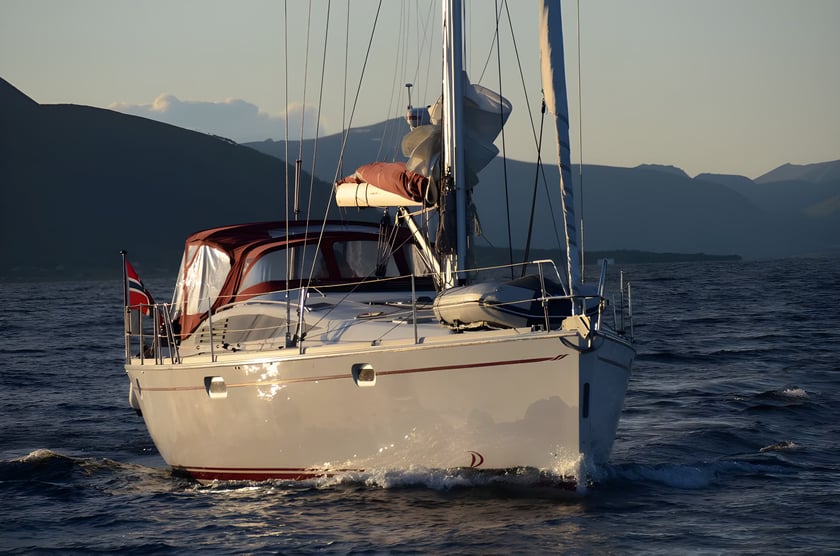
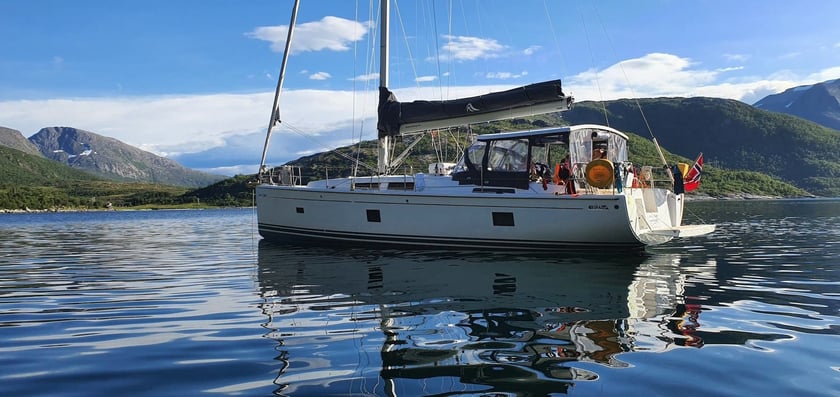
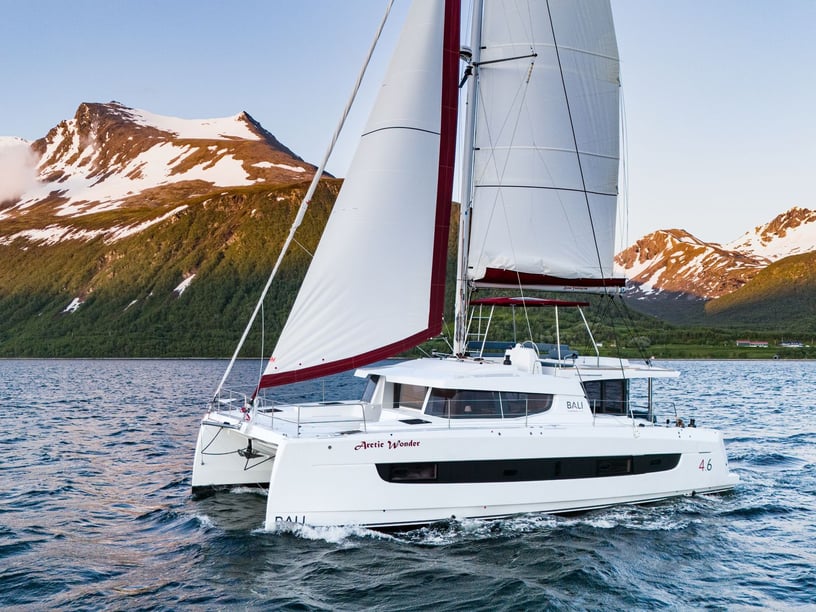
A charter here is shaped by the close relationship between sea and mountains. Cruising days may combine sheltered passages, secluded anchorages, fishing and wildlife watching, followed by hiking or visits to coastal settlements. The ability to move between Tromsø’s urban waterfront and the less developed shores of Kvaløya is one of the area’s defining contrasts.
The coast also carries important historical context. Håkøya and Håkøybotn are associated with the sinking of the German battleship Tirpitz by British bombers in November 1944, and the Tirpitz Memorial provides a focal point for understanding that wartime landscape. Farther west, the fishing traditions of outer Kvaløya and Sommarøy offer a different cultural setting from modern suburban Kvaløysletta.
Season changes transform the experience: summer emphasizes long days and extended cruising, while professionally operated cold-season voyages may focus on aurora, whales or ski access.
Access, marinas and departure areas
Kvaløysletta is connected to Tromsøya by the Sandnessund Bridge, with Tromsø Airport immediately across the strait. Roads and local buses link the district with the airport, Eidkjosen and Tromsø, although a car or taxi is generally more convenient when carrying provisions or sailing equipment.
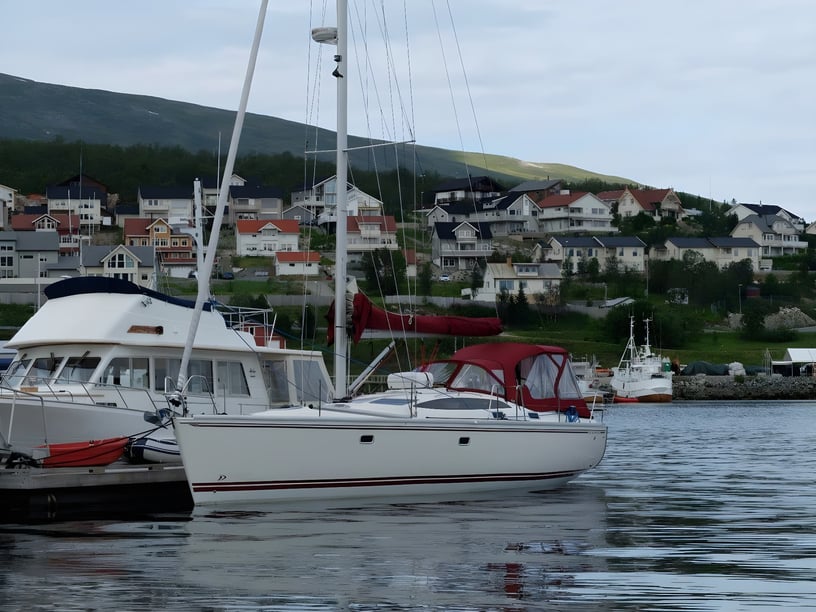
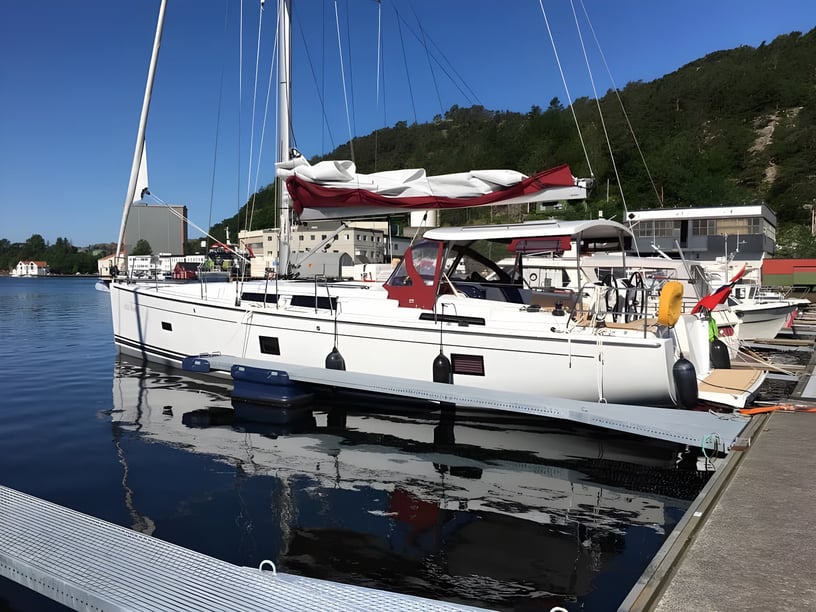
Yacht trips in this area may begin from Eidkjosen, where there is a guest harbor, marine support and an established sailing base. Tromsø Guest Marina and the city waterfront are alternative departure points. Kvaløysletta itself is best understood as a convenient access and support area rather than the primary focus of a cruise: its value lies in connecting the airport and city services with the boating facilities and waters around Kvaløya.
Planning the right charter
When comparing a yacht charter or boat rental in Kvaløysletta–Tromsø, start with the intended cruising area rather than distance alone. Travelers planning to remain in the inner passages have more sheltered alternatives available, while outer Kvaløya and longer coastal routes require a vessel, crew and schedule suited to exposed Arctic waters.
Charter format is especially important. Independent and bareboat cruising is principally a May-to-September activity, while winter and early-spring trips are better suited to professionally skippered operations with Arctic equipment and local experience. Even in summer, thermal clothing and cold-water precautions are essential.
Before departure, review current official nautical charts, tide information, notices and the latest marine forecast. Sandnessundet contains marked shoals and underwater hazards, and conditions can change rapidly around the mountains. Build flexibility into the itinerary, retain sheltered alternatives and avoid treating distant stops as guaranteed. These considerations are particularly important for routes toward the outer islands, Lyngen, Senja or Lofoten.