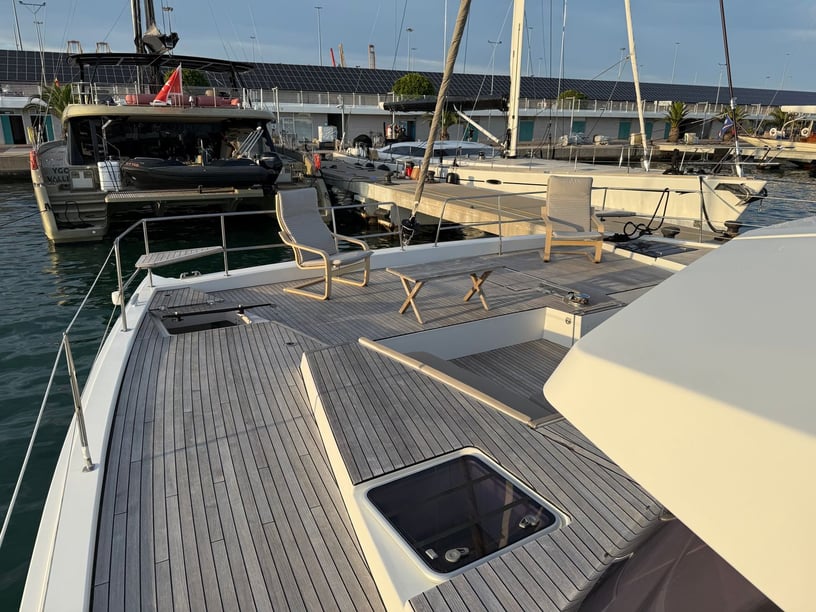
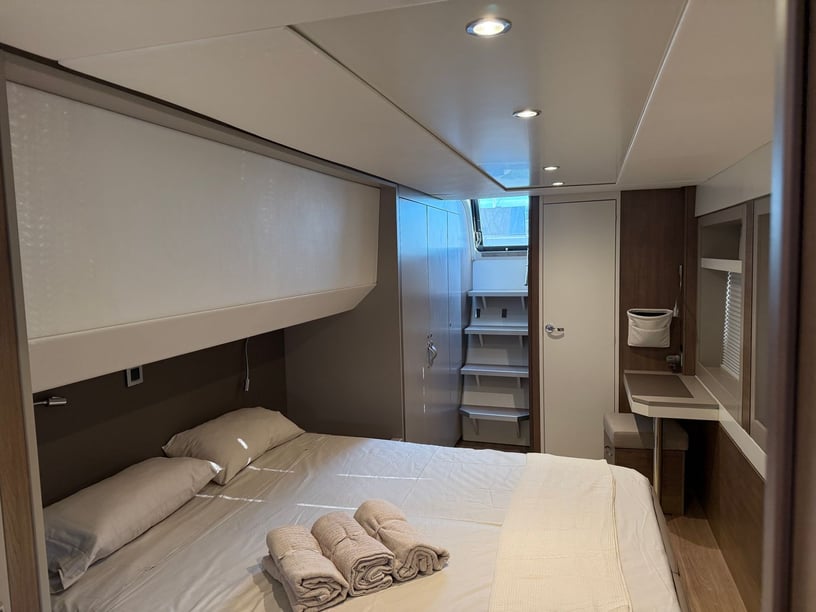
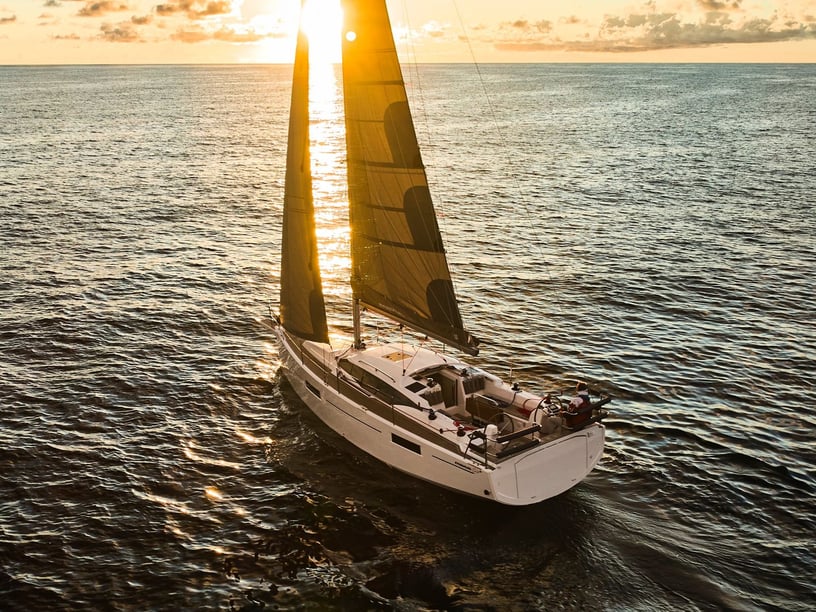
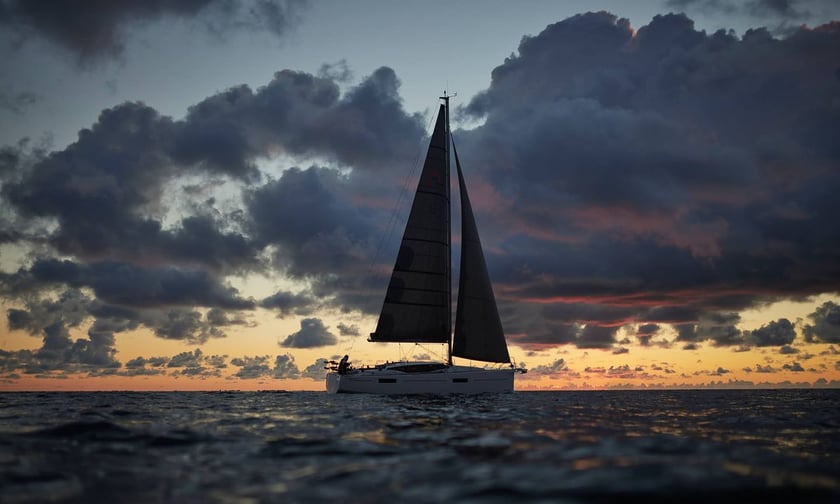
Yacht charter in Valencia
Valencia brings together Mediterranean sailing and the varied attractions of a major coastal city. Its modern marina complex sits beside long urban beaches, waterfront restaurants and the maritime neighborhood of El Cabanyal-Canyamelar. Historic districts and cultural landmarks are also within easy reach of the waterfront.
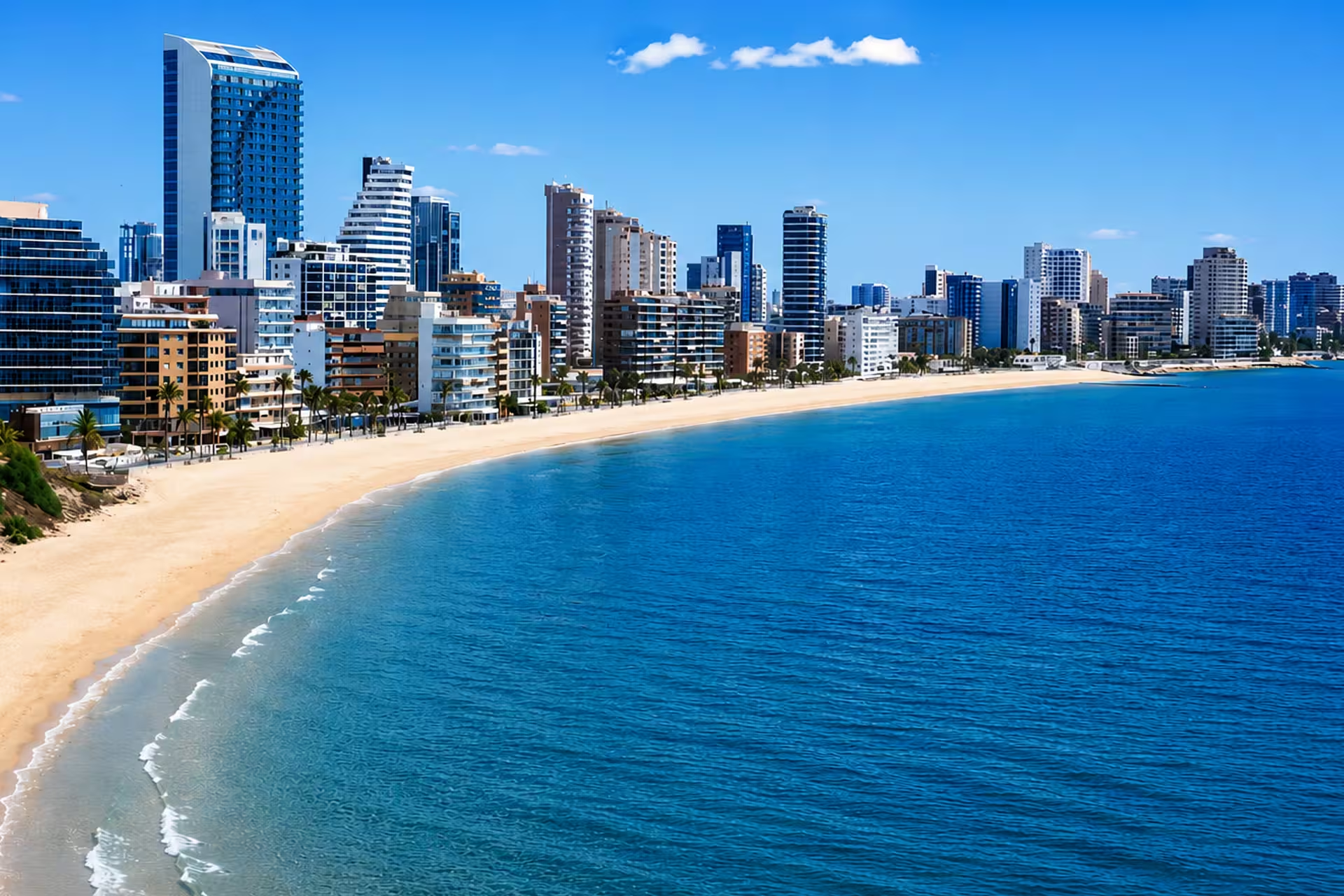
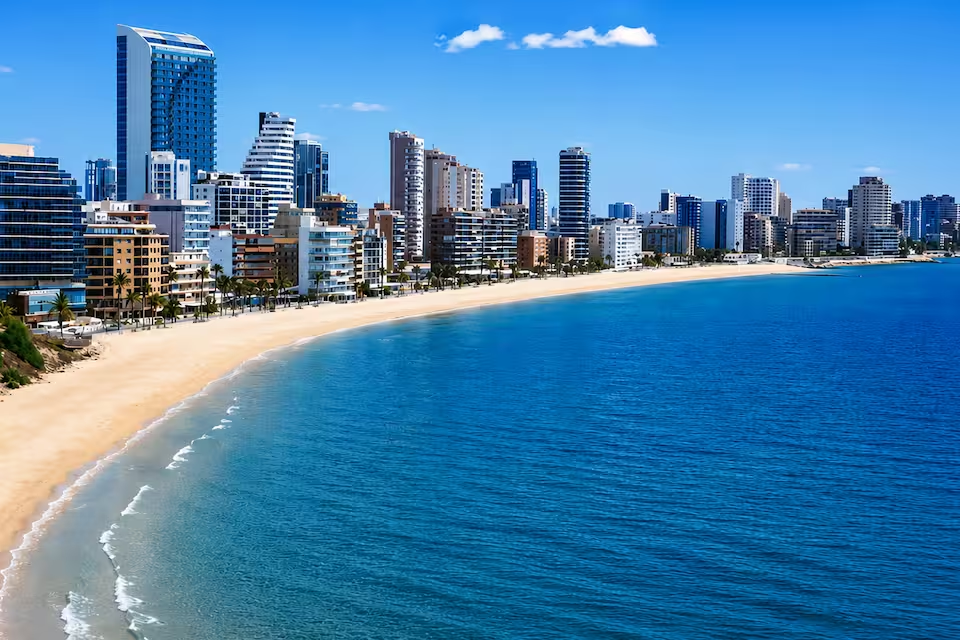
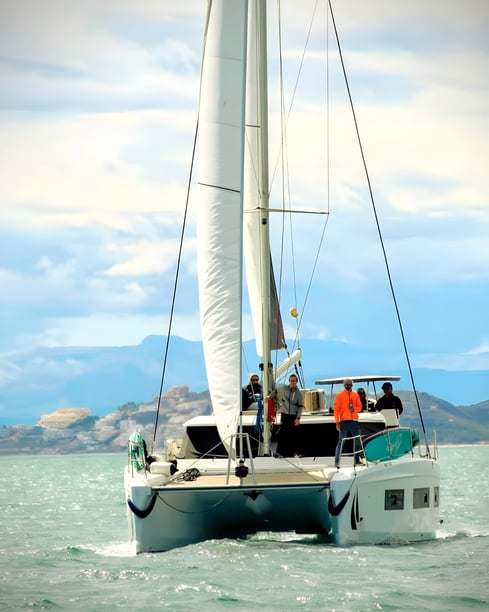
A yacht charter in Valencia is best understood as an urban-coastal experience rather than a journey between islands or secluded rocky coves. The shoreline around the city is predominantly sandy, open and visually continuous. Trips commonly combine time under sail with swimming off the coast, beach visits and meals ashore. The principal marinas provide shelter and services, while natural protection outside the ports is limited.
Coastal places to explore
La Marina de València is the natural focal point for the city’s boating life. The waterfront retains buildings and infrastructure associated with the 2007 and 2010 America’s Cup, including the distinctive Veles e Vents building. Immediately north, the Cabanyal and Malvarrosa beaches create a long coastal backdrop for short outings.
Port Saplaya offers a practical objective for a northbound coastal trip, with an inner marina reached after sailing along Valencia’s beachfront. To the south, the character changes around El Saler and La Devesa, where beaches, dunes and pine woods separate the Mediterranean from L’Albufera lagoon.
L’Albufera is not an anchorage or cruising extension for normal yachts. It is a separate, shallow-water environment where traditional albuferenc boats operate from places such as El Palmar and Gola de Pujol. Visiting it ashore or taking a local boat excursion can nevertheless add a contrasting landscape to a Valencia yacht trip.
What sailing around Valencia is like
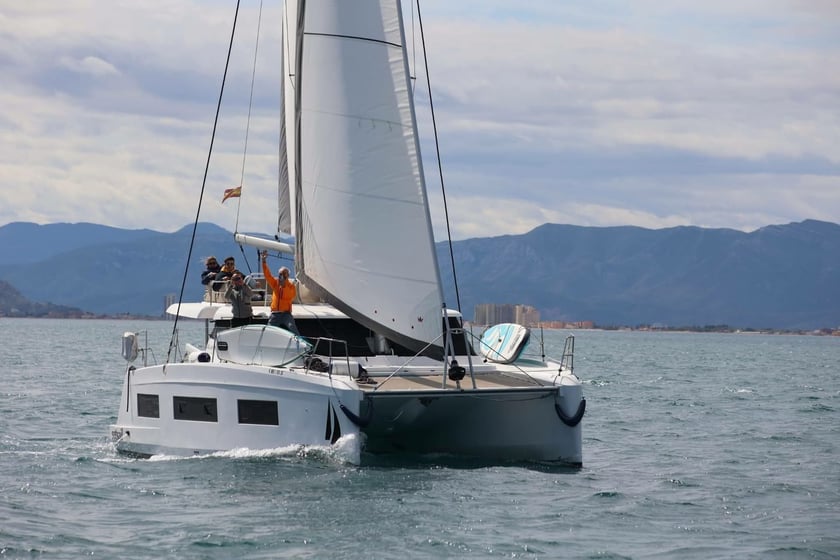
Cruising around Valencia follows an open, east-facing coast, with the city’s marinas serving as the main sources of protection. This makes the area well suited to coastal day sailing, watersports and marina-to-marina passages, but less suited to sheltered cove-hopping. Beach anchoring should be considered only in settled conditions because there are few naturally protected stopping places.
During summer, mornings are often lighter before easterly or southeasterly thermal breezes develop. These local breezes, including winds known as the Garbí and Llebeig, support sailing, windsurfing and kitesurfing. Sustained onshore wind can build uncomfortable swell along the exposed shoreline, so route and swimming plans remain forecast-dependent.
The overall sailing difficulty is moderate. In addition to coastal exposure, crews need to account for substantial commercial traffic near the Port of Valencia and observe marked approaches, restricted areas and harbor instructions.
Best time for a Valencia yacht charter
The practical warm-weather boating season generally runs from April or May through October. June, July and August are the particularly suitable months, with the principal recreational period extending into September. July is normally the driest and sunniest month, while summer’s thermal breeze pattern can provide useful sailing conditions after lighter mornings.
April and May offer shoulder-season possibilities, although conditions are less consistently summery. September remains warm but brings a greater risk of heavy rain and thunderstorms. October is usually mild, yet wetter and more changeable, so greater itinerary flexibility is valuable. Winter sailing is possible, but yacht-holiday activity is reduced and the exposed coast requires careful selection of weather windows.
Routes from Valencia
A short coastal outing can run north from La Marina de València past the urban beaches toward Port Saplaya, returning to the city without committing to a long passage. Southbound trips reveal the less urban shore around El Saler and La Devesa, although suitable stopping points depend on sea conditions and the planned marina arrangements.
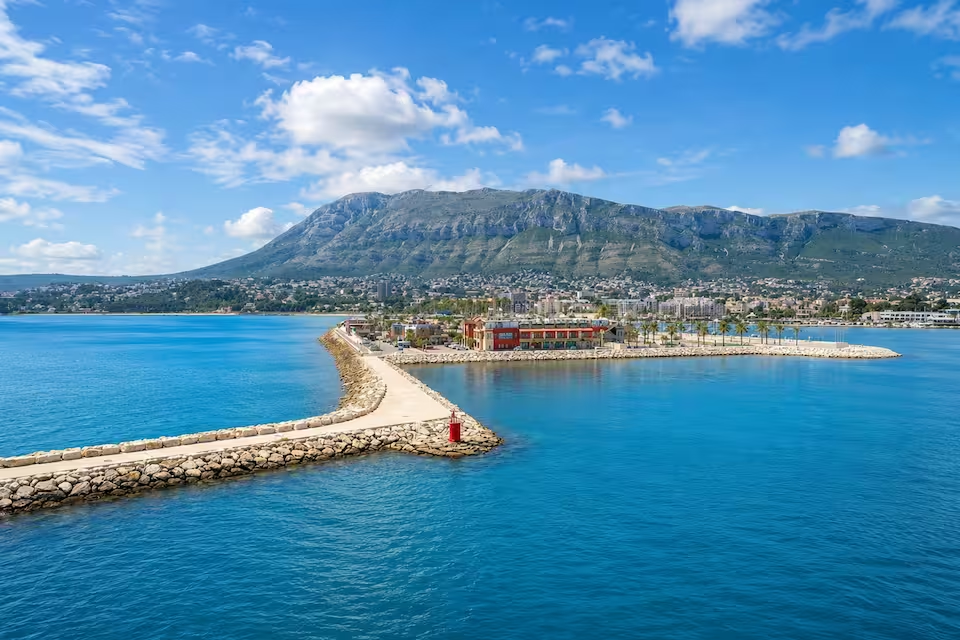
For a longer passage, Valencia can connect with Dénia across the Gulf of Valencia. This is an open-coast route typically planned around ports because reliable natural shelter and overnight anchorages are limited. It therefore suits travelers seeking purposeful coastal sailing more than a sequence of short hops between protected bays. L’Albufera excursions should be arranged separately using local shallow-draft boats.
Experiences on the water and ashore
A Valencia charter can balance active sailing with an unusually broad range of city experiences. After returning to the marina, travelers can explore El Cabanyal-Canyamelar, a district shaped by fishing and seafaring traditions, or continue inland to the City of Arts and Sciences and La Lonja de la Seda. The latter reflects Valencia’s importance as a Mediterranean trading center during the fifteenth and sixteenth centuries.
Food is closely connected to the surrounding landscape. The rice fields around L’Albufera are associated with Valencian paella, while all-i-pebre, traditionally made with eel, belongs to the lagoon’s culinary culture. Families and mixed-interest groups may appreciate being able to divide their time between sailing, beaches, waterfront dining and cultural visits. Regular warm-season breezes also make the coast relevant for dinghy sailing, windsurfing and kitesurfing.
Getting there and departure areas
Valencia Airport lies west of the city. Metrovalencia Line 5 connects the airport with central Valencia and the port corridor, while high-speed and long-distance rail services use Joaquín Sorolla station. The marina and city beaches can also be reached by public transport, taxi, road and bicycle routes.
Relevant boating facilities include La Marina de València, Real Club Náutico de Valencia and Valencia Mar. Port Saplaya Marina is another possible coastal reference point to the north. Valencia can therefore function both as a place to begin a trip and as a city-based stop within a wider coastal itinerary. Confirm the exact embarkation marina before arranging transfers, as the port and marina facilities cover different parts of the waterfront.
Planning your charter
Begin by deciding whether the priority is a short city-and-beach outing or a longer marina-to-marina passage. Short trips allow more time for swimming and sightseeing, while longer routes require closer attention to coastal exposure, harbor distances and forecast changes. The absence of sheltered coves means itineraries should not depend on beach anchoring when onshore wind or swell is expected.
Before departure, review the AEMET coastal marine forecast and current navigational warnings, particularly in autumn or when easterly winds are forecast. Plans near the commercial port should also account for ship traffic and harbor restrictions. If L’Albufera is part of the visit, arrange it as a separate local excursion; private navigation there is regulated independently, and its jetties are not departure points for normal cruising yachts.
When comparing charter choices, check the departure marina, intended cruising area, trip duration and arrangements for weather-related itinerary changes. Travelers considering alternative coastlines and cruising styles can also compare Valencia with the wider selection of yacht charter destinations in Spain.