1 boats and yachts available for charter in Murcia
INSTANT BOOKING
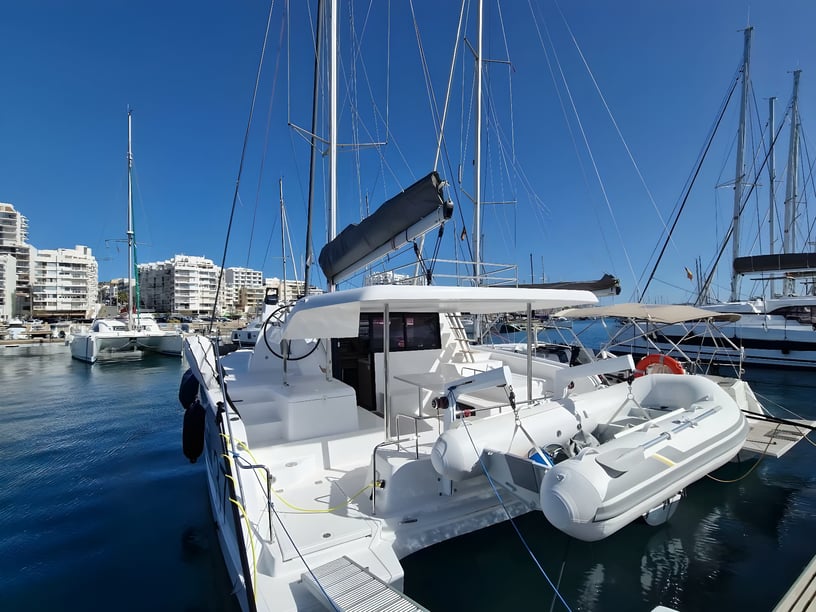
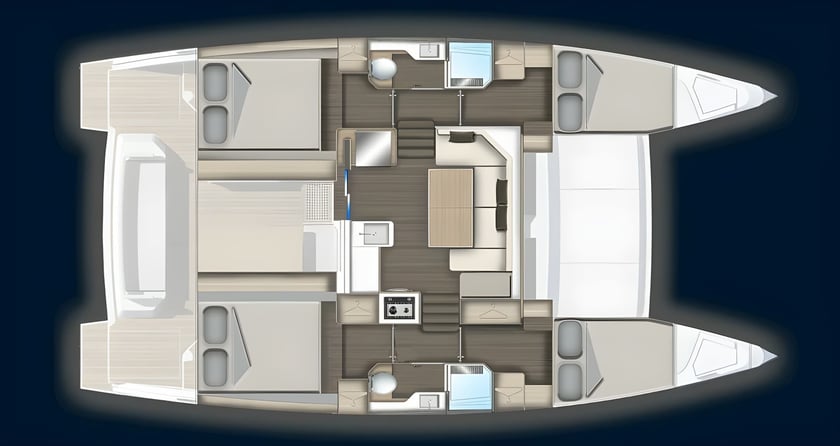
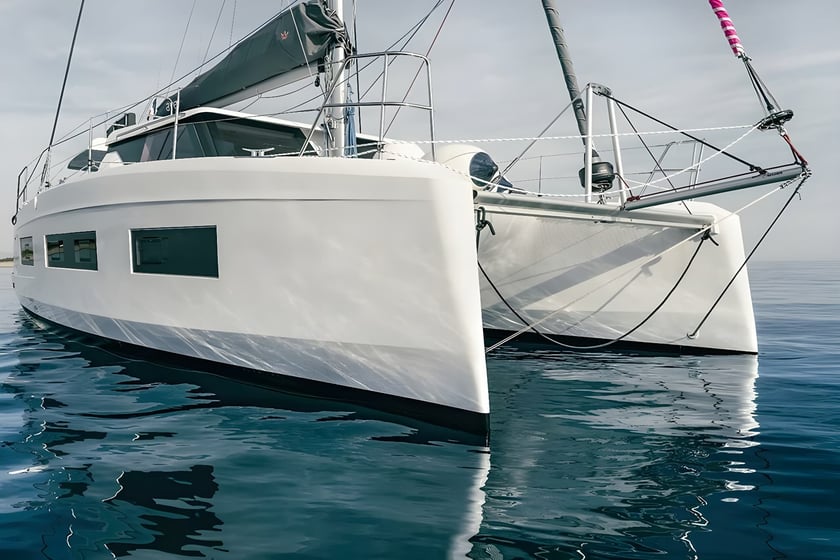
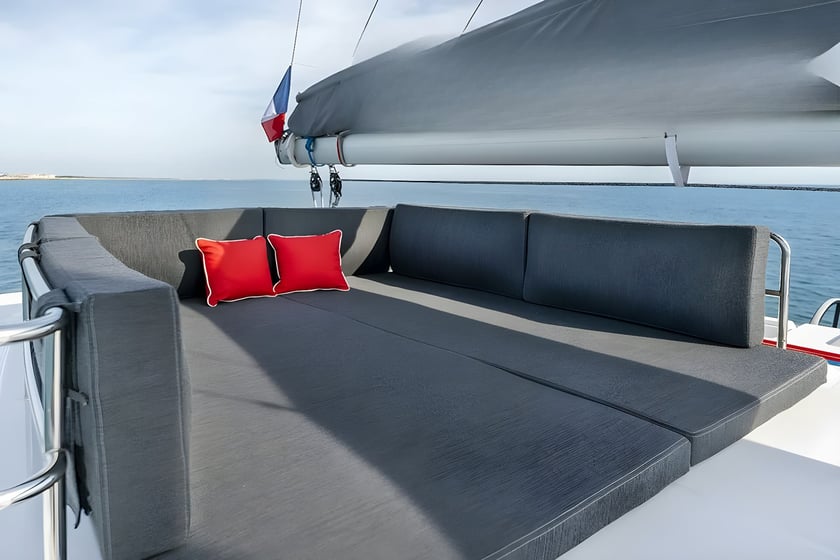
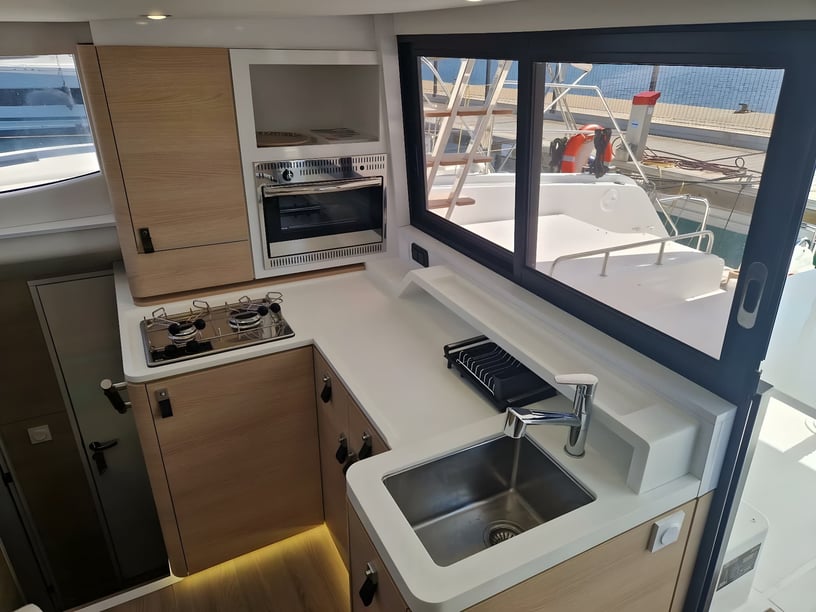
- Aventura, 37
- 2023
- Murcia
4.67(3)
- 10 berths
- 4 cabin
- 10 guests
- 10.9 m
- 2 WC
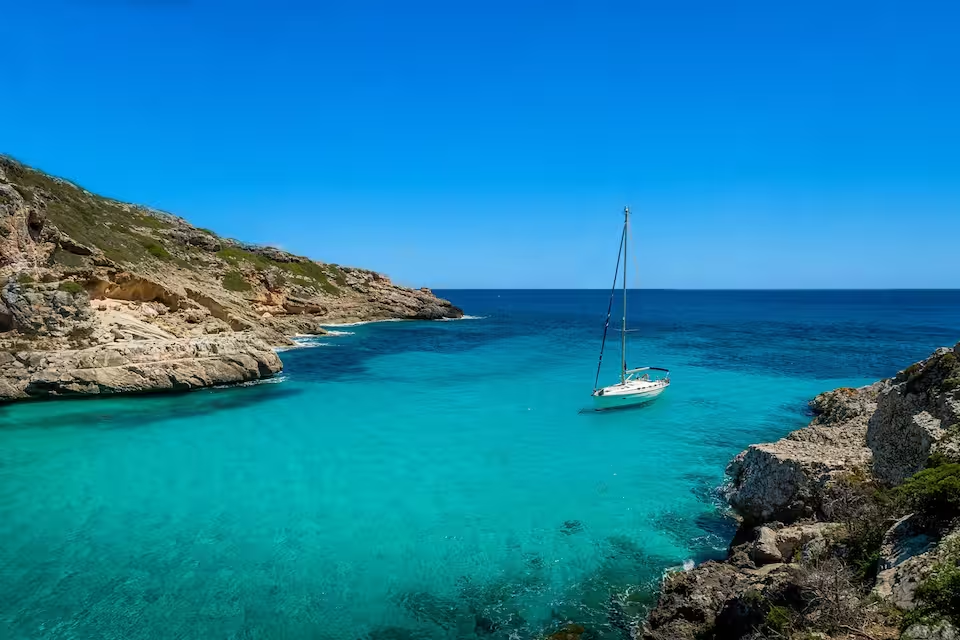
A yacht charter in Murcia offers two contrasting boating environments along more than 250 kilometres of southeastern Spanish coastline. The Mar Menor is a shallow saltwater lagoon sheltered from Mediterranean swell by La Manga, while the open coast extends past Cabo de Palos, Cartagena and Mazarrón toward Águilas. This allows travelers to choose between short lagoon outings and more exposed coastal cruising without leaving the region.
Inside the Mar Menor, trips can focus on protected waters, waterfront towns and the lagoon’s five islands. On the Mediterranean side, longer passages link historic ports, rocky coves, marine reserves and comparatively undeveloped stretches of coast. Cartagena adds a strong maritime and cultural dimension, while Cabo Tiñoso, Puntas de Calnegre and Cabo Cope appeal to travelers interested in cliffs, natural landscapes and time away from larger resorts.
The most suitable itinerary depends on whether the priority is easy line-of-sight cruising, swimming and water sports, or a broader voyage involving open-water passages and visits ashore.
The Mar Menor is the natural choice for short passages and a sheltered style of cruising. San Pedro del Pinatar and Lo Pagán, Santiago de la Ribera, Los Alcázares and Puerto Tomás Maestre provide access to the lagoon’s towns and islands. La Manga forms the long, narrow divide between these waters and the Mediterranean, and the navigable connection beside Puerto Tomás Maestre makes it possible to move between the two boating areas when current operating conditions permit.
Cabo de Palos sits at the southeastern end of the Mar Menor and is a useful gateway to the open coast. The nearby lighthouse, rocky shoreline and Cabo de Palos–Islas Hormigas Marine Reserve give this area a different character from the resort-lined lagoon. It suits trips built around coastal scenery, swimming and diving, although the exposed headland demands greater attention to sea conditions.
Cartagena offers a naturally sheltered harbor framed by hills, docks, fortifications and historic coastal batteries. A harbor cruise can be combined with time ashore at the Roman Theatre or a stop around Cala Cortina. West of the city, La Azohía, Isla Plana and Cabo Tiñoso lead into the Bay of Mazarrón, where protected sections alternate with headlands and rocky coves.
Farther southwest, Puntas de Calnegre, Cabo Cope, Calabardina and Águilas offer access to less developed coastal landscapes. This part of Murcia is better suited to travelers planning a wider Mediterranean itinerary than to those seeking only short lagoon passages.
Conditions can differ substantially over a relatively short distance. The Mar Menor is generally calm and protected from ocean swell, making it well suited to short, visible-horizon passages and sailing activities. Its shallow water requires careful draft planning, and wind across the lagoon can still produce short, steep chop even when the Mediterranean side is not especially rough.
Open-coast cruising is more variable. Easterly winds, currents and swell can create demanding conditions around Cabo de Palos and exposed parts of La Manga. Cabo Tiñoso is another section where a route that appears straightforward on a map may become more challenging in unfavorable weather. Cartagena’s natural harbor and parts of La Azohía and Águilas provide greater shelter.
Summer is typically hot, dry and sunny, with coastal sea breezes often moderating daytime heat. The practical distinction is therefore less about distance than exposure: a calm lagoon outing and a passage around an open headland can require very different levels of experience and preparation on the same day.
The principal yacht-charter period runs from late spring to early autumn, with the highest boating activity between June and September. June and September are identified as particularly suitable months. June combines established summer conditions with long days, while September remains part of the main season but brings an increasing possibility of thunderstorms, intense rain and abrupt wind changes.
July and August offer reliably hot summer weather but also coincide with the busiest period on the water. April, May and October can provide mild conditions and lower activity, although warm weather is less consistent. These months may suit flexible travelers who are prepared to adapt their route to the forecast.
Sailing continues year-round in the sheltered Mar Menor, but winter recreational activity is reduced and open-coast plans become more weather dependent. From November through March, stronger winds and rougher seas are more common. Seasonal guidance for the overall coast should therefore be interpreted locally: the lagoon may remain manageable when exposed Mediterranean headlands are unsuitable.
For a short excursion, a circuit around the Mar Menor’s five protected volcanic islands keeps the journey within sheltered waters and provides views of La Manga and the settlements around the lagoon. A longer variation leads through the Tomás Maestre connection toward Isla Grosa and Islote del Farallón on the Mediterranean side, where swimming or snorkeling can form part of the outing.
Cartagena supports a compact harbor itinerary that combines sheltered cruising with the city’s maritime landscape. The route passes the waterfront, docks, fortifications, Christmas Fort and Cala Cortina, making it a good choice when history ashore is as important as time underway.
West of Cartagena, a coastal outing between La Azohía and Cabo Tiñoso brings together a protected bay, cliffs and marine-reserve waters associated with boating, kayaking and snorkeling. More ambitious itineraries can continue toward Puerto de Mazarrón and Águilas, but exposed capes and longer distances make forecast-based planning especially important.
A Murcia yacht charter can alternate between swimming stops, short coastal passages and visits to places shaped by trade, fishing and naval history. Cartagena’s harbor reflects its importance from Carthaginian and Roman times through its later role as a naval center. Around Mazarrón, two seventh-century BC Phoenician vessels discovered off Playa de la Isla provide evidence of much earlier Mediterranean shipbuilding and commerce.
The natural environment is equally varied. Rocky reefs, Posidonia seagrass habitats and historic wreck-diving areas support diving and snorkeling, particularly around the region’s marine reserves. Calblanque, Cabo Tiñoso, Puntas de Calnegre and Cabo Cope preserve stretches of cliffs, coves and relatively undeveloped coastline. Because some zones regulate diving, fishing and anchoring, these landscapes are best enjoyed with close attention to local restrictions.
Food can connect a day on the water with the coast’s working traditions. Caldero, associated especially with Cabo de Palos and the Mar Menor, is a rice dish prepared with rock fish and a broth flavored with dried ñora pepper. La Azohía also retains an association with almadraba, the fixed-net method traditionally used for seasonal tuna fishing.
Región de Murcia International Airport is the principal airport within the region. Alicante-Elche Miguel Hernández Airport is another practical gateway, particularly for the Mar Menor and the northern Costa Cálida. The A-30, AP-7 and A-7 road corridors connect the principal coastal areas, and road transport is generally the most convenient way to reach dispersed marinas and smaller settlements.
Cartagena also has rail and intercity bus connections. Common departure points include Cartagena, Puerto Tomás Maestre, Cabo de Palos, San Pedro del Pinatar, Santiago de la Ribera, Los Alcázares, Puerto de Mazarrón and Águilas. The right base should follow the intended waters: lagoon ports reduce travel time for Mar Menor trips, Cartagena suits harbor and western-coast itineraries, while Mazarrón and Águilas are better positioned for Murcia’s southwestern shoreline.
Begin by deciding whether the trip is primarily a sheltered lagoon outing or an open Mediterranean cruise. Travelers interested in a slower, wind-led journey can compare sailboat charters in Murcia, while groups prioritizing deck space may wish to consider catamaran options. For short coastal outings, motorboat rental in Murcia may fit the itinerary better than an extended yacht charter. The intended route, trip length and exposure matter more than choosing a boat category in isolation.
Draft is an important consideration inside the shallow Mar Menor and its marina approaches. Before planning a passage through the Tomás Maestre connection, current information on the channel, bridge, clearance and operating procedures should be checked. On the open coast, itineraries around Cabo de Palos and Cabo Tiñoso should remain flexible enough to respond to marine forecasts.
The Cabo de Palos–Islas Hormigas and Cabo Tiñoso marine reserves have regulated zones where fishing, diving, anchoring or other activities may require authorization or may be prohibited. Anchoring on Posidonia and other protected seagrass should be avoided, with authorized moorings used where provided. These considerations are central to choosing a suitable route, not merely technical details: they determine where a yacht can stop and how time for swimming, snorkeling or going ashore can be arranged.
Find the right private boat rental option for your sailing experience and travel style in Murcia.
A professional skipper handles the sailing on a skippered yacht charter, while you relax and enjoy. No sailing experience required.

Captain the yacht yourself for total freedom on a bareboat yacht charter. A valid sailing license is required.
Trusted by thousands of travelers booking boat rentals every year.
Rent yachts in Murcia by trip length, including day charter, multi-day charter, and weekly charter.

Flexible half-day and full-day yacht charters in Murcia to explore nearby bays.

2-3 day yacht charters in Murcia to recharge in secluded coves and hidden anchorages.

7-day weekly yacht charters in Murcia to explore secluded bays and multiple sailing destinations.
The best time for yacht charter in Murcia depends on the season, with each period offering different sailing conditions and travel experiences.
August, September
Peak season
The busiest charter period in Murcia falls in August, September: 27°C air, 28°C sea, 15 sunny days a month and wind averaging 8 knots.
June, July
Sweet spot
The sweet spot in Murcia falls in June, July: 26°C air, 27°C sea, 21 sunny days a month and wind averaging 8 knots with fewer boats out than at peak.
April, May, October
Shoulder
Shoulder season in Murcia covers April, May, October: 20°C air, 21°C sea, 11 sunny days a month and wind averaging 9 knots.
January, February, March, November, December
Low season
Low season in Murcia covers January, February, March, November, December: 15°C air, 16°C sea, 12 sunny days a month and wind averaging 10 knots.
Weather, sea and price values are multi-year climate averages for Murcia. The average price shows the seasonal price trend.
| Month | JAN | FEB | MAR | APR | MAY | JUN | JUL | AUG | SEP | OCT | NOV | DEC |
|---|---|---|---|---|---|---|---|---|---|---|---|---|
| 🌡️ Avg. temperature | 13° | 14° | 16° | 18° | 21° | 25° | 28° | 28° | 25° | 21° | 17° | 14° |
| ☀️ Avg. sunny days A day is counted as sunny when average daytime cloud cover is 30% or less. | 13 days | 10 days | 11 days | 10 days | 13 days | 19 days | 24 days | 20 days | 10 days | 10 days | 12 days | 13 days |
| 🌧️ Avg. days with rain A day is counted as rainy when at least 1 mm of rain falls. Monthly rainfall | 4 days27 mm | 2 days9 mm | 7 days52 mm | 6 days34 mm | 4 days29 mm | 2 days11 mm | 0 days2 mm | 2 days9 mm | 5 days49 mm | 4 days32 mm | 4 days25 mm | 4 days32 mm |
| 💨 Avg. wind Shows how windy a typical day is during this month, based on the full-day average. | 9 knSuitable for sailing based on hourly wind data. | 9 knSuitable for sailing based on hourly wind data. | 10 knSuitable for sailing based on hourly wind data. | 9 knSuitable for sailing based on hourly wind data. | 8 knSuitable for sailing based on hourly wind data. | 8 knSuitable for sailing based on hourly wind data. | 8 knSuitable for sailing based on hourly wind data. | 8 knSuitable for sailing based on hourly wind data. | 8 knSuitable for sailing based on hourly wind data. | 8 knSuitable for sailing based on hourly wind data. | 9 knSuitable for sailing based on hourly wind data. | 8 knSuitable for sailing based on hourly wind data. |
| 🌊 Avg. seawater temperature | 14° | 14° | 16° | 18° | 21° | 25° | 28° | 29° | 26° | 23° | 18° | 16° |
| 📅 Season | LOW | LOW | LOW | SHOULDER | SHOULDER | SWEET SPOT | SWEET SPOT | HIGH SEASON | HIGH SEASON | SHOULDER | LOW | LOW |
/ night
catamaran available
€546
€1,337
Prices vary by yacht type, size, season and charter type. Additional costs such as fuel, skipper fees and security deposit may apply.
Last updated at October 12, 2026
/ day
catamaran available
€1,070
€1,337
Prices vary by yacht type, size, season and charter type. Additional costs such as fuel, skipper fees and security deposit may apply.
Last updated at October 12, 2026
Learn everything you need to know about boat rental in Murcia, including costs, yacht types, charter options and sailing requirements.
How much does a yacht charter cost in Murcia?
What types of boats are available for charter in Murcia?
Can I charter a yacht bareboat, with a skipper or with a crew in Murcia?
What is the best time for yacht charter in Murcia?
How many guests can a yacht charter accommodate in Murcia?
How much does a skipper cost per day in Murcia?
What are the most widely available yacht models in Murcia?