Yacht charter in Thailand
A yacht charter in Thailand is less about following one national cruising route and more about choosing between several distinct regions. The southern peninsula divides the limestone islands and open offshore waters of the Andaman Sea from the broad Gulf of Thailand, where the Samui and Ko Chang archipelagos have their own seasonal patterns. This variety makes the choice of coast just as important as the choice of boat or itinerary.
On the Andaman side, a trip may combine developed yacht services around Phuket with the sheltered karsts of Phang Nga Bay, the beaches and coastal settlements near Krabi, and more exposed passages to offshore islands. In the Gulf, charter routes range from the Samui–Phangan–Tao group to the compact eastern chain of Ko Chang, Ko Mak and Ko Kood. Exploring by yacht connects reef-fringed islands, marine parks, quieter anchorages and lively resort areas that would otherwise require separate road and ferry journeys.
Where to charter a yacht in Thailand
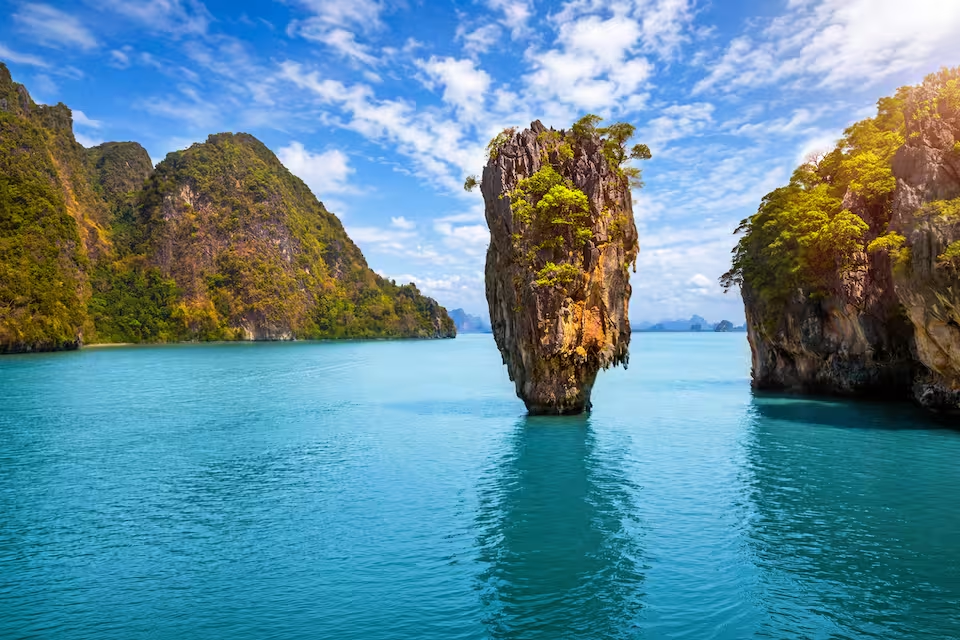
Phuket is Thailand’s principal yacht-service hub and the main gateway to the Andaman Sea. From its eastern marinas, yachts can enter Phang Nga Bay, where limestone karsts, sea caves and enclosed lagoons create a comparatively sheltered cruising landscape. Ko Yao Noi, Ko Yao Yai, Krabi and Railay fit naturally into this area, while the Phi Phi Islands add a busier and more open-water element.
Routes extending south toward Ko Lanta and Ko Rok involve longer legs and greater exposure than a bay-focused itinerary. The Racha Islands, Similan Islands and Surin Islands lie farther offshore and are better suited to trips planned around suitable sea conditions and current marine-park opening periods.
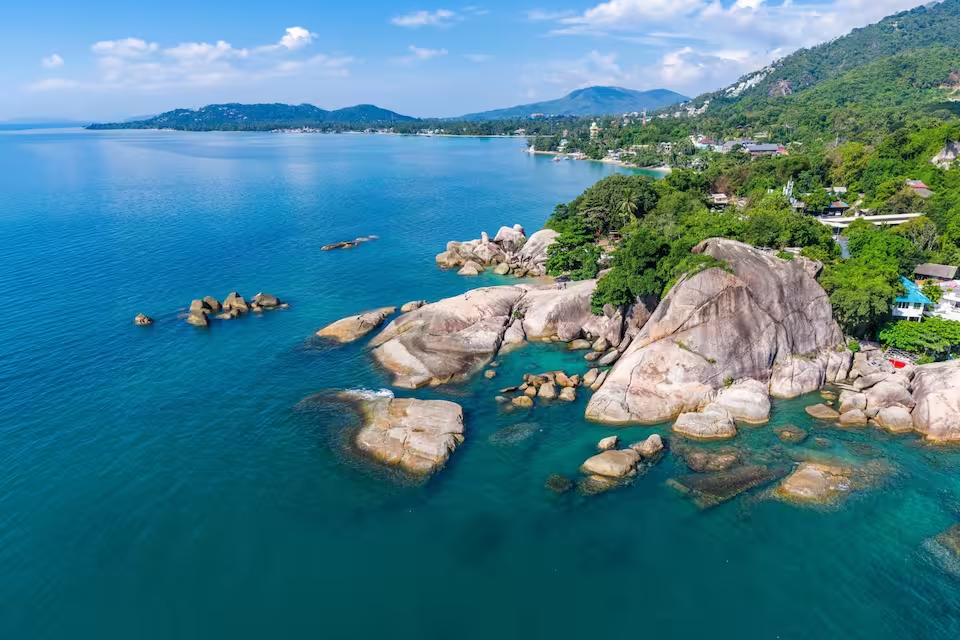
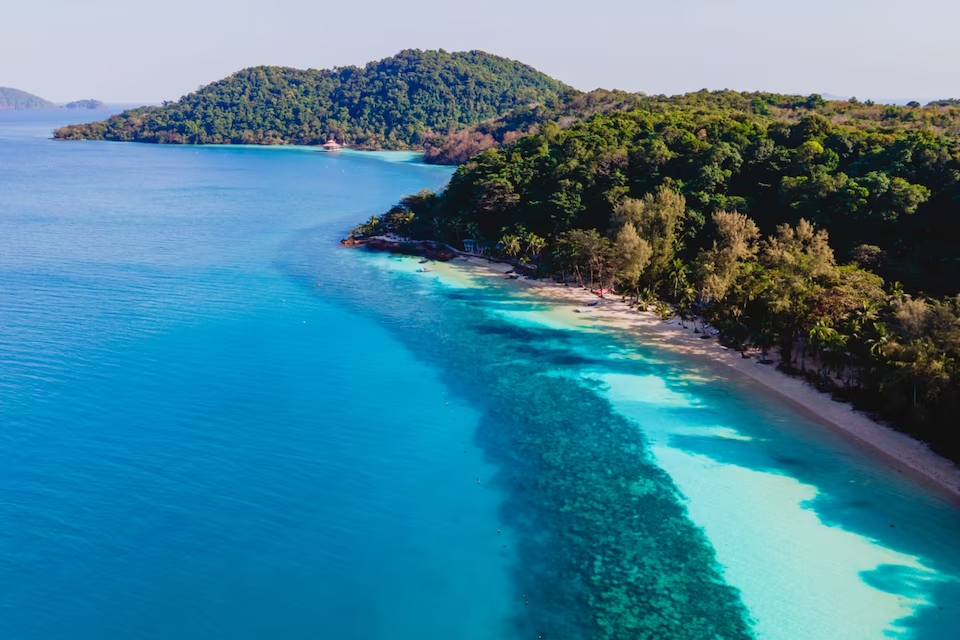
In the Gulf, Ko Samui is a base for circuits through Mu Ko Ang Thong, Ko Phangan and Ko Tao. This region suits travelers who want to mix island cruising with established beach destinations and snorkeling or diving areas. Farther east, Ko Chang anchors a compact route through Ko Rang, Ko Mak and Ko Kood. Its island chain offers an alternative to the larger Andaman charter scene, with fishing communities, forested marine-park landscapes and comparatively quiet anchorages.
What sailing in Thailand is like
Thailand’s cruising grounds are separate sailing areas rather than parts of one continuous itinerary. Around Phang Nga Bay, islands and headlands provide considerable shelter, making it possible to build a trip around shorter passages and frequent stops. The experience changes beyond the bay: routes toward the Racha, Similan and Surin islands cross more exposed Andaman waters, where swell and weather have a greater influence on comfort and timing.
Sheltered geography does not remove the need for careful planning. Tidal streams matter in channels and marina approaches, while reefs and shallow bays are best approached in good daylight. Fishing gear, tour vessels and traditional long-tail boats may also be encountered near islands and settlements. In the Gulf, conditions differ between the Samui group and the eastern Ko Chang archipelago, so forecasts should be checked for the chosen cruising area rather than interpreted as a national picture. These contrasts allow travelers to choose between protected island-hopping and itineraries with more substantial open-water passages.
When to plan a Thailand yacht charter
There is no single sailing season that applies equally to both Thai coasts. December through March forms the broad national high-season pattern, but this is especially relevant to the Andaman coast and Ko Chang. Around Phuket, Phang Nga and Krabi, the principal cruising period generally runs from November into March or April, when the northeast monsoon tends to favor this side of the peninsula.
From around mid-May to mid-October, the southwest monsoon usually brings more rain, squalls and swell to exposed Andaman waters. Offshore marine parks may also close seasonally. April and November often sit between the main patterns, but transition periods can still bring variable winds and thunderstorms; neither month should be treated as a guarantee of settled conditions.
The Samui, Ko Phangan and Ko Tao area follows a different rhythm. It can have favorable boating periods from late winter through summer, while northeast-monsoon rain may disrupt cruising late in the year. Whatever the month, current marine forecasts and park opening information should determine the final route.
Popular cruising routes
A classic Andaman circuit starts around Phuket, enters Phang Nga Bay and continues through Ko Yao toward Krabi and Railay. Phi Phi can then form the more open-water leg back to Phuket. This route brings together sheltered karst scenery, island anchorages and opportunities to go ashore without requiring a long offshore passage.
With more time and suitable conditions, an itinerary can extend south from Phuket to the Racha Islands, Phi Phi, Ko Lanta and Ko Rok. A separate offshore cruise to the Similan Islands requires closer attention to forecasts, passage conditions and the marine park’s operating season.
In the Gulf, Ko Samui, Mu Ko Ang Thong, Ko Phangan and Ko Tao form a varied island circuit. The eastern alternative begins at Bang Bao on Ko Chang and loops through Ko Rang, Ko Mak and Ko Kood, keeping the trip within one relatively compact archipelago.
Life on the water and ashore
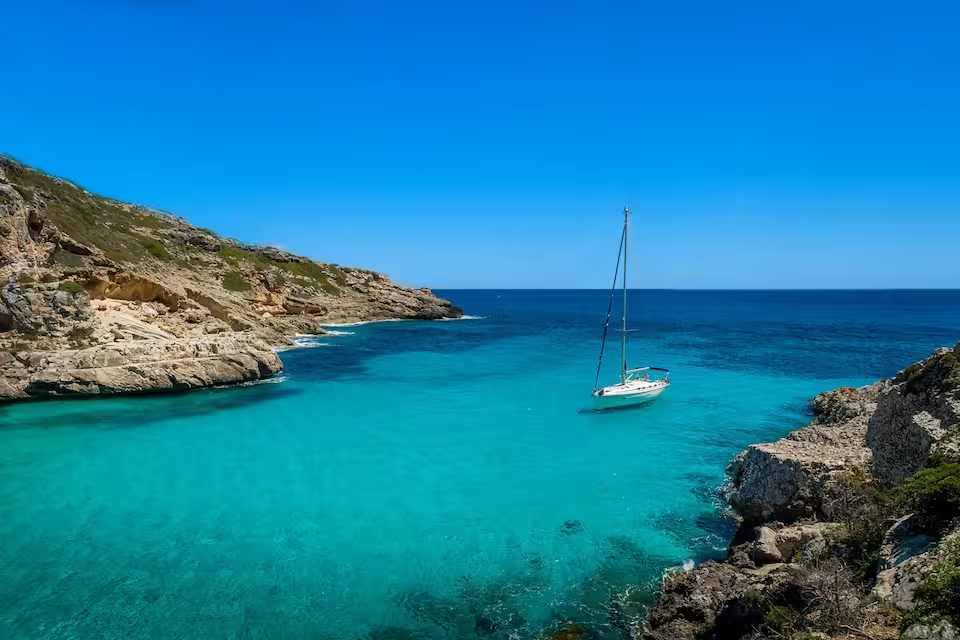
A Thailand yacht charter can move between swimming and snorkeling stops, reef-fringed bays, beaches and time ashore in coastal communities. Phang Nga and Krabi stand out for limestone walls, sea caves and enclosed lagoons, while the offshore islands place greater emphasis on clear-water marine environments and diving. In the Gulf, Mu Ko Ang Thong and the Samui–Phangan–Tao group combine marine-park landscapes with established island destinations.
The experience is not limited to beaches. Phuket Old Town reflects the island’s tin-trading history through its Sino-European shophouses and mansions, providing a cultural contrast to nearby marina and anchorage days. Phuket has also belonged to the UNESCO Creative Cities Network in gastronomy since 2015, making food-focused time ashore a meaningful part of an Andaman itinerary.
Thailand’s coastal identity has been shaped by maritime trade, fishing and migration. Buddhist, Muslim, Chinese-Thai and Chao Lay communities contribute distinct food traditions and relationships with the sea. A thoughtfully planned route leaves room for these places rather than treating every stop solely as a swimming anchorage.
Airports and yacht departure points
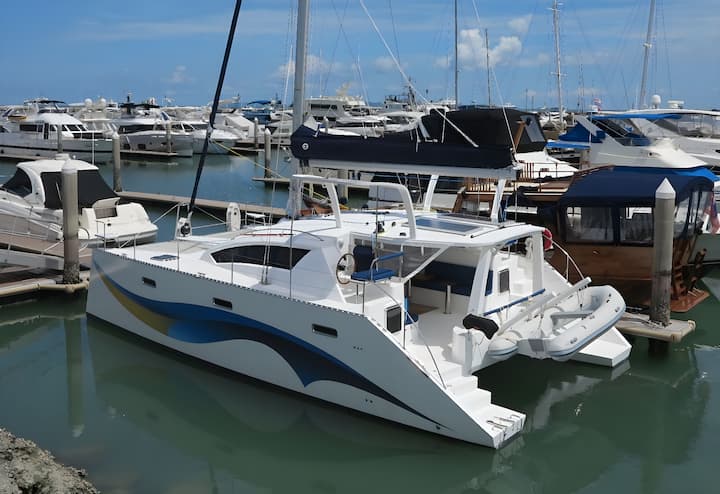
Phuket International Airport provides the most direct access to Thailand’s main yacht-service center. Common departure points include Ao Po Grand Marina, Phuket Yacht Haven Marina and Chalong Bay. Ao Po is particularly convenient for entering Phang Nga Bay, while Phuket’s broader marina network supports itineraries heading toward Krabi, Phi Phi or the offshore Andaman islands. Krabi International Airport serves Port Takola Yacht Marina, Krabi Boat Lagoon Marina and nearby coastal areas.
Ko Samui has its own airport for Gulf itineraries, while Surat Thani offers an alternative involving road and ferry transfers. Trat is the gateway for Ko Chang, Ko Mak and Ko Kood, with Bang Bao serving as a departure point on Ko Chang. Pattaya and the eastern Gulf can be reached through U-Tapao or Bangkok, with Ocean Marina Jomtien among the relevant coastal bases.
Planning the right charter
When comparing yacht charter or boat rental in Thailand, begin with the coast and travel dates rather than selecting an itinerary in isolation. A sheltered Phang Nga Bay circuit has different passage demands from an offshore Similan cruise, while Samui and Ko Chang should not be planned according to Andaman weather assumptions. Consider how much of the trip you want to spend sailing, swimming, visiting marine parks and going ashore.
If considering a bareboat charter, check the operator’s qualification and experience requirements for the specific vessel. These requirements vary, and an itinerary involving exposed passages may call for different experience from one centered on protected waters. Travelers who prefer not to manage navigation and local formalities themselves should confirm the available charter arrangement before booking rather than assuming every boat is offered in every format.
Marine national parks may impose seasonal closures, fees, visitor limits and access rules. Anchoring is prohibited in designated coral areas, where available mooring buoys should be used. Before departure, confirm park status, review current charts and tide information, and obtain a local briefing for reef or shallow-water approaches. These checks are especially important when an itinerary depends on one particular offshore island group.






Verified
Fadime M.01 Jan 2026
The boat was in good condition, and the charter company's team was very helpful. The handover and the information provided about the sailing area were also very well prepared, leaving an overall excel...
Listing owner: denisKoh Chang / Thailand