Yacht charter in Stockholm–Saltsjöbaden
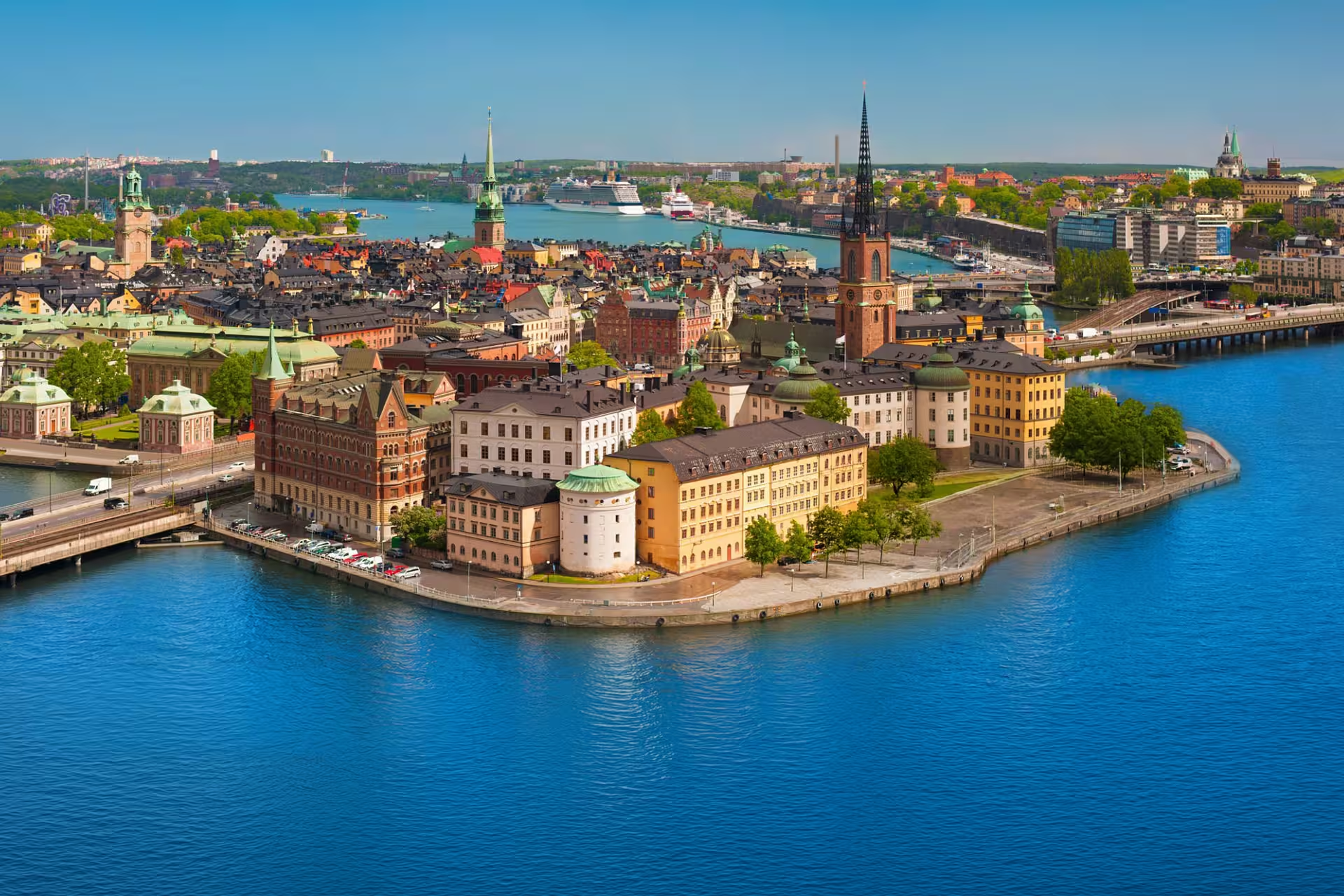
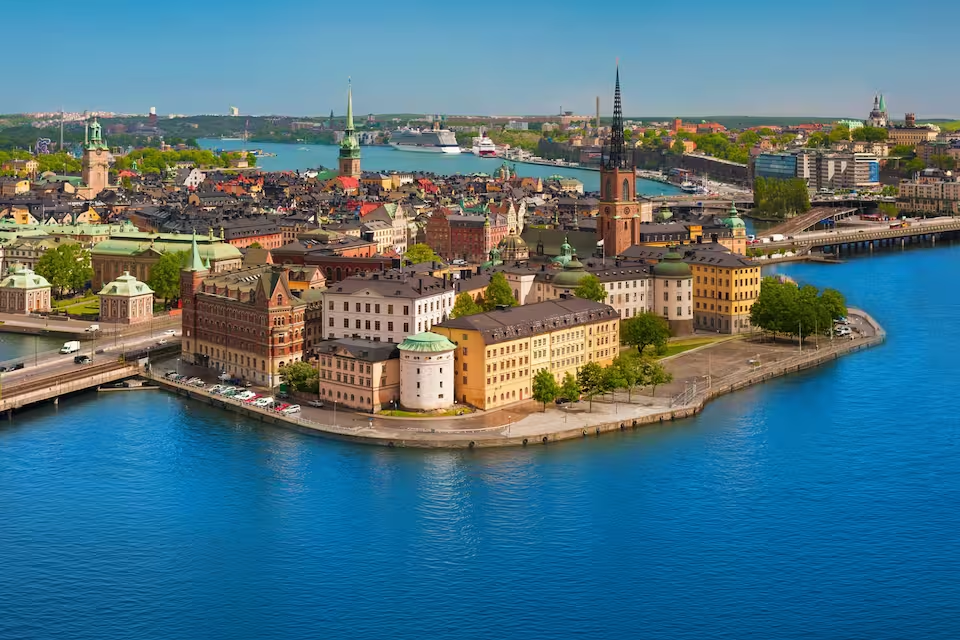
Saltsjöbaden sits east of central Stockholm, where the sheltered waters of Baggensfjärden meet the inner edge of the Stockholm Archipelago. Its position makes it relevant for yacht charters ranging from short local cruises to longer passages among the islands, skerries and natural harbors farther east.
The locality has a strong sailing identity, shaped by the Royal Swedish Yacht Club headquarters and regatta harbor. It also retains the character of the seaside resort established here in the 1890s: waterfront villas, bathing facilities, promenades and the Grand Hotel frame Hotellviken and the surrounding inlets. A yacht charter in Stockholm–Saltsjöbaden can therefore combine time on the water with an easy introduction to the area’s maritime and resort history. Travelers considering a wider itinerary can also compare yacht-charter destinations across Sweden.
Places to explore from Saltsjöbaden
Baggensfjärden is the immediate cruising ground. Its relatively enclosed waters suit a local outing around Saltsjöbaden and Gåsö, with wooded shores and an island stop providing a compact introduction to the archipelago landscape. The indented coastline around Hotellviken, Neglingeviken, Moranviken and Pålnäsviken also gives the locality a close relationship with the water.
For a short cruise farther south and east, Ägnö and the sheltered natural harbor of Napoleonviken offer a route focused on anchoring and the archipelago’s granite-and-forest scenery. Longer outward passages continue through Fällström and Ingaröfjärden toward Runmarö and Sandhamn on Sandön. This progression takes a charter from protected inner waters into a more intricate and, in places, more exposed island environment.
A westbound passage offers a different perspective. Boats can head toward Stockholm through Baggensfjärden and the narrow Baggensstäket passage, connecting Saltsjöbaden’s resort waterfront with the city-facing side of the cruising area.
What sailing around Saltsjöbaden is like
Cruising begins in the comparatively sheltered setting of Baggensfjärden, where short fetches generally limit wave development. Conditions change as a route moves toward open fjärds and the outer archipelago: stronger winds can produce choppier water, while islands create alternating wind shadows and more exposed stretches.
Astronomical tides are negligible, but Baltic water levels can still vary with wind and atmospheric pressure. The greater navigational challenge comes from narrow channels, shoals and rocks close to the surface. Accurate pilotage and current charts are essential, even where islands remain clearly visible and passages appear protected.
Overall, the area presents a moderate level of sailing difficulty. It can support family cruising, day trips and longer archipelago passages, but route selection should reflect the skipper’s experience and the forecast. The contrast between sheltered local water and more demanding outer sections is central to planning a Stockholm–Saltsjöbaden yacht charter.
Best time for a yacht charter
The principal recreational boating period runs from late spring through September. June, July and August form the main season, bringing the broadest range of marina, ferry and island visitor services. These months are particularly suitable for itineraries that depend on regular shoreside stops or connections.
September is also one of the best months for boating, although it belongs to the cooler shoulder season and some services begin to reduce. May can support viable early-season cruising, but lower water temperatures remain an important safety consideration even when the air feels comfortable.
From October through April, short daylight, cold water, winter weather and possible coastal ice greatly restrict normal recreational boating. Travelers planning outside summer should verify marina operations, transport connections and current marine conditions rather than assuming that warm-season services continue.
Route ideas from sheltered waters to the archipelago
A local Baggensfjärden and Gåsö circuit suits a short charter or an introductory day on the water, keeping the route within the more sheltered inner setting. Another compact option runs toward Ägnö and Napoleonviken, combining a manageable passage with time in a traditional natural harbor.
For a longer archipelago trip, the route through Fällström and Ingaröfjärden can continue toward Runmarö and Sandhamn. This direction gradually introduces more islands, skerries and exposed water, so the itinerary can be shortened or extended according to conditions and available time.
Heading west through Baggensstäket toward Stockholm creates a city-oriented alternative. Because the passage is narrow, the boat’s dimensions and current navigational information should be checked before it is included in the plan.
Experiences on the water and ashore
A charter around Saltsjöbaden can balance active sailing with swimming, anchoring and short visits ashore. The surrounding granite shores, wooded islands and natural harbors give crews opportunities to pause away from the locality’s developed waterfront, while Baggensfjärden supports scenic cruising close to the departure area.
Back in Saltsjöbaden, the historic waterfront provides a cultural counterpoint to the islands. The Grand Hotel, built in 1892–1893, formed the centerpiece of the planned seaside resort, while the railway and resort were inaugurated in 1893. The KSSS clubhouse and regatta harbor reflect the locality’s later development as an organized sailing center.
This combination makes the area especially suited to travelers who want the rhythm of an archipelago cruise without separating the boating experience from Stockholm-area history and coastal life.
Access, marinas and departure points
Travelers usually reach Saltsjöbaden through the Stockholm metropolitan area by road, bus or the Saltsjöbanan local railway. Saltsjöbaden station is near the historic waterfront and marina area. Stockholm Arlanda Airport is the principal international gateway, while Bromma Stockholm Airport is another relevant airport. Public-transport arrangements can change during infrastructure work, so connections should be checked before arrival.
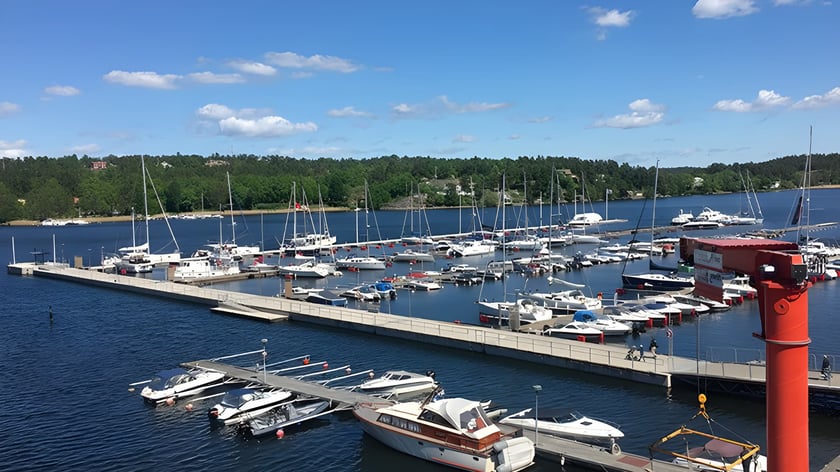
KSSS Marina Saltsjöbaden is the principal identified departure point, supported locally by Moranviken Marina and Saltsjöbadens Båtklubb. Saltsjöbaden can function both as a place to embark when a charter arrangement begins locally and as a destination within a broader Stockholm Archipelago itinerary. Marina staffing and associated visitor services are most extensive in summer and may be reduced outside the main season.
Planning your charter
When comparing yacht charter or boat rental in Stockholm–Saltsjöbaden, begin with the intended route rather than distance alone. A sheltered outing on Baggensfjärden has different requirements from a passage toward Runmarö or Sandhamn, where open fjärds and more intricate navigation become increasingly relevant. Confirm that the proposed boat, charter format and skipper experience are appropriate for the planned waters.
Check the vessel’s draft and air draft before using narrow or constrained passages. Current Swedish archipelago charts are important, as are Sjöfartsverket notices and navigational warnings. Weather and marine forecasts should be reviewed throughout the trip; in colder periods, SMHI ice information is also relevant.
Shoreside planning matters as well. Island services, passenger-boat connections and staffed marina facilities are concentrated in summer. Crews should respect private residential shorelines, seasonal wildlife or fishing restrictions and the Swedish Right of Public Access. These checks allow the itinerary to remain flexible while accounting for the archipelago’s rocks, channels, variable exposure and seasonal operating patterns.









Verified
Břetislav K.01 Oct 2025
Communication was excellent during both the handover and return of the boat, and the approach at the marina was fair. I also appreciate having a supermarket within walking distance of the marina.
Listing owner: PerStockholm - Saltsjöbaden / Sweden