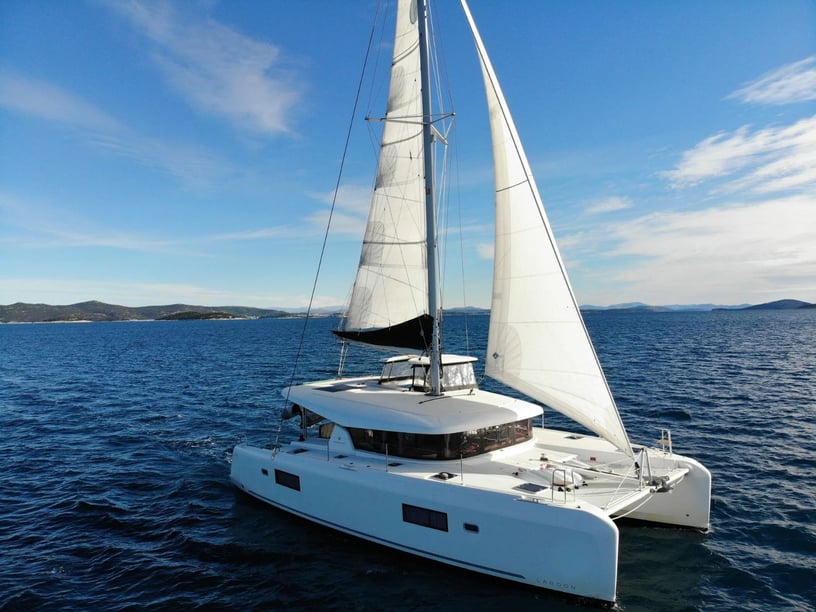
Yacht charter in San Benedetto del Tronto
San Benedetto del Tronto sits on the Adriatic coast of southern Marche, where a working fishing port, tourist harbor and long sandy seafront meet the city center. A yacht charter in San Benedetto del Tronto is therefore less about moving between secluded coves and more about coastal passages, beach time and shore visits to maritime towns.
The coastline is low and largely straight, with shallow water near the gently shelving shore and hills rising inland. There are no significant islands, natural bays or protected coves immediately around the city, so the harbor is the main local refuge. This geography gives the destination a clear character: it suits travelers who want to combine open-coast cruising with urban amenities, fishing heritage and easy access to the Riviera delle Palme.
Coastal places to explore
Nearby cruising is organized around a sequence of coastal settlements rather than an island-hopping circuit. Grottammare lies north of San Benedetto and can be incorporated into a short coastal passage, while Porto d’Ascoli extends the urban shoreline toward the Tronto River. South of the river, Martinsicuro continues the sandy Adriatic coast into Abruzzo.
The Sentina Regional Nature Reserve, near the mouth of the Tronto, adds a different landscape of dunes and coastal wetland. It is most relevant as a shore-based nature visit and wildlife-watching stop rather than a sheltered anchorage. Because natural protection is limited along this stretch, time ashore is generally planned around established ports and suitable sea conditions.
What sailing along this coast is like
The breakwater-protected port provides San Benedetto del Tronto’s principal shelter. Once outside, yachts enter an exposed, comparatively straight section of the Adriatic, and passages typically follow the coast north or south between established harbors. There are few natural alternatives if conditions deteriorate, making weather checks and alternative-port planning important even for relatively short trips.
Conditions are generally calmer from spring through early autumn, but episodes of the northeasterly bora or southeasterly scirocco can bring strong winds and rough seas, especially outside summer. The overall sailing difficulty is moderate: the coastal geography is straightforward, yet the exposure and shortage of natural refuges require sensible passage planning. Near the entrance, crews must also remain aware of fishing and commercial movements associated with the working port.
Best time for a San Benedetto del Tronto yacht charter
The main recreational boating season runs from May through September. June, July and August are the most suitable months for consistently warm, clear and relatively calm conditions. June is the calmest month on average, while July is generally the clearest and driest; these advantages also place both months within the principal summer season.
May and September offer shoulder-season alternatives, with viable coastal cruising when forecasts are favorable. April and October can also support days on the water during settled spells, though conditions are less dependable. From November through March, cooler weather, shorter days and a greater likelihood of wind and unsettled seas reduce boating activity.
Coastal routes and longer itineraries
San Benedetto del Tronto appears as the northern Marche stop on the established Rotta dei Trabocchi, a six-day coastal itinerary connecting Termoli, the Tremiti Islands, Vasto, Ortona, Pescara, Giulianova and San Benedetto. This route shows how the city can function as one stage of a broader central Adriatic cruise rather than solely as the focus of a local loop.
Travelers considering a longer itinerary can compare onward possibilities around Pescara or Termoli. Distances, weather, yacht range and available berths should determine how much of the route is practical for a particular charter.
Experiences on the water and ashore
A charter here naturally combines cruising with the city’s maritime culture. The southern harbor pier is home to the Museo d’Arte sul Mare, an open-air collection that grew from an international art symposium established in 1996. The Museo del Mare and Museo delle Anfore explore the fishing fleet’s history, including amphorae recovered in local fishing nets across the Mediterranean.
The palm-lined seafront and sandy beaches make swimming and family beach time easy to integrate with a harbor visit. Farther inland, Paese Alto and the Torre dei Gualtieri reveal the older hilltop settlement from which the modern maritime city developed. Food is part of that identity too: brodetto alla sambenedettese originated in the fishing community’s practice of cooking portions of the catch that could not be sold.
Access, harbor and departure points
Porto Turistico Tiziano, within the larger Port of San Benedetto del Tronto, is the principal local tourist harbor and departure point. The setting makes San Benedetto both a place to join or end a coastal trip and a worthwhile harbor stop, but travelers should not assume it operates as a major charter base. Transit berthing may be available through the tourist harbor and Circolo Nautico Sambenedettese, and advance contact is advisable.
The city is served by the Adriatic railway corridor, with a central station, and is accessible by the A14 motorway. Marche Airport near Ancona and Abruzzo Airport near Pescara are the main air gateways. For broader regional comparisons, explore yacht charters in Italy.
Planning your charter
When comparing yacht charter or boat rental in San Benedetto del Tronto, begin with the intended trip rather than assuming an island-style itinerary. A day focused on swimming and the seafront has different requirements from a multi-port Adriatic passage. For longer routes, consider cruising speed, onboard accommodation, weather flexibility and the distance between reliable harbors before choosing a boat or charter format.
Confirm the actual departure point, berth arrangements and check-in details before traveling. Crews should consult current forecasts, navigational notices and port instructions, as well as entrance-depth information; sediment accumulation has historically required periodic dredging. Fishing-vessel traffic is another practical consideration within the port. Because shelter outside the harbor is limited, itinerary flexibility matters more than maintaining a fixed schedule when bora, scirocco or rough seas are forecast.