1 boats and yachts available for charter in Netherlands Antilles
INSTANT BOOKING
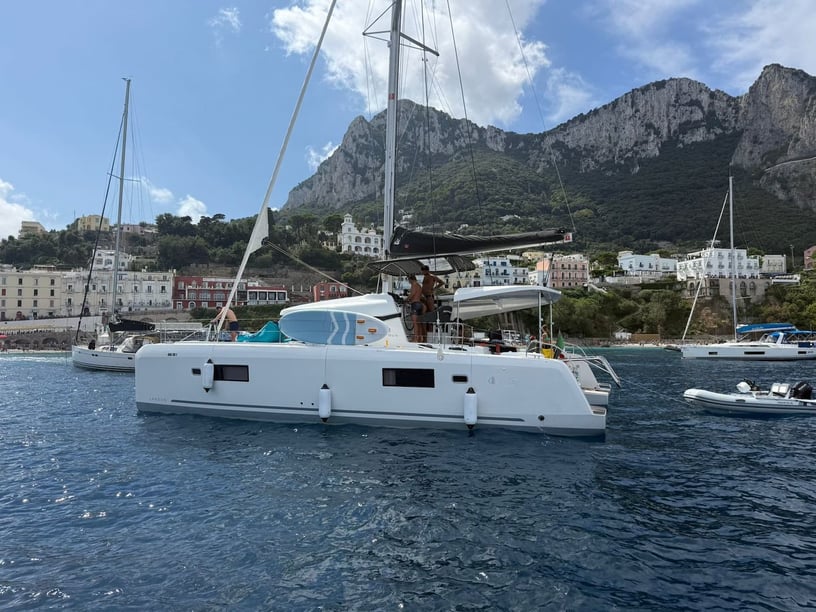
- Lagoon, 42
- 2025
- St. Maarten - Philipsburg
New
- 8 berths
- 4 cabin
- 12.8 m
- 4 WC
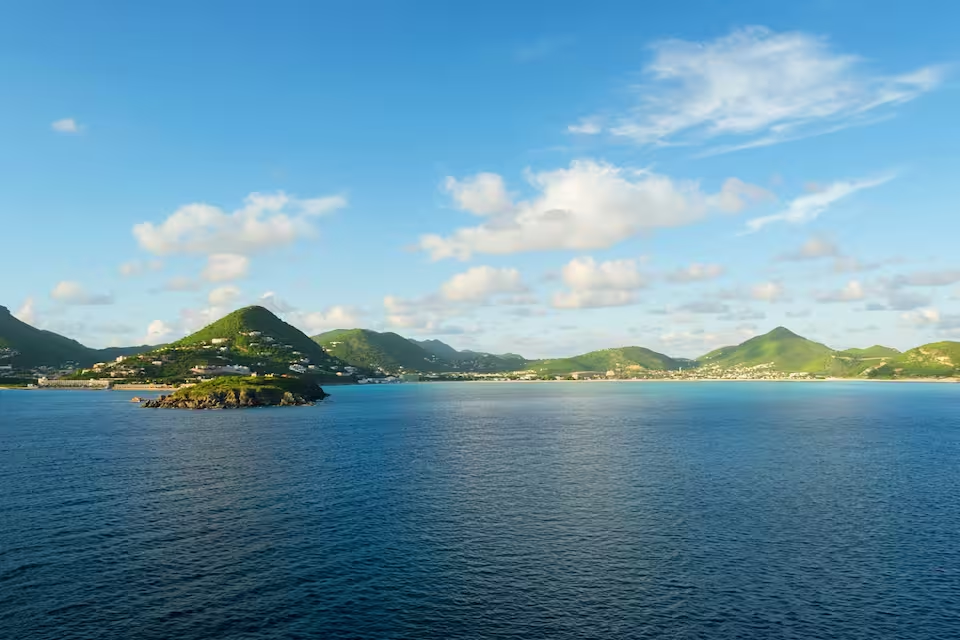
A yacht charter in the Netherlands Antilles is best understood as a choice between several contrasting Dutch Caribbean islands rather than a voyage through one continuous cruising ground. The Netherlands Antilles was dissolved in 2010, and Aruba had already gained separate-country status in 1986, but the historic name is still commonly used for Aruba, Bonaire, Curaçao, Sint Maarten, Saba and Sint Eustatius.
For charter planning, these islands form two widely separated groups. Aruba, Bonaire and Curaçao have arid landscapes, fringing reefs and relatively sheltered leeward coasts. Far to the northeast, Sint Maarten offers a major yachting center around Simpson Bay Lagoon, while volcanic Saba and Sint Eustatius rise steeply from deeper, more exposed water. This variety creates opportunities ranging from relaxed coastal outings and reef-focused day trips to open-channel passages, but the distance between the two groups means travelers should normally select one cluster for a single holiday.
In the southern group, each island supports a different style of trip. Aruba’s western and southern shores suit coastal sails from Oranjestad or Palm Beach, with established snorkeling and sunset routes along the calmer leeward coastline. Bonaire places its coral environment at the center of the experience: Kralendijk is the main boating base, and Klein Bonaire is a natural objective for day sailing and snorkeling. Boats use designated marine-park moorings rather than anchoring on the reef.
Curaçao combines sheltered boating areas with a substantial cultural stop ashore. Spanish Water provides a protected setting near marinas and routes toward Caracas Bay and Fuik Bay, while Willemstad’s natural harbor leads directly to its historic waterfront. Trips can also extend offshore to Klein Curaçao by sailing vessel, catamaran or motor yacht.
In the northeastern group, Simpson Bay Lagoon is the main service and departure hub. Great Bay and Philipsburg provide access to south-coast trips past Little Bay, Maho Beach and Mullet Bay. Saba and Sint Eustatius are better suited to travelers interested in dramatic volcanic scenery and inter-island passages. Their limited harbor infrastructure, marine-park controls and reliance on designated moorings make them more operationally demanding than a sheltered coastal outing from Sint Maarten.
Easterly to northeasterly trade winds shape sailing across both island groups, but local exposure makes a substantial difference. Along the leeward sides of Aruba, Bonaire and Curaçao, conditions are generally calmer than on exposed shores. Protected waters such as Spanish Water make it possible to combine short coastal legs with time swimming, snorkeling or going ashore. Voyages between the southern islands, however, involve longer stretches of open water and should not be treated as simple harbor-to-harbor hops.
Sint Maarten offers shelter inside Simpson Bay Lagoon, although entry is governed by bridge openings, vessel dimensions and navigation procedures. Beyond the lagoon, passages to Saba and Sint Eustatius cross open channels. Fort Bay is Saba’s principal harbor, and the island’s steep coastline provides fewer sheltered options than Sint Maarten. These differences make route choice important: travelers seeking an easy coastal rhythm may prefer the southern leeward coasts or Sint Maarten day trips, while the northern inter-island corridor is more appropriate when open-water sailing is a deliberate part of the experience.
There is no single boating season that applies equally to all six islands. February, March and April are particularly suitable across the broader destination, combining the southern islands’ drier conditions with the main winter-and-spring boating period in the northeast. December through April is generally the principal seasonal window, so advance planning may be useful for trips during these months.
In Aruba, Bonaire and Curaçao, recreational boating continues throughout the year, with February through June generally drier. May and June can therefore remain practical for southern-island cruising even as the wider destination moves beyond its main seasonal period. Sint Maarten, Saba and Sint Eustatius have a broadly drier stretch from winter into spring, followed by greater rainfall and materially higher tropical-cyclone exposure from June through November, especially August through October. The southern islands lie near the edge of the Atlantic hurricane zone and have lower cyclone exposure, but they are not immune to strong winds, swell or tropical-system effects.
Short itineraries can focus on a single island. Aruba supports leeward-coast outings from Oranjestad, while a Bonaire trip can pair Kralendijk with Klein Bonaire using the marine park’s designated moorings. From Spanish Water on Curaçao, coastal routes connect Caracas Bay and Fuik Bay; a longer day on the water can lead to Klein Curaçao.
From Philipsburg, a south-coast Sint Maarten route can link Great Bay, Little Bay, Maho Beach and Mullet Bay. Travelers looking for a more passage-oriented trip can consider the established sea connection between Sint Maarten and Saba or the broader corridor linking Sint Maarten, Saba and Sint Eustatius. These routes involve exposed channels and arrival procedures at Fort Bay or Gallows Bay. The southern and northeastern island groups are too widely separated to combine as a short local itinerary, so moving between them generally requires a flight and a separate charter plan.
A yacht holiday here can alternate between time under sail, reef activities and historically significant stops ashore. Bonaire’s continuous fringing reefs and Klein Bonaire make snorkeling and diving central to many trips, while marine-park rules help protect the coral by restricting anchoring. Saba and Sint Eustatius also have protected marine environments, but their steep volcanic profiles create a markedly different setting from the low, dry southern islands.
Curaçao offers one of the strongest combinations of boating and urban heritage. Willemstad developed beside a natural harbor, and its historic center has been on the UNESCO World Heritage List since 1997. The Queen Emma Bridge, Handelskade and surrounding waterfront can form the shore-based part of a cruise from Spanish Water or the Willemstad area. On Sint Eustatius, Fort Oranje recalls the island’s trading history and the 1776 salute to the American brig Andrew Doria.
The islands also have distinct cultural identities. Papiamento or Papiamentu is prominent in the south, while English is widely used in the northeastern group. These differences reinforce why the former Netherlands Antilles should be approached as several individual island experiences rather than one uniform destination.
Aruba, Bonaire, Curaçao and Sint Maarten have international or regional airports close to their principal boating areas. Common starting points include Oranjestad and Renaissance Marina in Aruba, Kralendijk and Harbour Village Marina in Bonaire, Spanish Water or Willemstad in Curaçao, and Simpson Bay Lagoon or Great Bay in Sint Maarten.
Princess Juliana International Airport on Sint Maarten is the main connecting hub for Saba and Sint Eustatius, which can be reached by short regional flights or inter-island ferry services. Sea arrivals use Fort Bay on Saba and Gallows Bay on Sint Eustatius. Because the southern and northeastern groups are far apart, travelers should build any transfer between them into the wider flight itinerary rather than expect a quick local boat connection.
When comparing boat rental in the Netherlands Antilles, begin by choosing the island group and trip style rather than treating the historic destination name as a single jurisdiction. Rules for immigration, customs, yacht clearance and marine activities differ among Aruba, Curaçao, Sint Maarten and the Caribbean Netherlands islands. Visiting yachts must complete clearance at the required ports of entry, and current procedures should be confirmed with the relevant harbor authorities.
Environmental regulations can directly affect an itinerary. General anchoring is prohibited in Bonaire National Marine Park, where visiting yachts use designated overnight moorings in Kralendijk Bay. Saba and Sint Eustatius also require compliance with marine-park procedures and designated mooring or permitted anchoring arrangements. Nature fees, permits or activity rules may apply to boating, diving and snorkeling.
Boat format should follow the route. Travelers prioritizing trade-wind sailing and longer time under canvas can explore sailboat charters in the Netherlands Antilles, while those considering deck space for coastal day trips can compare catamaran charter options. Motor-yacht planning may be relevant for routes such as Curaçao to Klein Curaçao, where the journey is often treated as a focused day trip.
Before confirming a northeastern itinerary, check hurricane-season arrangements and how weather could alter exposed passages. For Simpson Bay Lagoon, verify current bridge schedules, vessel-size restrictions and entry procedures. These practical details matter more than the historic regional label: a well-matched Netherlands Antilles yacht charter starts with the specific island, waters and marine rules involved.
Trusted by thousands of travelers booking boat rentals every year.
The best time for yacht charter in Netherlands Antilles depends on the season, with each period offering different sailing conditions and travel experiences.
March, April, December
Peak season
The busiest charter period in Netherlands Antilles falls in March, April, December: 9°C air, 9°C sea, 20 sunny days a month and wind averaging 5 knots.
January, February
Sweet spot
The sweet spot in Netherlands Antilles falls in January, February: 0°C air, 0°C sea, 19 sunny days a month and wind averaging 0 knots with fewer boats out than at peak.
May, June, November
Shoulder
Shoulder season in Netherlands Antilles covers May, June, November: 9°C air, 10°C sea, 11 sunny days a month and wind averaging 5 knots.
July, August, September, October
Low season
Low season in Netherlands Antilles covers July, August, September, October: 28°C air, 30°C sea, 11 sunny days a month and wind averaging 13 knots.
Weather, sea and price data shown here are for St. Maarten - Philipsburg. Prices reflect seasonal pricing trends. For more details: St. Maarten - Philipsburg.
| Month | JAN | FEB | MAR | APR | MAY | JUN | JUL | AUG | SEP | OCT | NOV | DEC |
|---|---|---|---|---|---|---|---|---|---|---|---|---|
| 🌡️ Avg. temperature | 0° | 0° | 0° | 0° | 0° | 0° | 27° | 28° | 28° | 28° | 27° | 26° |
| ☀️ Avg. sunny days A day is counted as sunny when average daytime cloud cover is 30% or less. | 17 days | 21 days | 22 days | 16 days | 10 days | 10 days | 12 days | 13 days | 10 days | 11 days | 14 days | 22 days |
| 🌧️ Avg. days with rain A day is counted as rainy when at least 1 mm of rain falls. Monthly rainfall | 10 days29 mm | 9 days37 mm | 9 days22 mm | 10 days41 mm | 10 days48 mm | 10 days43 mm | 17 days78 mm | 15 days87 mm | 18 days135 mm | 17 days130 mm | 15 days106 mm | 12 days37 mm |
| 💨 Avg. wind Shows how windy a typical day is during this month, based on the full-day average. | 15 knSuitable for sailing based on hourly wind data. | 14 knSuitable for sailing based on hourly wind data. | 12 knSuitable for sailing based on hourly wind data. | 11 knSuitable for sailing based on hourly wind data. | 12 knSuitable for sailing based on hourly wind data. | 14 knSuitable for sailing based on hourly wind data. | ||||||
| 🌊 Avg. seawater temperature | 0° | 0° | 0° | 0° | 0° | 0° | 29° | 30° | 30° | 30° | 29° | 28° |
| 📅 Season | SWEET SPOT | SWEET SPOT | HIGH SEASON | HIGH SEASON | SHOULDER | SHOULDER | LOW | LOW | LOW | LOW | SHOULDER | HIGH SEASON |
/ night
catamaran available
€896
€896
Prices vary by yacht type, size, season and charter type. Additional costs such as fuel, skipper fees and security deposit may apply.
Last updated at October 18, 2026
Available only for overnight charters.
Prices vary by yacht type, size, season and charter type. Additional costs such as fuel, skipper fees and security deposit may apply.
Last updated at October 18, 2026
Learn everything you need to know about boat rental in Netherlands Antilles, including costs, yacht types, charter options and sailing requirements.
How much does a yacht charter cost in Netherlands Antilles?
What types of boats are available for charter in Netherlands Antilles?
Can I charter a yacht bareboat, with a skipper or with a crew in Netherlands Antilles?
What is the best time for yacht charter in Netherlands Antilles?
What are the popular yacht charter destinations in Netherlands Antilles?
How many guests can a yacht charter accommodate in Netherlands Antilles?
What are the most widely available yacht models in Netherlands Antilles?