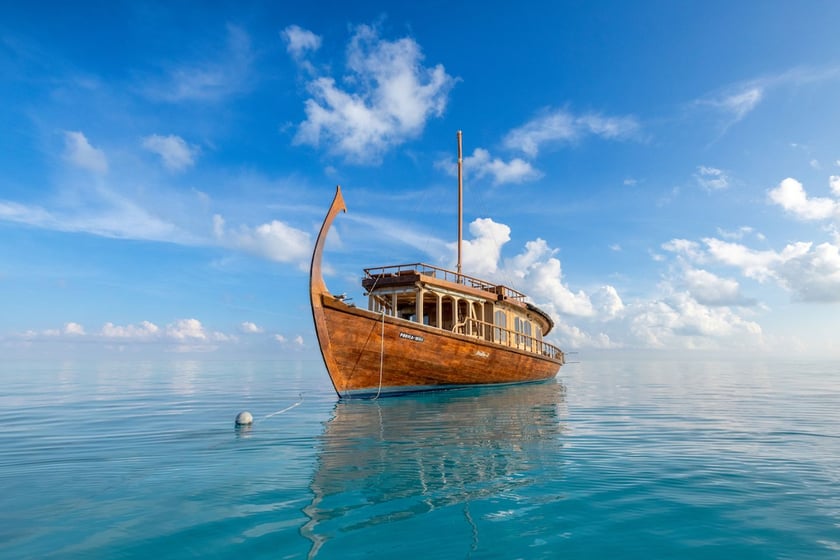
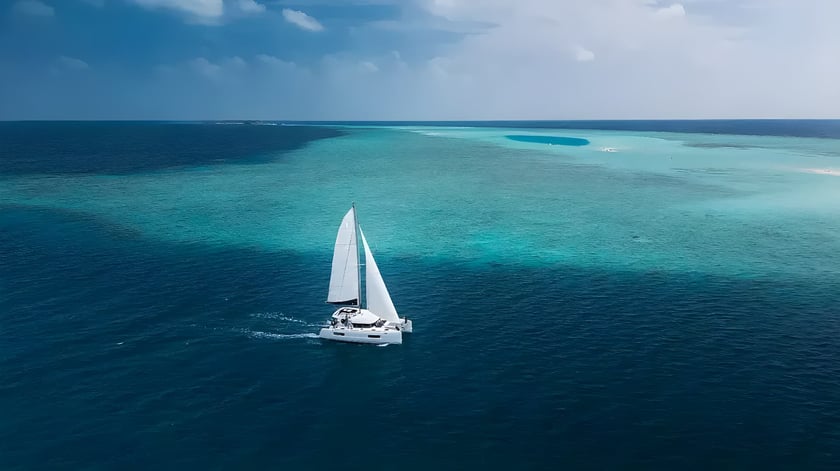
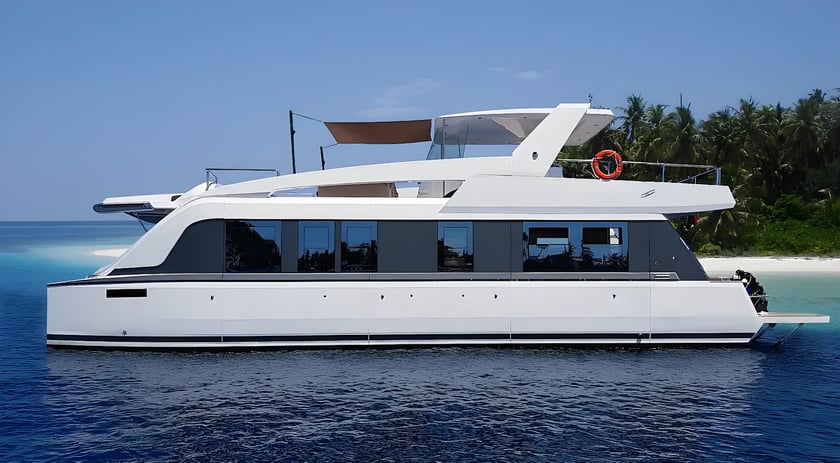
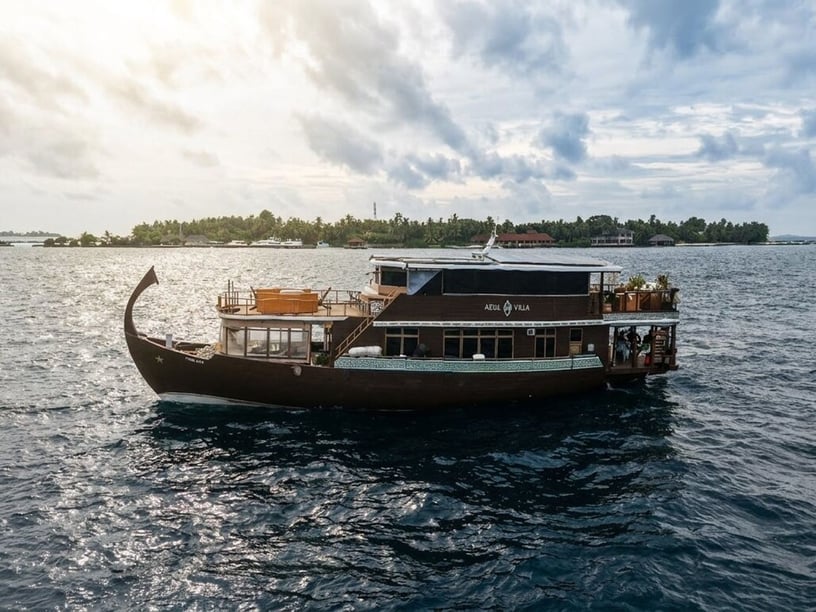
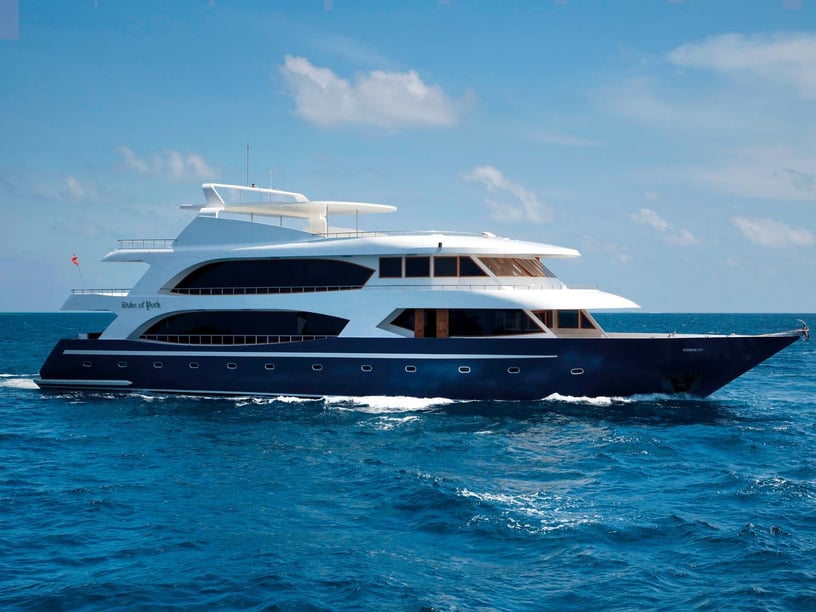
Yacht charter in Malé
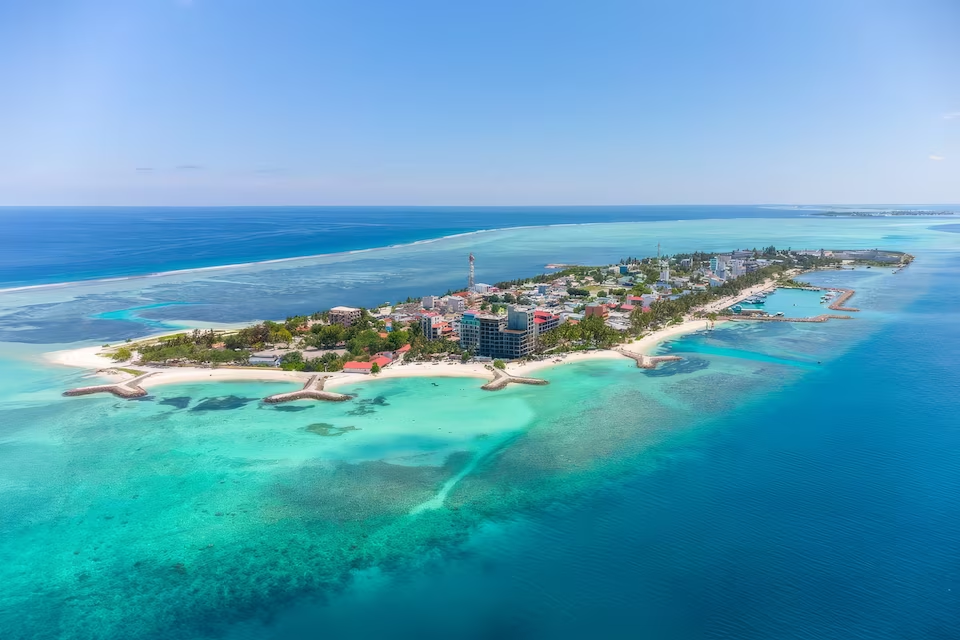
A yacht charter in Malé begins at the urban and maritime heart of the Maldives. The compact, seawalled capital occupies the southern side of North Malé Atoll, near the channel separating it from South Malé Atoll. Velana International Airport, Hulhumalé and Vilimalé are all part of the surrounding Greater Malé area, concentrating air access, transfer jetties and marine services within a relatively small area.
Malé is principally an embarkation, provisioning and cultural stop rather than a conventional beach or anchorage destination. Its busy waterfront contrasts sharply with the reef-dotted lagoons, resort islands and inhabited islands reached soon after departure. This makes the capital a practical gateway to central-atoll cruising, whether the trip focuses on nearby excursions or a longer liveaboard itinerary. Travelers considering a broader route can also compare yacht charters across the Maldives.
Islands and coastal areas to explore
The immediate cruising area spans both North and South Malé atolls. Hulhumalé is closely connected to the airport and serves as an alternative embarkation area, while quieter Vilimalé offers a different perspective on Greater Malé. Farther from the capital, islands such as Thulusdhoo in North Malé Atoll and Gulhi or Maafushi in South Malé Atoll can add local-island stops to a charter itinerary.
CROSSROADS Maldives, on Eh’mafushi, is relevant for its marina and its position within easy reach of Greater Malé. Around these islands, reef areas and sandbanks support swimming, snorkeling and short scenic excursions. The appeal lies in combining several settings: the working capital, inhabited islands, resort environments and open lagoon scenery, rather than treating Malé itself as the sole destination.
What cruising around Malé is like
Leaving Malé means moving quickly from a busy harbor environment into lagoons broken up by reefs, coral heads and narrow entrances. Some legs are sheltered inside the atolls, but passages near windward reefs can be more exposed. Tidal streams may run strongly through channels, particularly around the divide between North and South Malé atolls, where tide rips can develop.
These conditions help explain why visitor cruising is commonly undertaken on crewed yachts, safari vessels, dive liveaboards or locally operated excursion boats. Local knowledge is valuable not only for reef navigation, but also for managing commercial traffic and changing sea conditions. For travelers, the practical result is an itinerary whose pace may vary: calm lagoon cruising can be interspersed with carefully timed channel passages, snorkeling stops and transfers between islands.
Best time for a Malé yacht charter
December through April is the principal recreational boating season around Malé. The northeast monsoon generally brings lower rainfall, more sunshine and calmer seas, with January, February and March identified as particularly suitable months. This period is well suited to travelers who prioritize more settled passage conditions and easier movement between exposed and sheltered areas.
April is transitional, while the southwest monsoon normally extends from mid-May through November. During this period, stronger westerly winds, heavier showers, squalls and rougher exposed passages can affect routes and small-boat transfers. Cruising still takes place, especially in protected lagoons, but schedules need more flexibility. November is another transition month, and December usually marks the return of the main season. Weather and sea state can differ significantly between sheltered waters and the windward sides of reefs.
Cruising routes from Greater Malé
Short trips can remain within Greater Malé, linking reef and sandbank stops with Hulhumalé, Vilimalé or CROSSROADS Maldives. These routes suit travelers who want time for swimming or snorkeling without committing to a long inter-atoll passage. Hulhumalé yacht charters may also be relevant when comparing embarkation areas near the airport.
Longer liveaboard circuits can connect North Malé Atoll with Rasdhoo Atoll, Ari Atoll and South Malé Atoll. Such itineraries place Malé at the start or end of a wider central-atolls journey rather than making the city the daily focus. The exact sequence depends on weather, sea conditions, chosen activities and the vessel’s operating plan.
Experiences on the water and ashore
Snorkeling, diving and marine-life encounters are central reasons to explore the surrounding atolls by yacht. A charter allows cruising time to alternate with reef stops, swimming and visits to inhabited or resort islands. The contrast between Malé’s dense waterfront and the open lagoons beyond it is one of the area’s defining features.
Time ashore can add historical and culinary context. Near the waterfront, travelers can visit the Malé Fish Market, Republic Square and the city’s compact historic core. Hukuru Miskiy, completed in 1658 from interlocking carved coral blocks, reflects the Maldives’ coral-stone architectural tradition. Cafés and tea shops offer opportunities to try hedhikaa snacks or tuna-and-coconut dishes such as mas huni with roshi. These stops make Malé more than a transfer point, even when the main purpose of the trip is cruising.
Airport access and embarkation points
Velana International Airport is located on Hulhulé beside the capital, with road links to Malé and Hulhumalé. Ferries, speedboats and private transfers connect the Greater Malé islands and onward destinations. This close relationship between the airport, city and waterfront makes the area a convenient staging point, but it does not mean every trip departs from central Malé.
Possible embarkation locations include waterfront jetties near Republic Square, Hulhumalé, airport transfer jetties and The Marina at CROSSROADS Maldives. Travelers should confirm the precise meeting point before arrival, along with the transfer arrangements for luggage and passengers. Boats may be positioned on a different island from the accommodation or airport terminal, so the name “Malé departure” can refer to the wider Greater Malé transport area.
Planning the right charter
When comparing a Malé yacht charter or Malé boat rental, begin with the intended trip length and activity mix. A short excursion may concentrate on reefs, sandbanks and nearby islands, while an overnight yacht or liveaboard can support a broader central-atoll route. Travelers focused on diving should examine how dive operations and equipment are handled; those prioritizing island visits should consider transfer times and the rules applying to individual resort calls.
Crewed arrangements are particularly relevant around Malé because reef entrances, coral heads, channel currents and commercial traffic require current local knowledge. For foreign vessels, cruising authorization and representation by a registered local shipping agent are required, while some resort visits need prior consent. These operational matters are normally best clarified before the trip rather than on arrival.
Allow flexibility during the southwest monsoon, when exposed passages or small-boat transfers may change at short notice. Malé is an inhabited local island, so modest dress is expected in public. Alcohol is not available in the city, although it is permitted at licensed resorts and on liveaboards. Confirming embarkation details, onboard arrangements and planned shore visits in advance helps align the charter format with the route and season.