Yacht charter in the Gulf of Gökova
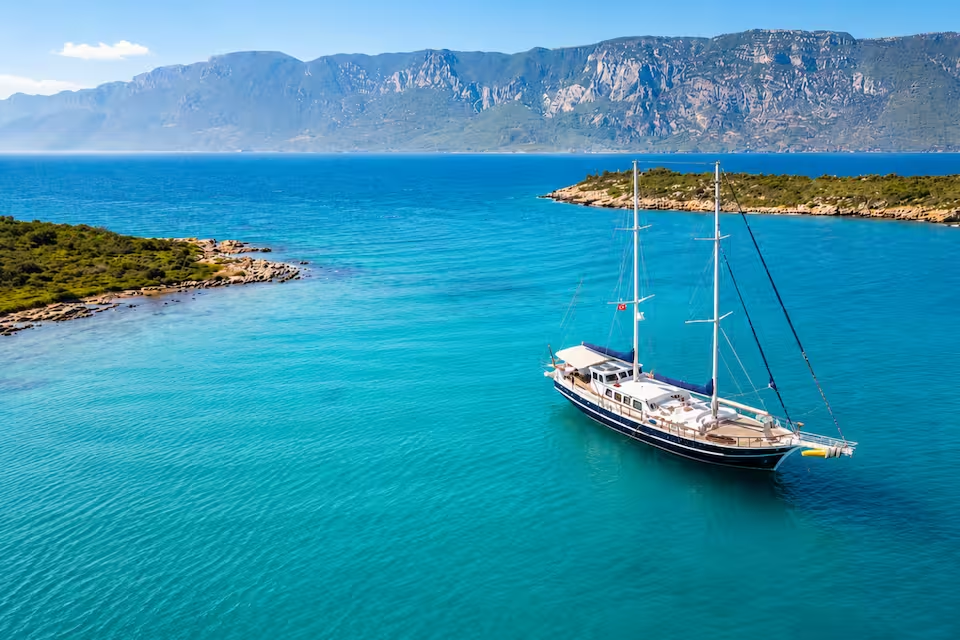
The Gulf of Gökova stretches eastward from the Bodrum–Datça approaches to Akyaka, between two mountainous shores in southwestern Turkey. A yacht charter in the Gulf of Gökova brings together pine-framed coves, small coastal settlements, islands and archaeological sites, often within a route that alternates between short coastal hops and longer crossings.
The gulf’s shape creates considerable variety. Its western entrance is relatively open to Aegean conditions, while the eastern and southeastern shores contain deeply indented bays and clusters of sheltered anchorages. This allows an itinerary to combine active sailing with quieter periods spent swimming, snorkeling or going ashore.
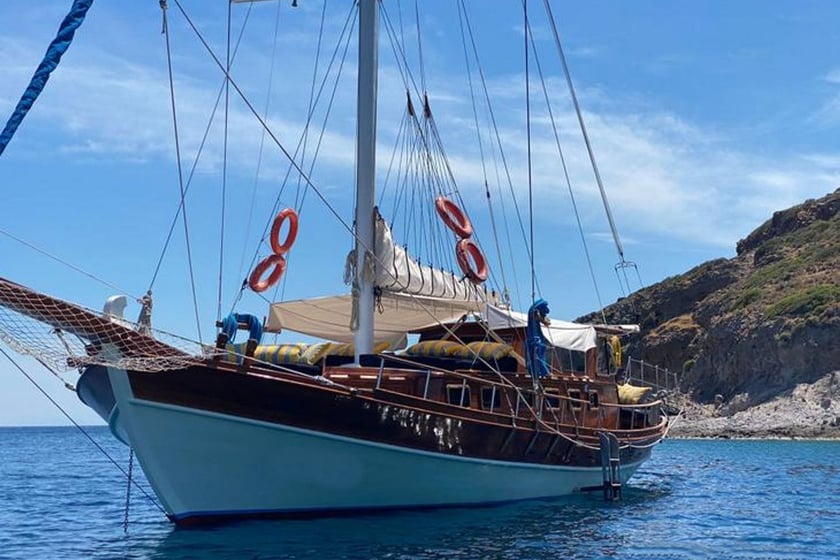
Gökova also has an important place in Turkey’s maritime culture. Mid-20th-century voyages by Cevat Şakir Kabaağaçlı and fellow writers and artists helped establish the Blue Voyage tradition, connecting life aboard local wooden boats with the region’s landscapes and ancient sites. Travelers interested in that heritage can explore the region through a Blue Cruise in the Gulf of Gökova.
Where to go around the gulf
The western and northern side of the gulf suits travelers who want to begin around Bodrum and follow the coast through Yalıçiftlik, Mazı, Çökertme, Ören and Akbük. Orak Island and Kisebükü are natural early or final stops on many round trips. Farther east, Ören combines marina facilities with the site of ancient Keramos, while Çökertme and Akbük provide useful coastal stopping points between the gulf’s outer and inner sections.
The inner southern shore has a more intricate cruising landscape. The Seven Islands, Küfre Bay, Tuzla Bay, Değirmen Bükü, Löngöz and Okluk form a sequence of forested peninsulas and well-enclosed coves. This area is especially relevant to itineraries built around secluded anchorages, swimming and shorter moves between overnight stops. Karacasöğüt can serve as both a departure point and a practical link with the Marmaris side of the region.
Sedir Island adds a cultural focus to the central and eastern gulf. It contains the remains of ancient Kedrai, including a theater, fortifications, sanctuaries and an ancient harbor. At the head of the gulf, Akyaka feels different again: steep mountains rise behind an alluvial plain, spring-fed streams and shallow coastal waters, while regular afternoon thermal wind supports a strong windsurfing and kitesurfing scene.
What sailing in Gökova is like
Gökova is generally considered a moderately demanding cruising area rather than a uniformly sheltered one. Mornings are often lighter, while westerly to northwesterly winds commonly strengthen during summer afternoons. On open legs, particularly near the western entrance or during cross-gulf passages, these winds can produce short seas and a more energetic ride.
Conditions change markedly after entering the deeply indented coves of the southern shore. Areas around the Seven Islands, Tuzla, Değirmen Bükü and Löngöz can be substantially calmer than exposed water nearby. This contrast shapes the daily rhythm of many charters: passages are often timed around the forecast, followed by longer periods at anchor inside protected bays.
Akyaka has its own local pattern, with a dependable summer afternoon thermal wind. That is an advantage for wind-based sports, but it also reinforces the value of completing exposed yacht passages earlier in the day when appropriate. Shelter can vary even between neighboring coves, so the actual forecast matters more than the gulf’s general reputation.
The best time for a Gulf of Gökova charter
The established recreational cruising season runs from May through October. June to September usually brings the warmest and driest weather, making this the main period for swimming-focused itineraries and extended time aboard.
May, June, September and October are identified as particularly suitable months. May and October can appeal to travelers who prefer to avoid the strongest summer heat, although conditions are somewhat less consistent. June combines warm, predominantly dry weather with the start of the principal season, while September retains summer conditions after the hottest part of the year.
July and August bring the greatest heat and a higher likelihood of fresh afternoon meltemi conditions. Early starts can therefore be useful for exposed westbound legs or cross-gulf passages. Autumn later becomes wetter and more variable, while winter cruising is limited by cooler temperatures, substantially greater rainfall and changeable weather.
Routes and itinerary ideas
A classic week-long route is the Bodrum–Gökova–Bodrum circuit. It commonly links Bodrum with Orak Island or Çökertme before continuing toward the Seven Islands or Küfre Bay. The route can then reach the sheltered coves around Değirmen Bükü and Löngöz, include Sedir Island, and return through Kisebükü or Çökertme. The order is normally adapted to wind, sea and anchorage conditions rather than followed as a fixed sequence.
Travelers beginning farther east can concentrate more closely on Sedir Island, the inner bays and the shores around Akyaka, Çamlı or Karacasöğüt. Local day trips from Akyaka or Çamlı also provide sea access to Sedir Island and ancient Kedrai, though they offer a different experience from a multi-day yacht charter. Starting point matters: the gulf is long, and a route from Bodrum naturally includes more open-water sailing than one focused on the sheltered southeastern coves.
Experiences on and beyond the water
A charter here is often shaped by the transition from sailing to anchoring. Open passages lead into forest-backed bays where the schedule can slow for swimming and snorkeling. The deeply indented southern shoreline makes it possible to visit several distinct coves without turning every day into a long passage.
History is woven into the cruising landscape. Sedir Island’s ancient settlement of Kedrai has a documented past extending to the sixth century BCE. Its archaeological remains include an agora, cisterns, churches, fortifications and a theater. The island’s protected Cleopatra Beach is also unusual: its sand consists of naturally formed limestone droplets rather than ordinary fragments of rock, and removing it is prohibited.
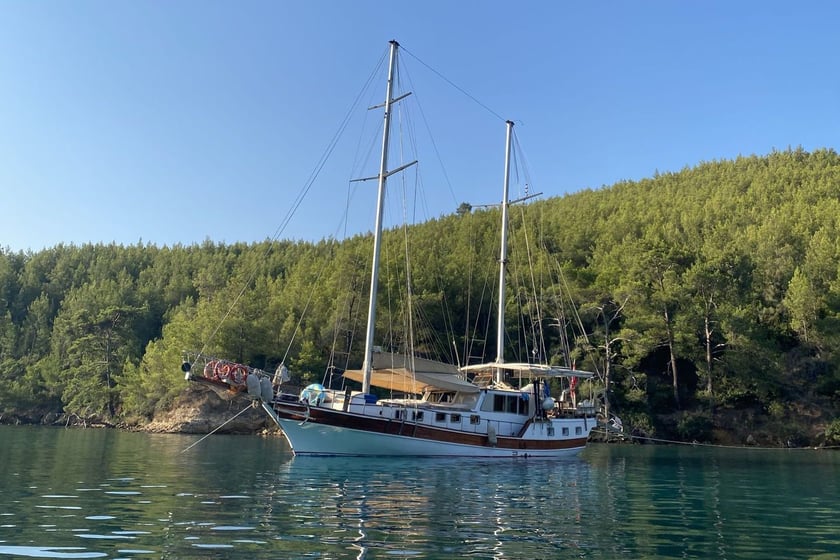
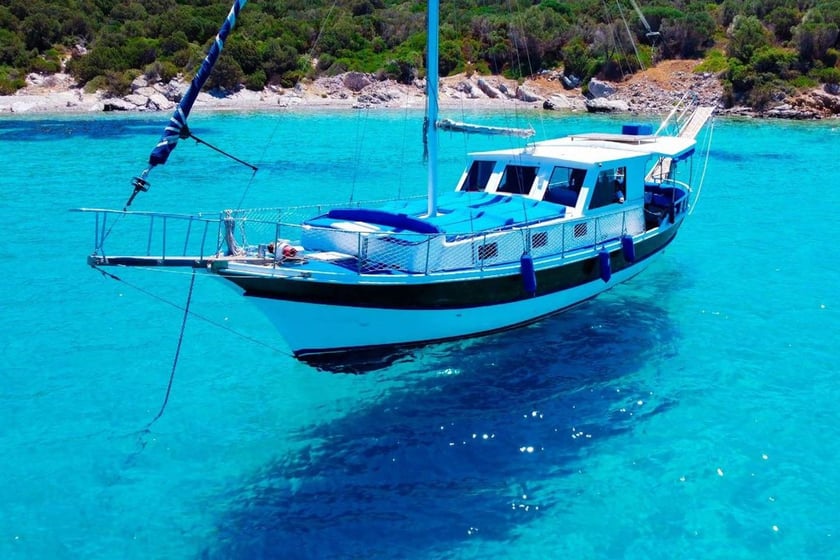
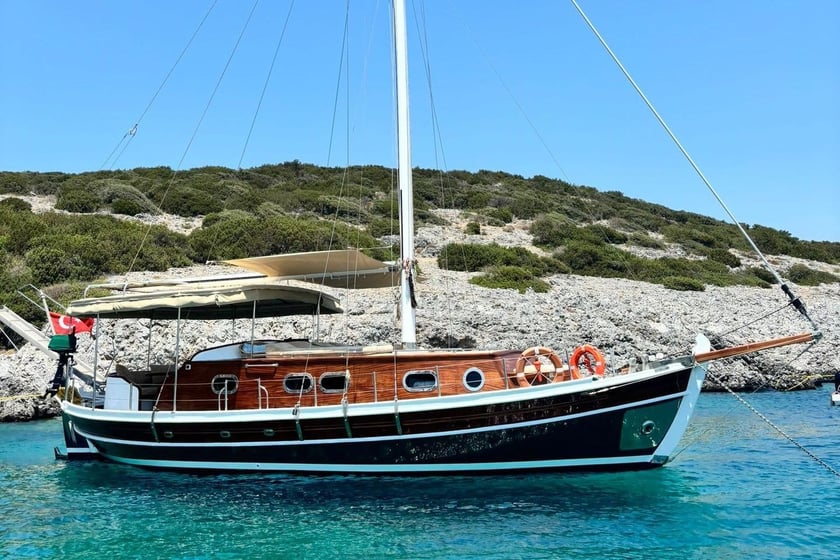
Elsewhere, modern Ören occupies the site of ancient Keramos, while ancient Idyma lies near Akyaka. The gulf’s 20th-century Blue Voyage story adds another layer, linking these places with Turkish literature, seafaring and traditional wooden boats. Travelers drawn to this heritage may find a gulet charter in the Gulf of Gökova particularly relevant to the region’s character.
Getting there and choosing a departure point
Access depends on which side of the gulf the itinerary uses. Milas–Bodrum Airport is the principal gateway for Bodrum, Ören and the northern or western cruising areas. Dalaman Airport is generally more convenient for Akyaka, Marmaris and Karacasöğüt. Road transfers run through Milas, Muğla and Marmaris, but the gulf’s length and mountainous shoreline mean that no single land hub serves every charter area equally well.
Bodrum is a practical western starting point with major provisioning and full marina services. Gökova Ören Marina provides another useful base on the northern shore, reducing the distance to the inner gulf. Karacasöğüt offers smaller-scale berthing and services on the south side, while Akyaka and Çamlı are relevant for local departures and access to Sedir Island. Many inner coves have limited or no shore facilities and are considerably easier to reach by yacht than by road.
Planning the right charter
Begin by matching the departure base to the part of Gökova that matters most. A Bodrum round trip combines the maritime atmosphere of a major yachting center with longer, more exposed passages. Starting around Ören, Akyaka, Çamlı or Karacasöğüt can place the inner gulf and Sedir Island closer to the center of the itinerary.
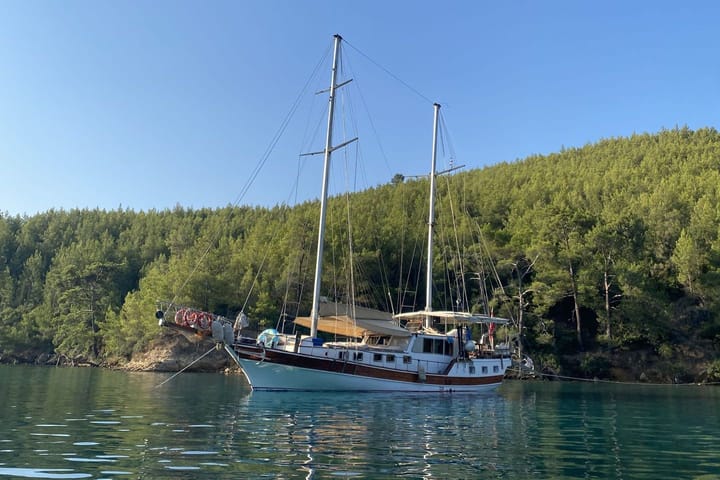
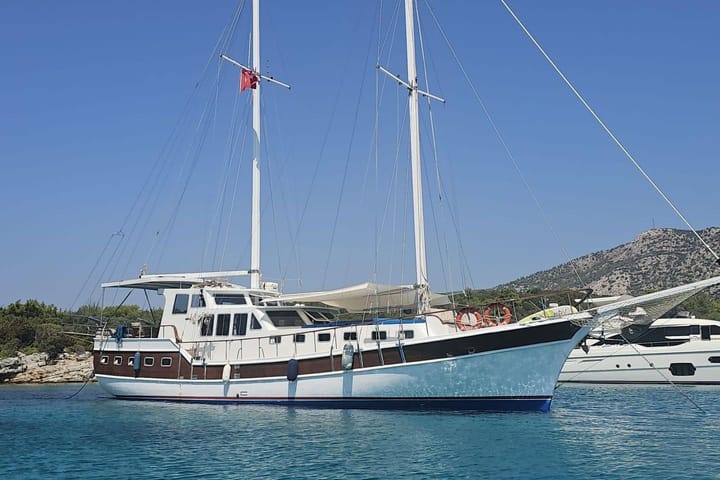
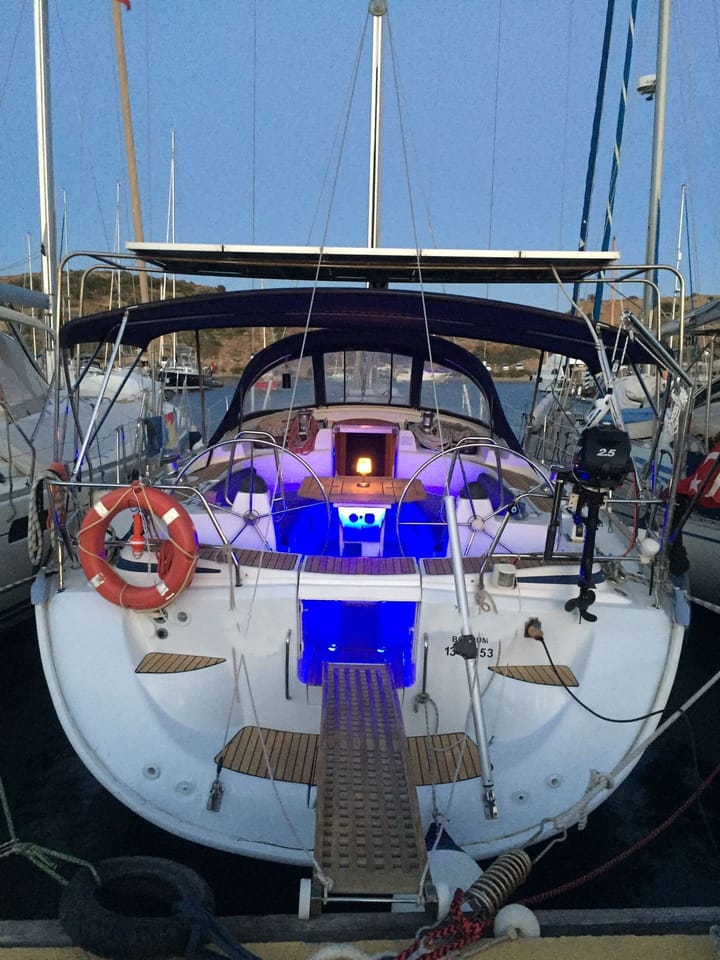
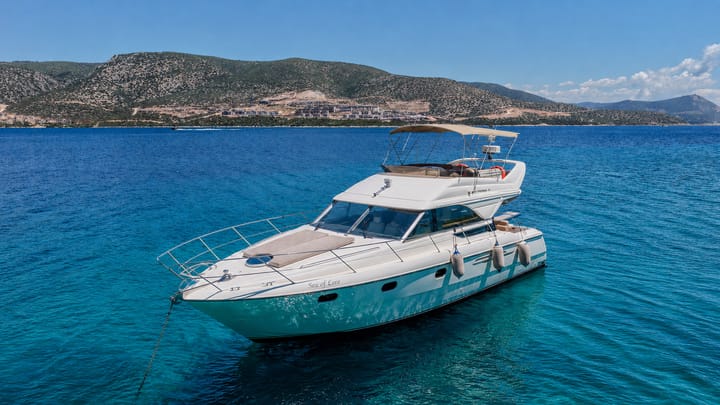
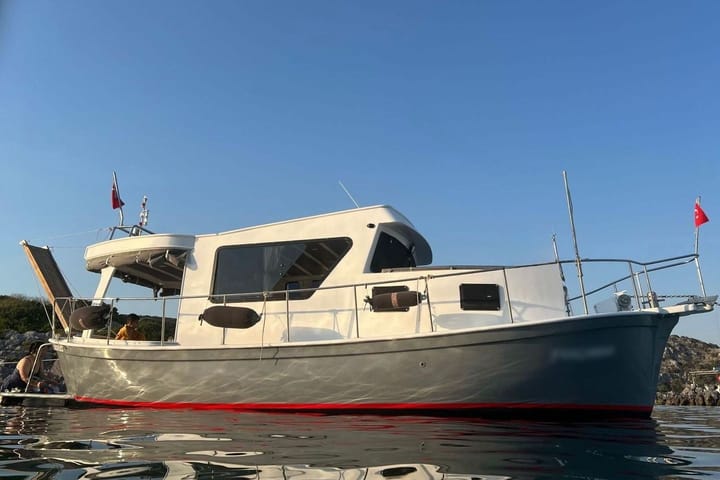
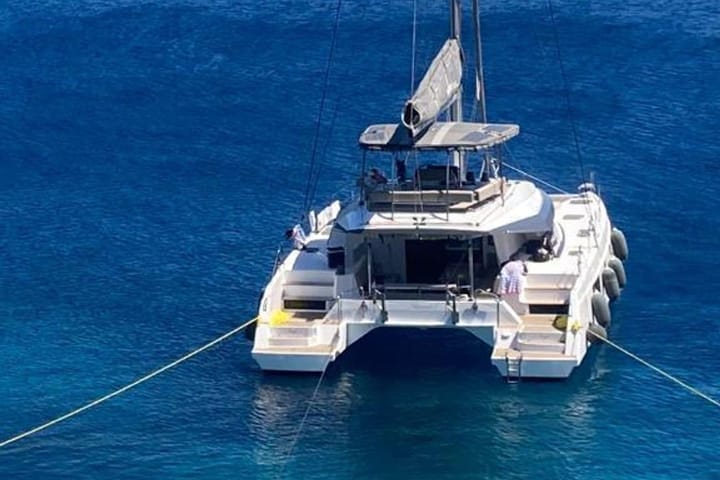
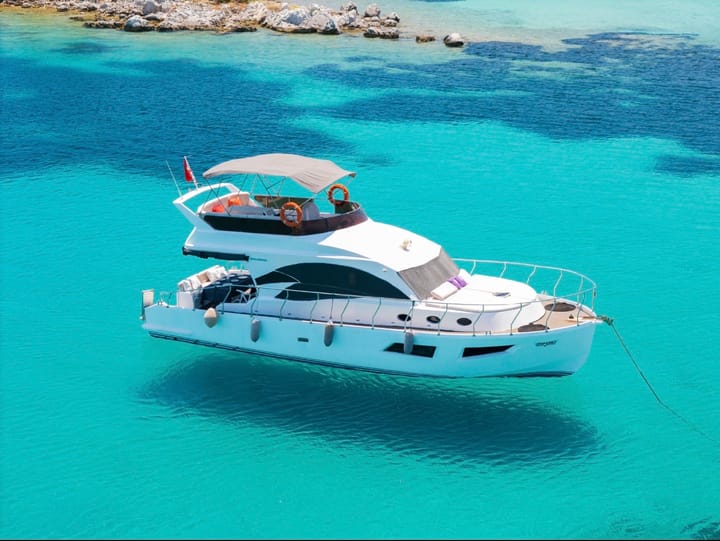
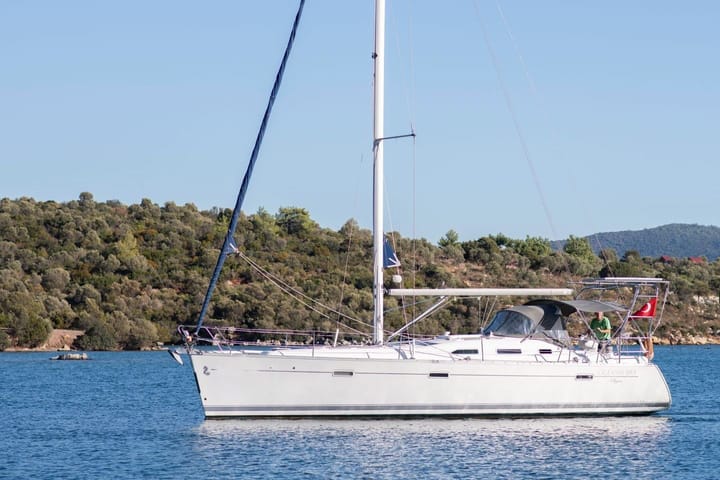
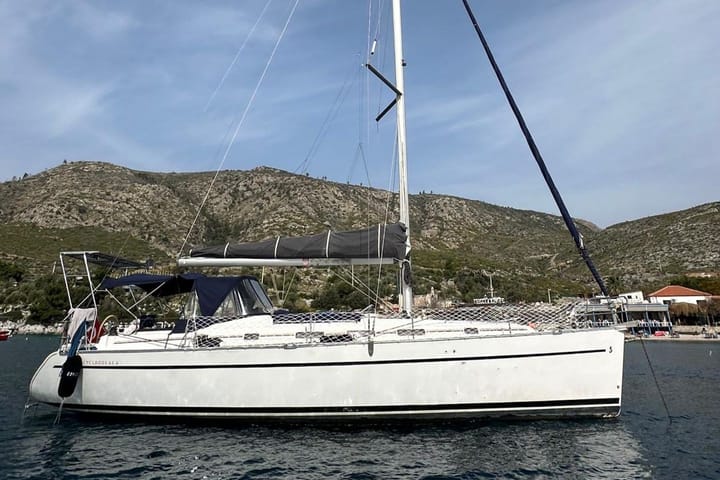
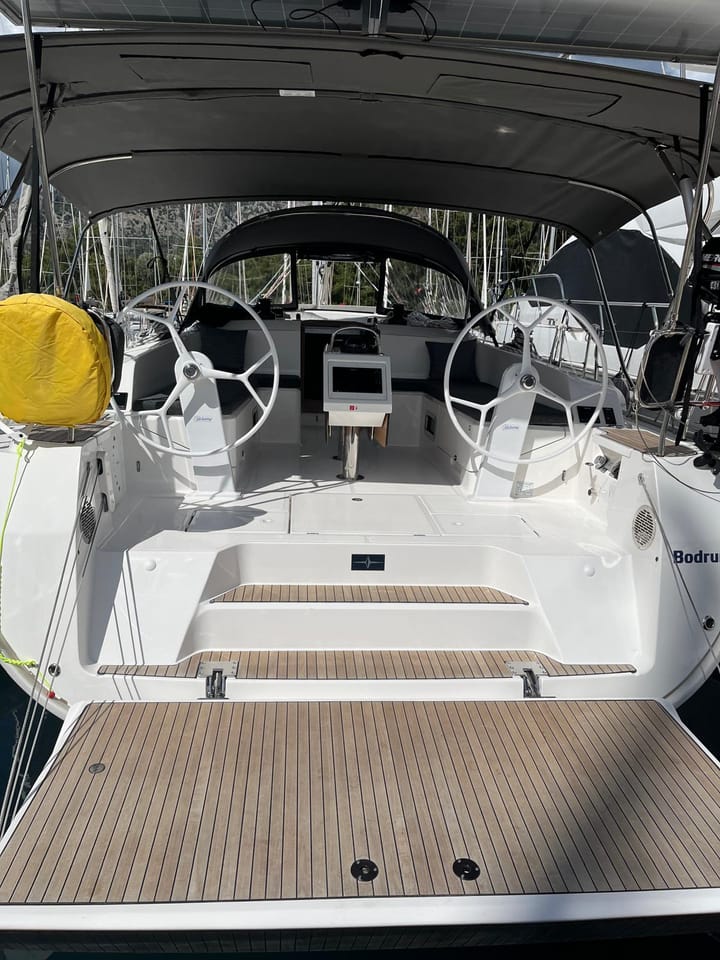
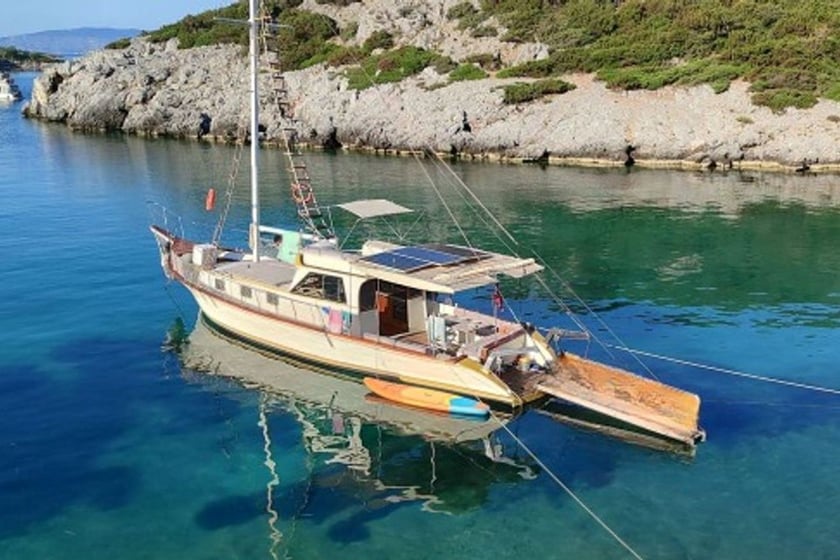
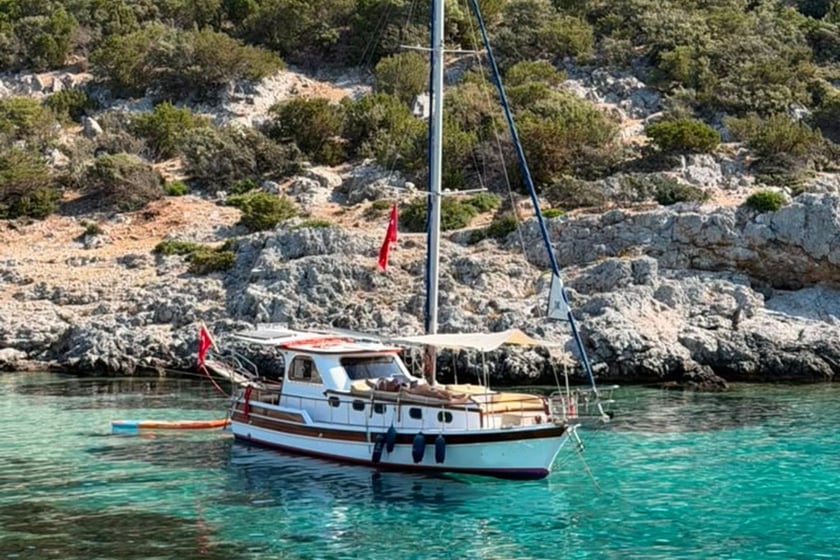
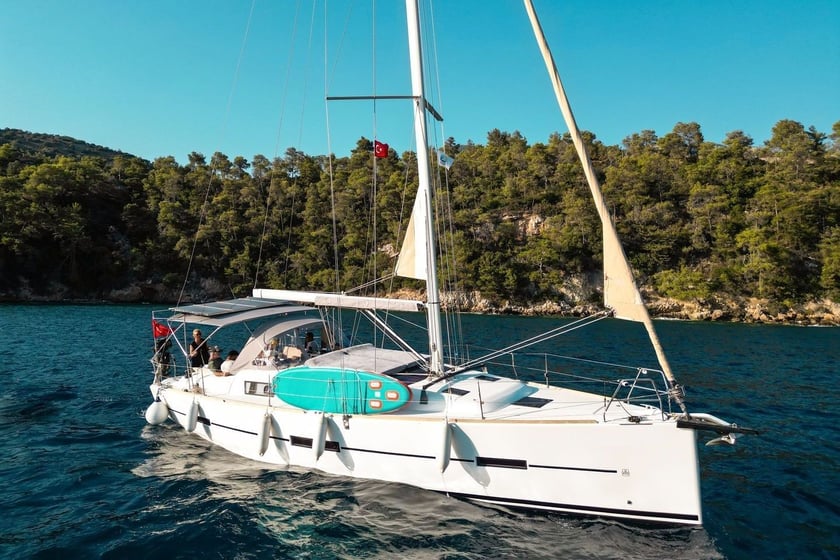
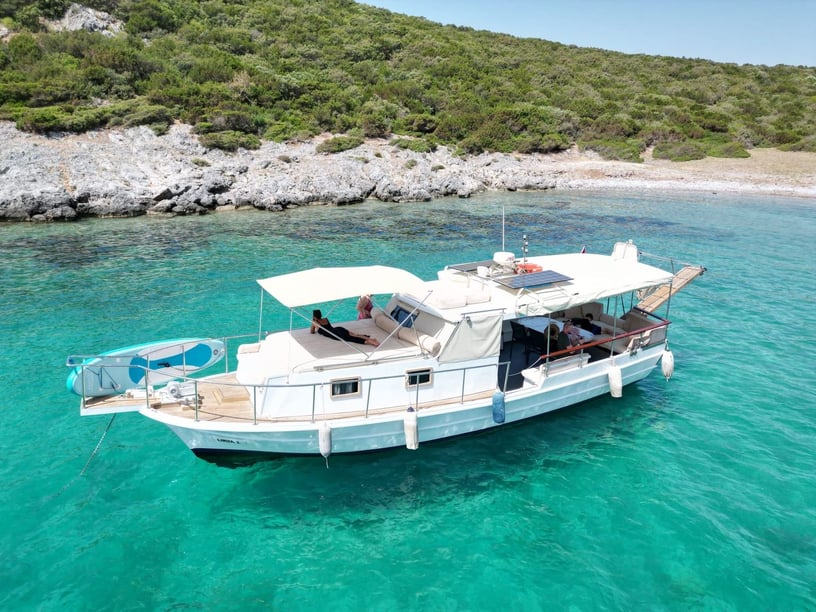
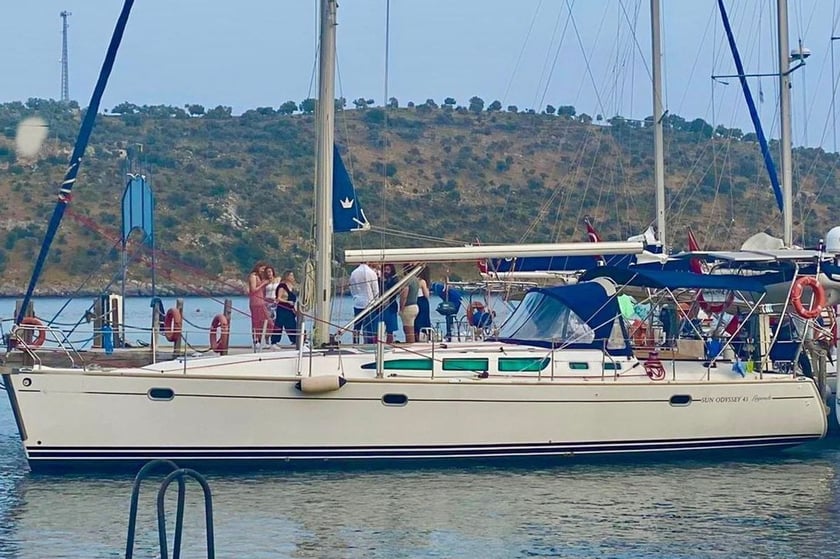
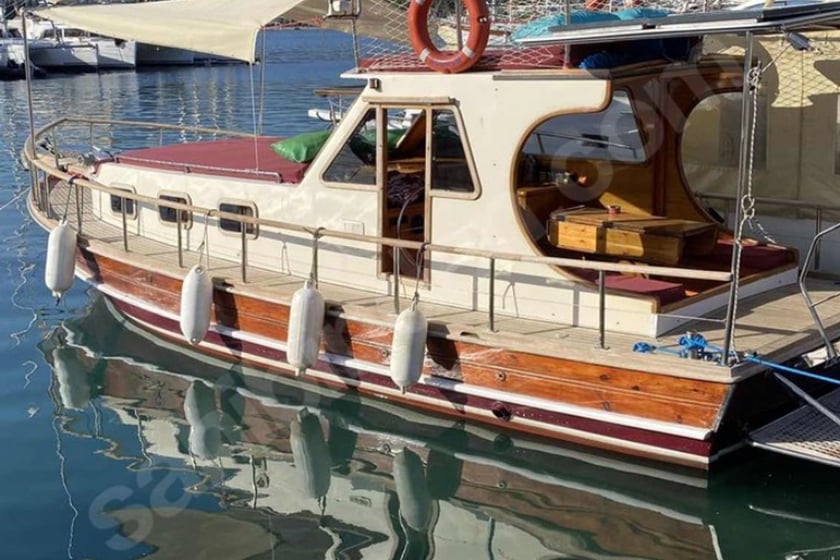
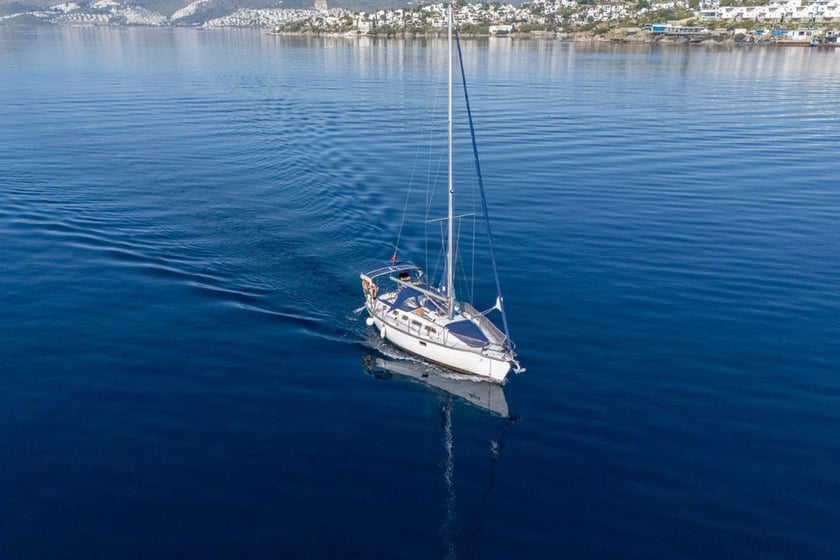
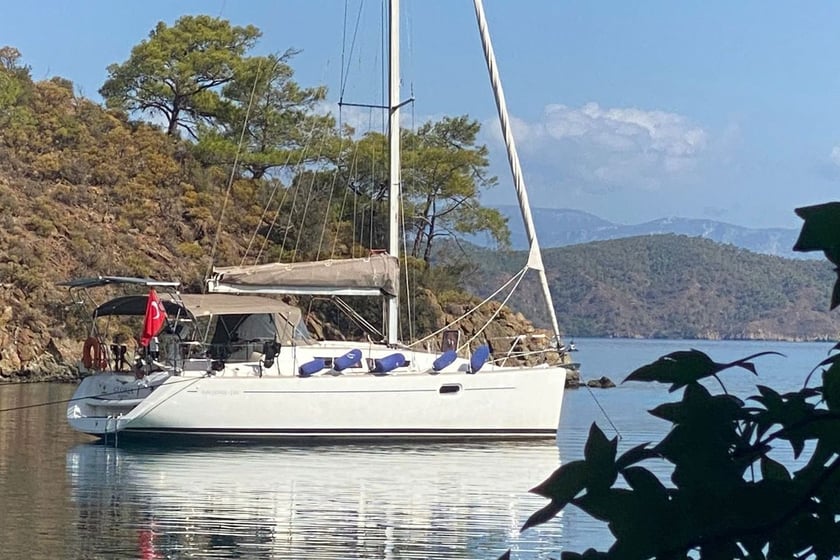
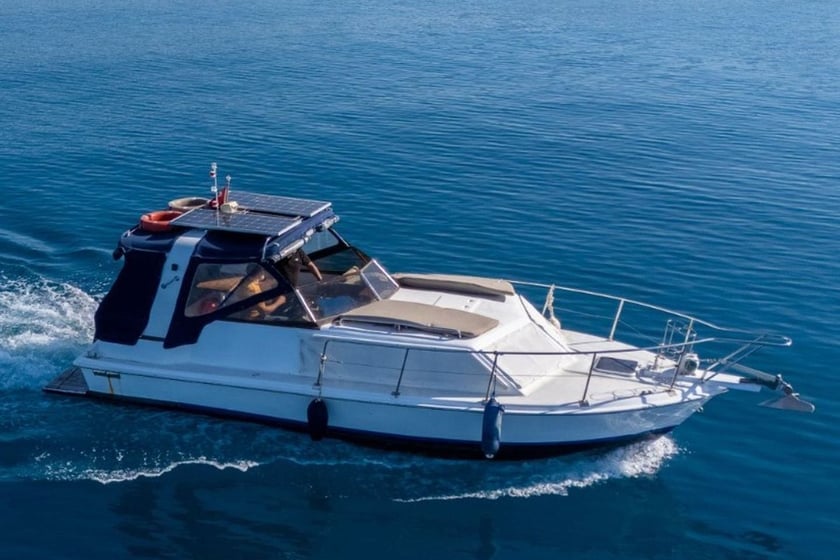
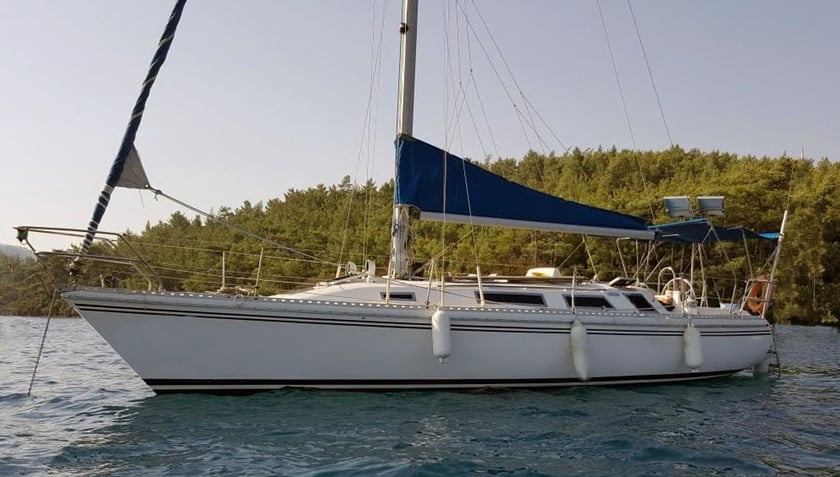
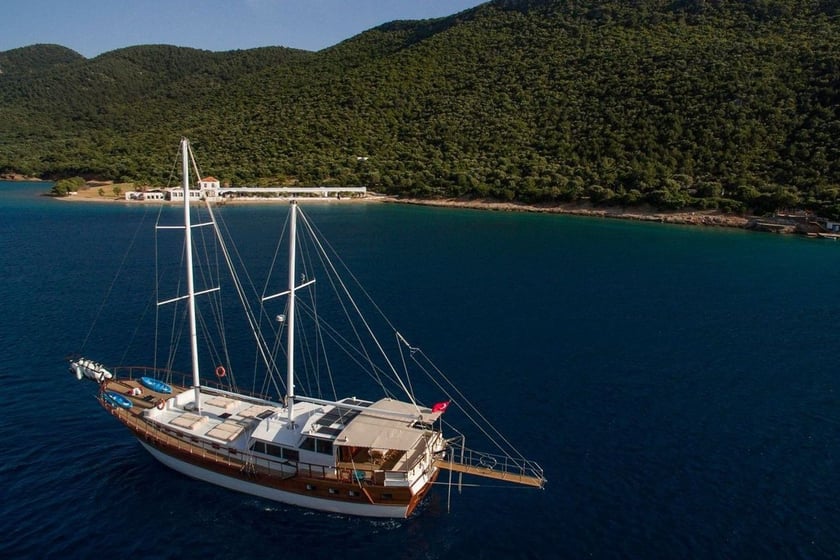
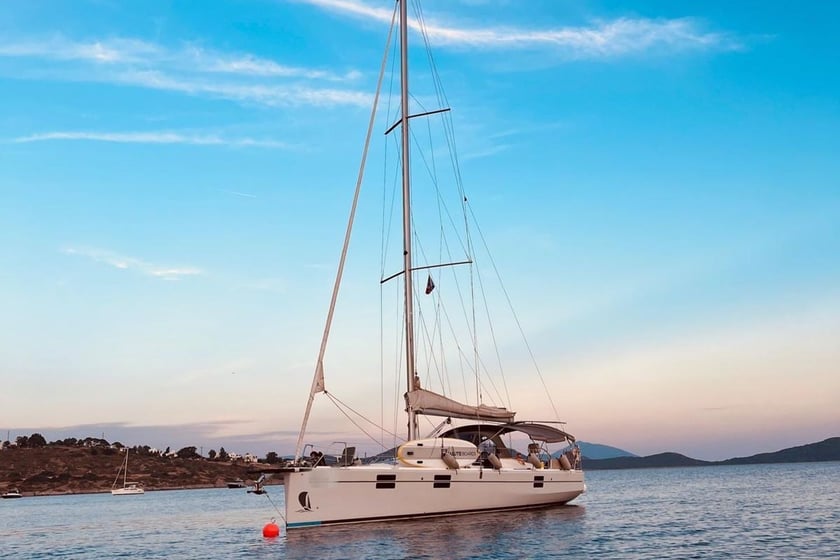
Charter style should also reflect the desired rhythm. The region’s gulet tradition suits travelers interested in the cultural context of the Blue Voyage, while those who want the wind and passage-making to play a larger role can compare the destination’s sailboat charter options. For any Gulf of Gokova boat rental, it is worth checking how the proposed route, boat and daily passage plan account for stronger afternoon winds and the limited facilities in many coves.
Parts of the gulf lie within a Special Environmental Protection Area and include ecologically sensitive or fisheries-restricted waters. Current nautical charts, official notices and local guidance should be followed for anchoring, fishing and access. Plans should retain flexibility because neighboring bays may provide different levels of shelter under the same forecast. Provisioning and marina stops also deserve advance thought: major services are concentrated around Bodrum and Ören, with smaller-scale facilities at Karacasöğüt.





















Verified
Özkan E.13 Oct 2026
We were very pleased with the boat and the service; thank you.
Listing owner: BuseBodrum / Turkey