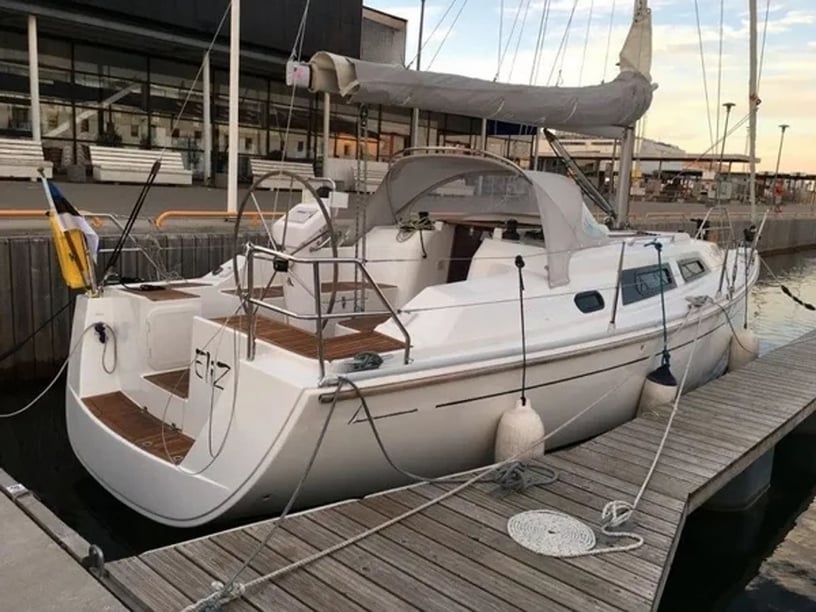
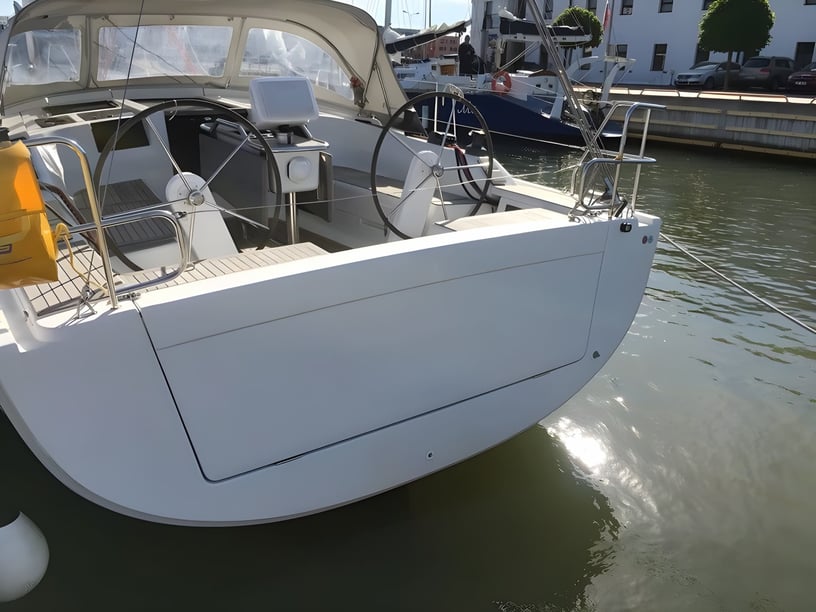
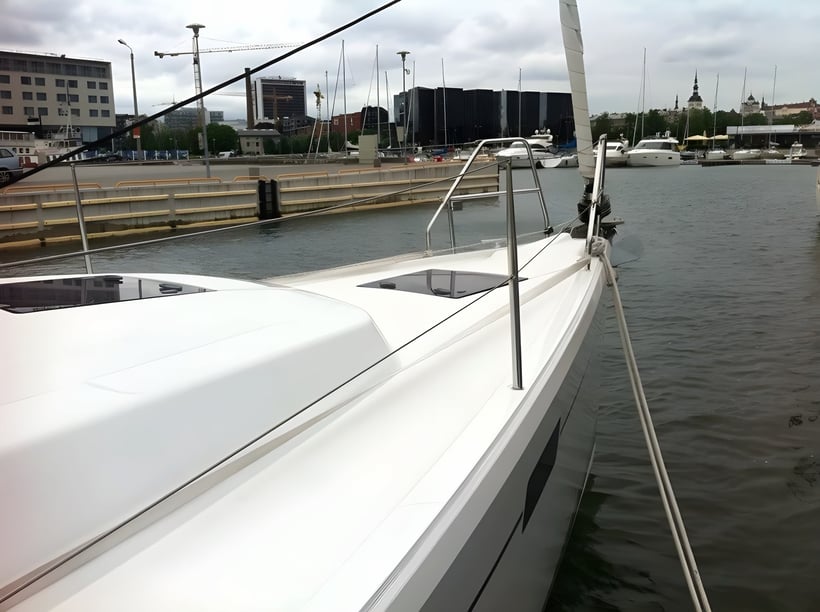
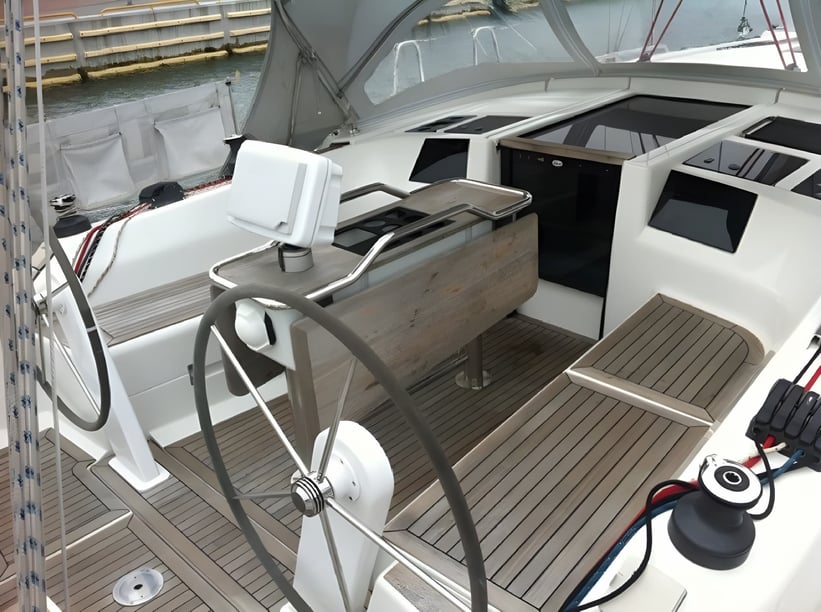
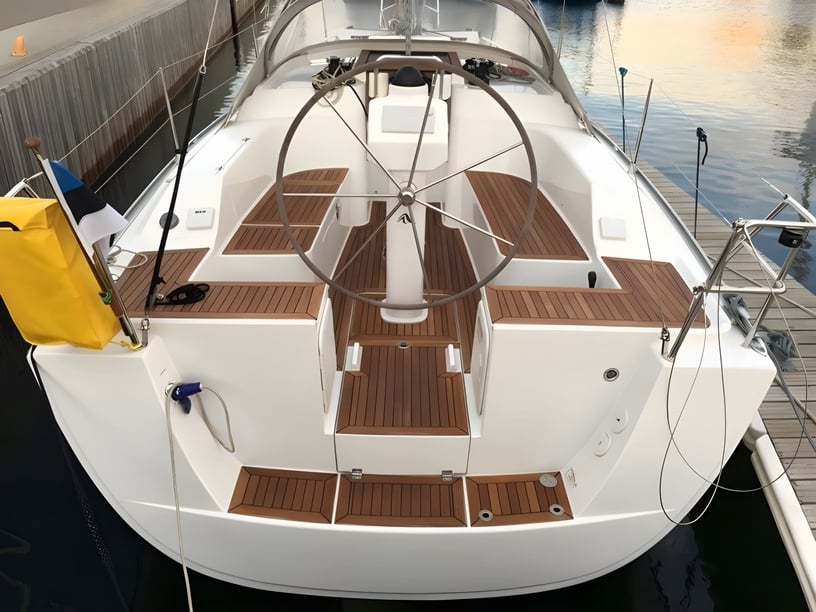
Yacht charter in Estonia
Estonia offers a Baltic yacht charter shaped by three contrasting waters: the Gulf of Finland in the north, the Gulf of Riga in the southwest and the island-filled Väinameri between the mainland and the western archipelago. Its coast extends for nearly 3,800 kilometers when the islands are included, with 2,317 islands ranging from inhabited communities to small, wooded islets.
This geography creates several styles of trip. The western islands lend themselves to harbor-to-harbor cruising, while Tallinn combines an urban waterfront with short passages to Gulf of Finland islands. The outer shores of Saaremaa and Hiiumaa offer a more exposed setting for experienced crews and weather-dependent routes.
Exploring by yacht reveals connections that are less apparent on a land itinerary: medieval Tallinn, fishing settlements, lighthouses, reed-fringed bays and marine national parks can all form part of the same journey. Rather than one continuous resort coast, Estonia is a collection of distinct cruising areas linked by marked channels and open-water passages.
Where to charter and cruise
The western archipelago is Estonia’s most concentrated island-hopping area. Väinameri separates the mainland from Saaremaa, Hiiumaa, Muhu and Vormsi, creating relatively sheltered waters with numerous small harbors. Haapsalu is a useful mainland starting point, while Kärdla and Orjaku give access to Hiiumaa. Kuressaare and Roomassaare serve Saaremaa, whose outer Baltic coast is more exposed than the waters facing Väinameri. This region suits travelers who want a multi-day itinerary built around islands, small settlements and time ashore rather than long urban stays.
Northern Estonia offers a different balance. A charter from Tallinn can combine the capital’s historic center and maritime museums with Naissaar or Prangli. These islands are close enough to support shorter outings, although every passage remains subject to weather and boat suitability. Farther east, Käsmu and Lahemaa National Park bring wooded shores, maritime heritage and quieter coastal scenery into the picture.
Pärnu provides access to Pärnu Bay and the Gulf of Riga. Short bay cruising can be extended toward Kihnu, Manija or, on a longer and more exposed itinerary, Ruhnu. Kihnu is particularly significant for its living maritime culture. Travelers choosing between regions should therefore consider the desired rhythm: Tallinn for city-and-island combinations, Väinameri for sustained island hopping, and Pärnu for Gulf of Riga routes with distinctive small-island communities.
What sailing in Estonia is like
Estonian waters are virtually tideless, but that does not mean sea level and conditions remain constant. Wind is the main driver of currents and water-level changes, and atmospheric conditions can affect harbor approaches and shallow passages. In Väinameri, shoals, rocks, narrow marked channels and limited depths make careful pilotage important even when the distance between stops appears modest.
Shelter varies substantially. The channels and inner waters of the western archipelago generally support more protected harbor-to-harbor cruising, while the outer coasts of Saaremaa and Hiiumaa are exposed to the Baltic. Crossings in the Gulf of Finland or Gulf of Riga also require closer attention to forecasts. Sõrve, Vilsandi and Kihnu are among the locations typically experiencing more wind than protected mainland sites.
Summer winds are generally lighter than those of autumn and winter, and long daylight allows flexible passage planning. Local onshore breezes commonly develop during spring and summer days. For charter travelers, the practical distinction is less about covering large distances and more about matching the route and yacht to shallow water, exposed crossings and the availability of suitable harbors.
The best time for an Estonia yacht charter
The principal recreational boating season runs from May through September, with June, July and August offering the most consistently comfortable conditions. These three months combine comparatively lighter summer winds with long daylight, making them the most suitable period for island passages and multi-stop itineraries. They also fall within the main operating season for guest harbors.
May is a shoulder-season option, often with usable boating weather but notably cold sea temperatures. Cold-water equipment and conservative route choices remain important even on sunny days. September can still support a yacht charter, although daylight is shorter, winds become more variable and some seasonal harbor services begin to close.
From late autumn through early spring, stronger winds, cold conditions, reduced harbor services and possible sea ice substantially limit normal recreational cruising. Conditions also vary by route: sheltered Väinameri waters and an exposed passage off Saaremaa should not be treated as equivalent, regardless of month.
Charter routes to consider
From Tallinn, Naissaar is a natural short-passage option, combining an island harbor with beaches, forest and former military sites. Prangli can work as a day or overnight destination, adding traditional villages and coastal dining to a Gulf of Finland trip.
In western Estonia, Haapsalu and Hiiumaa can be connected by a weather-dependent Väinameri crossing. From there, a broader itinerary may continue among Hiiumaa, Muhu, Vormsi and Saaremaa, using the small-harbor network rather than committing to one long passage. The exact sequence should reflect yacht draft, forecast conditions and seasonal harbor operations.
From Pärnu, shorter outings within Pärnu Bay provide an alternative to a longer Gulf of Riga cruise. Kihnu and Manija can be incorporated into multi-stop trips, while Ruhnu requires more time and an appropriate weather window. These routes are best understood as flexible cruising patterns, not fixed schedules.
Coastal culture, nature and time ashore
An Estonian yacht charter can alternate quiet cruising with substantial time ashore. In Tallinn, the historic Old Town reflects the city’s role as a Hanseatic trading center, while the Seaplane Harbour explores the country’s maritime history. Farther west, Kuressaare Episcopal Castle and Kõpu Lighthouse introduce different chapters of island life and Baltic navigation.
The coast is also rich in protected habitats. Vilsandi and Matsalu national parks support seabirds, grey seals and varied coastal landscapes. Reed-edged bays, sandy beaches, wooded islands and limestone shores give anchorages and harbor approaches distinct characters, although shallow water means stopping places must be selected with care.
Kihnu offers one of the country’s clearest examples of living maritime culture. Its traditional songs, clothing, handicrafts and customs form a UNESCO-recognized cultural space. Käsmu, known as the Captains’ Village, preserves another strand of coastal history through its seafaring and maritime-school heritage.
Meals ashore may feature salted or smoked Baltic fish, dark rye bread, berries and, on the western islands, juniper. These cultural and culinary stops help shape the pace of a charter: passages can be balanced with beaches, nature watching, lighthouse visits and evenings in small harbor communities.
Reaching Estonia’s departure points
Tallinn is the principal international gateway, served by its airport and passenger-ferry connections. Noblessner Marina and Seaplane Harbour Marina are among the city’s relevant departure points, allowing travelers to combine arrival, sightseeing and embarkation without first crossing the country.
For the western archipelago, Haapsalu’s Grand Holm Marina provides mainland access to Väinameri. Kuressaare Yacht Harbour and Roomassaare Harbour serve Saaremaa, while Kärdla Marina is a starting point on Hiiumaa. Domestic flights connect Tallinn with Kuressaare and Kärdla, and vehicle and passenger ferries link the mainland with the larger islands.
Pärnu Yacht Club Marina is the main departure point for Pärnu Bay and routes toward the Gulf of Riga islands. Regional and seasonal vessels also connect islands including Vormsi, Kihnu, Ruhnu and Naissaar, which can be useful when coordinating guests or combining a charter with land travel.
Planning the right charter
When comparing yacht charter or boat rental in Estonia, begin with the cruising area rather than assuming one boat or itinerary will suit the entire coast. A yacht intended for Väinameri should be appropriate for shallow, channel-based navigation, while a route involving the outer shores of Saaremaa, Hiiumaa or a longer Gulf crossing demands greater attention to seaworthiness, forecast conditions and crew experience. Travelers specifically considering a sailing yacht can explore sailboat charter in Estonia.
Confirm the proposed route, yacht draft and likely harbor stops before departure. Guest-harbor seasons commonly run from May until September or October, but individual services and opening periods vary. Harbor masters may request advance contact by VHF or telephone, so arrival procedures should be checked for each planned stop.
Current official charts, Sailing Directions, Notices to Mariners and navigational warnings are essential because rocks, shoals and narrow marked channels are recurring features. Planning should also allow for wind-driven changes in water level rather than relying on tidal predictions. Finally, pack and equip for Baltic water temperatures: early-summer sunshine does not remove the need for suitable cold-water safety equipment.