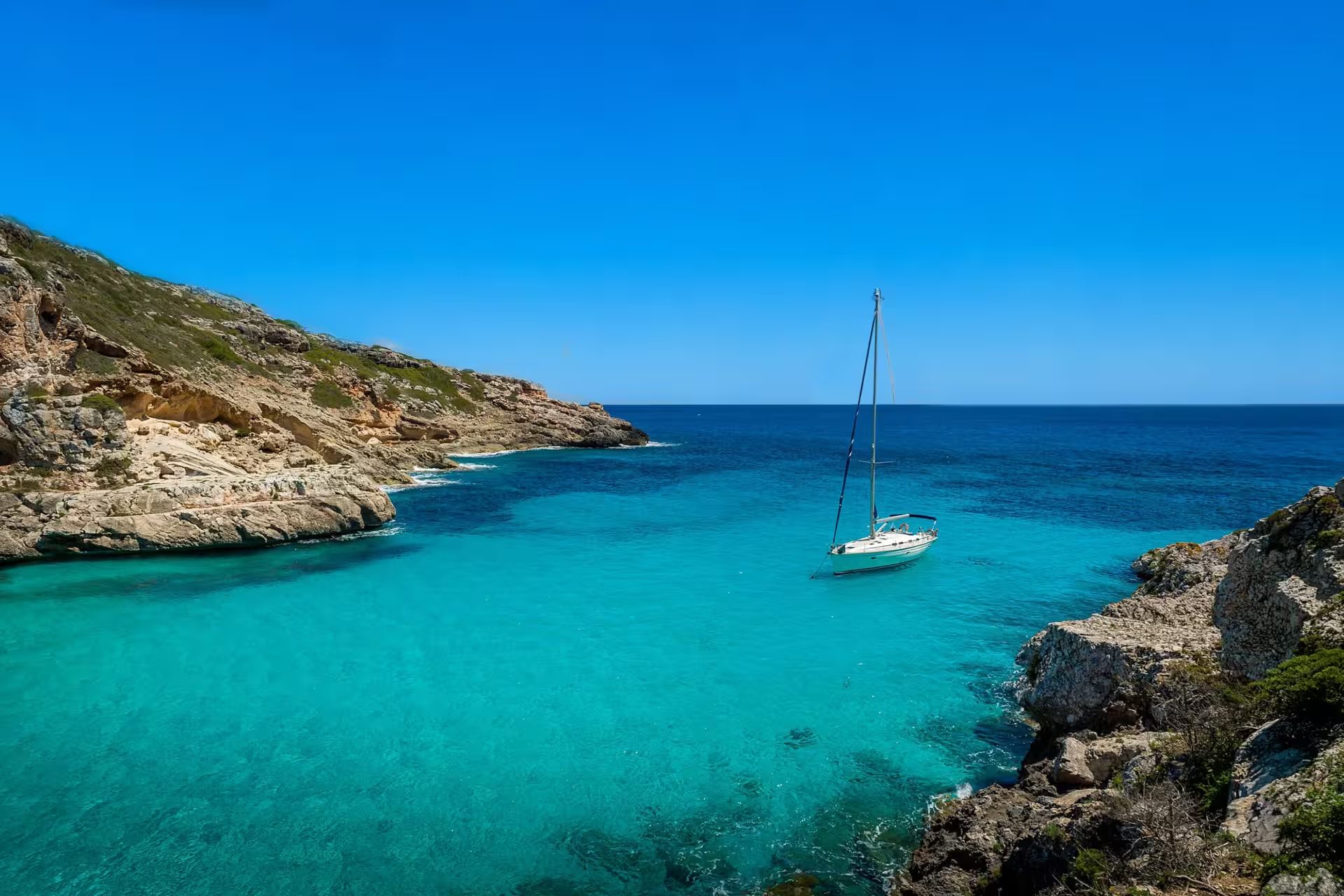
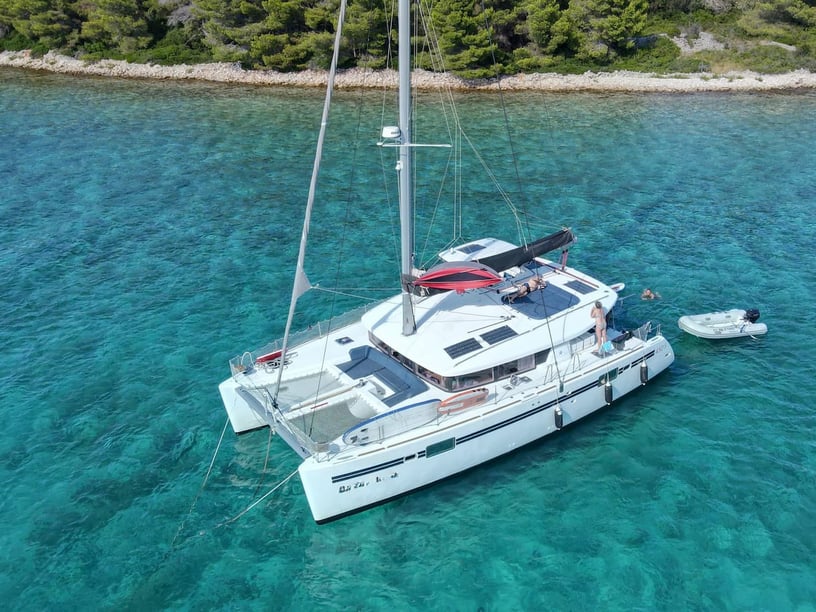
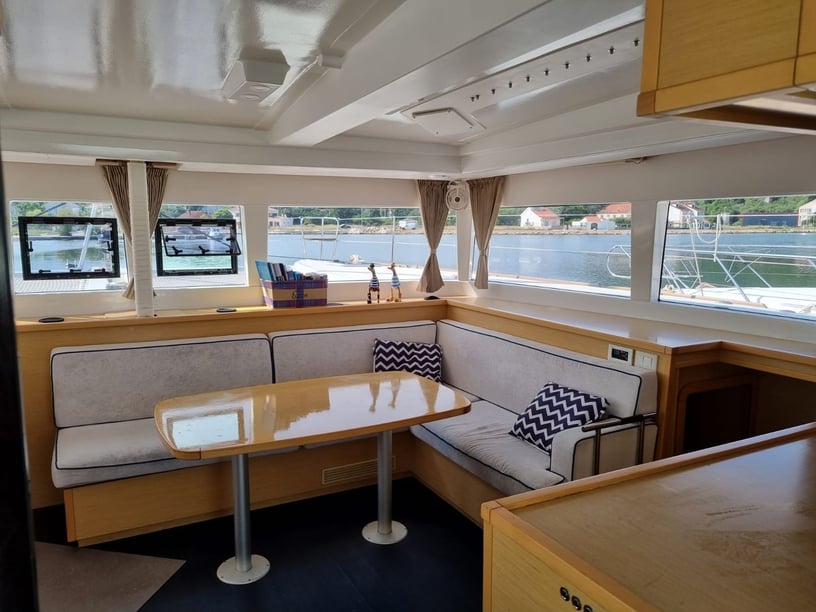
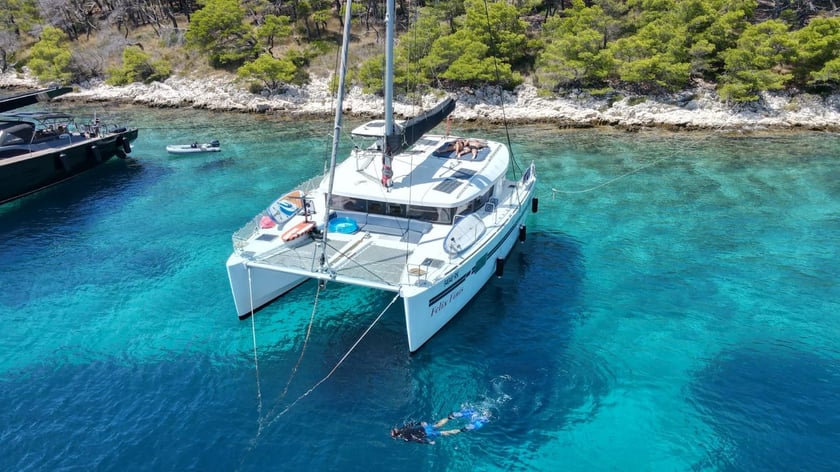
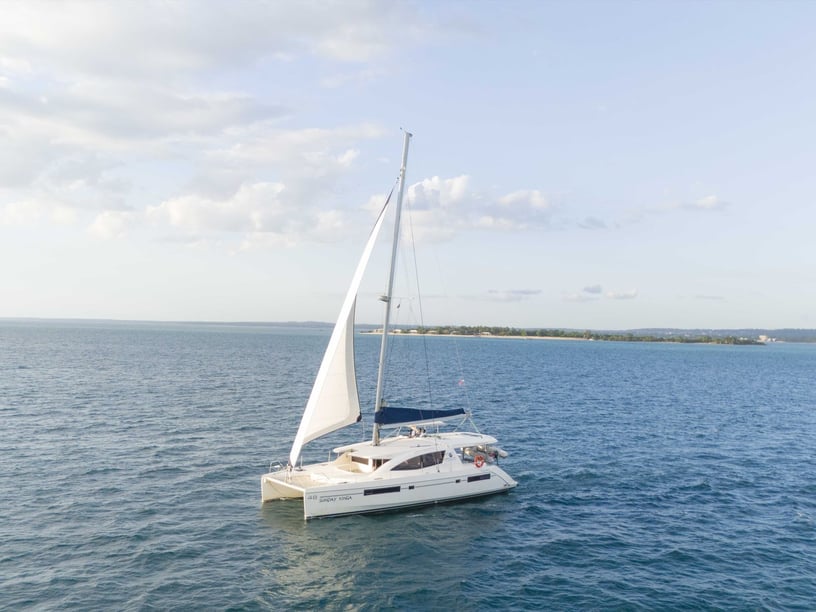
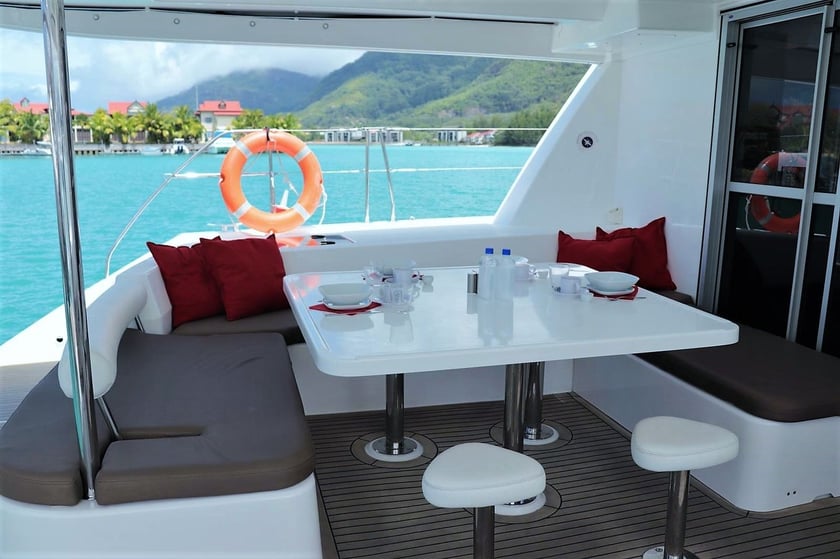
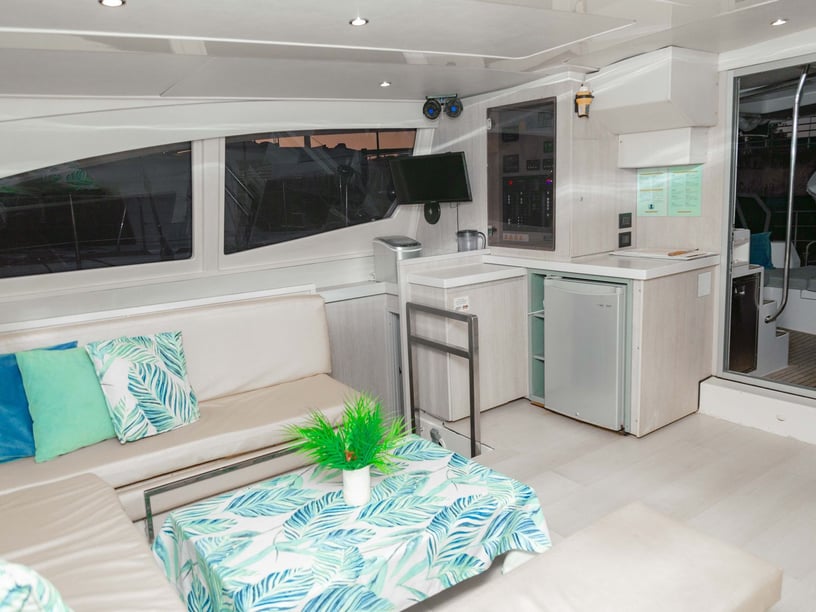
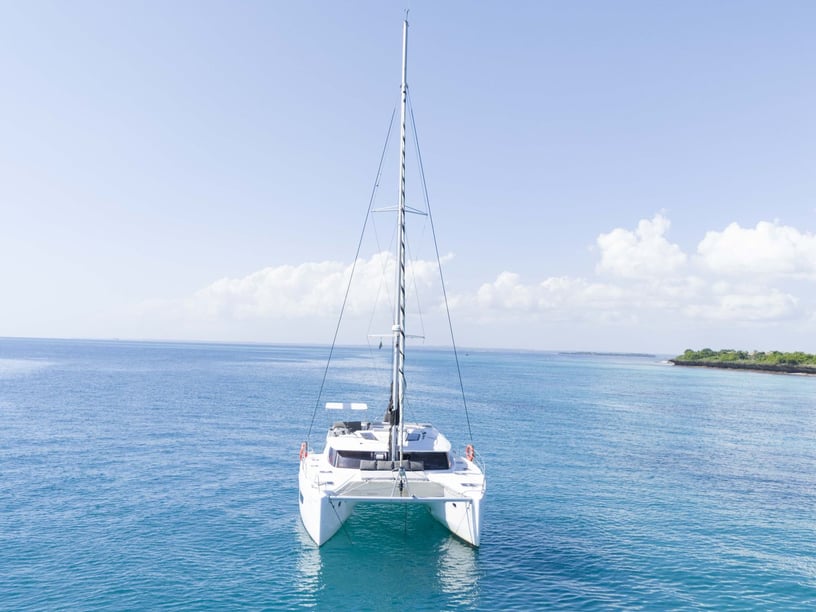
Yacht charter in the Zanzibar Archipelago
A yacht charter in Zanzibar opens up an Indian Ocean archipelago rather than a single coastal resort. The two principal islands are Unguja—often informally called Zanzibar—and quieter, greener Pemba, surrounded by smaller coral islands, reefs, tidal lagoons and sandbanks. Unguja has the main tourism, port and marina infrastructure, while Pemba offers a more remote cruising environment with mangrove-fringed inlets and deeper channels.
Trips can range from a few hours around Stone Town to multi-day circuits of Unguja or an open-water passage to Pemba. This variety makes Zanzibar suitable both for travelers who want boating as one part of a land-based holiday and those planning a longer journey. For a wider view of the regional marketplace, explore yacht charters in Tanzania.
Islands, reefs and coastal areas to explore
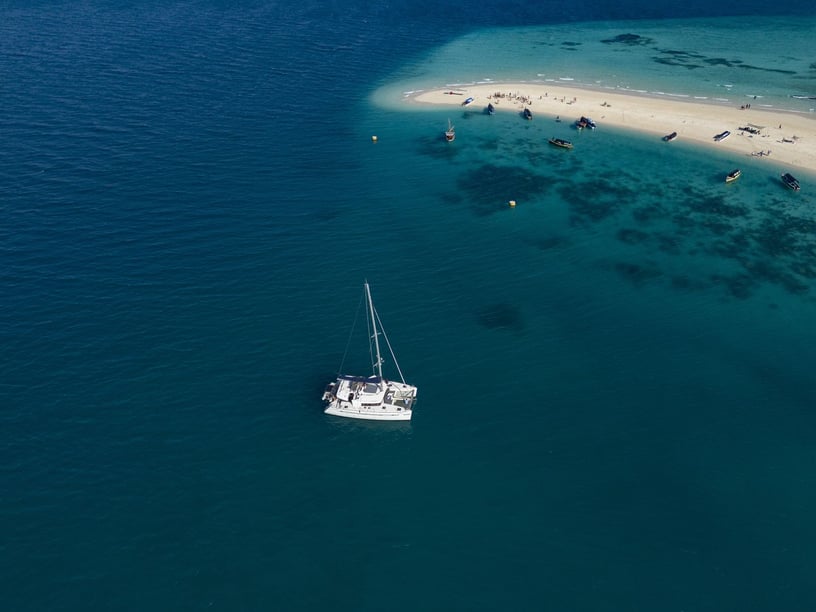
Stone Town is a natural starting point for exploring western Unguja. Nearby Changuu and Bawe islands, together with the Nakupenda sandbank, can be combined into a short circuit with time for swimming, snorkeling and a visit ashore. Farther south, Fumba provides access to Menai Bay, where sandbanks, mangroves, coral areas and Kwale Island shape the day on the water.
The north and northeast offer a different cruising pattern. Nungwi and Matemwe connect naturally with Mnemba’s reef system, a noted area for snorkeling and diving. Around southern Unguja, Kizimkazi can serve as another point of departure. Pemba, including Misali Island and the indented western coast, is better suited to longer itineraries prepared for greater remoteness and a more exposed channel crossing.
What sailing around Zanzibar is like
Zanzibar’s cruising geography is shaped by reefs, shallow passes and substantial tidal changes. Attractive anchorages and lagoons may be sheltered, but reaching them can depend on water depth, daylight and local knowledge. Even short trips are commonly timed around the tide because reef flats, beaches and landing points can change considerably as the water rises and falls.
Conditions also vary with the monsoon. The northeast Kaskazi generally runs from November or December through March and commonly brings lighter seas along Unguja’s western side. The southeast Kusi dominates roughly from April into October or November; it can provide more purposeful sailing but produces rougher conditions in exposed channels and along windward shores, particularly from June through October.
The Pemba Channel is substantially more exposed than coastal waters around Unguja. Longer yacht charters therefore require careful assessment of wind, current and sea state, as well as experienced local pilotage through reef approaches.
Best time for a Zanzibar yacht charter
June through October is the most consistently dry period for recreational boating and is among the best times to charter. However, the southeast monsoon can be brisk, so exposed passages may feel choppy even when the weather is dry. These months can suit travelers who appreciate active sailing but still require route planning around windward coasts and channels.
January and February form a second particularly suitable period, with warm weather and generally lighter winds. March marks a transition toward the long rains, while April and May usually bring reduced boating activity and service availability. November and early December are more variable because of the short rains and the change between monsoon regimes. Whatever the month, current local conditions matter because shelter can shift with wind direction.
Charter routes from short outings to island passages
For a half- or full-day trip, the Stone Town–Changuu–Bawe–Nakupenda circuit combines a historic island stop with swimming and snorkeling close to Zanzibar City. From Fumba, routes through Menai Bay commonly connect sandbanks, mangroves and Kwale Island.
A multi-day charter can continue from Stone Town toward Menai Bay, then north by way of Tumbatu and Nungwi before reaching Mnemba. The exact sequence should remain flexible because tides, monsoon direction and anchoring conditions affect each leg. An Unguja–Pemba–Misali itinerary is a more demanding alternative involving an exposed channel passage. It is generally appropriate for experienced sailors or professionally skippered trips rather than a casual extension to an Unguja holiday.
Life on the water and experiences ashore
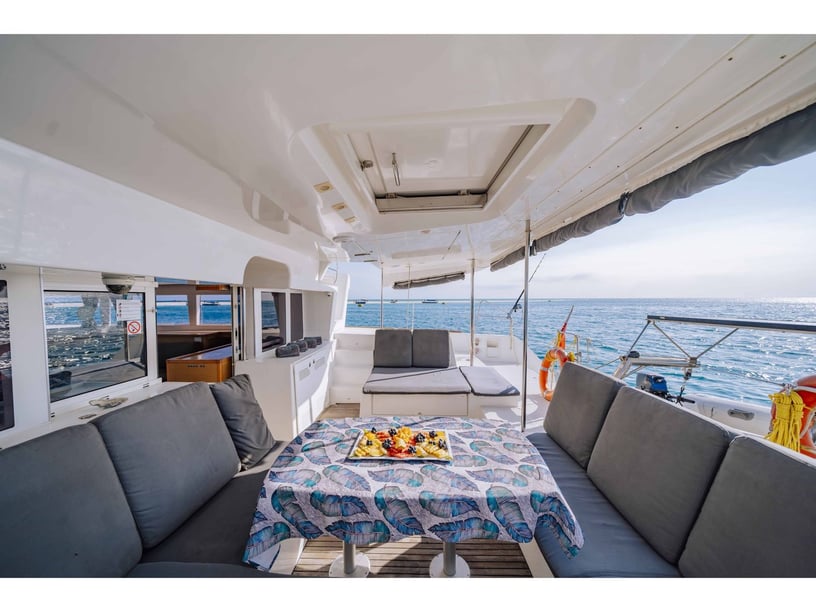
A Zanzibar charter can divide the day between reef cruising, snorkeling, diving, sandbank stops and visits ashore. Protected marine areas around Menai Bay, Mnemba, Chumbe and Pemba contribute to the archipelago’s appeal, although anchoring, landing and water activities may be regulated.
The maritime experience is closely connected to Swahili culture. Traditional wooden dhows remain in use, and boats are still built by hand on the islands. In Stone Town, the waterfront leads directly into a UNESCO-listed historic quarter whose coral-stone buildings and carved doors reflect African, Arab, Indian and European influences. Time ashore can also introduce Zanzibari food based on seafood, coconut and locally grown spices. These cultural stops distinguish a yacht journey from a holiday focused only on the beaches.
Getting there, marinas and departure points
Abeid Amani Karume International Airport is the main air gateway to Unguja, which is also reached by passenger ferry from mainland Tanzania. Road transfers connect Stone Town with Fumba, Nungwi, Matemwe and Kizimkazi. Pemba has its own airport and inter-island marine links.
Around Stone Town, Malindi Port and Hotel Verde Marina are relevant departure points, and full-service yacht infrastructure is concentrated in this area. Trips may also begin from smaller coastal locations such as Nungwi, Fumba, Matemwe or Kizimkazi, depending on the route. On Pemba, Mkoani and Wete are important ports. Away from Stone Town, travelers should expect greater reliance on anchorages, local jetties and the yacht’s own resources rather than continuous marina services.
Planning the right charter
Begin by deciding whether the trip is a short excursion around Unguja, a multi-day coastal circuit or a passage to Pemba. This choice has greater practical importance than distance alone: reef navigation, tidal access, anchorage exposure and the Pemba Channel all change the level of preparation required. When assessing boat rental in Zanzibar, ask how local pilotage is handled and whether the proposed schedule accounts for tides and daylight at shallow approaches.
Confirm current port-clearance, customs and inter-port documentation requirements before departure, particularly for visiting private yachts or routes between islands. Marine conservation areas may also require permits or conservation payments and can regulate anchoring and landing.
For longer trips, discuss the vessel’s self-sufficiency and the availability of suitable overnight anchorages outside Stone Town. A route that keeps to sheltered waters around Unguja is materially different from one that crosses to Pemba, so the experience of the skipper or crew should match the intended itinerary and seasonal conditions.