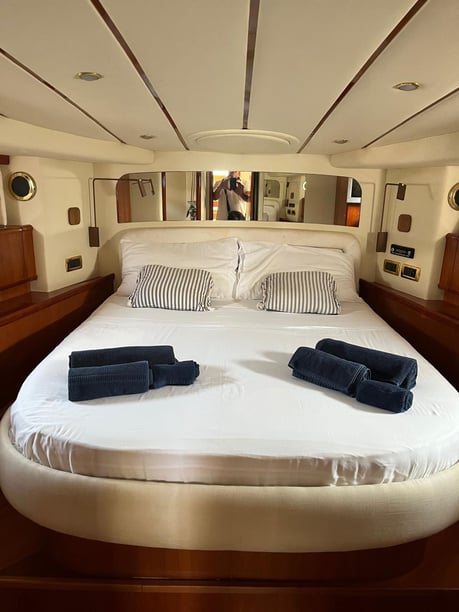
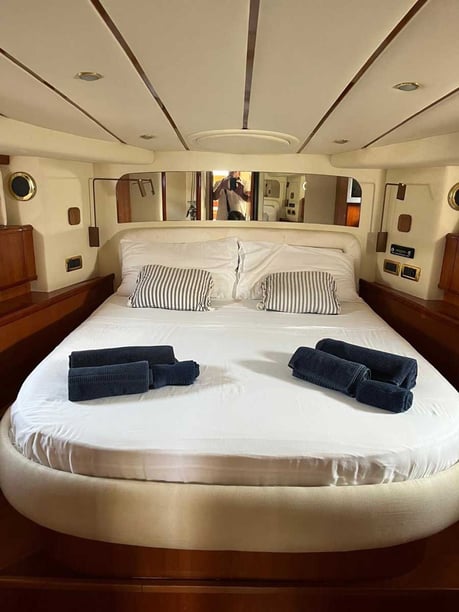
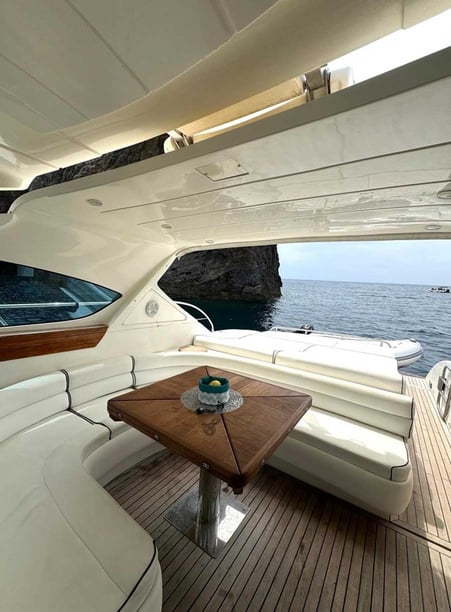
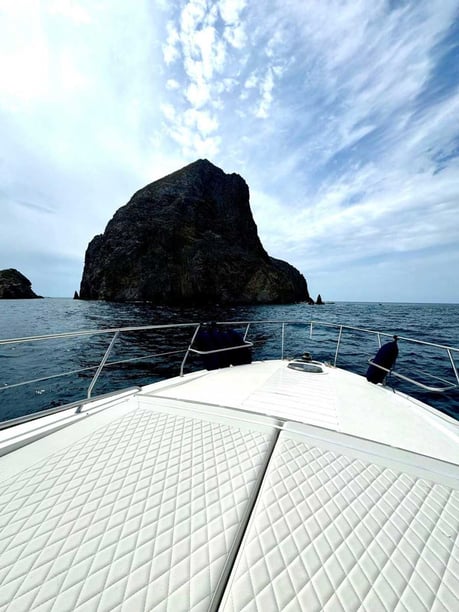
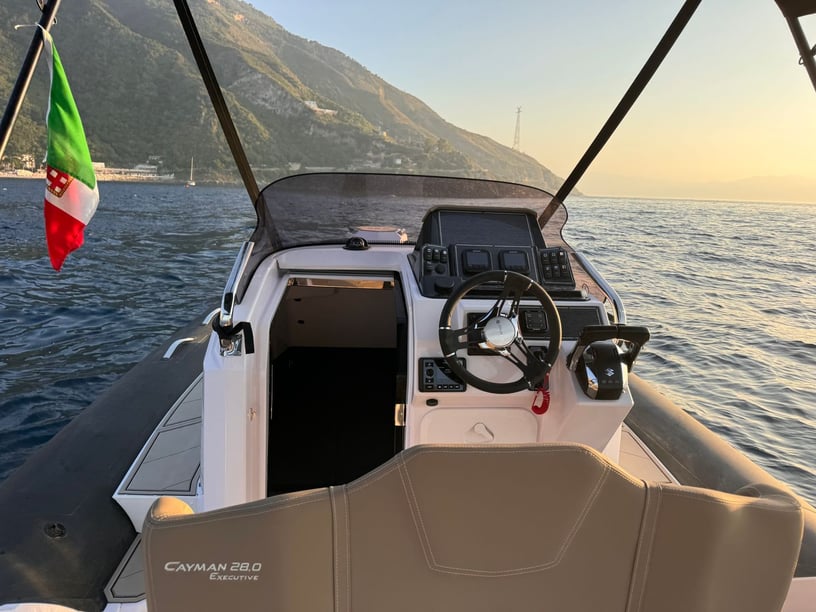
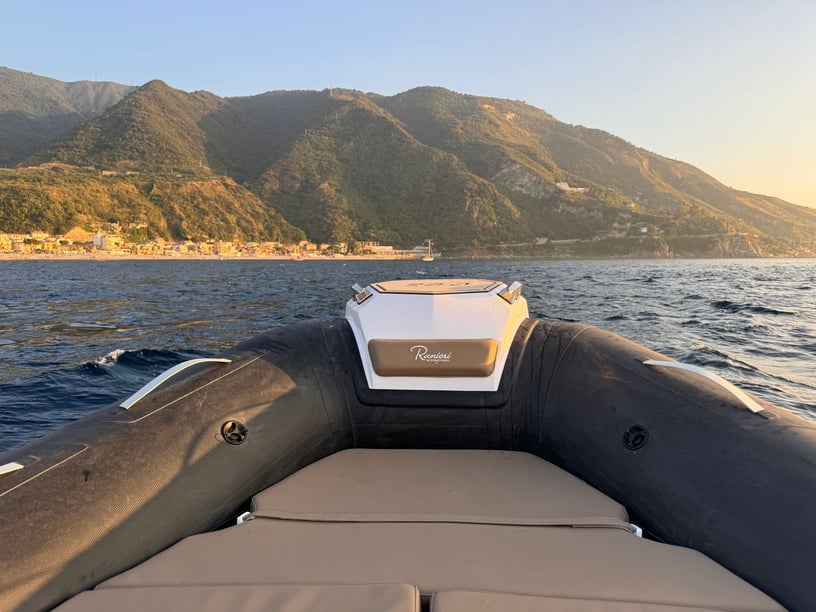
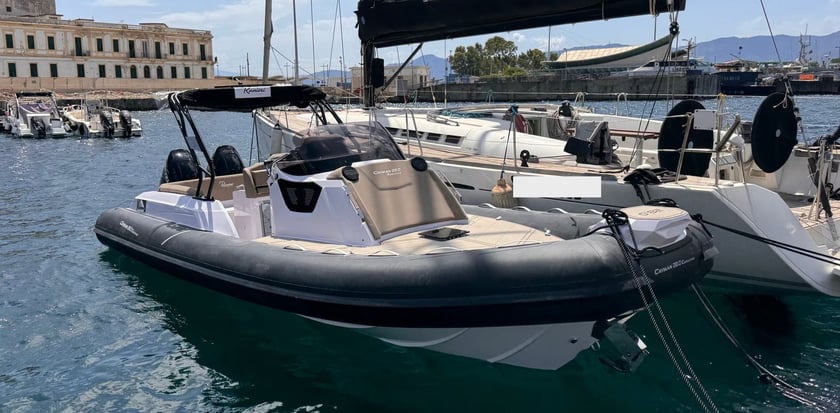
Yacht charter around Tropea
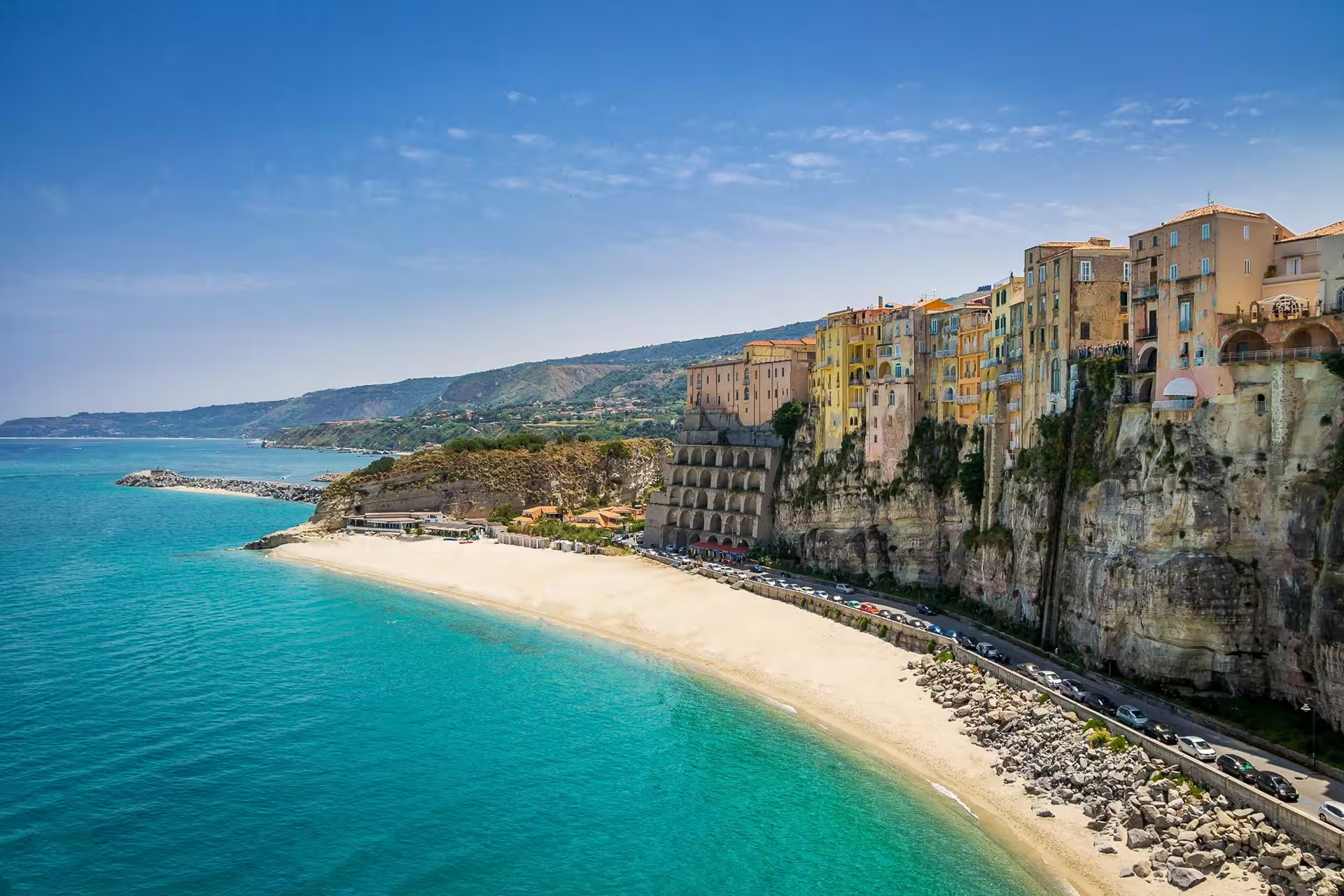
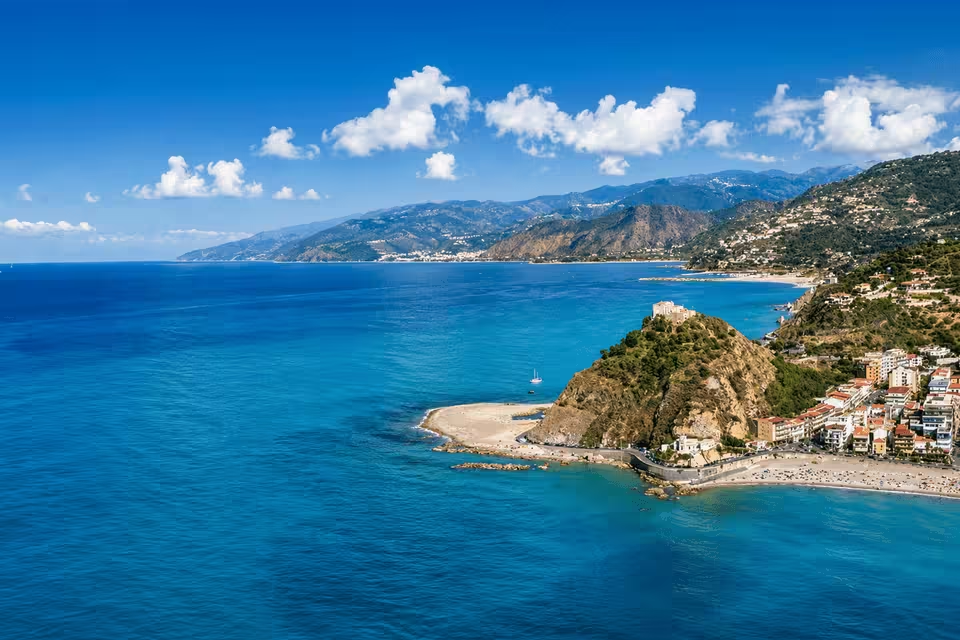
A yacht charter in Tropea brings together short coastal cruising, swimming stops and time ashore in one of Calabria’s most distinctive seaside towns. Tropea’s historic center occupies a rock terrace roughly 60 meters above the Tyrrhenian Sea, while Porto di Tropea sits below the cliffs near the beaches and lower Marina quarter.
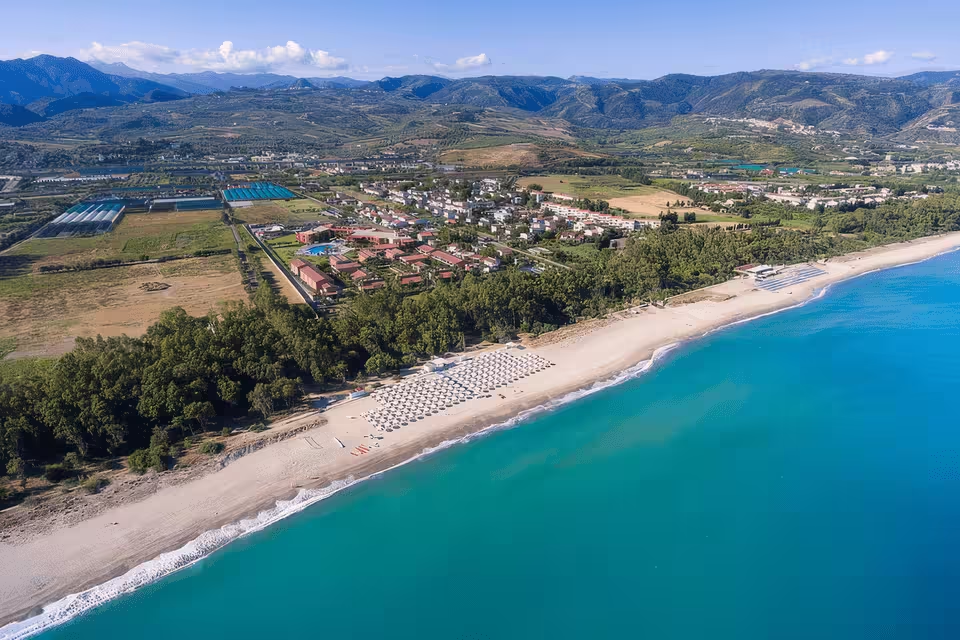
The town lies on the Costa degli Dei, north of Capo Vaticano, where sandy beaches give way to cliffs, caves, rocky outcrops and small inlets. This varied shoreline makes Tropea particularly relevant for relaxed coastal trips, while its position also allows more ambitious offshore passages toward Stromboli and the Aeolian Islands. Travelers comparing the area with other yacht charter destinations across Italy should consider Tropea for its combination of coastal access, historic character and contrasting short- and long-range cruising possibilities.
Coastal places to explore
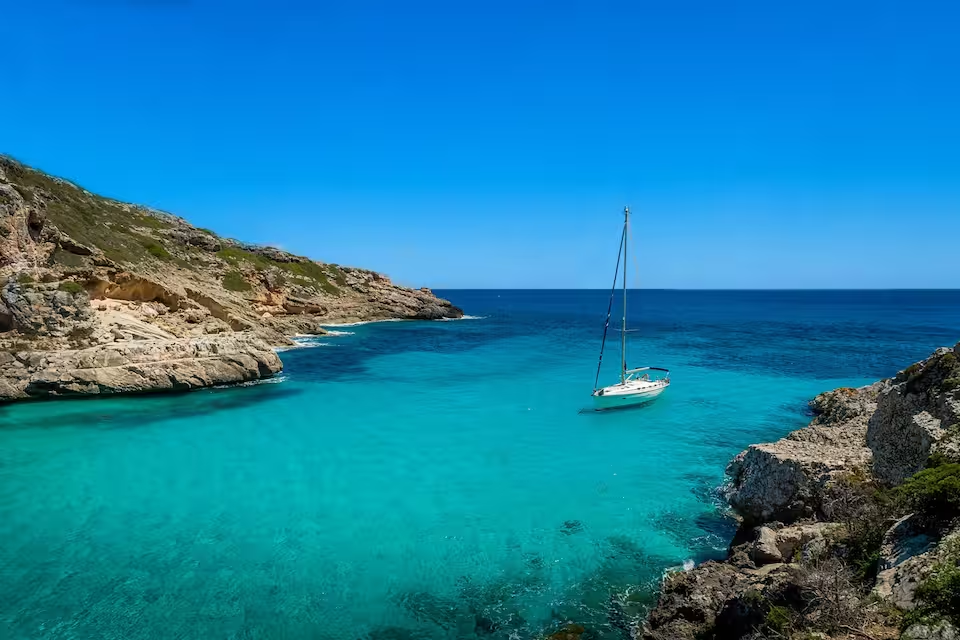
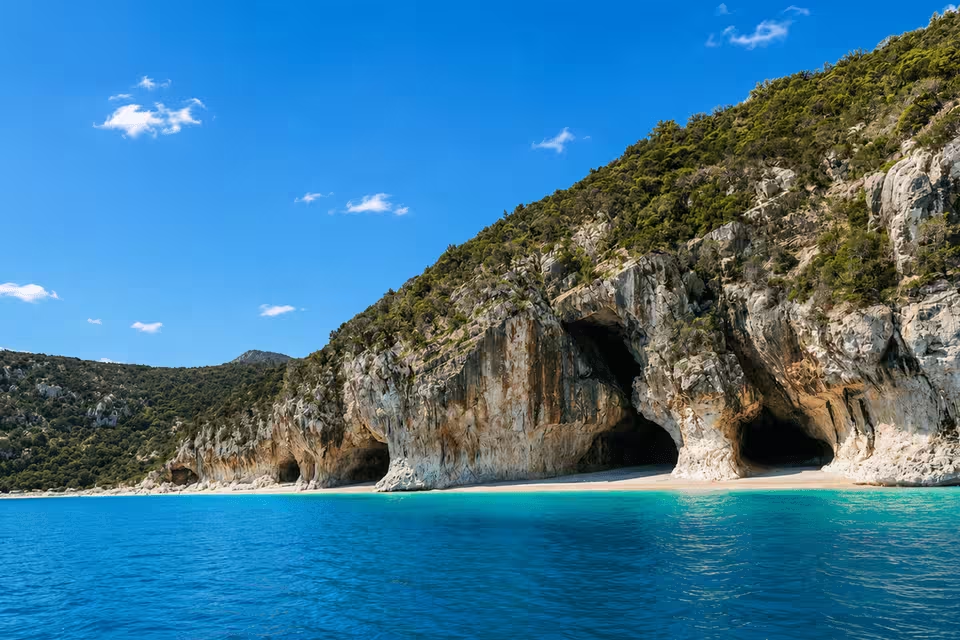
Capo Vaticano is the principal coastal objective southwest of Tropea. The route passes the Riaci and Formicoli areas before reaching the waters around Grotticelle and Praia i Focu. Along this stretch, caves, rocky sections and coves create opportunities for swimming and snorkeling, including places that are difficult or impossible to approach from land.
North of Tropea, Parghelia, Zambrone and Briatico can be connected on a coastal passage toward Vibo Marina, the next major serviced port. This direction suits travelers who prefer a succession of coastal settlements and beach stops rather than an open-water crossing.
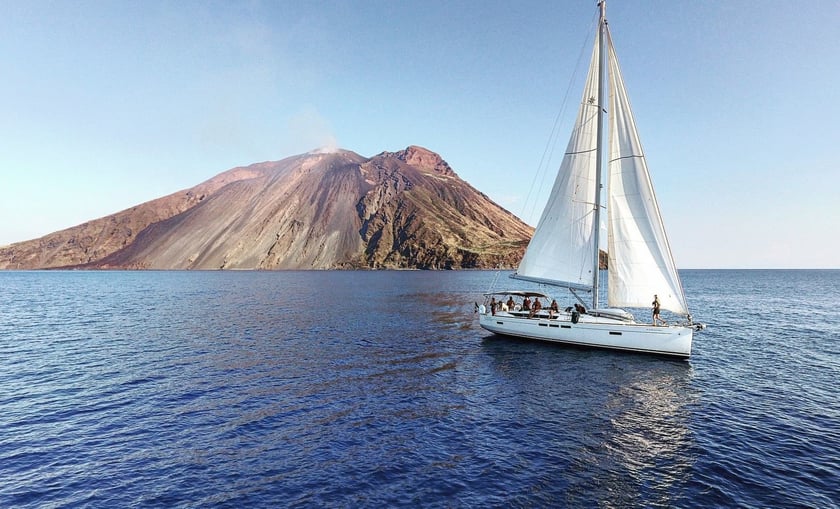
Farther offshore, Stromboli is the most immediately recognizable Aeolian objective. Lipari and Vulcano can also form part of a longer itinerary, but these islands require a different level of planning from the sheltered rhythm of local coastal exploration.
What sailing from Tropea is like
Cruising around Tropea is generally moderate in difficulty. Local trips often consist of manageable coastal legs broken up by anchoring, swimming or snorkeling, but the coastline is not uniformly sheltered. Tropea and Capo Vaticano face west, so westerly wind and sea can affect exposed stretches and open coves.
Many attractive stopping places along the coast are best treated as fair-weather anchorages rather than dependable overnight shelter. Close inshore navigation also requires care around rocks and shoals. The settled conditions typical of late spring and summer often support a relaxed coastal itinerary, but the forecast should still determine where and how long a yacht stops.
The passage toward the Aeolian Islands is more demanding because it involves open water. It should not be approached as an extension of a casual bay-hopping day: weather, vessel suitability, crew experience and passage time all become more important.
Best time for a Tropea yacht charter
The main recreational boating season runs approximately from May through October. June through September usually provides the most dependable combination of warmth, sunshine and lower rainfall, with average winds predominantly from the west. June and September are identified as particularly suitable months for yacht charter around Tropea.
July and August are the principal peak, bringing the warmest water and high boating activity. Travelers who value swimming conditions and a lively summer atmosphere may favor this period, while those seeking a less peak-focused trip can consider May or October. These shoulder-season months can still work for coastal cruising, although conditions are less consistently summery.
From November through April, the area is cooler, wetter and windier, and leisure-boating activity is substantially reduced. Offshore plans and seasonal services toward the Aeolian Islands remain weather-dependent at any time and should be confirmed locally.
Route ideas from Tropea
The most accessible route follows the coast from Tropea to Capo Vaticano. It can combine Riaci, Formicoli, coastal caves and the waters around Grotticelle or Praia i Focu, with the day’s progress shaped by swimming and snorkeling stops rather than distance alone.
A northbound passage toward Vibo Marina links Parghelia, Zambrone and Briatico. It offers a useful alternative when travelers want a linear coastal journey with another serviced harbor at the end.
Stromboli and the Aeolian Islands create the main offshore option. Stromboli may be visited on a full-day excursion, while Lipari and Vulcano are better incorporated as stages in a longer cruise. Because this route crosses open water, itinerary flexibility is essential if wind or sea conditions change.
Life on the water and ashore
A yacht trip around Tropea can alternate naturally between coastal cruising and time in the water. The shoreline toward Capo Vaticano is well suited to swimming and snorkeling, and the Costa degli Dei marine park protects Posidonia meadows and Mediterranean marine fauna. Anchoring must be planned with care to avoid damaging seagrass and to comply with current local rules.
Tropea also rewards going ashore. The historic center contains Norman, Gothic and Baroque elements, as well as seventeenth- and eighteenth-century noble palaces. Below the town, the Sanctuary of Santa Maria dell’Isola occupies a rocky outcrop that was once separated from the mainland.
Local food adds another dimension to the charter experience. Seafood features prominently, alongside dishes using Cipolla Rossa di Tropea Calabria PGI, the area’s protected sweet red onion. From the west-facing coast, evening views can include the silhouettes of Stromboli and the Aeolian Islands.
Reaching the port and starting a trip
Lamezia Terme International Airport is the principal air gateway for Tropea. Travelers can continue by road or connect through Lamezia Terme Centrale railway station; Tropea has its own station on the southern Tyrrhenian line, with regional services toward Lamezia Terme and Reggio Calabria. Reggio Calabria Airport is another possible gateway.
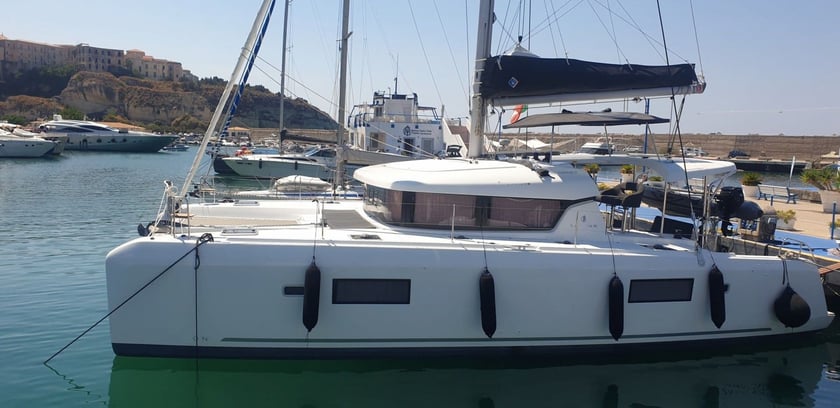
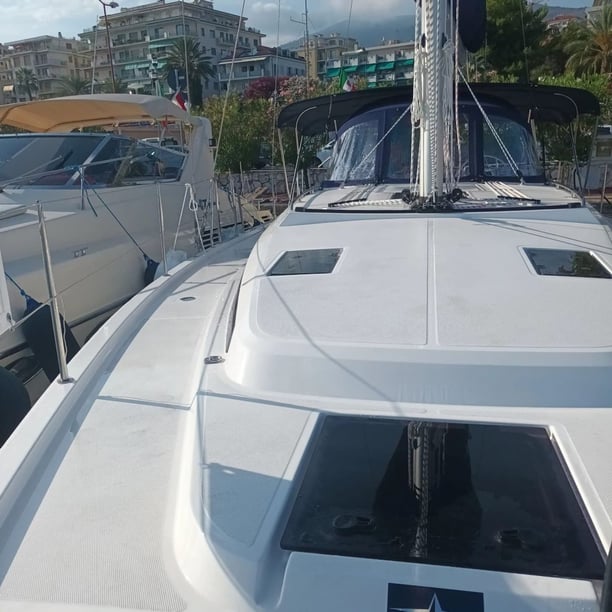
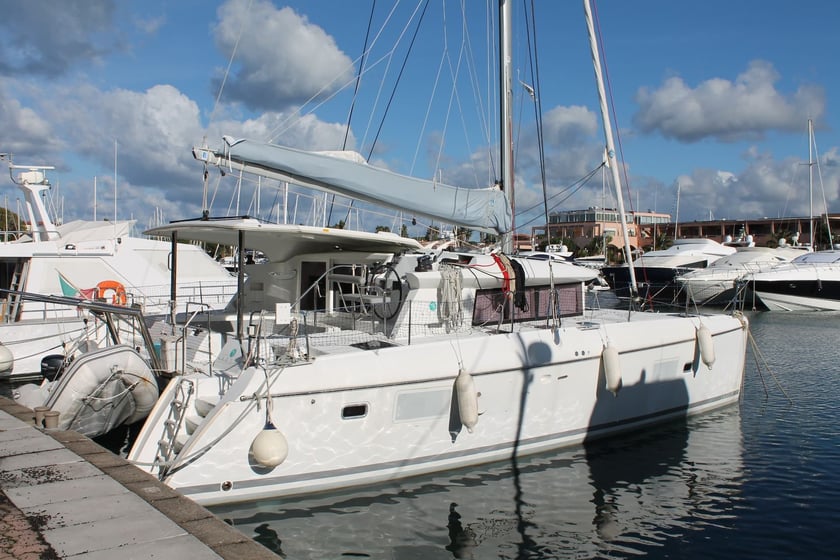
Porto di Tropea is the main serviced harbor and a departure point for trips along the Costa degli Dei and toward the Aeolian Islands. Tropea therefore functions both as a place to explore from the water and as a practical starting point for coastal or offshore journeys.
The historic center stands high above the marina and beaches. Some pedestrian approaches involve steep streets or stairways, so luggage transfers and mobility requirements are worth considering before arrival.
Planning the right charter
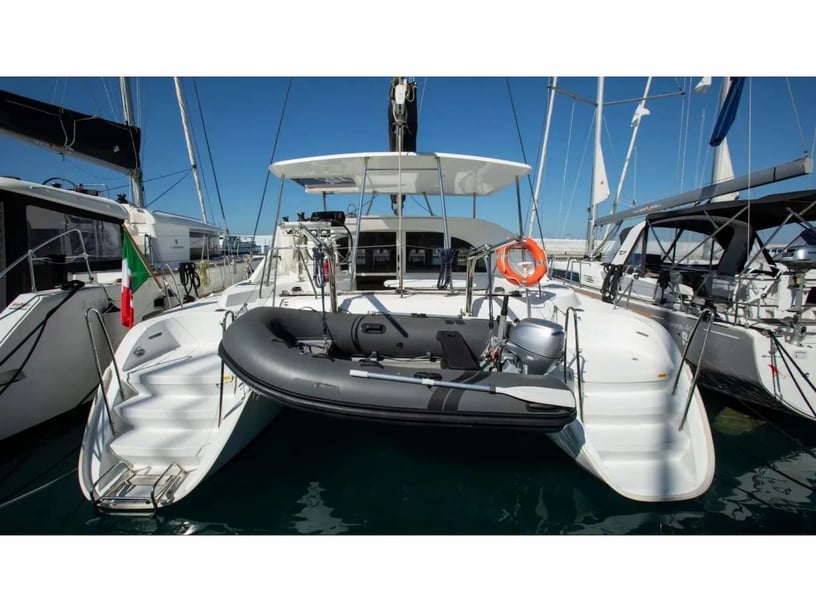
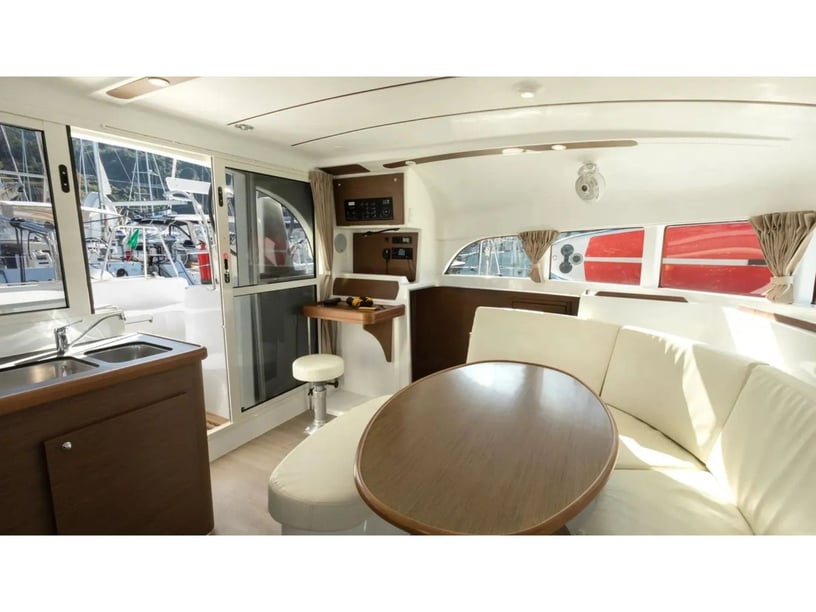
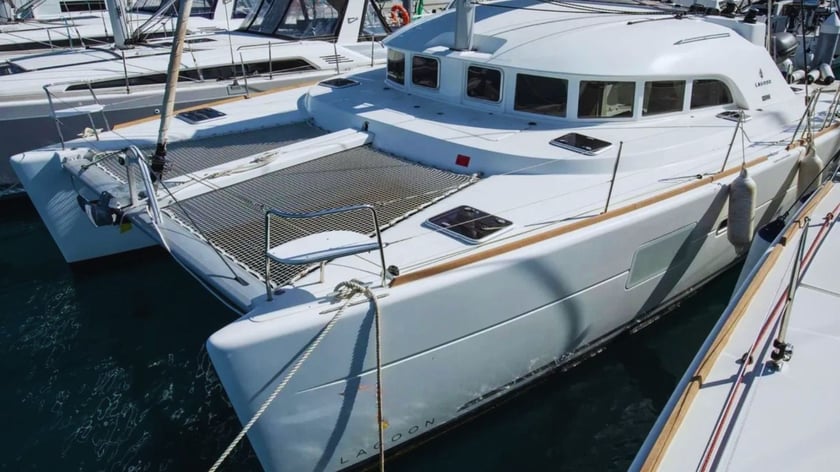
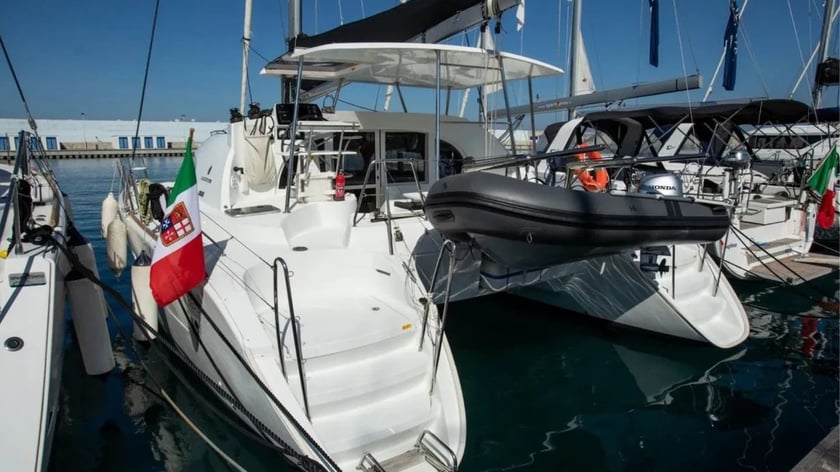
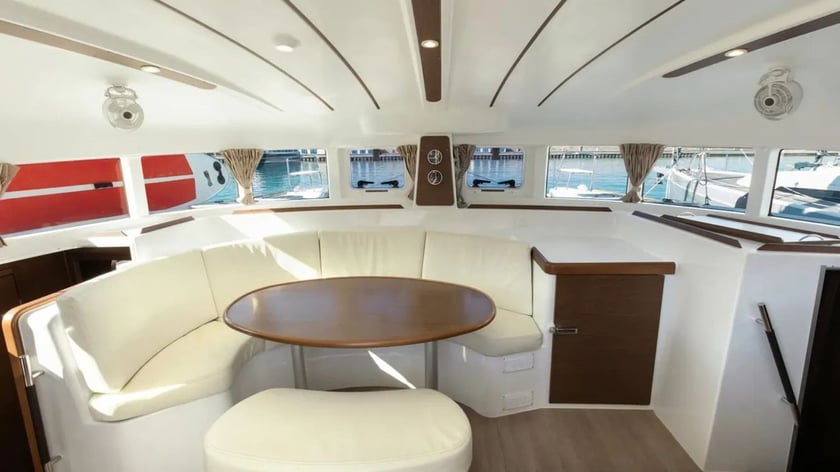
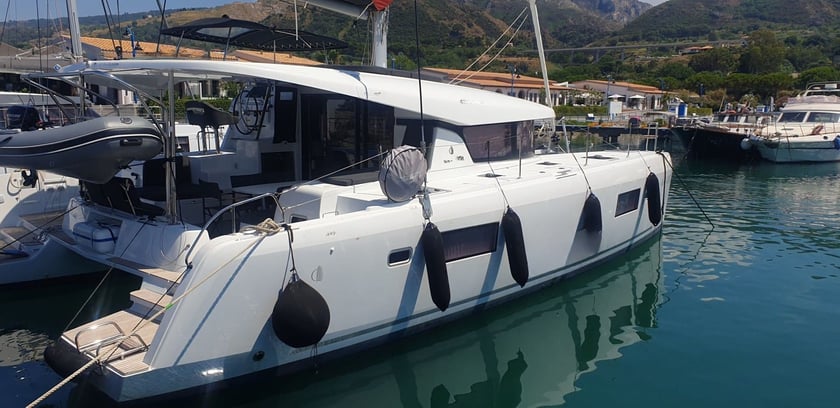
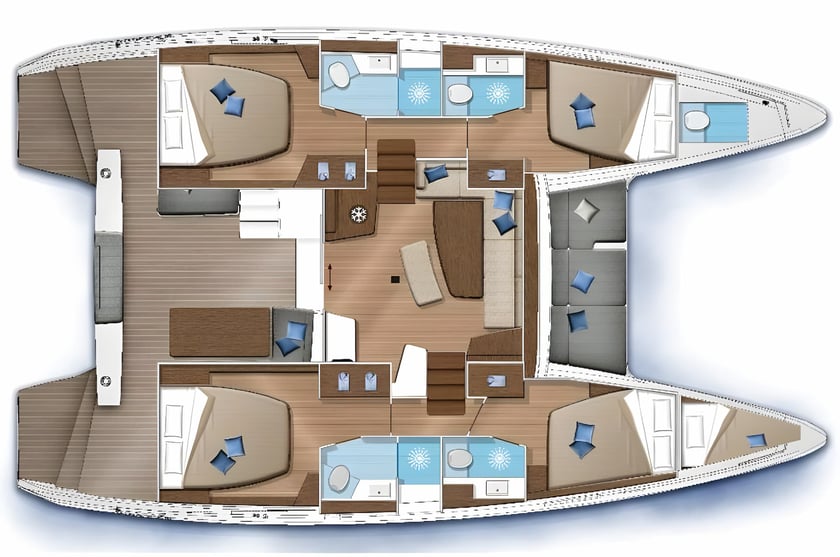
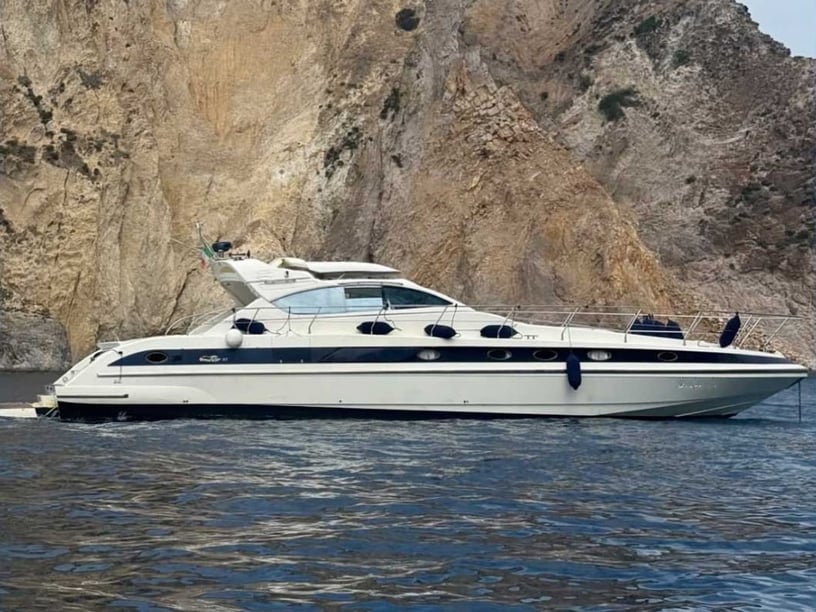
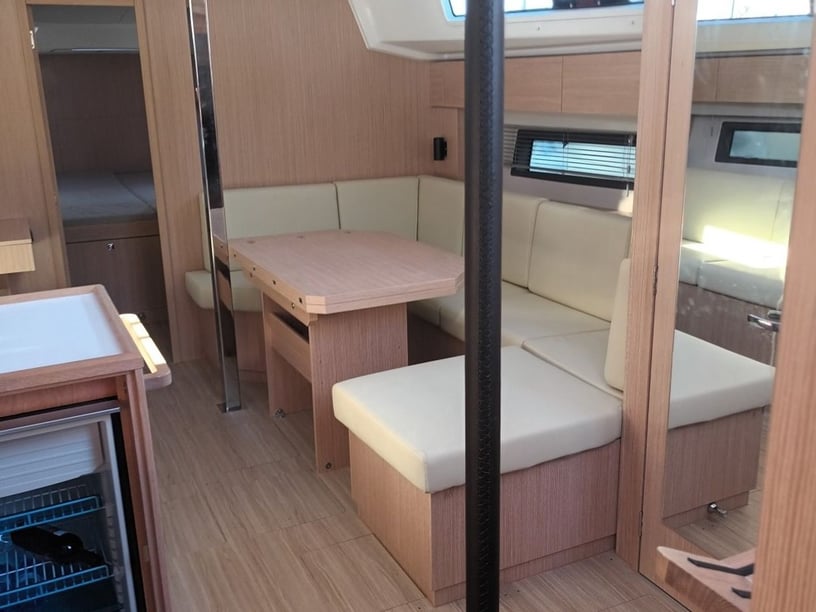
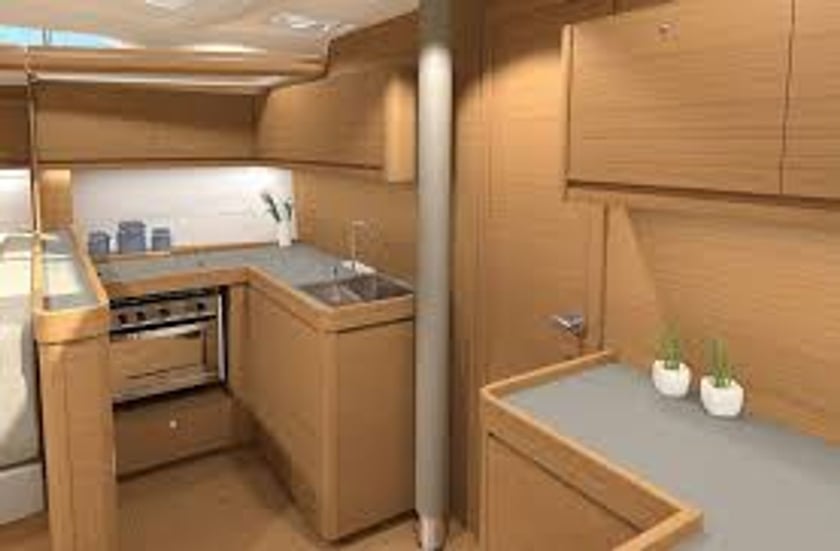
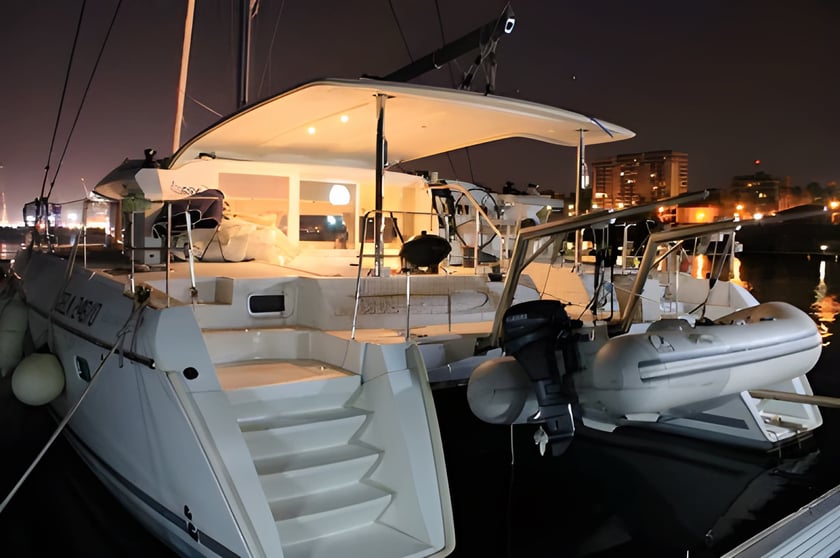
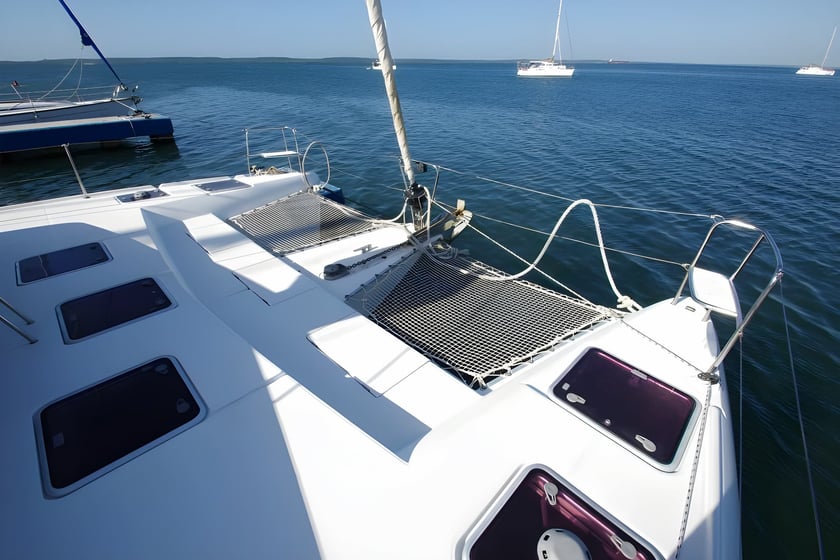
For boat rental in Tropea, the first decision should be the intended cruising range. A short trip toward Capo Vaticano emphasizes coves, beaches and time in the water, whereas an Aeolian itinerary requires more passage time, suitable weather and a yacht prepared for open-water navigation. A northbound route toward Vibo Marina provides a middle ground, combining coastal exploration with access to another serviced port.
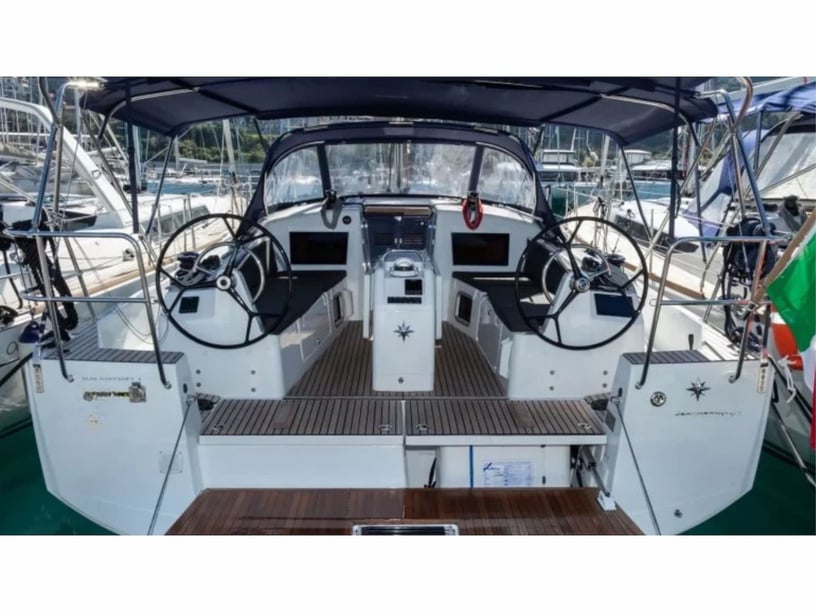
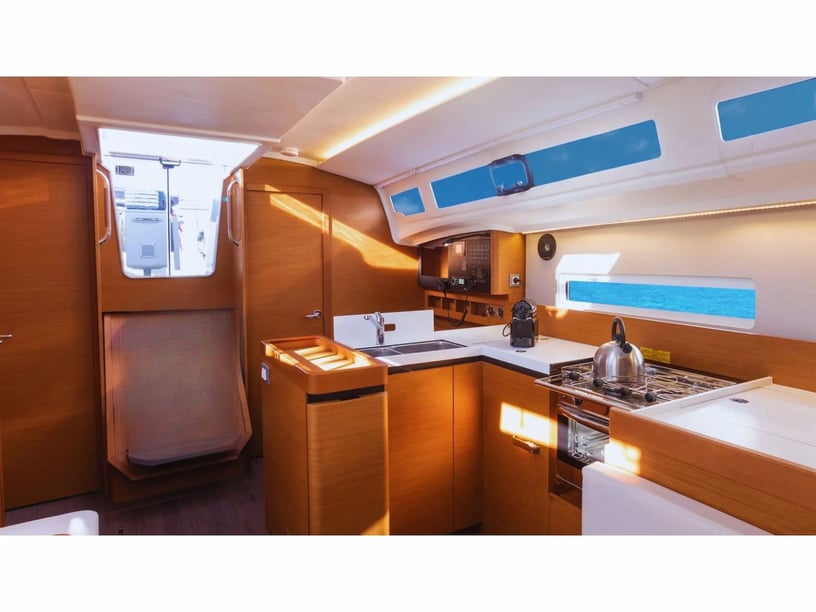
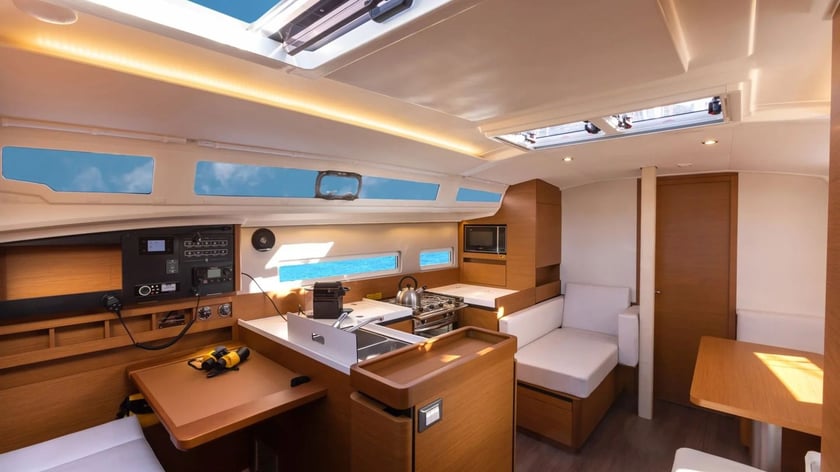
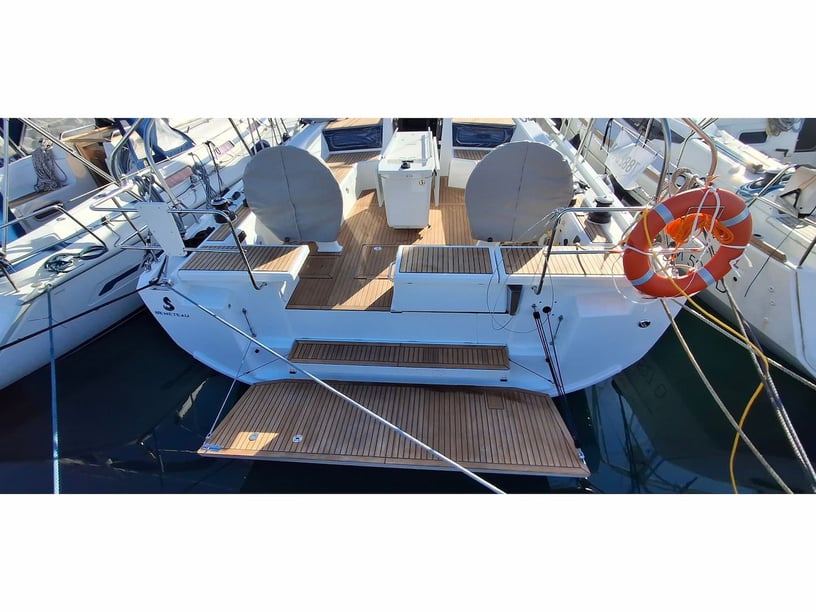
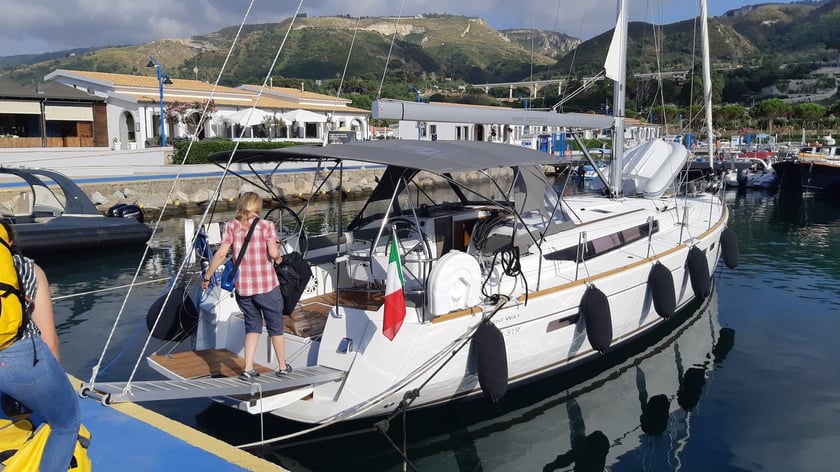
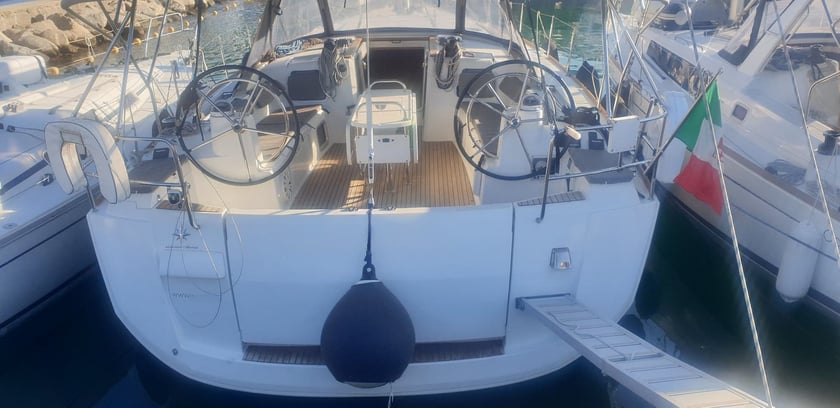
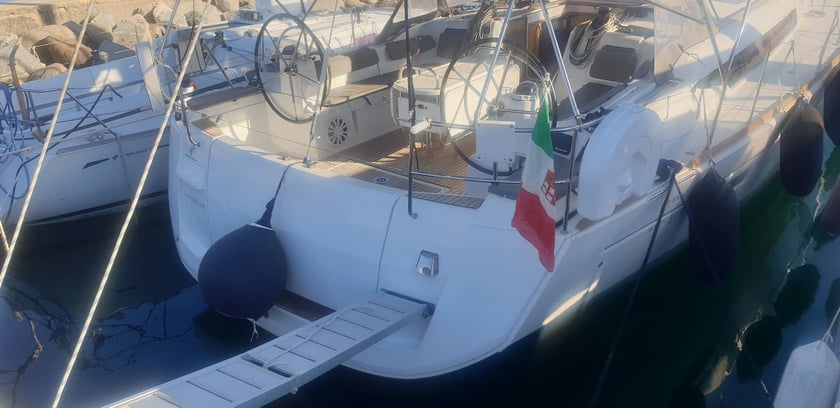
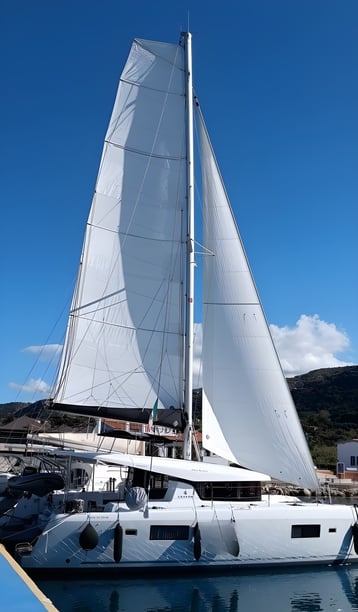
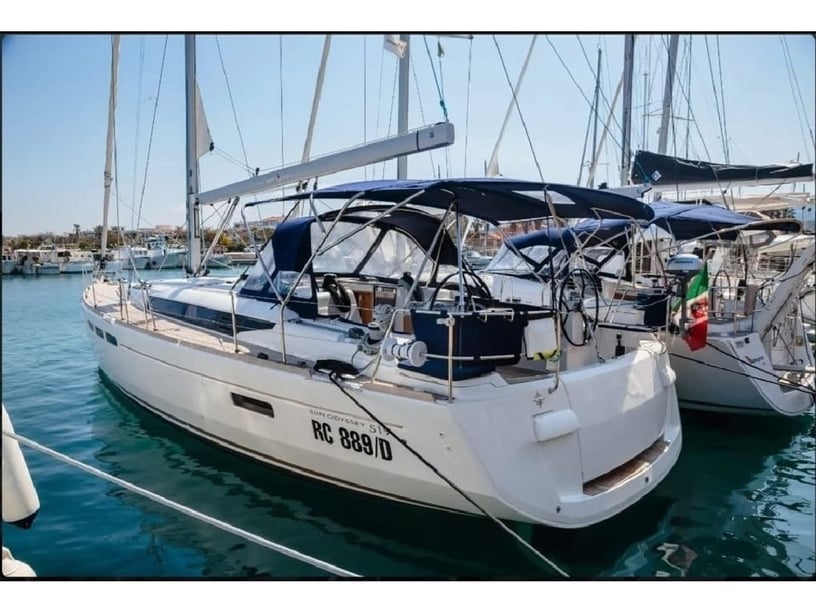
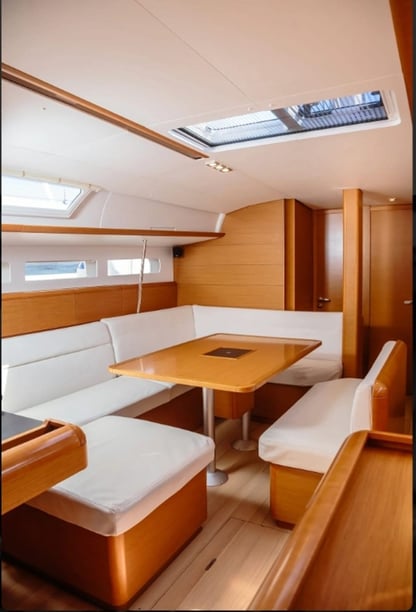
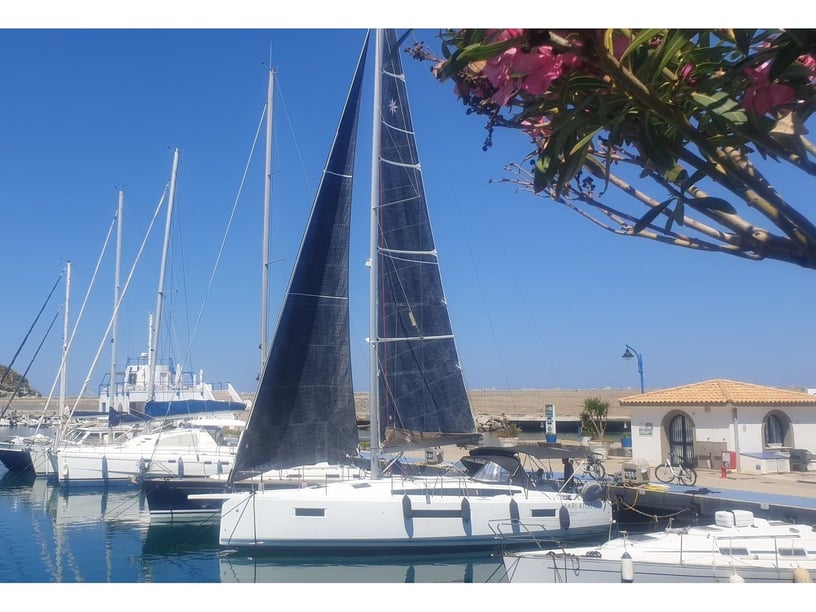
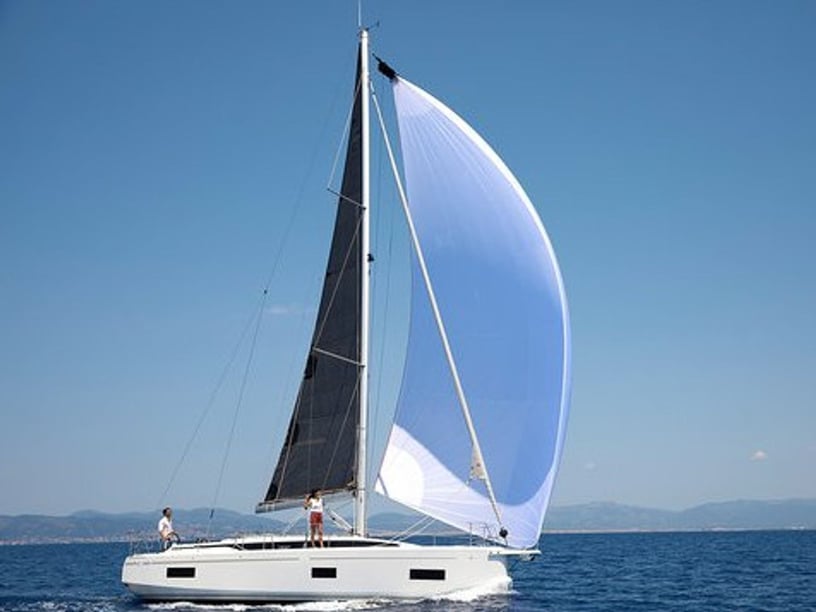
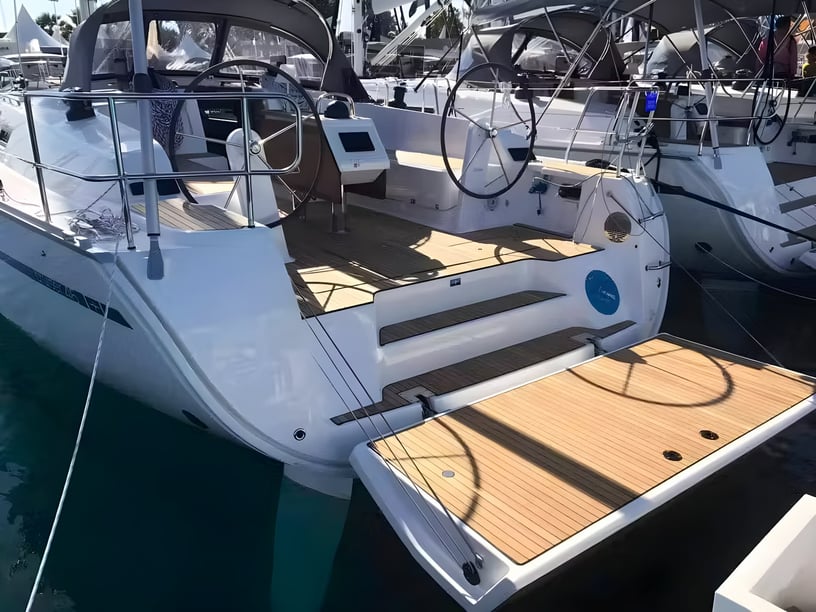
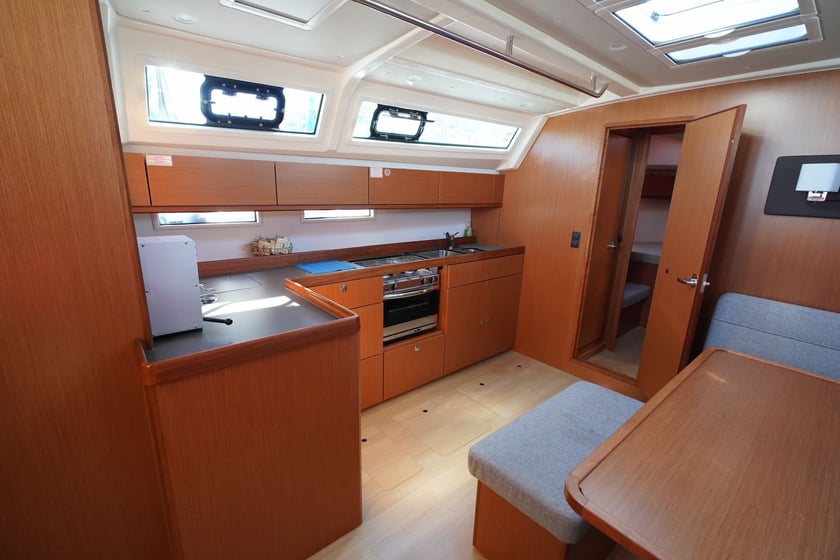
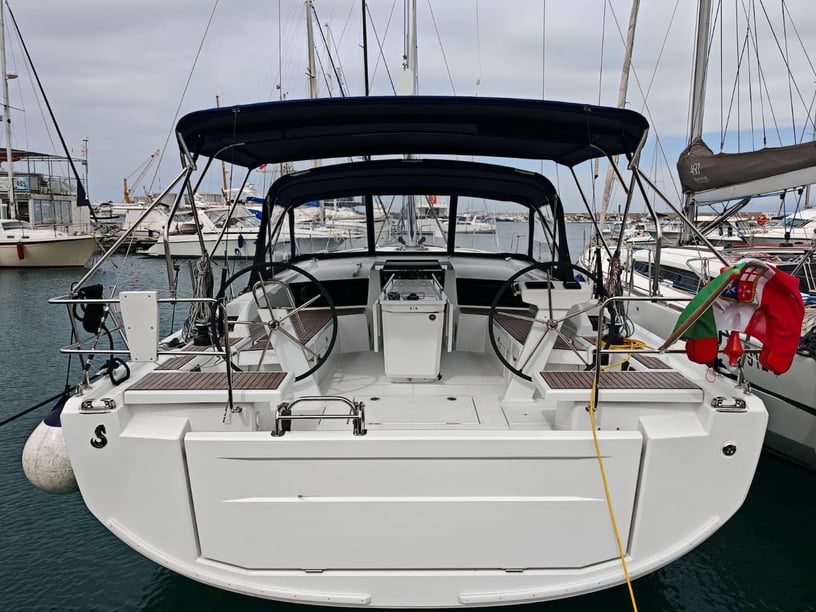
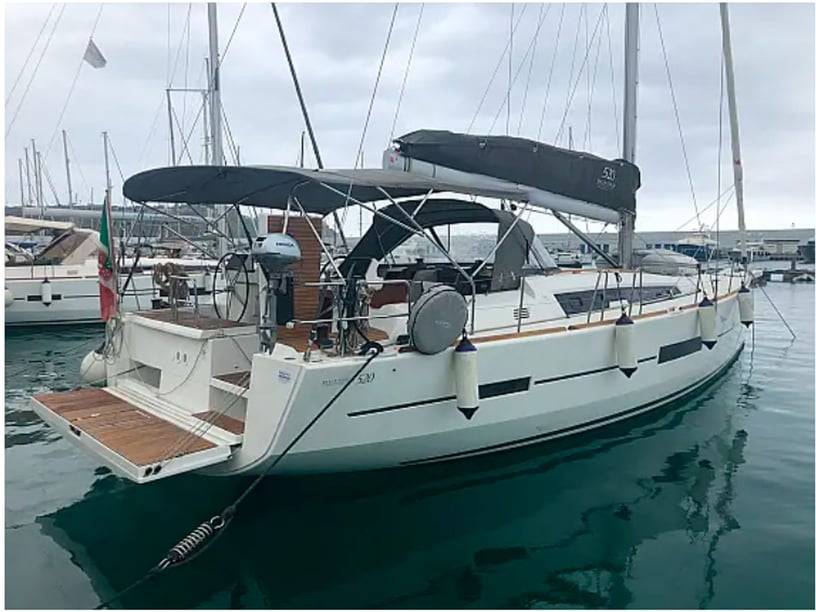
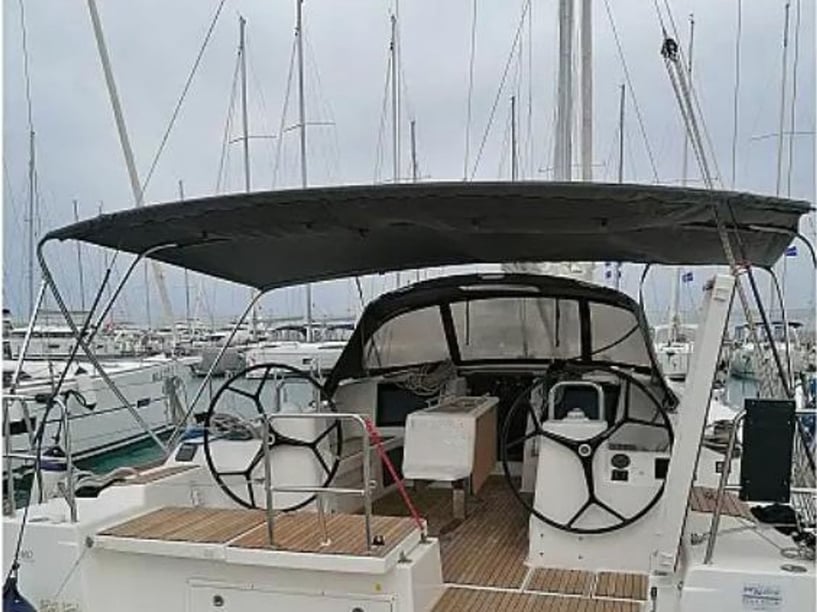
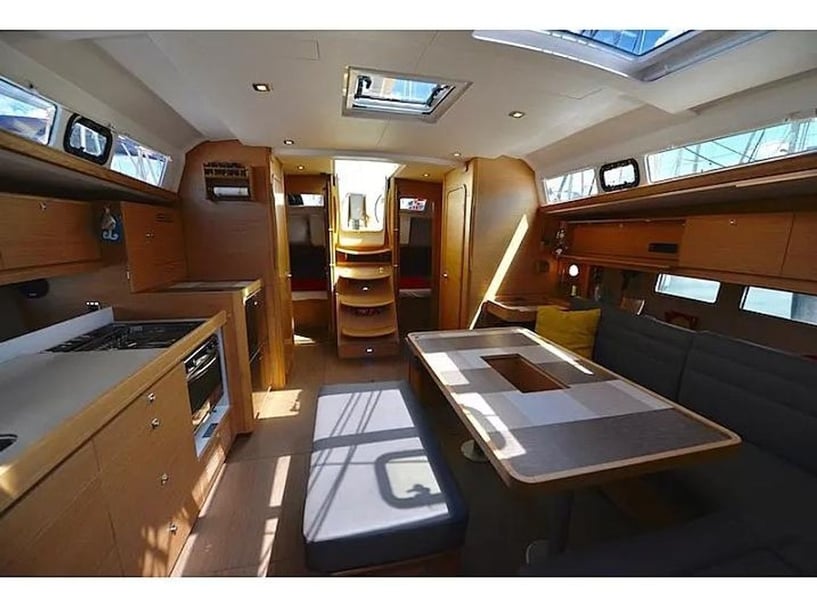
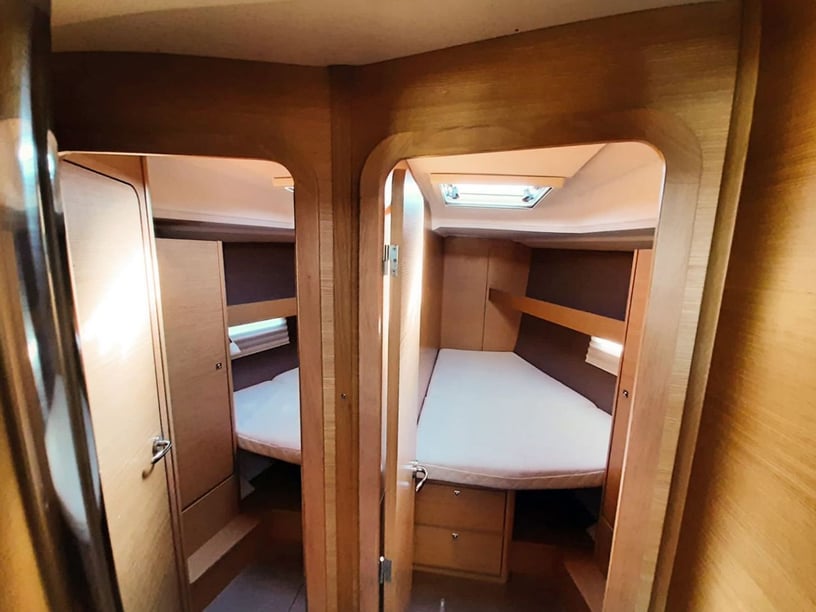
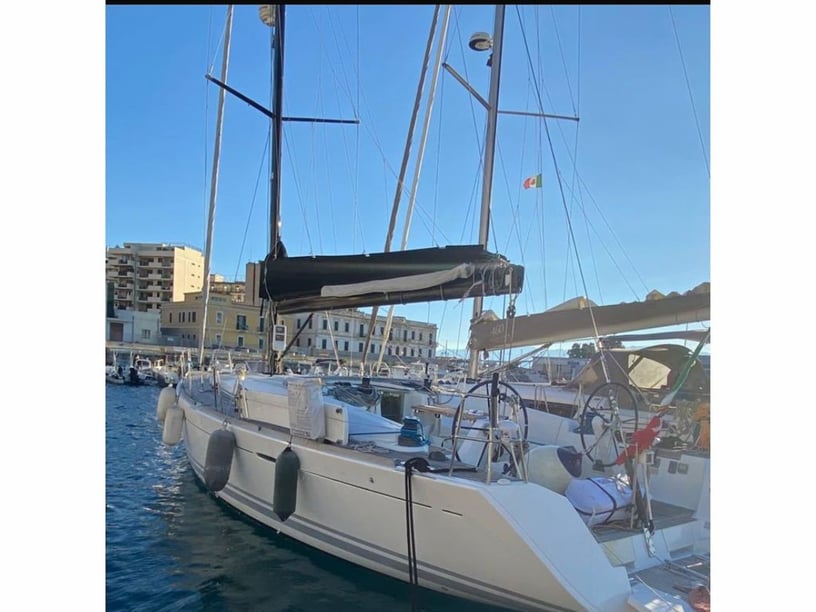
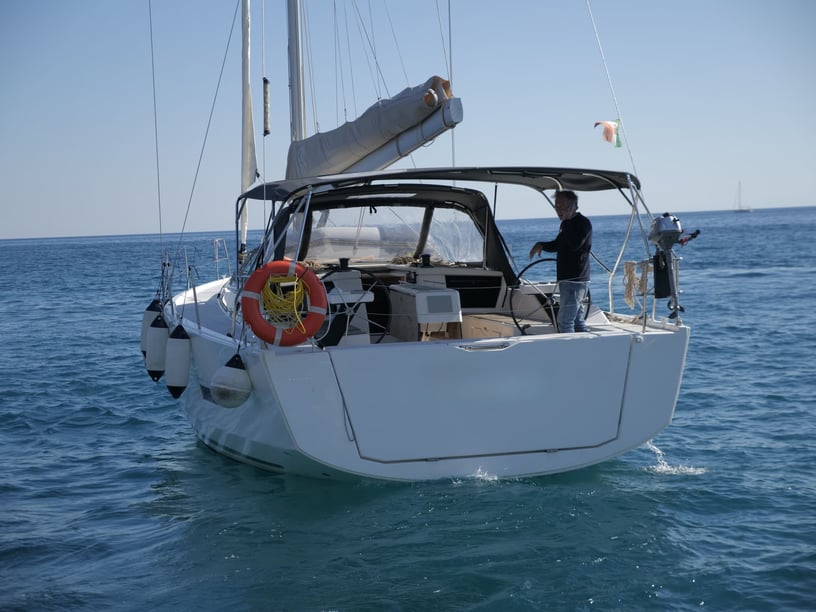
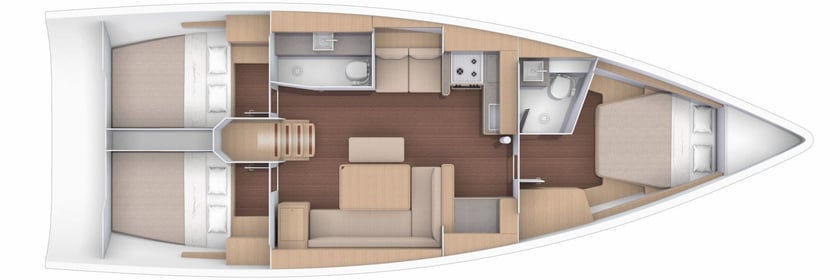
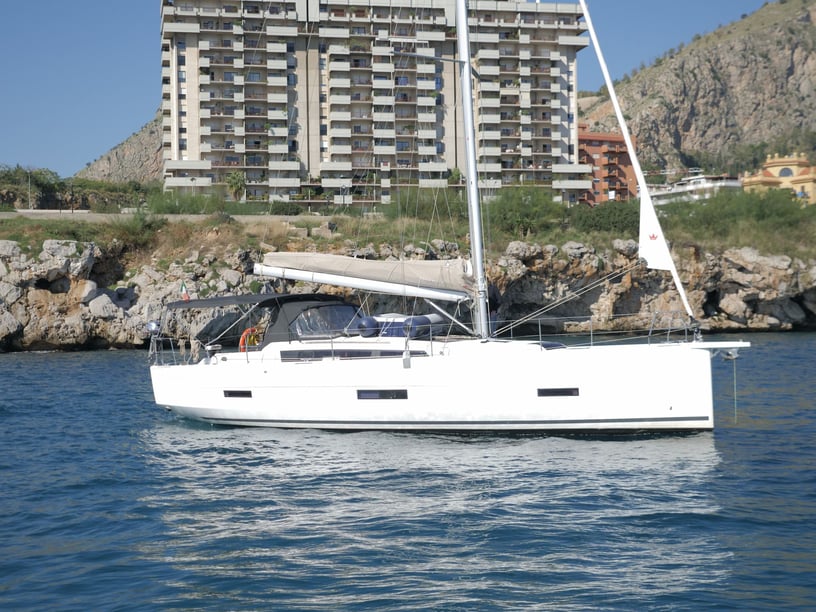
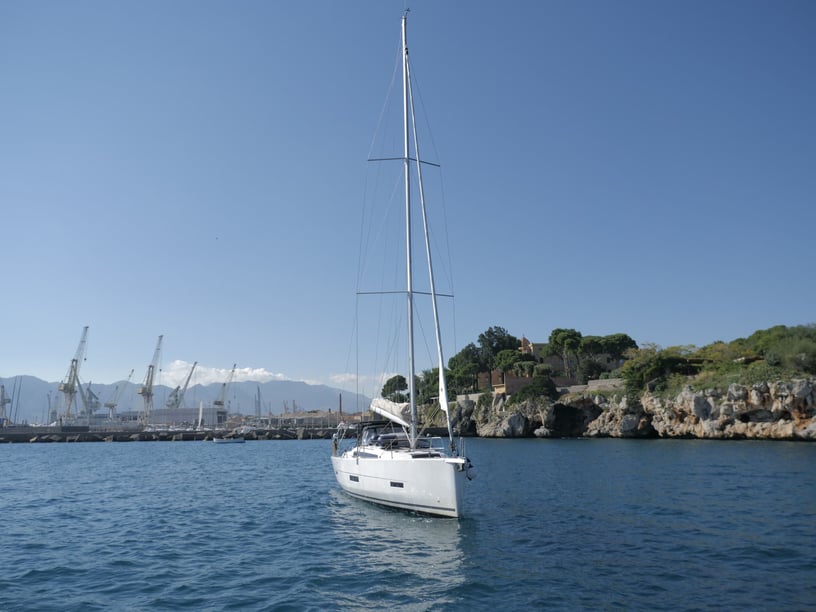
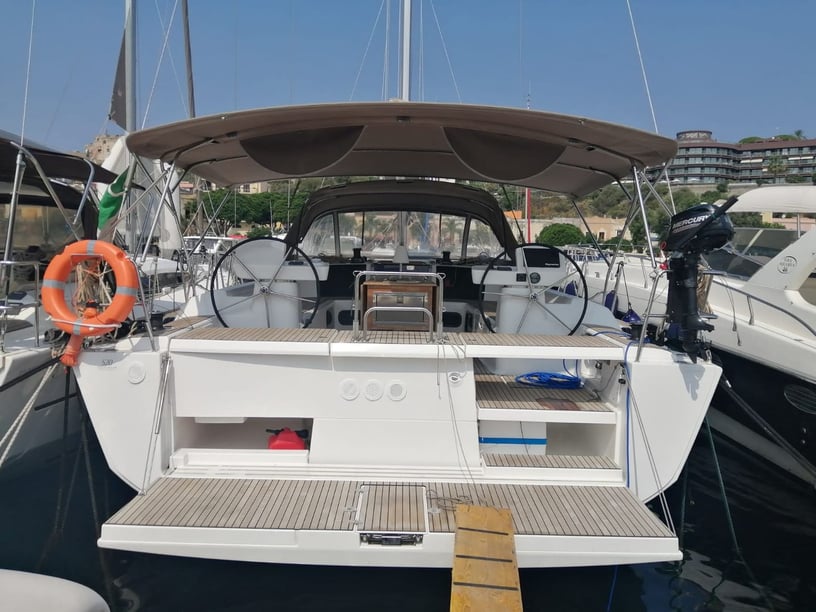
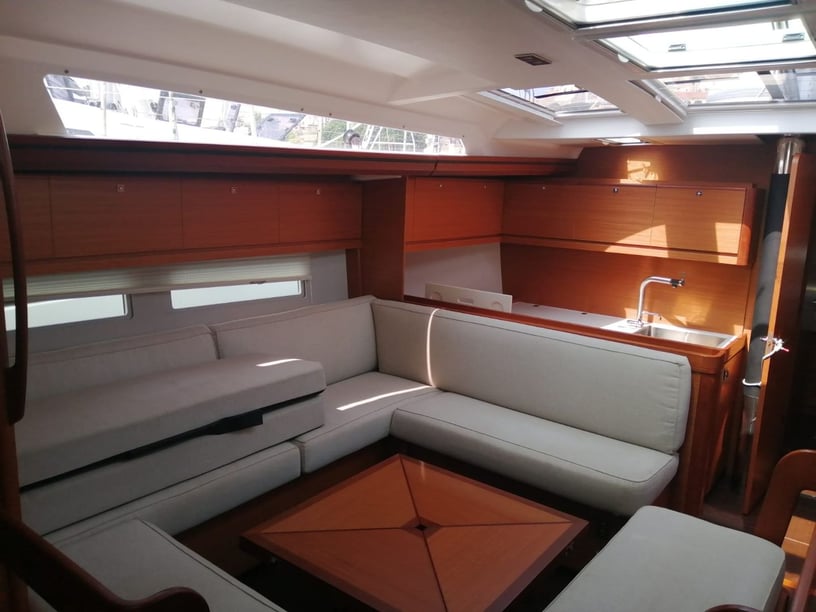
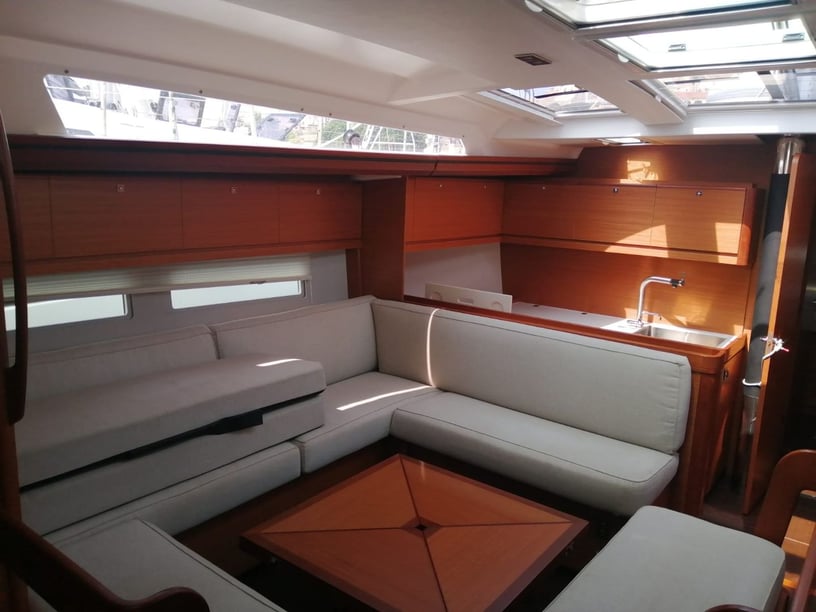
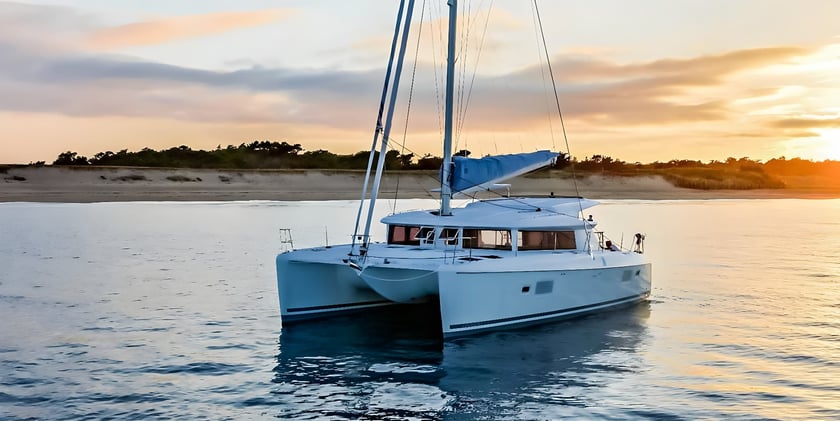
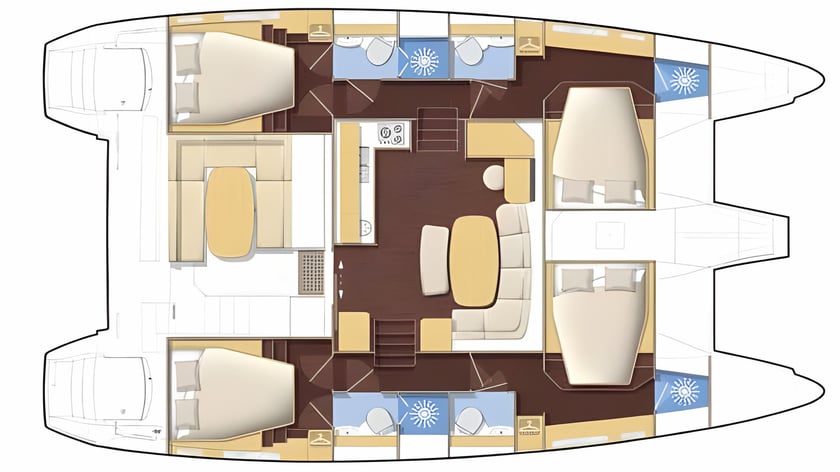
The area’s moderate sailing profile also makes experience level important. Travelers should account for westerly exposure, fair-weather anchorages and hazards close to shore when deciding how their trip will be operated. Those comparing propulsion, pace and onboard style can also review the dedicated sailboat charter options for Tropea, while confirming current suitability and availability for their dates.
Before departure, consult current nautical charts, harbor notices, weather forecasts and local ordinances. Port-entry conditions and navigation rules can change, while protected habitats may be subject to specific anchoring restrictions. Building flexibility into the route is especially important when an itinerary includes exposed coves or the Aeolian crossing.