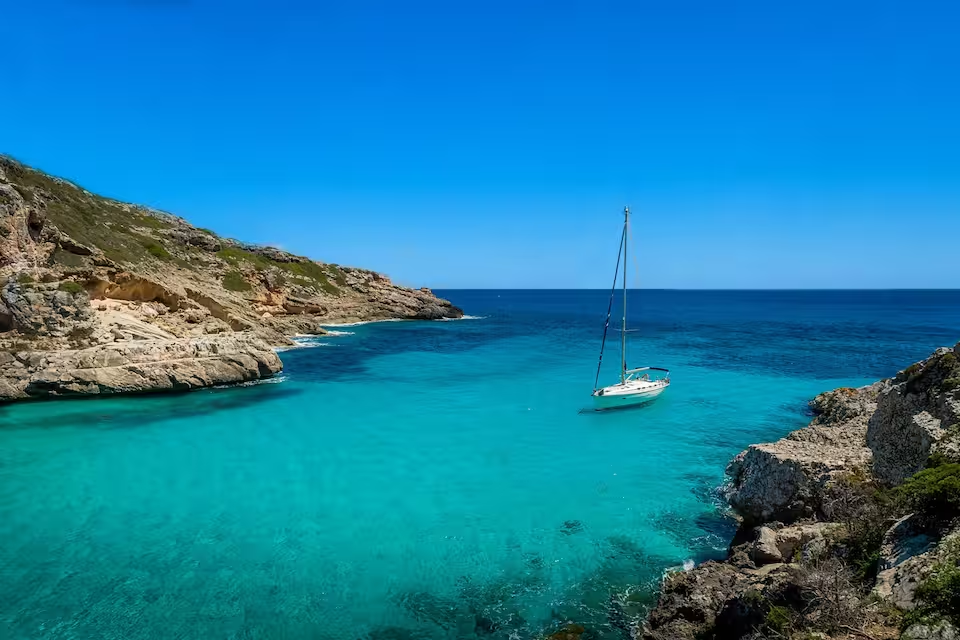
2 boats and yachts available for charter in Egypt
INSTANT BOOKING
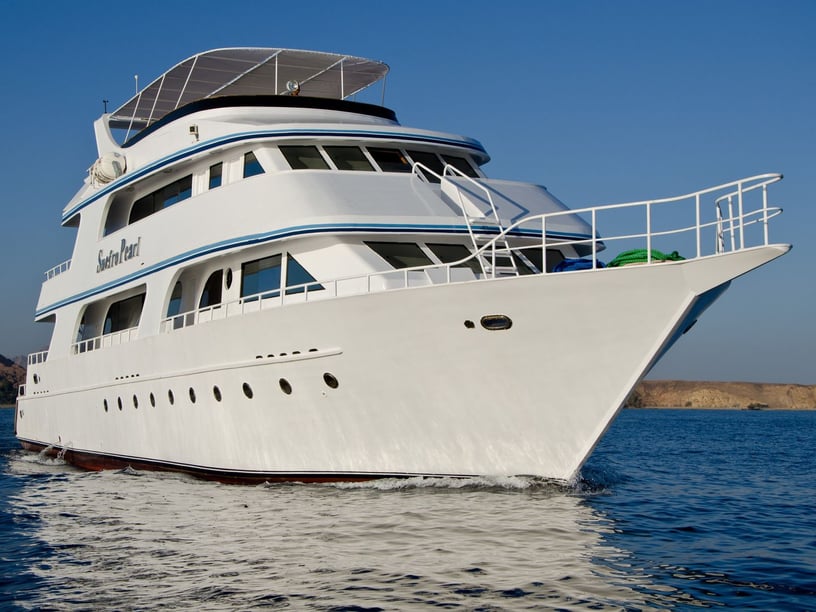
- Custom Made
- 2012
- Sharm El Sheikh
New
- 12 berths
- 6 cabin
- 29 m
- 8 WC
INSTANT BOOKING
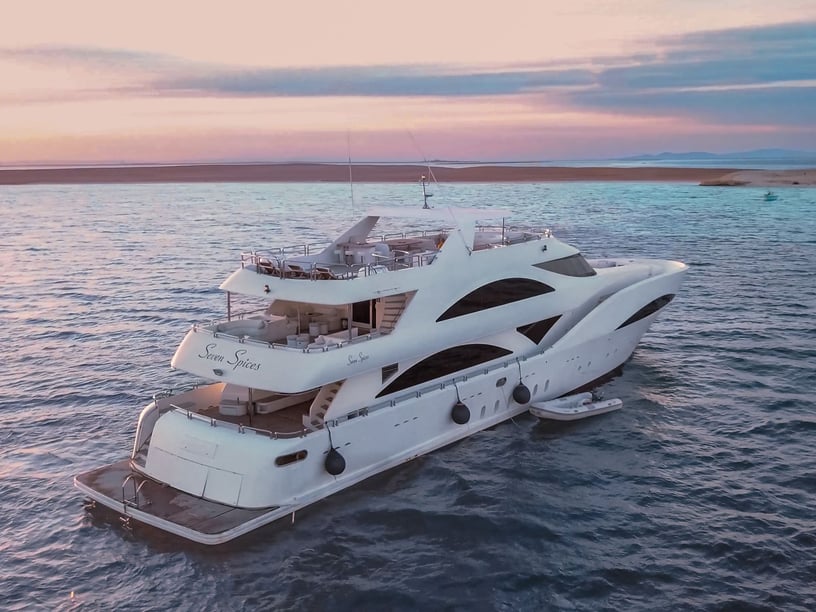
- Custom Made
- 2011
- El Gouna - Hurghada
New
- 13 berths
- 6 cabin
- 40 m
- 6 WC
A yacht charter in Egypt can take several distinct forms because the country has two contrasting recreational boating coasts. The Red Sea is the principal yachting area, with resort ports, coral-fringed islands, protected bays and routes built around snorkeling, diving and marine life. The Mediterranean coast is lower and sandier, with trips focused more on ports, cities and North Coast resorts than on island-hopping.
This variety makes the choice of region especially important. Around Hurghada and El Gouna, short cruises can combine beaches, reefs and the Giftun Islands. Sharm El-Sheikh opens onto Ras Mohammed and the Strait of Tiran, while departures farther south reach remote reef systems and islands on multi-day itineraries. Alexandria offers a different experience shaped by Mediterranean history and urban culture. Although the Suez Canal connects the two seas, it is a regulated transit corridor rather than a casual cruising route.
Hurghada, El Gouna and Soma Bay form one of Egypt’s most accessible Red Sea boating areas. Hurghada Marina, Hurghada Port and Abu Tig Marina provide starting points for trips toward the Giftun Islands, nearby beaches and reef stops. This area suits travelers who want to divide their time between cruising, swimming and snorkeling without committing to long offshore passages. For more focused local planning, explore yacht charters around El Gouna and Hurghada.
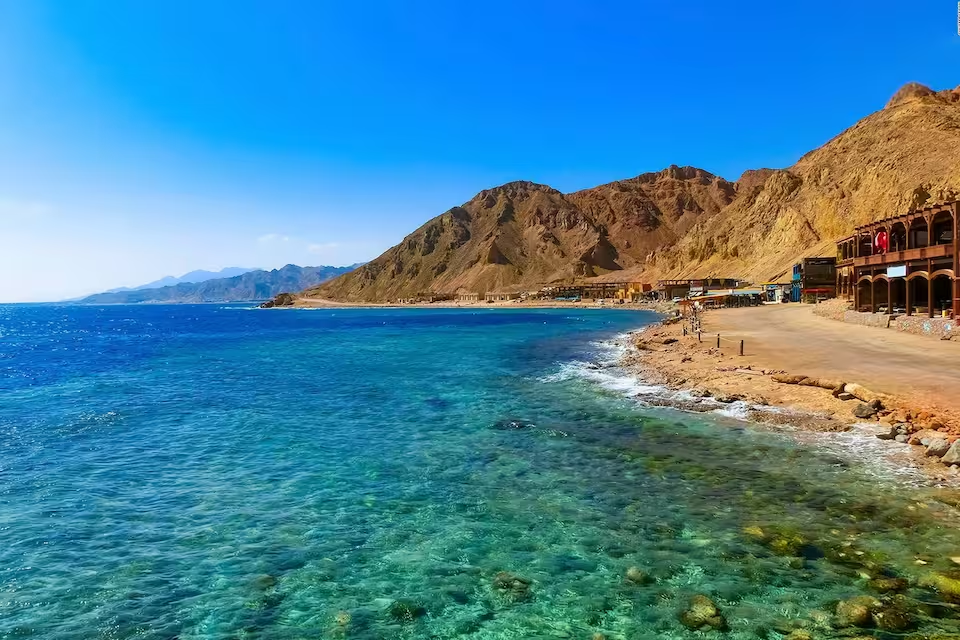
On the southern Sinai coast, Sharm El-Sheikh is the gateway to Ras Mohammed, northern Red Sea wreck routes and the reef systems of the Strait of Tiran. The nearby Gulf of Aqaba has a narrower, deeper coastal character, with desert mountains rising behind the shoreline. Dahab and Nuweiba extend the range of places to visit along this gulf, though Sharm El-Sheikh remains the main departure point among them.
Port Ghalib, Marsa Alam and Hamata are better positioned for the southern Red Sea. Trips from these bases may reach Fury Shoals, St John’s reefs, Rocky Island and Zabargad Island. Longer offshore circuits to Brothers Islands, Daedalus Reef and Elphinstone Reef are exposed and generally oriented toward experienced divers.
On the Mediterranean, Alexandria combines a working port city with archaeological and maritime history. El Alamein and Marsa Matruh represent the more seasonal North Coast resort context. Compared with the Red Sea, this coast offers fewer island-based itineraries and a more port-to-port style of boating.
Conditions vary substantially between the Gulf of Suez, the Gulf of Aqaba, the open Red Sea and the Mediterranean. Northerly to northwesterly winds prevail across much of the northern Red Sea and can be stronger or more persistent in the Gulf of Suez and around exposed offshore reefs. Bays and nearshore reef systems may provide shelter, but conditions can change once a route moves into open water.
Reefs are central to the experience and also to route planning. Coral heads, isolated shoals, currents and commercial traffic require careful navigation and strong local knowledge. For travelers, this means that the shortest line between two stops is not necessarily the practical route, and offshore schedules may change with wind, sea conditions or access decisions.
Mediterranean cruising has a more open-coast character. Northwesterly winds are commonly moderate during summer, while winter depressions can bring rain, stronger winds and rougher seas. The limited island-hopping and greater distances between suitable ports make this a different proposition from reef-based Red Sea cruising.
There is no single nationwide charter season that accurately describes both Egyptian coasts. Red Sea boating and resort excursions operate throughout the year, but spring and autumn usually offer the most comfortable balance of warmth and boating conditions. Summer remains viable, particularly for water-based activities, although intense heat and persistent winds can affect comfort on deck.
Winter is also active on the Red Sea, especially around established resort areas, but exposed offshore liveaboard routes can be more vulnerable to strong wind. Travelers considering distant reefs should allow for itinerary changes rather than treating every planned offshore stop as fixed.
Mediterranean leisure boating is principally associated with late spring through early autumn. Summer provides the most dependable context for North Coast activity, whereas winter is cooler, wetter and more unsettled. Timing should therefore be assessed for the particular coast and route, not from a general Egypt forecast.
A short Red Sea itinerary can begin in Hurghada or El Gouna and head toward the Giftun Islands for beaches, swimming, snorkeling and reef stops. This compact geography works well when the aim is to spend more time in the water than making long passages.
Longer northern circuits connect Hurghada or Sharm El-Sheikh with the Strait of Gubal, Abu Nuhas, the SS Thistlegorm wreck and Ras Mohammed. From Sharm El-Sheikh, North-and-Tiran itineraries concentrate on Ras Mohammed and the reef sites of the Strait of Tiran.
The character changes south of Port Ghalib. Routes may continue toward Fury Shoals and the St John’s reef system, sometimes extending to Rocky and Zabargad islands. The Brothers–Daedalus–Elphinstone circuit involves exposed passages and currents and is normally intended for experienced divers. These offshore routes are less about frequent shore visits and more about reaching remote dive sites.
A passage through the Suez Canal should not be treated as an extension of a leisure itinerary. Yachts moving between the Mediterranean and Red Sea must follow regulated transit procedures between Port Said and Suez.
Snorkeling and diving are defining parts of a Red Sea charter. Near Hurghada, the Giftun Islands combine clear water, beaches and accessible reef stops. Farther offshore, pinnacles, wrecks and protected marine areas create trips designed around time beneath the surface rather than conventional coastal sightseeing. Windsurfing and kitesurfing can also form part of a stay in established Red Sea resort areas.
The scenery changes along the Gulf of Aqaba and southern Red Sea, where arid mountains stand behind the coast and remote islands punctuate longer routes. Protected areas such as Ras Mohammed and Wadi El Gemal add ecological importance, although access and activity rules may apply.
A Mediterranean charter places more emphasis on history ashore. Alexandria was founded in 331 BC and retains a strong maritime identity. The Citadel of Qaitbay stands on the waterfront at the site associated with the ancient Lighthouse of Alexandria, while submerged remains of ancient port structures survive in the Eastern Harbour. Fresh fish and seafood are established specialties in both Mediterranean and Red Sea coastal cities.
Hurghada International Airport is the most direct gateway for Hurghada, El Gouna and Soma Bay, with departures commonly using Hurghada Marina, Hurghada Port or Abu Tig Marina. Sharm El-Sheikh International Airport serves trips beginning at Sharm El-Sheikh Port.
For southern routes, Marsa Alam International Airport provides access to Port Ghalib and the coast toward Marsa Alam. Port Ghalib International Marina is an important departure point, while Safaga and Hamata support other Red Sea itineraries. Road distances along the southern coast can be substantial, so transfer time should be considered when matching flights to embarkation.
Borg El Arab International Airport serves Alexandria, and Porto Marina El Alamein is a North Coast departure point. Cairo is the principal gateway for Suez and Ain Sokhna, as well as for onward domestic connections.
When comparing yacht charter or boat rental in Egypt, begin with the purpose of the trip. A day cruise to the Giftun Islands requires a different plan from a multi-day wreck itinerary or an exposed southern liveaboard circuit. Consider how much time you want to devote to swimming and snorkeling, whether diving is the main focus, and how comfortable the group is with longer passages.
Confirm the intended departure port before arranging flights and transfers, particularly on the southern Red Sea coast. For offshore routes, ask how wind, sea conditions and authority decisions may affect the schedule. Protected areas and individual reef sites can have entry controls, designated moorings or activity rules; anchoring on coral should be avoided and local environmental instructions followed.
Foreign tourist yachts must complete Egyptian entry, visit-program and berthing procedures through the Yacht Single Window or an authorized representative. Suez Canal passages are separately regulated by the Suez Canal Authority. Travelers bringing a yacht into Egyptian waters should establish these requirements well in advance, while charter guests should confirm which formalities are handled as part of their specific arrangement.
Find the right private boat rental option for your sailing experience and travel style in Egypt.
A professional skipper handles the sailing on a skippered yacht charter, while you relax and enjoy. No sailing experience required.

Enjoy ultimate comfort with a private captain and crew on a crewed yacht charter.
Trusted by thousands of travelers booking boat rentals every year.
Rent yachts in Egypt by trip length, including multi-day charter and weekly charter.

2-3 day yacht charters in Egypt to recharge in secluded coves and hidden anchorages.

7-day weekly yacht charters in Egypt to explore secluded bays and multiple sailing destinations.
The best time for yacht charter in Egypt depends on the season, with each period offering different sailing conditions and travel experiences.
January, February, March, November, December
Peak season
The busiest charter period in Egypt falls in January, February, March, November, December: 21°C air, 23°C sea, 23 sunny days a month and wind averaging 11 knots.
April, October
Sweet spot
The sweet spot in Egypt falls in April, October: 27°C air, 25°C sea, 26 sunny days a month and wind averaging 11 knots with fewer boats out than at peak.
May, September
Shoulder
Shoulder season in Egypt covers May, September: 31°C air, 26°C sea, 28 sunny days a month and wind averaging 12 knots.
June, July, August
Low season
Low season in Egypt covers June, July, August: 33°C air, 29°C sea, 30 sunny days a month and wind averaging 12 knots.
Weather, sea and price data are averaged across El Gouna - Hurghada and Sharm El Sheikh. Average prices reflect seasonal pricing trends. For location-specific conditions: El Gouna - Hurghada and Sharm El Sheikh.
| Month | JAN | FEB | MAR | APR | MAY | JUN | JUL | AUG | SEP | OCT | NOV | DEC |
|---|---|---|---|---|---|---|---|---|---|---|---|---|
| 🌡️ Avg. temperature | 18° | 19° | 22° | 26° | 30° | 33° | 34° | 34° | 32° | 28° | 24° | 20° |
| ☀️ Avg. sunny days A day is counted as sunny when average daytime cloud cover is 30% or less. | 24 days | 22 days | 24 days | 24 days | 27 days | 29 days | 31 days | 31 days | 30 days | 29 days | 24 days | 22 days |
| 🌧️ Avg. days with rain A day is counted as rainy when at least 1 mm of rain falls. Monthly rainfall | 0 days2 mm | 1 days3 mm | 0 days2 mm | 0 days0 mm | 0 days0 mm | 0 days2 mm | 0 days0 mm | 0 days2 mm | ||||
| 💨 Avg. wind Shows how windy a typical day is during this month, based on the full-day average. | 11 knSuitable for sailing based on hourly wind data. | 11 knSuitable for sailing based on hourly wind data. | 11 knSuitable for sailing based on hourly wind data. | 10 knSuitable for sailing based on hourly wind data. | 10 knSuitable for sailing based on hourly wind data. | 11 knSuitable for sailing based on hourly wind data. | 11 knSuitable for sailing based on hourly wind data. | 12 knSuitable for sailing based on hourly wind data. | 12 knSuitable for sailing based on hourly wind data. | 11 knSuitable for sailing based on hourly wind data. | 10 knSuitable for sailing based on hourly wind data. | 10 knSuitable for sailing based on hourly wind data. |
| 🌊 Avg. seawater temperature | 22° | 21° | 22° | 23° | 25° | 27° | 29° | 30° | 28° | 26° | 25° | 23° |
| 📅 Season | HIGH SEASON | HIGH SEASON | HIGH SEASON | SWEET SPOT | SHOULDER | LOW | LOW | LOW | SHOULDER | SWEET SPOT | HIGH SEASON | HIGH SEASON |
/ night
motor yachts available
€2,529
€9,668
Prices vary by yacht type, size, season and charter type. Additional costs such as fuel, skipper fees and security deposit may apply.
Last updated at October 12, 2026
Available only for overnight charters.
Prices vary by yacht type, size, season and charter type. Additional costs such as fuel, skipper fees and security deposit may apply.
Last updated at October 12, 2026
Learn everything you need to know about boat rental in Egypt, including costs, yacht types, charter options and sailing requirements.
How much does a yacht charter cost in Egypt?
What types of boats are available for charter in Egypt?
Can I charter a yacht bareboat, with a skipper or with a crew in Egypt?
What is the best time for yacht charter in Egypt?
What are the popular yacht charter destinations in Egypt?
How many guests can a yacht charter accommodate in Egypt?