2 boats and yachts available for charter in Cyprus
INSTANT BOOKING
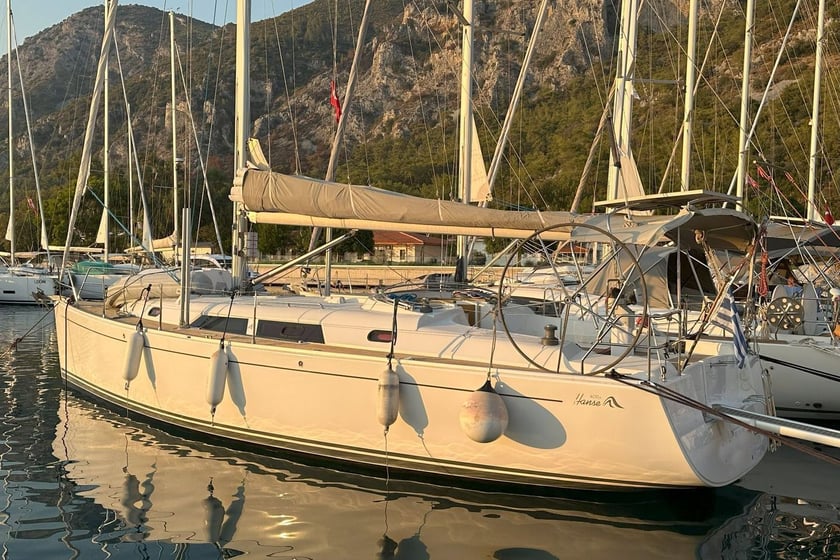
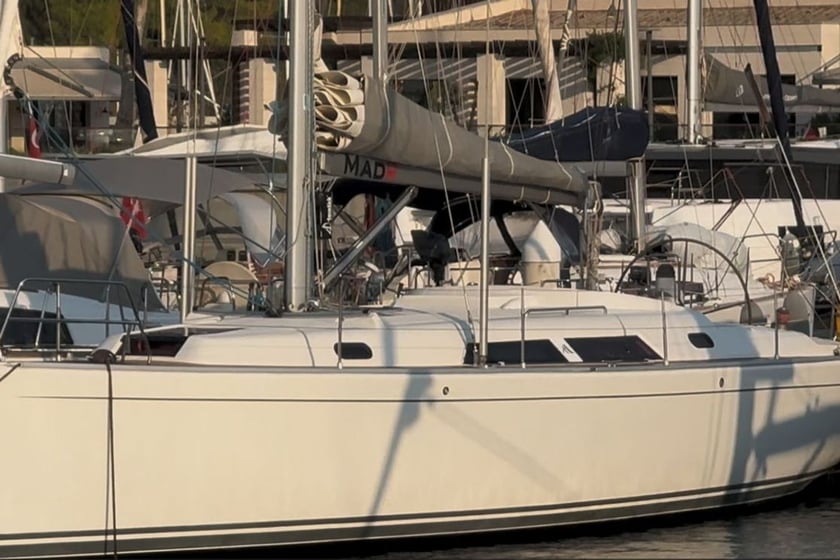
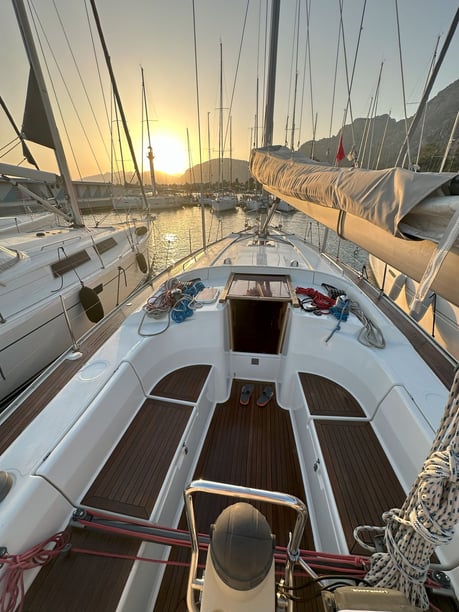
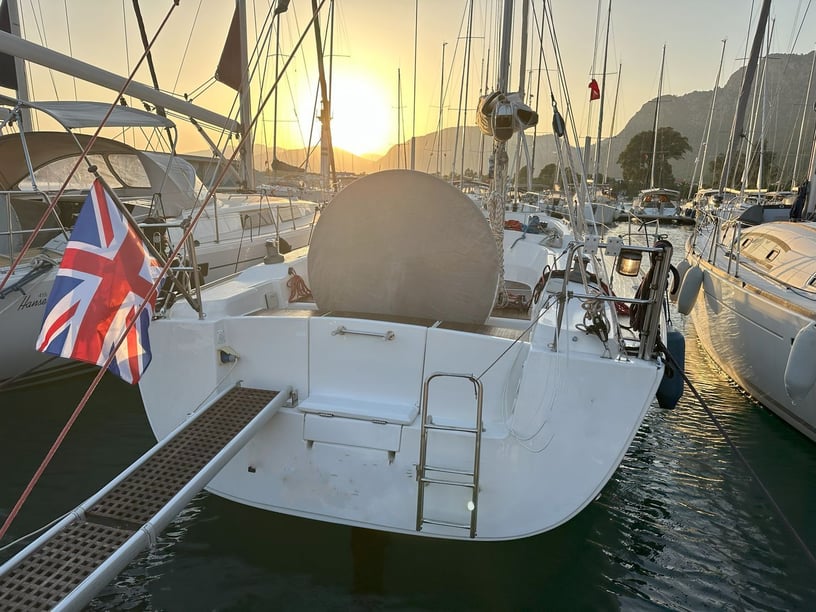
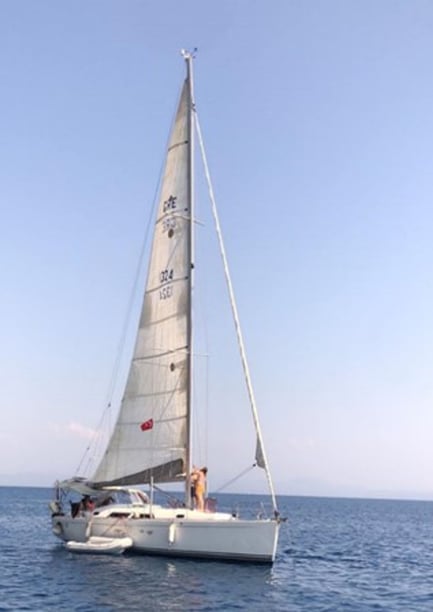
- Hanse, 400e
- 2008
- Kyrenia
- 8 berths
- 3 cabin
- 12 m
- 2 WC
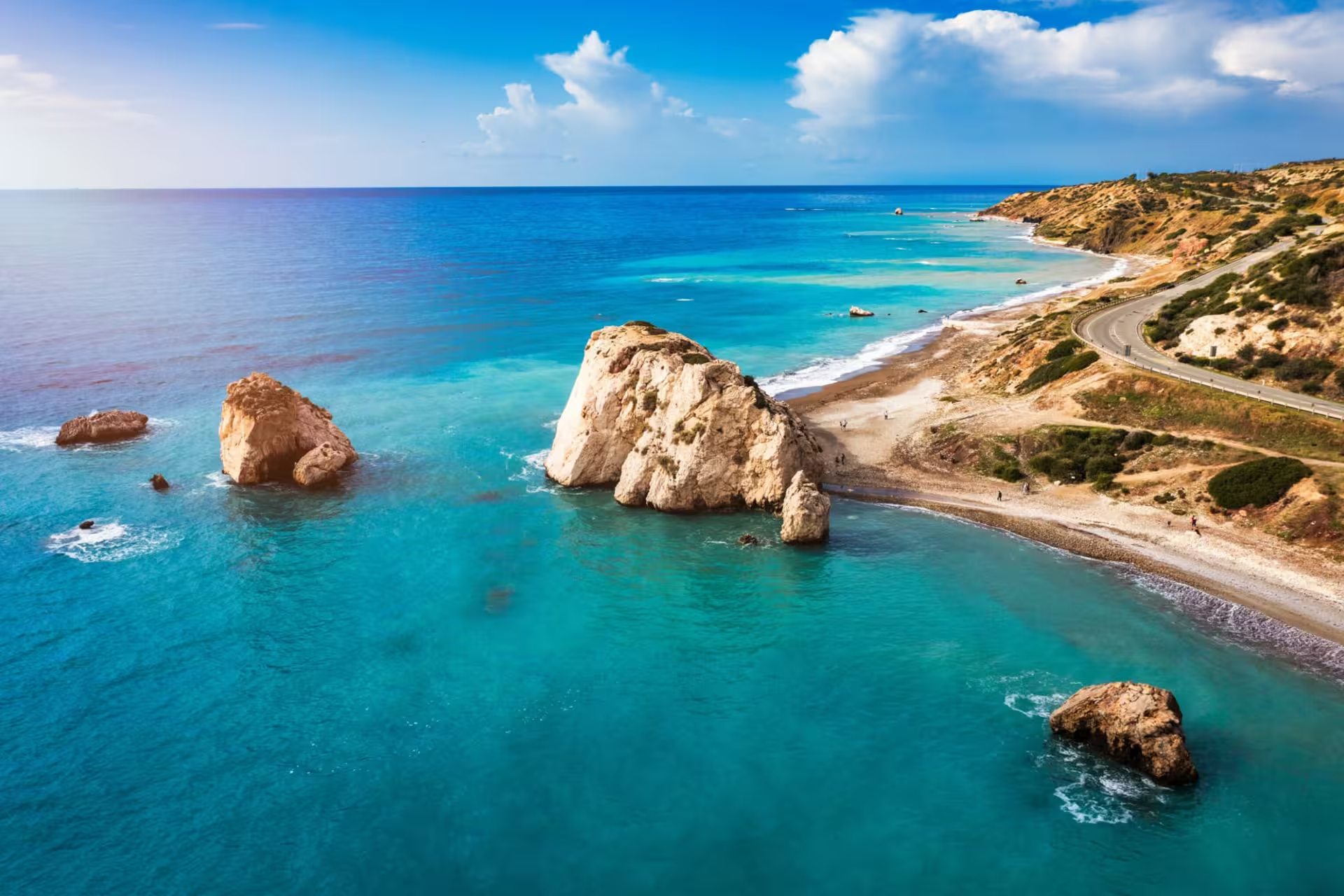
Explore different yacht types for charter in Cyprus, including gulet and sailboat.
Trusted by thousands of travelers booking boat rentals every year.
Find the right private boat rental option for your sailing experience and travel style in Cyprus.
A professional skipper handles the sailing on a skippered yacht charter, while you relax and enjoy. No sailing experience required.
Captain the yacht yourself for total freedom on a bareboat yacht charter. A valid sailing license is required.

Enjoy ultimate comfort with a private captain and crew on a crewed yacht charter.
Rent yachts in Cyprus by trip length, including multi-day charter and weekly charter.

2-3 day yacht charters in Cyprus to recharge in secluded coves and hidden anchorages.

7-day weekly yacht charters in Cyprus to explore secluded bays and multiple sailing destinations.
Read verified reviews from travelers who chartered yachts in Cyprus, covering service quality, sailing routes and the overall charter experience.
Verified
Kadir K.15 Aug 2025
Our days with the Fair Captain have been a truly unforgettable experience for us. As soon as we stepped on the boat, both his experience in seafaring and his meticulous approach to his work became app...


Verified
Çağdaş Ç.02 Aug 2025
The holiday we spent with our fair captain was an experience full of unforgettable memories. Thanks to the professionalism and hospitality of our captain, every moment was pleasant. His dinners, in pa...
Verified
Yusufhan İ.26 Jul 2025
We had some reservations before our boat vacation we planned as two friends. We were worried that the boat was narrow and that we would not be comfortable. In addition to this, the attitude and attitu...
Verified
Erdem M.18 Jul 2025
My wife and son and I had planned this holiday for a short time as we had no previous experience of boat holidays, but before the tour was over, we made a longer plan for next year together with Adil ...
Verified
Baran Y.14 Jul 2025
We spent six wonderful days on this lovely boat with my wife, sailing through an incredible itinerary. Adil Kaptan is not only an experienced sailor and a fantastic cook, but also a warm-hearted host ...
Verified
Pascale C.04 Jul 2025
Adil is really a fantastic host and captain. He likes to spoil his guests and does'nt want money for the extra's. He brought us to nice bays and typical restaurants and he's a good fisherman and cook,...
Verified
Burcu D.23 Jun 2025
I wanted to make a surprise for my wife's birthday, and as a bonus, I myself had the best 2 days of my life. A fair captain is a captain who should definitely travel, building his entire journey on yo...
Verified
Alparslan T.14 Oct 2024
The passage from Adil Bey, Adil Kaptan to Adil Abi is no more than 5 minutes. Adil Abi has a different outlook on life, every meaning “head” is our brother. Their human relationship is very good. The ...
Verified
Mustafa S.10 Oct 2024
Traveling with the Fair Captain is not told, it is lived! The boat is beautiful, due to its thoroughness, the whole place is clean, equipped and adequate in all respects. It has a lot of entertainment...
Verified
Ömer Ö.18 Sep 2024
While looking for a marriage proposal organization, I came across Adil's evening dress. It was definitely a nicer organization than my girlfriend had dreamed of. The bays we went to on our boat trip w...
Verified
Kadri K.11 Sep 2024
Although it was only a 2-day trip, the pleasant conversations of the fair captain, delicious dinners made us leave the boat with unforgettable good memories.We recommend it to everyone. We thank him o...
Verified
Naim Kaan Y.02 Sep 2024
After a wonderful trip with the Fair Captain, we write this message with great happiness, both because we know such a wonderful person and that we have had a very pleasant holiday. For those who will ...
Verified
melike e.29 Aug 2024
As a 5-person team, the boat holiday was our first experience. We devoted 3 days to the boat because we had concerns. At the end of 3 days Of course, we forbade the regret of not making long plans. We...
Verified
Tuğba O.24 Aug 2024
First of all, I would like to begin by offering our eternal thanks for the attention and patience he has shown us to our Fair Captain. Our boat was of sufficient capacity according to the number of pe...
Verified
SERDAR MURAT S.19 Aug 2024
From the moment he greeted us in the parking lot, a warm blooded person who felt that he would call Adil Abi instead of Adil Kaptan. It was a very pleasant trip. There were 5 of us, he took us to very...
Verified
ozan d.11 Aug 2024
My two friends and my wife had a great vacation. This time we went on a 2-night tour to experience an accommodation boat holiday for the first time, but we have already started making plans to take a ...
Verified
Kaan Berk K.01 Aug 2024
Even if you have taken a boat vacation before, it means that if you have not sailed with the Fair Captain, you have not. I speak so assertively because we have enjoyed every moment of our time on the ...
Verified
Denizhan T.29 Jul 2024
I think we made our first boarding boat experience with a family of 4 with the right Captain. The fair captain is experienced, a good cook:) meticulous, pleasant conversationalist, private respectful ...
Verified
Taner A.27 Jul 2024
With our boat tour with Adil's brother, we saved a lot of good memories. Our brother Adil's sincere conversation made us cook the fish he held with his own hands and prepared a fish feast. We returned...
A yacht charter in Cyprus follows a largely continuous coastline rather than an island-hopping route. This makes the choice of starting point especially important: the rugged Akamas Peninsula in the west, the urban harbors of the south and the resort coast around Cape Greco each offer a different kind of trip.
Short cruises commonly combine swimming and coastal sightseeing, while longer charters can cover stretches between the western, southern and southeastern shores. The island’s established marinas provide practical bases, but many natural stopping places are exposed to at least one wind direction. Cyprus therefore rewards route planning based on weather and shelter rather than a fixed sequence of nearby islands.
Time aboard can be combined with beaches, wreck diving, waterfront dining and archaeological sites close to the coast. It is this mix of boating and easy access to substantial places ashore that distinguishes Cyprus from more remote cruising grounds.
Latchi is the main small-craft gateway to the western Akamas coast. From this former fishing harbor, local cruises enter Chrysochous Bay and visit the peninsula’s rocky coves and Blue Lagoon area. The shoreline is quieter and less developed than the main resort districts, making it well suited to swimming and scenery-focused outings. Natural shelter is not consistent, however, so conditions influence where a yacht can stop.
Paphos offers a different western base. Trips from its harbor can follow the coast toward Coral Bay, Peyia and the approaches to Lara and Akamas. It combines time on the water with access to the archaeological landscapes of Kato Paphos and nearby coastal sites associated with Aphrodite.
On the south coast, Limassol has modern marina facilities, extensive dining and access to excursions around Lady’s Mile, Cape Gata and the Akrotiri Peninsula. It suits travelers who want an urban base alongside their charter. Larnaca also combines a city stay with southeastern cruising and is particularly relevant for divers because the MS Zenobia wreck lies offshore.
Farther east, Ayia Napa and Protaras provide a resort-oriented setting of beaches, clear-water bays and coastal sightseeing. The route around Cape Greco is defined by limestone cliffs, sea caves and headlands, with Konnos Bay among the notable stops. This area is a strong choice for shorter cruises focused on swimming and recognizable coastal scenery.
Cruising in Cyprus is primarily coastal. Nearby bays can be explored on short outings, but transferring between the west, south and southeast involves longer, more exposed passages and careful selection of harbors. Major marinas offer secure berthing; natural anchorages, especially along western sections, may be open to changing wind or swell.
Summer weather is generally hot, dry and clear. Westerly winds prevail around much of the island, while afternoon sea breezes can strengthen locally. Currents are usually weak, although persistent wind can increase their effect. Reefs and rocky ledges along parts of the west coast, as well as regulated areas and nearshore marine farms, make current chart information important.
For travelers, the practical distinction is between a local charter centered on one coast and a trip involving exposed inter-coastal passages. The latter requires more flexibility around weather, suitable harbor planning and a boat appropriate for the intended distance.
Organized coastal boating generally runs from May through October, with June to September forming the principal period. These months bring limited rainfall, generally clear weather and conditions favorable for swimming and coastal sightseeing. July and August sit firmly within the high season, so the main resort and marina areas have greater visitor activity.
October is also among the particularly suitable months. Sea temperatures remain warm and visitor activity is lower than during the principal summer peak, although conditions begin moving toward the more changeable part of the year. May marks the start of the main boating season, while spring can offer opportunities subject to local weather and operator schedules.
From November through March, shorter days, increased rain and a higher likelihood of unsettled weather reduce the consistency of yacht trips. Fair-weather sailing remains possible, but winter plans require considerably more flexibility.
Cyprus routes are often organized as out-and-back coastal cruises from a well-positioned harbor. From Latchi, yachts follow the western Akamas shoreline to rocky coves and the Blue Lagoon area before returning. From Ayia Napa, the natural progression leads around Cape Greco toward Protaras and Paralimni, passing sea caves, beaches and prominent headlands.
Paphos-based outings can extend north toward Coral Bay, Peyia and the Lara coast. From Limassol Old Port, a south-coast route around Lady’s Mile and Cape Gata reveals the Akrotiri Peninsula from the water. Larnaca can serve as the starting point for a longer southeastern route toward Ayia Napa and Protaras.
Rather than trying to cover the entire island, many travelers will gain more from choosing one coastal region and allowing time for swimming stops and visits ashore. Longer transfers make sense when the journey itself is central to the charter and weather flexibility is available.
Swimming is central to many Cyprus charters, whether in the coves of Akamas, around Cape Greco or beside the beaches of the southern coast. The contrast lies in the surroundings: Akamas has a more rugged and relatively undeveloped shoreline, while the southeast pairs clear-water bays with established resort areas.
Diving adds another dimension. The MS Zenobia sank near Larnaca in 1980 during its maiden voyage and is now a major boat-accessed wreck-diving site. Coastal cliffs, rocky ledges and sea caves also give sightseeing trips a strong geological character, particularly around Cape Greco.
Going ashore can introduce the island’s long maritime and cultural history. Paphos contains UNESCO-listed archaeological remains, while Kourion is accessible from the Limassol area. Cyprus’s position between the Aegean, Levant and Egypt shaped coastal trade over many centuries, leaving Greek, Roman, Byzantine, Frankish, Venetian, Ottoman and British layers.
Meals can become part of the charter rhythm in the larger coastal cities. Cypriot meze is served as a shared sequence of small dishes and may center on seafood, accompanied by local cheeses, dips and seasonal produce.
Most international travelers arrive through Larnaca International Airport or Paphos International Airport. Larnaca is convenient for the southeastern coast, including Larnaca, Ayia Napa and Protaras. Paphos Airport is better positioned for Paphos, Polis and Latchi. Road transfers and interurban bus services connect the principal coastal towns.
Common embarkation points include Limassol Marina, Limassol Old Port, Larnaka Marina, Ayia Napa Harbour, Ayia Napa Marina, Paphos Harbour and Latchi Harbour. The best base depends less on a single island-wide itinerary than on the coastline to be explored. For Akamas, Latchi is the logical gateway; for Cape Greco, Ayia Napa offers the more direct starting point; and Limassol provides convenient access to the central south coast.
When comparing boat rental in Cyprus and longer yacht charter options, begin with the intended coast and trip length. A short swimming cruise from Latchi or Ayia Napa requires a different plan from a passage linking Larnaca with the southeastern resorts or moving between the island’s western and southern shores. Consider how much time should be devoted to cruising, anchoring, swimming and visits ashore before selecting a route.
Ask for a realistic itinerary based on the departure harbor, expected weather and suitable shelter. Deeper-draft vessels should verify current access and berth information at Larnaka Marina, where depths are limited in parts of the basin. Current marine forecasts, charts and navigation notices are also important because protected areas, exercise zones and marine farms may affect a proposed route.
International arrivals by yacht should confirm customs, immigration and pre-arrival procedures with the intended recognized port of entry. Cyprus remains divided by a UN-controlled buffer zone, and legal entry and clearance arrangements vary by area. Any itinerary involving ports outside the Republic of Cyprus government’s effective control needs specific advance verification.
Travelers comparing this coastal style with other destinations can also consult the broader yacht charter guide.
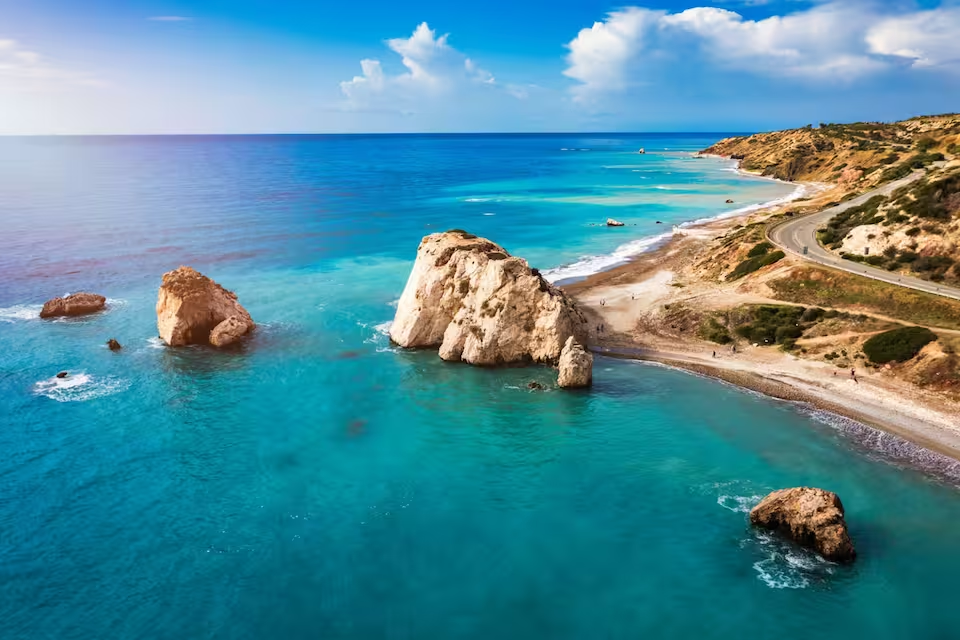
The best time for yacht charter in Cyprus depends on the season, with each period offering different sailing conditions and travel experiences.
May, June, July, August, September
Peak season
The busiest charter period in Cyprus falls in May, June, July, August, September: 0°C air, 0°C sea, 26 sunny days a month and wind averaging 0 knots.
March, April, October, November
Shoulder
Shoulder season in Cyprus covers March, April, October, November: 0°C air, 0°C sea, 16 sunny days a month and wind averaging 0 knots.
January, February, December
Low season
Low season in Cyprus covers January, February, December: 0°C air, 0°C sea, 11 sunny days a month and wind averaging 0 knots.
Weather, sea and price data shown here are for Kyrenia. Prices reflect seasonal pricing trends. For more details: Kyrenia.
| Month | JAN | FEB | MAR | APR | MAY | JUN | JUL | AUG | SEP | OCT | NOV | DEC |
|---|---|---|---|---|---|---|---|---|---|---|---|---|
| 🌡️ Avg. temperature | 0° | 0° | 0° | 0° | 0° | 0° | 0° | 0° | 0° | 0° | 0° | 0° |
| ☀️ Avg. sunny days A day is counted as sunny when average daytime cloud cover is 30% or less. | 11 days | 11 days | 13 days | 17 days | 19 days | 26 days | 30 days | 30 days | 27 days | 21 days | 13 days | 11 days |
| 🌧️ Avg. days with rain A day is counted as rainy when at least 1 mm of rain falls. Monthly rainfall | 10 days64 mm | 7 days37 mm | 6 days37 mm | 4 days27 mm | 5 days28 mm | 2 days8 mm | 0 days1 mm | 1 days3 mm | 2 days7 mm | 4 days19 mm | 7 days36 mm | 10 days60 mm |
| 🌊 Avg. seawater temperature | 0° | 0° | 0° | 0° | 0° | 0° | 0° | 0° | 0° | 0° | 0° | 0° |
| 📅 Season | LOW | LOW | SWEET SPOT | SWEET SPOT | HIGH SEASON | HIGH SEASON | HIGH SEASON | HIGH SEASON | HIGH SEASON | SHOULDER | SHOULDER | LOW |
/ night
sailboat available
€268
€268
Prices vary by yacht type, size, season and charter type. Additional costs such as fuel, skipper fees and security deposit may apply.
Last updated at September 20, 2026
Available only for overnight charters.
Prices vary by yacht type, size, season and charter type. Additional costs such as fuel, skipper fees and security deposit may apply.
Last updated at September 20, 2026
Learn everything you need to know about boat rental in Cyprus, including costs, yacht types, charter options and sailing requirements.
How much does a yacht charter cost in Cyprus?
What types of boats are available for charter in Cyprus?
Can I charter a yacht bareboat, with a skipper or with a crew in Cyprus?
What is the best time for yacht charter in Cyprus?
What are the popular yacht charter destinations in Cyprus?
How many guests can a yacht charter accommodate in Cyprus?
What are the most widely available yacht models in Cyprus?


Verified
Bora S.28 Aug 2025
Adil Bey becomes Adil Abi as soon as he gets on the boat. With its technical knowledge and hospitality, Gülerüzü gets the full score from you in the first 10 minutes. If it will be your first boat exp...
Listing owner: AdilKyrenia / Cyprus